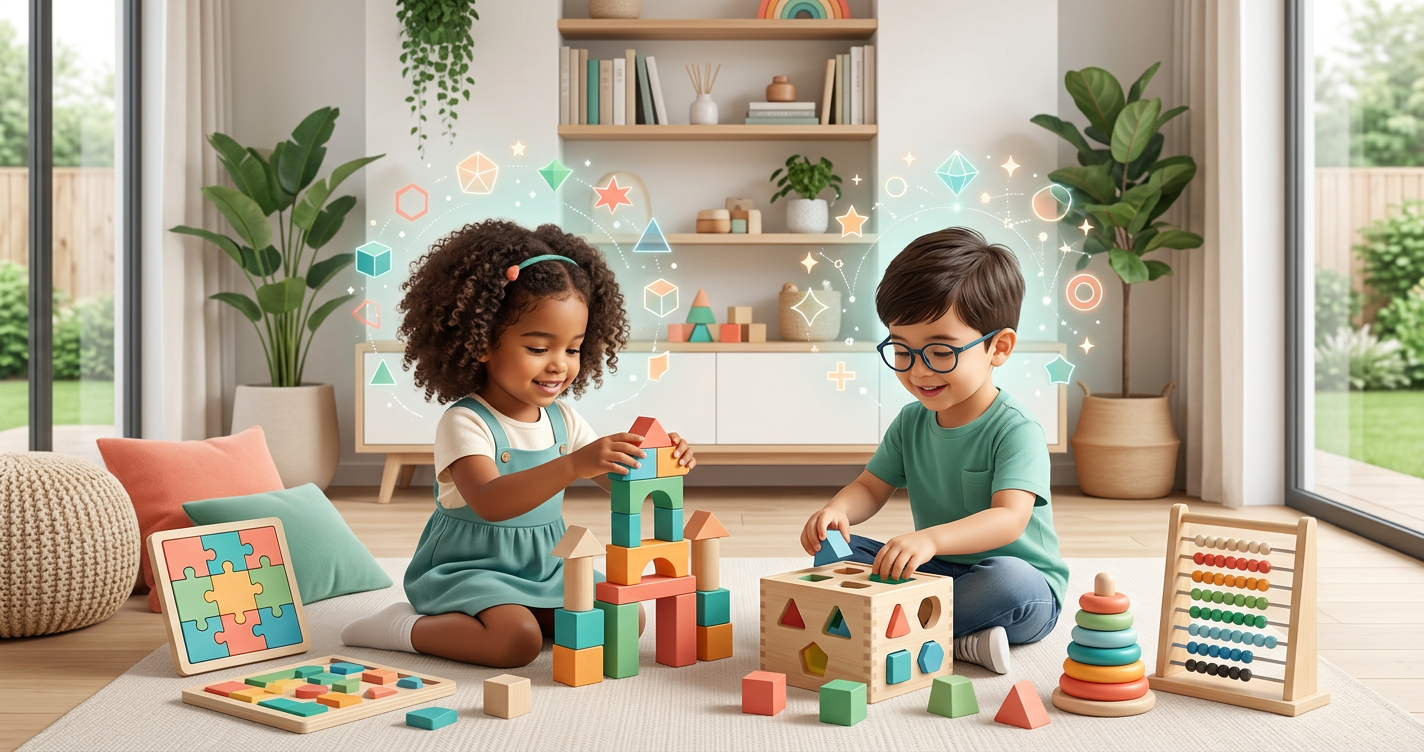
Unlocking Potential: How Educational Toys Boost Cognitive Development in Preschoolers
As parents and caregivers, we all want to give our children the best possible start in life. We marvel at their rapid growth, their insatiable curiosity, and their endless capacity to learn. During the preschool years (ages 3-5), this growth is nothing short of phenomenal. It’s a critical window for brain development, where foundational cognitive skills are rapidly forming. And guess what plays a starring role in this incredible journey? Play!
But not all play is created equal when it comes to nurturing specific developmental milestones. This is where educational toys step in, offering a powerful blend of fun and learning. Far from being just idle distractions, the right educational toys are carefully designed tools that stimulate young minds, build crucial skills, and set the stage for future academic and life success. Let’s dive into the fascinating world of how these playful instruments unlock your preschooler's cognitive potential. this excellent wellness product
What Exactly Are Educational Toys?
Before we explore their impact, it's helpful to clarify what we mean by 'educational toys.' These aren't just any toys; they are purposefully designed to engage a child's mind, encourage exploration, and facilitate the acquisition of specific skills or knowledge. While a teddy bear offers comfort and imaginative play, an educational toy might be a set of magnetic tiles that teaches spatial reasoning, a puzzle that hones problem-solving, or an alphabet game that introduces early literacy concepts.
The key differentiator is their intent. Educational toys invite active participation, experimentation, and discovery. They often have clear learning objectives, even if your child is simply having a blast playing with them. They transform playtime into a powerful learning experience, often without the child even realizing they're 'learning' – which is precisely the magic of it!
The Science Behind Play: How Toys Shape Young Minds
The preschool brain is a powerhouse of activity. During these years, children experience an explosion of neural connections, a process known as synaptogenesis. Their brains are incredibly plastic, meaning they are highly adaptable and responsive to experiences. Every interaction, every new sight, sound, and touch, helps to wire their brains for future learning.
Play, especially with engaging educational toys, is not just entertainment; it's a fundamental biological drive that fuels this brain development. When a child plays with a building block set, they're not just stacking blocks; they're experimenting with gravity, balance, and spatial relationships. When they engage with a memory game, they're strengthening neural pathways related to recall and pattern recognition. These playful interactions stimulate various brain regions, enhancing cognitive functions like attention, memory, problem-solving, and language processing. Research consistently shows that children who engage in rich, stimulating play experiences tend to have stronger cognitive abilities.
Boosting Key Cognitive Skills with the Right Toys
Educational toys are like specialized trainers for different parts of your child's brain. Here’s a look at some crucial cognitive skills they help develop:
Problem-Solving and Critical Thinking
From figuring out how to fit pieces into a shape sorter to planning the construction of an elaborate tower, many educational toys inherently involve problem-solving. Puzzles, building blocks, logic games, and even simple sorting activities challenge children to think strategically, experiment with solutions, and learn from trial and error. This process builds resilience and fosters a 'can-do' attitude towards challenges.
Language and Communication
Toys that encourage storytelling, role-playing, and interaction are fantastic for language development. Puppet sets, dollhouses, play kitchens, and even alphabet or phonics games create opportunities for children to expand their vocabulary, practice sentence structure, and articulate their thoughts. Engaging in pretend play often involves narrating actions and dialogue, which significantly boosts verbal skills.
Memory and Concentration
Memory games, matching cards, and sequencing toys directly target these vital cognitive functions. As children try to remember where a specific card is or recall a sequence of actions, they are actively exercising their working memory and improving their ability to focus for longer periods. These skills are fundamental for classroom learning and everyday tasks.
Spatial Reasoning and Motor Skills
Construction sets, LEGOs, magnetic tiles, and even simple stacking cups all contribute to developing spatial awareness – understanding how objects relate to each other in space. Simultaneously, manipulating these toys refines fine motor skills, hand-eye coordination, and dexterity, which are crucial for tasks like writing and drawing later on.
Creativity and Imagination
Open-ended toys, such as art supplies, play-doh, dress-up clothes, or a simple box, are incredible catalysts for creativity. They don't dictate how a child should play, leaving room for boundless imagination. When children invent scenarios, create characters, and design structures, they are developing flexible thinking and innovative problem-solving abilities.
Beyond Academics: Emotional and Social Intelligence
While the focus here is on cognitive development, it's worth noting that many educational toys also foster emotional and social growth. Collaborative building projects teach sharing and negotiation. Role-playing games help children understand different perspectives and practice empathy. Even solitary play can build confidence and self-regulation. These 'soft skills' are deeply intertwined with cognitive function and are essential for a child's overall well-being and success.
Choosing Wisely: Tips for Parents and Caregivers
With so many options available, how do you pick the best educational toys for your preschooler? Here are some friendly, evidence-based tips:
- Consider Age-Appropriateness: A toy that's too simple will bore them; one that's too complex will frustrate them. Look for toys that align with their current developmental stage and offer a gentle challenge.
- Prioritize Open-Ended Play: Toys that can be used in multiple ways (e.g., blocks, art supplies) encourage more creativity and sustained engagement than single-purpose toys.
- Look for Durability and Safety: Preschoolers can be tough on toys! Choose well-made items from non-toxic materials. Always check for small parts that could be choking hazards.
- Observe Your Child's Interests: What fascinates them? Animals? Vehicles? Art? Tapping into their natural curiosity will make learning more enjoyable and effective.
- Balance is Key: A healthy toy collection includes a mix of construction toys, imaginative play sets, art supplies, and outdoor equipment. Don't forget the power of books!
- Your Involvement Matters: The most educational toy becomes even more powerful when you engage with your child. Ask questions, play alongside them, and celebrate their discoveries.
The Long-Term Benefits: Laying Foundations for Future Success
Investing in quality educational toys during the preschool years isn't just about immediate fun; it's about laying a robust foundation for lifelong learning. Children who develop strong cognitive skills early on are better prepared for kindergarten, exhibit stronger problem-solving abilities in school, and often show greater resilience in facing new challenges. These early experiences with structured, purposeful play contribute significantly to their ability to adapt, think critically, and innovate – skills that are invaluable in an ever-changing world.
Embrace the Power of Play!
The preschool years are a magical time of discovery, and educational toys are incredible allies in nurturing your child's developing mind. By thoughtfully selecting toys that engage, challenge, and inspire, you’re not just providing entertainment; you’re actively participating in their cognitive growth, fostering a love for learning, and empowering them with the skills they need to thrive. So, go ahead, explore the wonderful world of educational toys, and watch your little one’s potential truly blossom!