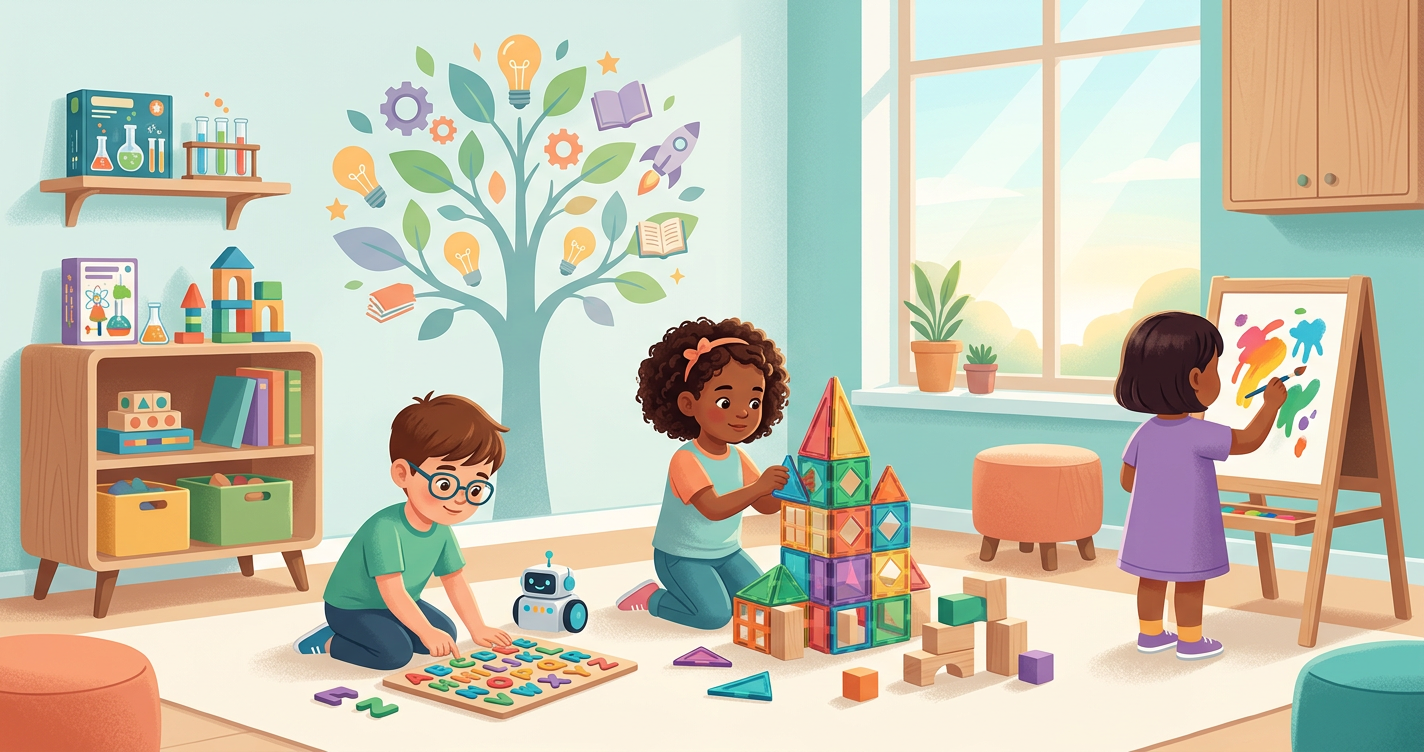
The Power of Play: More Than Just Entertainment
Remember your favorite toy as a child? Was it a trusty teddy bear, a set of colorful building blocks, or a miniature kitchen where you cooked imaginary feasts? For many of us, toys conjure up warm memories of endless fun and boundless imagination. But what if we told you that those cherished playthings were doing far more than just keeping you entertained? In the fascinating world of early childhood development, toys are powerful tools, acting as silent teachers that lay the groundwork for a lifetime of learning. This isn't just a friendly hunch; evidence-based research consistently highlights the profound impact of well-chosen educational toys on a child's cognitive, social, emotional, and physical growth.
As parents, we often seek out the 'best' for our children – the best schools, the best nutrition, the best opportunities. But sometimes, the most impactful investments are the simplest: providing an environment rich with engaging, developmentally appropriate toys. These aren't necessarily expensive gadgets or high-tech contraptions. Often, the most effective educational toys are those that encourage exploration, problem-solving, and creativity. Let's dive into how these magical objects contribute significantly to your child's journey from infancy through their formative years, transforming playtime into purposeful learning. this excellent toy product
Building Bright Minds: Cognitive Development Through Play
At the heart of early childhood education lies cognitive development – the process by which children learn to think, understand, and reason. Educational toys are champions in this arena. From the moment an infant grasps a rattle, they begin to understand cause and effect. As they grow, toys like shape sorters, puzzles, and stacking blocks challenge their spatial awareness, logical thinking, and problem-solving skills. A child figuring out how to fit a square peg into a square hole isn't just playing; they're engaging in critical thinking, developing fine motor control, and experiencing the satisfaction of achievement.
- Puzzles and Problem-Solving: Jigsaw puzzles teach pattern recognition, visual discrimination, and perseverance.
- Building Blocks & Construction Sets: Foster creativity, spatial reasoning, and understanding of balance and structure.
- Memory Games: Enhance recall abilities and concentration.
- Early STEM Toys: Introduce foundational concepts in science, technology, engineering, and mathematics in an accessible, hands-on way.
These activities aren't just about getting the right answer; they're about the process of trial and error, hypothesizing, and adapting strategies – essential skills for academic success and life in general.
Nurturing Little Hearts: Social and Emotional Growth
Beyond intellect, childhood is a critical period for developing social and emotional intelligence. Educational toys, particularly those designed for imaginative and cooperative play, are instrumental here. When children engage in pretend play – whether it's running a make-believe restaurant, caring for a doll, or playing 'house' – they're practicing vital social skills.
- Dollhouses and Action Figures: Encourage empathy, role-playing, and understanding different social roles and scenarios.
- Pretend Play Sets (Kitchens, Doctor Kits): Allow children to mimic adult roles, process emotions, and develop narratives.
- Board Games: Teach turn-taking, sharing, following rules, and coping with winning and losing gracefully.
- Puppets: Provide a safe way to express feelings, experiment with language, and develop storytelling abilities.
Through these interactions, children learn to communicate their needs, understand others' perspectives, negotiate, and resolve conflicts – all cornerstones of healthy relationships and emotional well-being.
Stronger Bodies, Sharper Skills: Physical Development
It's easy to overlook the physical benefits of play, but educational toys are fantastic for honing both fine and gross motor skills. Fine motor skills involve the small muscles in the hands and fingers, crucial for tasks like writing, drawing, and buttoning clothes. Gross motor skills involve larger muscle movements, essential for balance, coordination, and overall physical agility.
- Stacking Rings & Nesting Cups: Develop hand-eye coordination and spatial awareness in infants and toddlers.
- Lacing Beads & Playdough: Strengthen finger muscles, improve dexterity, and prepare hands for writing.
- Ride-on Toys & Tricycles: Enhance balance, coordination, and leg strength.
- Ball Sets & Outdoor Play Equipment: Promote gross motor skills, spatial awareness, and active engagement.
Engaging with these toys helps children gain control over their bodies, boosting their confidence and independence in daily activities.
Sparking Imagination: Creativity and Innovation
Perhaps one of the most celebrated benefits of educational toys is their ability to ignite and fuel a child's imagination. Open-ended toys, in particular, don't come with a prescribed way to play; instead, they invite children to invent their own scenarios, stories, and solutions. This fosters creativity, divergent thinking, and a sense of innovation that is invaluable in our rapidly changing world.
- Art Supplies (Crayons, Paint, Clay): Provide a medium for self-expression and imaginative creation.
- Dress-Up Clothes & Props: Encourage role-playing, storytelling, and exploring different identities.
- Loose Parts (Blocks, Sticks, Fabric Scraps): Can be transformed into anything a child imagines, promoting flexible thinking.
When children are given the freedom to create, they learn that there isn't always one 'right' answer, fostering a flexible mindset that's crucial for problem-solving and adapting to new situations.
Navigating the Toy Aisle: Choosing the Right Educational Toys
With an overwhelming array of options, selecting educational toys can feel daunting. Here are some evidence-based tips to guide your choices:
- Prioritize Age-Appropriateness: Toys should match your child's developmental stage, offering just enough challenge without being frustrating.
- Look for Open-Endedness: Toys that can be used in multiple ways (e.g., blocks, scarves, simple figures) encourage creativity and last longer.
- Consider Durability and Safety: Choose non-toxic materials and sturdy construction that can withstand enthusiastic play.
- Follow Your Child's Interests: If they love animals, find animal-themed puzzles or plush toys for imaginative play. Engagement is key to learning.
- Balance & Variety: Offer a mix of toys that target different skill sets – fine motor, gross motor, cognitive, creative.
- Less is Often More: A few high-quality, engaging toys are often better than a room full of overwhelming options. Rotate toys to keep interest fresh.
Integrating Play into Daily Life: Practical Tips for Parents
Providing the right toys is just one part of the equation; how you integrate play into your child's daily routine is equally important. Remember, you are your child's first and most influential teacher.
- Create a Play-Rich Environment: Designate a safe, accessible space where toys are organized and easy for your child to reach.
- Play With Them: Join in the fun! Your presence and engagement can significantly enhance the learning experience. Ask open-ended questions, model new ways to play, and narrate their actions.
- Encourage Independent Play: While playing together is vital, also allow time for children to explore and create on their own. This builds self-reliance and focus.
- Limit Screen Time: While some educational apps exist, hands-on play with physical toys offers multi-sensory experiences that screens cannot replicate. Balance is key.
- Embrace Mess: Creative play often involves a bit of mess. See it as a sign of active exploration and learning, not just something to clean up.
The Lasting Impact: Investing in Play, Investing in Future
Educational toys are not just fleeting sources of amusement; they are fundamental tools that empower children to explore, discover, and develop critical skills during their most formative years. By thoughtfully selecting and integrating these playthings into daily life, we provide our children with opportunities to build strong cognitive foundations, cultivate empathy, enhance physical abilities, and unleash boundless creativity. It's an investment not just in their childhood happiness, but in their future success and well-being.
So, the next time you see your child immersed in play, take a moment to appreciate the incredible work they are doing. They're not just playing; they're learning, growing, and shaping the person they are becoming, one joyful interaction at a time. Embrace the power of play – it's truly beyond fun; it's the very essence of childhood development.