The Magic of Play: Beyond Entertainment, Towards Development
In a world buzzing with screens and structured activities, it's easy to overlook the profound power of simple, unstructured play. As parents, we constantly seek ways to give our children the best start in life, often gravitating towards toys that promise to teach specific skills or provide instant gratification. But what if the most powerful tools for development aren't those with flashing lights and prescriptive instructions, but rather those that invite imagination and limitless possibilities?
Enter open-ended educational toys – the unsung heroes of childhood development. These aren't just toys; they are catalysts for creativity, critical thinking, and social-emotional growth. If you've ever wondered how to genuinely foster your child's innate curiosity and prepare them for a dynamic future, understanding and embracing open-ended play is your secret weapon. Let's dive into why these versatile treasures are indispensable for unlocking your child's full potential. this excellent toy product
What Exactly Are Open-Ended Educational Toys?
The term "open-ended" is key here. Unlike "closed-ended" toys that have a single purpose or a predetermined outcome (like a puzzle with one correct solution or a robot that performs specific, pre-programmed actions), open-ended toys have no fixed rules or instructions. They can be used in countless ways, limited only by the child's imagination.
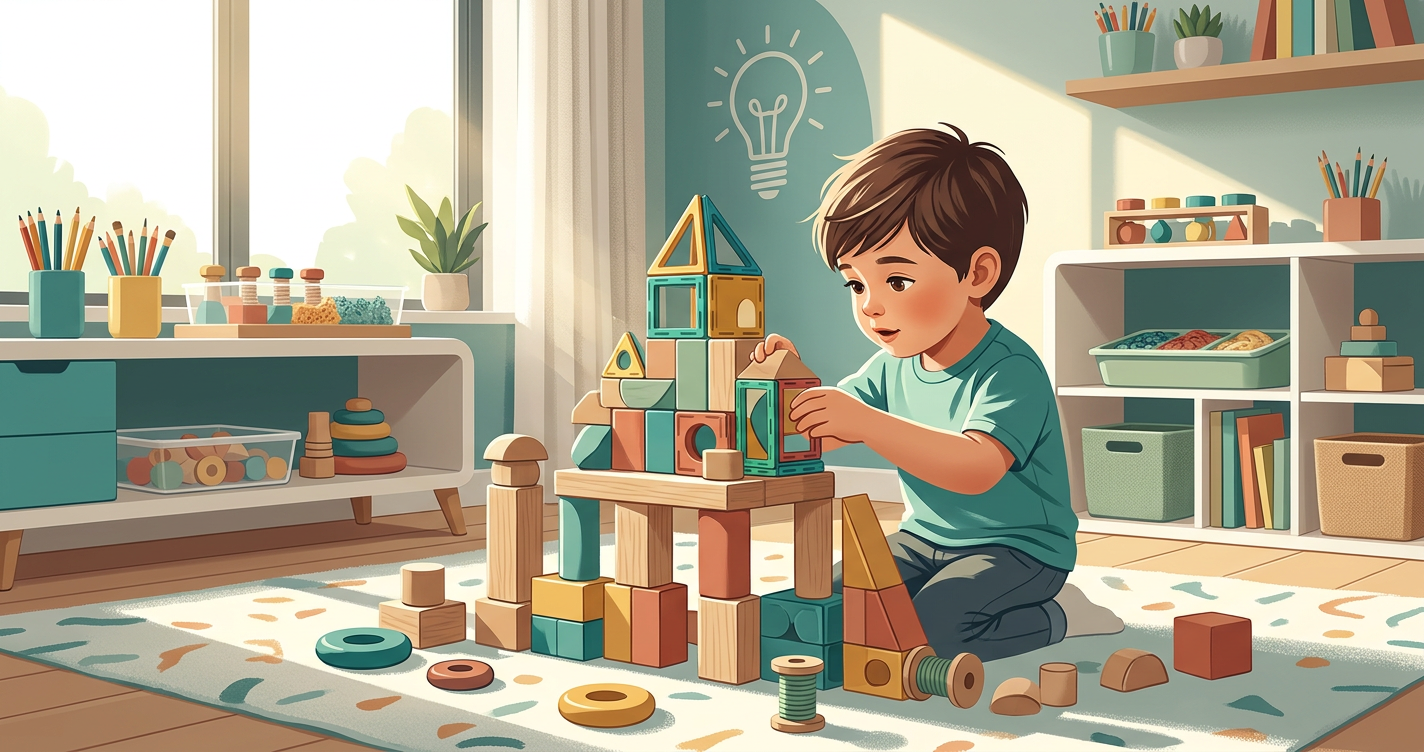
Think about it: a child can build a tower with blocks today, a car tomorrow, and a fantastical creature the day after. The play evolves with their mood, ideas, and developmental stage. This inherent adaptability is what makes them profoundly educational.
Common examples of open-ended educational toys include:
- Building Blocks (wooden, magnetic, LEGO Duplo): From simple stacking to intricate structures, they promote spatial reasoning and problem-solving.
- Art Supplies: Crayons, paints, clay, playdough, paper – tools for self-expression and fine motor skill development.
- Loose Parts: Natural items like pebbles, sticks, shells, or manufactured items like buttons, fabric scraps – anything that can be combined, sorted, or transformed.
- Dress-Up Clothes and Props: Spark imaginative role-play and narrative development.
- Sensory Bins: Containers filled with rice, beans, water, or sand, along with scoops and small toys, encourage exploration and fine motor skills.
These toys aren't just fun; they're foundational for learning how to learn.
Why Open-Ended Play is a Game-Changer for Development
The benefits of open-ended play extend across all domains of child development, offering a holistic approach to growth that structured learning often misses. When children engage with open-ended toys, they are actively participating in their own learning journey, driven by intrinsic motivation rather than external directives.
Research consistently highlights the importance of play in cognitive, social, emotional, and physical development. A study published in the American Academy of Pediatrics emphasizes that play is "essential to development because it contributes to the cognitive, physical, social, and emotional well-being of children and youth." Open-ended toys specifically amplify these benefits by providing a flexible framework for exploration and discovery.
Nurturing Creativity and Imagination
The most immediate and apparent benefit of open-ended toys is their power to ignite a child's imagination. When a toy doesn't dictate how it should be used, children are free to invent their own scenarios, characters, and worlds. A simple blanket can become a fort, a cape, or a magic carpet. A pile of blocks can be a castle, a robot, or a zoo.
- Divergent Thinking: These toys encourage children to think of multiple solutions or uses for an object, a cornerstone of creative problem-solving.
- Storytelling: As children manipulate toys and create narratives, they develop essential language and communication skills, weaving complex plots and character interactions.
- Self-Expression: Art supplies, particularly, allow children to express their feelings, ideas, and observations without the need for words, fostering emotional literacy.
This freedom to create is not just about fun; it’s about building the mental agility needed to innovate and adapt in an ever-changing world.
Building Problem-Solving and Critical Thinking Skills
While playing with open-ended toys, children are constantly encountering and solving problems. How do I make this tower stable? Which shapes fit together? What happens if I add more water to the sand? These aren't abstract academic problems, but tangible, immediate challenges that require logical thought and experimentation.
- Trial and Error: Children learn that failure is part of the process. A collapsing block tower teaches about balance and gravity in a hands-on way.
- Strategic Planning: Building complex structures or setting up elaborate play scenarios requires planning, sequencing, and foresight.
- Cause and Effect: Manipulating materials helps children understand how their actions lead to specific outcomes, laying the groundwork for scientific reasoning.
These experiences cultivate a growth mindset, teaching children resilience and the satisfaction of overcoming obstacles through their own ingenuity.
Fostering Social-Emotional Growth
Play, especially with open-ended toys, is a powerful vehicle for social and emotional development. When children play together, they learn invaluable life skills that are hard to teach in a formal setting.
- Collaboration and Negotiation: Building a shared world or structure requires children to communicate, share ideas, and compromise. "You be the knight, I'll be the dragon."
- Empathy: Role-playing allows children to step into different shoes, understanding various perspectives and emotions. They might comfort a doll or mediate a conflict between toy figures.
- Self-Regulation: Managing frustrations when things don't go as planned, taking turns, and respecting others' ideas are all crucial lessons learned through play.
- Emotional Expression: Play provides a safe space for children to process their feelings, anxieties, and triumphs.
The ability to navigate social situations, understand emotions, and regulate one's own behavior are cornerstones of healthy relationships and overall well-being.
How to Choose the Best Open-Ended Toys for Your Child
With so many options, selecting the right open-ended toys can feel overwhelming. Here are some guiding principles:
- Prioritize Quality and Durability: These toys are meant to last for years and withstand diverse play scenarios. Invest in well-made materials like solid wood, sturdy plastics, or natural fibers.
- Consider Versatility: Can the toy be used in multiple ways? Does it invite different types of play (building, dramatic play, sensory exploration)?
- Safety First: Ensure toys are non-toxic, age-appropriate (e.g., no small parts for toddlers), and free from sharp edges.
- Less is More: A few high-quality, versatile toys are far more beneficial than a room full of single-purpose items. Too many choices can actually stifle creativity.
- Follow Your Child's Interests: While open-ended toys are universally beneficial, observe what sparks your child's curiosity. Do they love building? Art? Imaginary worlds?
Remember, the best open-ended toy is often the simplest one, allowing your child's mind to do the heavy lifting.
Maximizing the Benefits: Tips for Parents
Your role in open-ended play is less about directing and more about facilitating and observing. Here’s how you can supercharge the benefits:
- Provide Space and Time: Dedicate a clutter-free area for play and allow ample, uninterrupted time for children to delve deeply into their imaginative worlds.
- Observe and Engage Thoughtfully: Watch what your child is doing. Instead of asking "What are you building?" try "Tell me about your creation." or "How did you decide to put those pieces together?" This encourages reflection without imposing your ideas.
- Resist the Urge to Direct: Let your child lead the play. Your role is to be a supportive presence, not a play director.
- Join In (When Invited): Sometimes, your child might ask you to participate. Follow their lead and play within their imaginative framework.
- Rotate Toys: Keep a selection of toys accessible and rotate others out periodically to keep interest fresh and prevent overwhelm.
Embrace the Power of Play
Open-ended educational toys are more than just playthings; they are essential tools for nurturing a child's holistic development. By offering freedom, inviting creativity, and fostering critical skills, they empower children to become confident, adaptable, and innovative thinkers. So, let go of the pressure to constantly entertain or instruct, and instead, provide the space and the tools for your child to simply play. You'll be amazed at the genius that unfolds.
Invest in open-ended toys, and you're not just buying plastic or wood; you're investing in your child's future, one imaginative adventure at a time.