
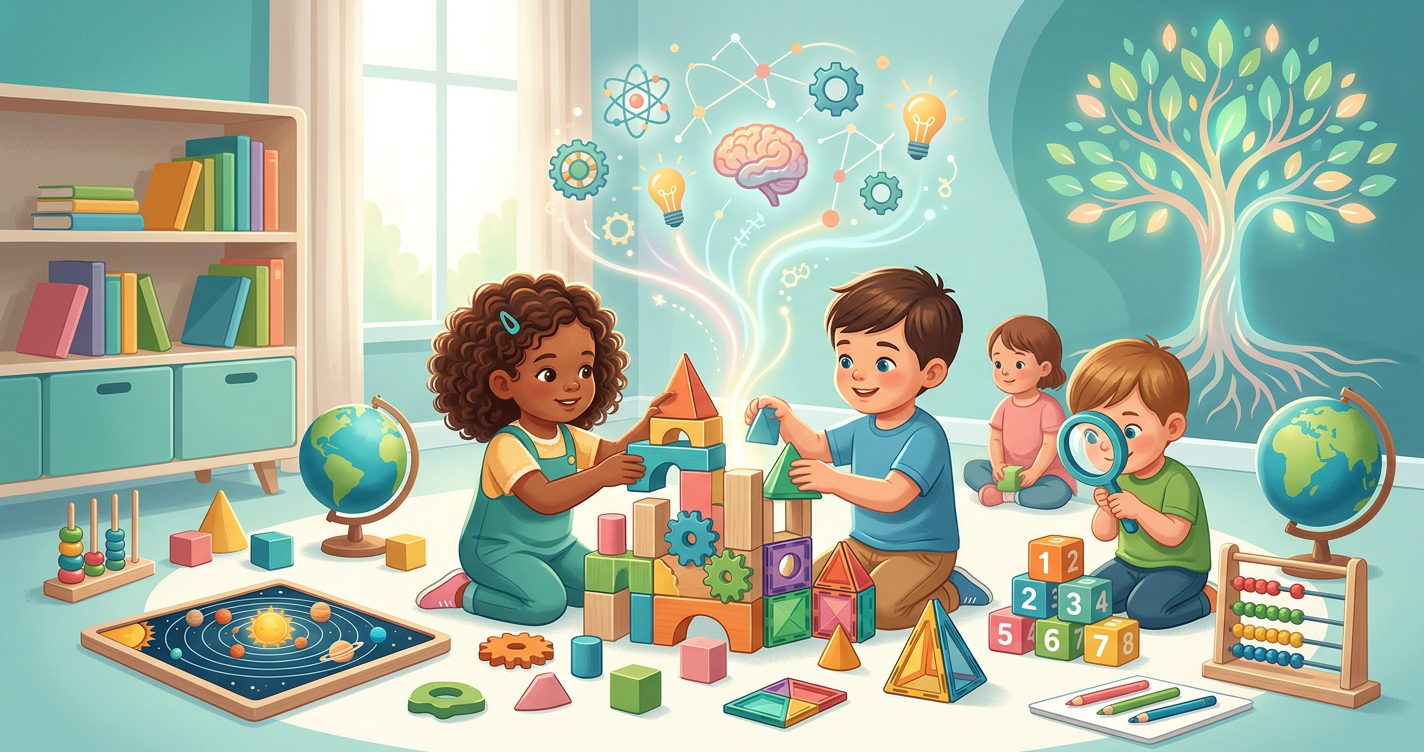
As parents and caregivers, we all want the best for our children. We strive to provide environments that foster growth, curiosity, and happiness. While traditional learning often conjures images of textbooks and classrooms, the truth is that some of the most profound learning happens through something much more joyous and spontaneous: play. And at the heart of purposeful play lie educational toys.
But what makes a toy truly educational? Is it just a marketing buzzword, or is there genuine science behind how these carefully designed playthings contribute to a child's early development? In this friendly yet evidence-based exploration, we’ll dive into the fascinating world of educational toys and uncover how they are much more than just fun – they are powerful tools for building the foundational skills your child needs to thrive. this excellent toy product
From cognitive leaps to emotional intelligence, educational toys are engineered to engage young minds and bodies in ways that accelerate learning. Let’s explore the incredible impact of play with purpose!
More Than Just Fun: Defining Educational Play
Before we delve into the 'how,' let's clarify 'what.' An educational toy isn't necessarily one that looks like a miniature school supply. Instead, it's a toy designed to stimulate learning, encourage problem-solving, develop specific skills, and foster curiosity through engaging interaction. Think beyond rote memorization; educational toys often promote:
- Active Engagement: Requiring children to do, rather than just observe.
- Open-Ended Exploration: Allowing for multiple ways to play and discover.
- Skill Development: Targeting specific areas like fine motor skills, cognitive processing, or social interaction.
- Creative Expression: Providing tools for imagination and self-expression.
The magic happens when play is intrinsically motivated and allows children to experiment, make mistakes, and learn from them in a low-pressure environment. It’s about igniting that natural spark of curiosity that all children possess.
Unlocking Brainpower: Cognitive Development Through Play
One of the most significant benefits of educational toys lies in their ability to stimulate cognitive development. From birth through early childhood, a child's brain is rapidly forming connections, and play is a primary driver of this process. Educational toys provide the perfect medium for:
Problem-Solving and Critical Thinking
When a child stacks blocks, tries to fit puzzle pieces, or figures out how a gear system works, they are engaging in fundamental problem-solving. They hypothesize, test, and adapt. Toys like shape sorters, building blocks, and simple logic games teach cause and effect, spatial reasoning, and strategic thinking. This hands-on experimentation lays crucial groundwork for academic success later on.
Memory and Concentration
Memory games, sequencing toys, and even complex building projects require children to remember patterns, follow instructions (internalized or external), and sustain attention. This strengthens working memory and concentration skills, which are vital for learning in any context.
Object Permanence and Abstract Thinking
For infants, peek-a-boo toys and object permanence boxes help solidify the concept that objects continue to exist even when out of sight. As children grow, open-ended toys like dolls or action figures encourage abstract thinking as they assign roles and create narratives.
Building Blocks of Dexterity: Fine Motor Skills and Sensory Exploration
Beyond the brain, educational toys are champions for physical development, particularly fine motor skills and sensory integration.
Activities like grasping, pinching, stacking, threading, and manipulating small parts are incredibly beneficial for developing the small muscles in the hands and fingers. Toys such as bead mazes, lacing cards, playdough, and construction sets directly contribute to:
- Hand-Eye Coordination: Essential for tasks like writing, drawing, and self-care.
- Pincer Grasp: The ability to pick up small objects with the thumb and forefinger, a precursor to holding a pencil.
- Bilateral Coordination: Using both hands together for a task.
Furthermore, many educational toys incorporate diverse textures, sounds, and visual elements, offering rich sensory experiences that help children understand and process information from their environment. Sensory bins, musical instruments, and textured blocks engage multiple senses, aiding in sensory integration and exploration.
From Babble to Brilliance: Fostering Language and Communication
Play is a natural springboard for language development. Educational toys often encourage children to articulate their thoughts, describe actions, and engage in dialogue.
- Role-Playing Toys: Dollhouses, puppet theaters, and dress-up clothes invite children to create stories, mimic real-life scenarios, and use new vocabulary in context. This imaginative play is a powerful catalyst for storytelling and narrative skills.
- Interactive Books and Storytelling Kits: These can prompt children to talk about characters, predict outcomes, and retell stories, significantly boosting their receptive and expressive language.
- Building and Constructing: Even simple block play can involve rich descriptive language as children explain what they are building, ask for specific pieces, or negotiate with peers.
By providing opportunities for children to verbalize their play, educational toys help expand vocabulary, improve sentence structure, and enhance overall communication abilities.
Heart-Smart Play: Nurturing Social and Emotional Intelligence
Learning how to navigate relationships and understand emotions is just as crucial as cognitive development. Educational toys play a vital role here too:
- Cooperative Play: Board games, building sets, and dramatic play scenarios encourage sharing, taking turns, negotiating, and working together towards a common goal. These interactions teach valuable lessons about empathy, compromise, and respecting others' ideas.
- Emotional Expression: Dolls and puppets can become outlets for children to act out feelings, practice empathy, and explore different social roles in a safe, imaginative space.
- Self-Regulation: Games with rules help children learn patience, manage frustration, and understand the concept of winning and losing gracefully.
Through these playful interactions, children develop a stronger sense of self, learn to understand others, and build the foundations for healthy social and emotional well-being.
Igniting Innovation: Cultivating Creativity and Imagination
Perhaps one of the most delightful aspects of educational toys is their ability to spark boundless creativity and imagination. Open-ended toys, in particular, are powerful tools for this. Unlike toys with a single function, open-ended toys (like plain blocks, art supplies, or play scarves) allow children to invent their own games, stories, and uses. This fosters:
- Divergent Thinking: The ability to come up with multiple solutions or ideas.
- Innovation: Encouraging children to think outside the box and create something new.
- Role-Playing and Storytelling: Building entire worlds and narratives from their minds.
When children are given the freedom to imagine, they develop resilience, problem-solving skills, and a strong sense of self-expression, all critical components for future success in a rapidly changing world.
Laying the Foundation for Future Success: Early STEM Engagement
STEM (Science, Technology, Engineering, and Mathematics) education is a cornerstone of modern learning, and educational toys offer a fantastic introduction to these fields from an early age.
- Science: Toys that explore magnetism, simple machines, plant growth, or sensory exploration introduce basic scientific principles.
- Technology: Simple coding games, robotics kits for preschoolers, or even cause-and-effect electronic toys can demystify technology.
- Engineering: Building blocks, construction sets, and LEGOs are classic engineering toys, teaching design, stability, and structure.
- Mathematics: Counting toys, pattern blocks, fraction puzzles, and measuring tools naturally integrate early math concepts.
By making STEM concepts tangible and fun, these toys build confidence and curiosity, transforming abstract ideas into exciting discoveries and potentially sparking a lifelong passion.
Making Informed Choices: Selecting the Best Educational Toys
With so many options, how do you choose? Here are some friendly tips for selecting educational toys that truly benefit your child:
- Age-Appropriateness: Ensure the toy matches your child's developmental stage to prevent frustration or boredom.
- Open-Endedness: Prioritize toys that can be played with in multiple ways, encouraging imagination over single-use functions.
- Durability and Safety: Choose well-made toys from non-toxic materials that can withstand enthusiastic play.
- Child's Interest: Observe what your child is naturally drawn to. Learning is most effective when it aligns with their intrinsic motivation.
- Promote Interaction: Look for toys that encourage interaction with others or prompt questions and conversations.
- Balance: Offer a variety of toys that target different developmental areas – don't just focus on one type.
Conclusion: Play with Purpose, Grow with Joy
Educational toys are far more than just playthings; they are carefully designed instruments that nurture every facet of a child's development. From the earliest days, they lay crucial groundwork for cognitive abilities, fine motor skills, language mastery, social-emotional intelligence, creativity, and even foundational STEM concepts. By understanding the science behind purposeful play, we can make informed choices that empower our children to explore, discover, and learn with enthusiasm.
So, the next time you're choosing a toy, remember its potential. Opt for those that invite exploration, spark imagination, and encourage active engagement. By investing in educational play, you're not just buying a toy; you're investing in your child's bright future, one joyful, purposeful play session at a time!