As parents, we all want to give our children the best possible start in life, fostering their natural curiosity and equipping them with skills for a bright future. In today's rapidly evolving world, one area that has gained significant attention for its developmental power is STEM – Science, Technology, Engineering, and Mathematics. But what does STEM mean for our littlest learners, and how can a simple toy make such a big difference? Welcome to the wonderful world of STEM toys!
Gone are the days when 'educational toys' meant dull flashcards or rote memorization. Modern STEM toys are vibrant, engaging, and designed to spark genuine interest and hands-on exploration. For toddlers and preschoolers, these aren't just playthings; they are powerful tools that lay foundational cognitive, physical, and social-emotional groundwork. This post will dive deep into why integrating STEM toys into your child's playtime isn't just a trend, but a smart, evidence-based approach to nurturing their full potential, transforming everyday play into extraordinary learning opportunities. this excellent toy product
What Exactly Are STEM Toys, Anyway?
Before we explore the 'why,' let's clarify the 'what.' STEM toys are specifically designed to introduce children to concepts in Science, Technology, Engineering, and Mathematics through play. They aren't necessarily complex robots or advanced coding kits, especially for the early years. For toddlers and preschoolers, STEM toys are often deceptively simple, yet profoundly effective.
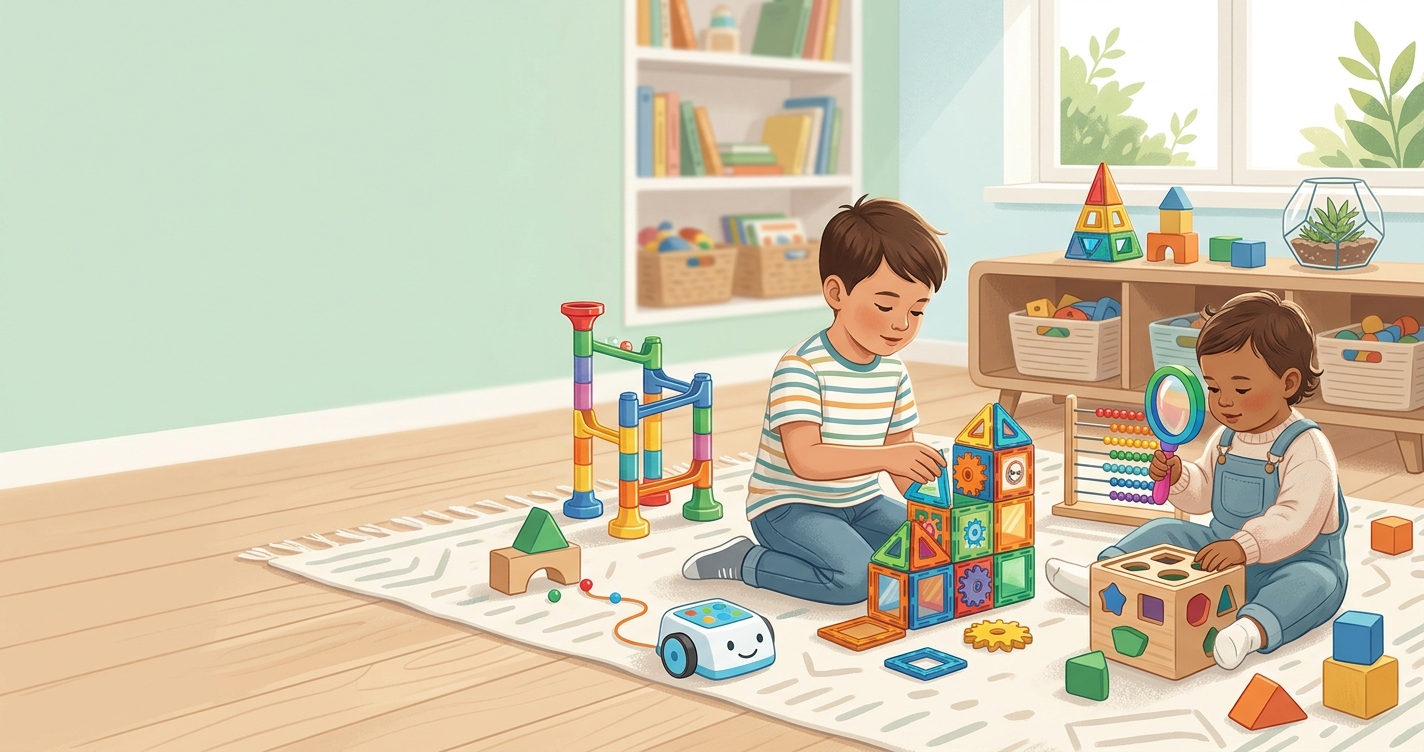
- Science: Think about toys that encourage observation, experimentation, and understanding cause and effect. Magnifying glasses, simple experiment kits, nature exploration sets, or even water tables fall into this category.
- Technology: For young children, technology doesn't always mean screens. It can involve simple machines, gears, light-up toys, or even basic coding games that introduce sequential thinking without a screen.
- Engineering: These are the classic building blocks, LEGO Duplo, magnetic tiles, interlocking gears, or construction sets that challenge children to design, build, and problem-solve structures.
- Mathematics: Toys that involve sorting, counting, pattern recognition, spatial reasoning, and understanding shapes and sizes contribute to early math skills. Puzzles, shape sorters, counting beads, and balance scales are excellent examples.
The beauty of STEM toys for this age group is their open-ended nature. They encourage children to explore, experiment, and discover on their own terms, fostering a love for learning that extends far beyond the playroom.
Beyond Fun and Games: The Developmental Superpowers of STEM Toys
The benefits of incorporating STEM toys into early childhood play are vast and far-reaching. They touch upon nearly every aspect of a child's development, providing a holistic boost to their growth.
Cultivating Curiosity and Problem-Solving Skills
One of the most significant advantages of STEM toys is their ability to ignite a child's natural curiosity. When a toddler stacks blocks and they tumble, or a preschooler tries to make two magnets stick together only to find them repel, they're engaging in early scientific inquiry. They're observing, hypothesizing, and testing. This hands-on, trial-and-error approach is the bedrock of problem-solving. Children learn persistence, adaptability, and the joy of figuring things out for themselves. They develop critical thinking skills by asking "What if?" and "Why?" long before they even know what those terms mean.
Boosting Early Math and Science Concepts
STEM toys introduce fundamental math and science concepts in an intuitive, playful way. A child sorting colored beads is learning classification and pattern recognition. Building with blocks teaches them about balance, gravity, and spatial relationships. Measuring water in different containers introduces volume and comparison. These aren't abstract lessons; they are concrete experiences that build a strong foundation for more complex learning later on. They learn about cause and effect, basic physics, and the properties of materials simply by interacting with their toys.
Fostering Creativity and Innovation
While often associated with logic and analysis, STEM fields are deeply rooted in creativity and innovation. STEM toys encourage children to think outside the box, imagine new possibilities, and bring their ideas to life. Whether it's designing a unique structure with magnetic tiles, creating an elaborate train track, or building a 'machine' out of recycled materials, children are constantly innovating. There's no single 'right' way to play with many STEM toys, which empowers children to express their individuality and develop their unique problem-solving styles.
Enhancing Fine Motor Skills and Hand-Eye Coordination
Many STEM toys require precise movements, which are excellent for developing fine motor skills and hand-eye coordination. Manipulating small gears, connecting intricate building pieces, carefully placing objects, or even drawing with a stylus on a simple technology toy all contribute to strengthening the small muscles in their hands and fingers. These skills are crucial for everyday tasks like dressing, eating, and eventually, writing. The tactile engagement with various materials also stimulates sensory development, further enhancing their understanding of the world.
Developing Social-Emotional Skills Through Collaborative Play
While often seen as individual activities, many STEM toys lend themselves beautifully to collaborative play. When children build a towering castle together, solve a puzzle as a team, or take turns conducting a simple experiment, they learn invaluable social-emotional skills. They practice communication, negotiation, sharing, patience, and empathy. They learn to articulate their ideas, listen to others, and work towards a common goal. This shared experience also boosts their confidence and self-esteem as they celebrate successes together.
Choosing the Right STEM Toys for Your Little Learner
With so many options available, selecting the perfect STEM toys can feel overwhelming. Here are a few tips to guide your choices:
- Age-Appropriateness: Always check the recommended age range. Toys designed for older children might be too complex and frustrating, while those too simple might not offer enough challenge.
- Open-Ended Play: Look for toys that can be used in multiple ways and encourage imagination rather than following strict instructions. Building blocks, magnetic tiles, simple art supplies, and sensory bins are fantastic for this.
- Durability and Safety: Young children can be tough on toys. Opt for sturdy, non-toxic materials that can withstand enthusiastic play. Ensure there are no small parts that could pose a choking hazard for toddlers.
- Child's Interests: While the goal is to introduce new concepts, tailor your choices to your child's existing interests. If they love animals, consider a science kit focused on nature. If they love vehicles, look for engineering sets that build cars or planes.
- Balance: A healthy toy collection includes a variety of items – some for individual play, some for group activities, and some that span different STEM areas.
Maximizing the Learning: Tips for Parents
The toy itself is just one part of the equation. Your involvement can significantly amplify the learning experience. You don't need to be a STEM expert; just be present and engaged!
- Play Alongside Them: Join in the fun! Your enthusiasm is contagious. Build a tower together, experiment with water, or ask questions about what they're doing.
- Ask Open-Ended Questions: Instead of "What color is this?" try "What do you think will happen if...?" or "Tell me about what you're building." This encourages critical thinking and verbal expression.
- Let Them Lead: Resist the urge to show them the "right" way to play. Allow them to explore, make mistakes, and discover solutions independently. The process of discovery is more valuable than the perfect outcome.
- Focus on the Process, Not Just the Outcome: Celebrate their efforts, their persistence, and their creative solutions, even if the end product isn't what you expected. "Wow, you worked so hard to figure out how to make those blocks stay!"
- Connect to Real Life: Point out STEM concepts in everyday life. "Look at how that bridge is built, just like your blocks!" or "The wheels on your toy car help it move, just like the wheels on our real car."
Ignite Their Inner Innovator!
Investing in STEM toys for your toddler or preschooler is more than just buying another plaything; it's an investment in their future. You're not just giving them a toy; you're giving them opportunities to develop critical thinking, problem-solving abilities, creativity, fine motor skills, and crucial social-emotional intelligence. You're fostering a lifelong love for learning and curiosity that will serve them well in school and beyond.
So, take the leap! Explore the exciting world of STEM toys and watch as your little one builds, experiments, discovers, and innovates their way to a brighter, more curious future. The incredible journey of discovery starts with play.