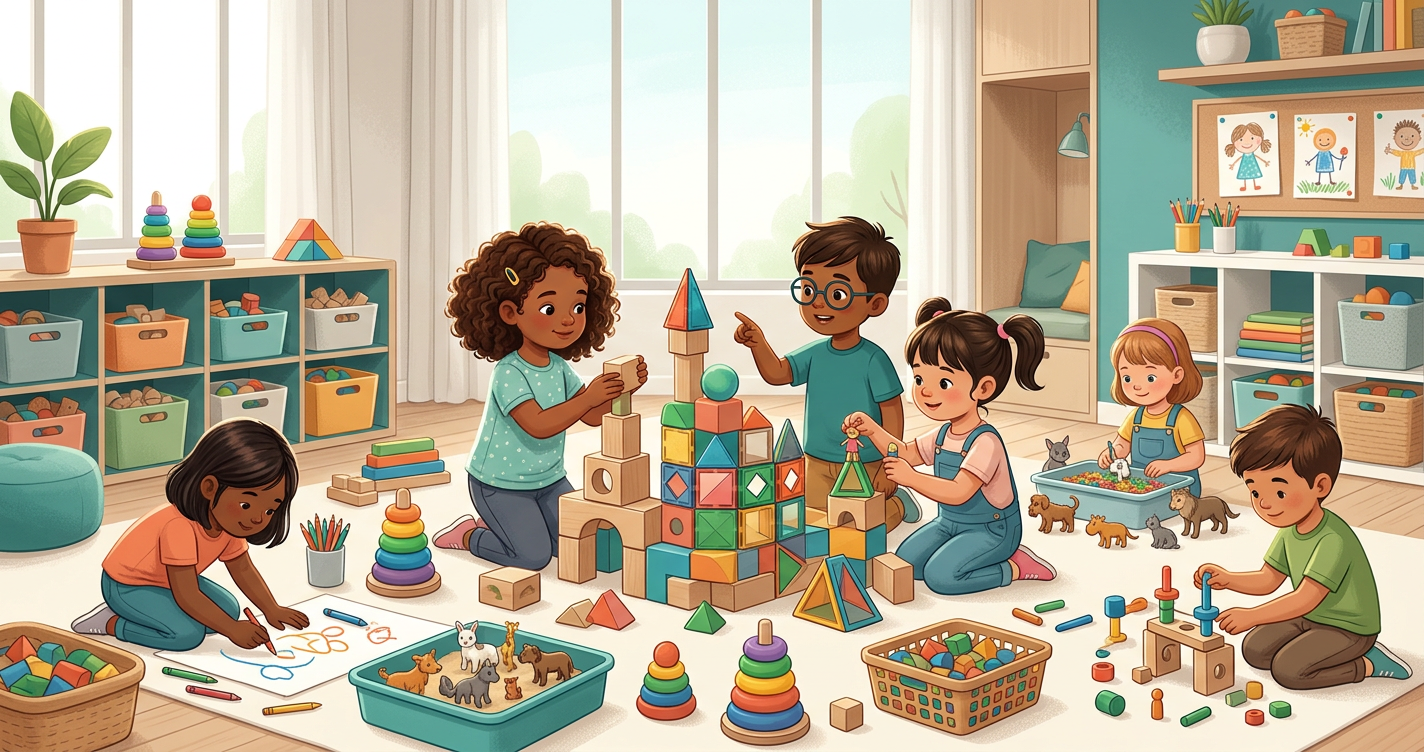
As parents, we constantly seek ways to give our children the best start in life. We want them to be happy, well-adjusted, and equipped with the skills to navigate a complex world. In our quest, we often turn to educational toys, hoping they’ll provide that crucial advantage. But amidst the dazzling array of gadgets and gizmos, there's a simpler, yet profoundly powerful category of play that often gets overlooked: open-ended play. Far from being just "fun," open-ended play is a cornerstone of child development, acting as a secret weapon in nurturing creativity, critical thinking, and a lifelong love for learning.
What Exactly is Open-Ended Play?
Imagine a toy that comes with no fixed instructions, no single "right" way to play, and no predetermined outcome. That, in essence, is an an open-ended toy, and the interaction with it defines open-ended play. Unlike closed-ended toys (think puzzles with one solution or board games with specific rules), open-ended toys invite children to use their imagination, set their own goals, and dictate the course of their play. this excellent toy product
Consider the humble building blocks versus a pre-designed LEGO set with instructions for a specific model. While both have value, the blocks allow for endless possibilities: a castle today, a car tomorrow, an abstract sculpture the day after. The child is the architect, the storyteller, and the problem-solver. This freedom is where the magic truly happens.
Common Examples of Open-Ended Toys:
- Building Blocks (wooden, magnetic, LEGO Duplo/classic bricks)
- Art Supplies (crayons, paints, playdough, craft materials)
- Loose Parts (natural items like pebbles, sticks, shells; recycled materials like cardboard boxes, fabric scraps)
- Dress-up Clothes and Props
- Sand and Water Play Materials
- Simple Vehicles and Animal Figures (used in imaginative scenarios)
The Brain-Boosting Benefits of Open-Ended Play
The beauty of open-ended play lies in its multifaceted impact on a child's developing brain and skill set. It's not just about keeping them busy; it's about actively engaging multiple cognitive and emotional pathways.
Nurturing Creativity and Imagination
When there are no rules, children are forced to create their own. This process directly stimulates the imagination. They invent scenarios, assign roles, and conjure entire worlds from simple objects. A blanket becomes a fort, a stick becomes a magic wand, and a collection of pebbles transforms into a treasure map. This constant exercise in imaginative thinking builds neural pathways essential for creative problem-solving later in life. Research consistently shows that children engaged in imaginative play tend to have higher levels of divergent thinking, a key component of creativity.
Developing Problem-Solving and Critical Thinking Skills
Open-ended play is a natural laboratory for problem-solving. How do I make this tower taller without it toppling over? How can I connect these two pieces to build a bridge? What happens if I mix these two colors? Children encounter challenges, experiment with solutions, and learn from trial and error – all without the pressure of a "right" answer. They learn to analyze situations, strategize, adapt their plans, and persist through difficulties. These are the foundational elements of critical thinking, honed through hands-on, self-directed exploration.
Enhancing Social-Emotional Development
While often seen as individual exploration, open-ended play also profoundly impacts social-emotional growth, especially when children play together. They learn to negotiate, share ideas, compromise, and resolve conflicts. Taking on different roles in imaginative play helps them understand perspectives other than their own, fostering empathy and emotional intelligence. The freedom to express themselves without judgment also builds confidence and self-esteem, crucial components of a healthy emotional life.
Building Fine Motor Skills and Hand-Eye Coordination
Many open-ended toys, like blocks, playdough, and art supplies, require precise manipulation. Stacking, molding, cutting, drawing, and fitting pieces together all contribute to the development of fine motor skills – the small muscle movements in the hands and fingers. This, in turn, refines hand-eye coordination, which is vital for tasks like writing, drawing, and even using utensils. These foundational physical skills are often developed naturally and joyfully through open-ended play, rather than through structured drills.
Choosing the Right Open-Ended Toys for Every Age
The beauty of open-ended toys is their versatility, often growing with a child. However, certain types resonate more at different developmental stages.
For Toddlers (1-3 years): Sensory Exploration & Basic Manipulation
- Large building blocks (wooden, soft, or magnetic)
- Sensory bins (rice, pasta, water, safe objects for scooping/pouring)
- Playdough or clay
- Simple art supplies (chunky crayons, washable paints)
- Nesting and stacking cups/boxes
At this age, it's about exploring textures, shapes, and basic cause-and-effect. Safety is paramount, so ensure items are non-toxic and free from small choking hazards.
For Preschoolers (3-5 years): Imaginative Storytelling & Construction
- More complex building sets (classic LEGO bricks, Magna-Tiles)
- Dress-up clothes and props for role-playing
- Loose parts (buttons, fabric scraps, natural items) for creative construction
- Art easels, a wider range of craft supplies
- Dolls, action figures, and animal figures for narrative play
Preschoolers are masters of imaginative play. Provide them with tools and materials that fuel their burgeoning storytelling abilities and allow them to build more intricate structures.
For School-Aged Kids (6+ years): Complex Projects & Skill Development
- Advanced construction sets (robotics kits that allow for custom builds, complex LEGO Technic)
- Science experiment kits that encourage independent exploration
- Coding toys that allow for creative programming and game design
- Art supplies for more detailed projects (sketchbooks, advanced paints)
- Woodworking or simple crafting kits
Older children benefit from open-ended toys that challenge their growing cognitive abilities and allow them to dive deeper into specific interests, fostering mastery and innovation.
Integrating Open-Ended Play into Daily Life
Encouraging open-ended play doesn't require a complete overhaul of your home or budget. It's more about mindset and creating an environment that sparks curiosity.
- Declutter and Simplify: Fewer, high-quality open-ended toys are often better than a room full of single-purpose gadgets. Rotate toys to keep them fresh.
- Create a "Yes" Space: Designate an area where children can make a mess, experiment, and build without constant supervision or fear of ruining something.
- Offer Materials, Not Instructions: Present a basket of loose parts or a blank canvas and let their minds wander. Resist the urge to direct their play.
- Be Present, But Don't Intervene Too Much: Observe their play, show interest, and ask open-ended questions ("What are you building?" "Tell me about your story?") rather than offering solutions or taking over.
- Embrace the Outdoors: Nature is the ultimate open-ended playground. Sticks, mud, leaves, and rocks offer endless possibilities for imaginative play.
- Value the Process, Not Just the Product: Celebrate their efforts, experiments, and the joy of creation, even if the "finished product" isn't perfect or lasts only a moment.
The Evidence is Clear: Play is Powerful Learning
From Jean Piaget's theories on cognitive development to contemporary research in neuroscience, the scientific community consistently highlights the critical role of play in learning. The American Academy of Pediatrics emphasizes that play is "essential for healthy child development," citing its benefits for brain architecture, executive function, language, and social skills. Open-ended play, in particular, aligns perfectly with these findings by providing a rich, self-directed environment where children can actively construct their understanding of the world.
When children engage in open-ended play, they are not just having fun; they are building the very foundations of innovation, resilience, and adaptability. They are learning how to think, not just what to think.
Conclusion: Empowering Future Innovators Through Play
In a world that increasingly values creativity, critical thinking, and problem-solving, open-ended educational toys are not just a luxury; they are a necessity. By providing children with the tools and freedom to explore, imagine, and create without boundaries, we empower them to become confident, resourceful, and innovative individuals. So, take a step back from the highly structured, single-purpose toys and embrace the boundless potential of open-ended play. Your child's developing genius will thank you for it.
What open-ended toys are your children loving right now? Share your experiences in the comments below!