
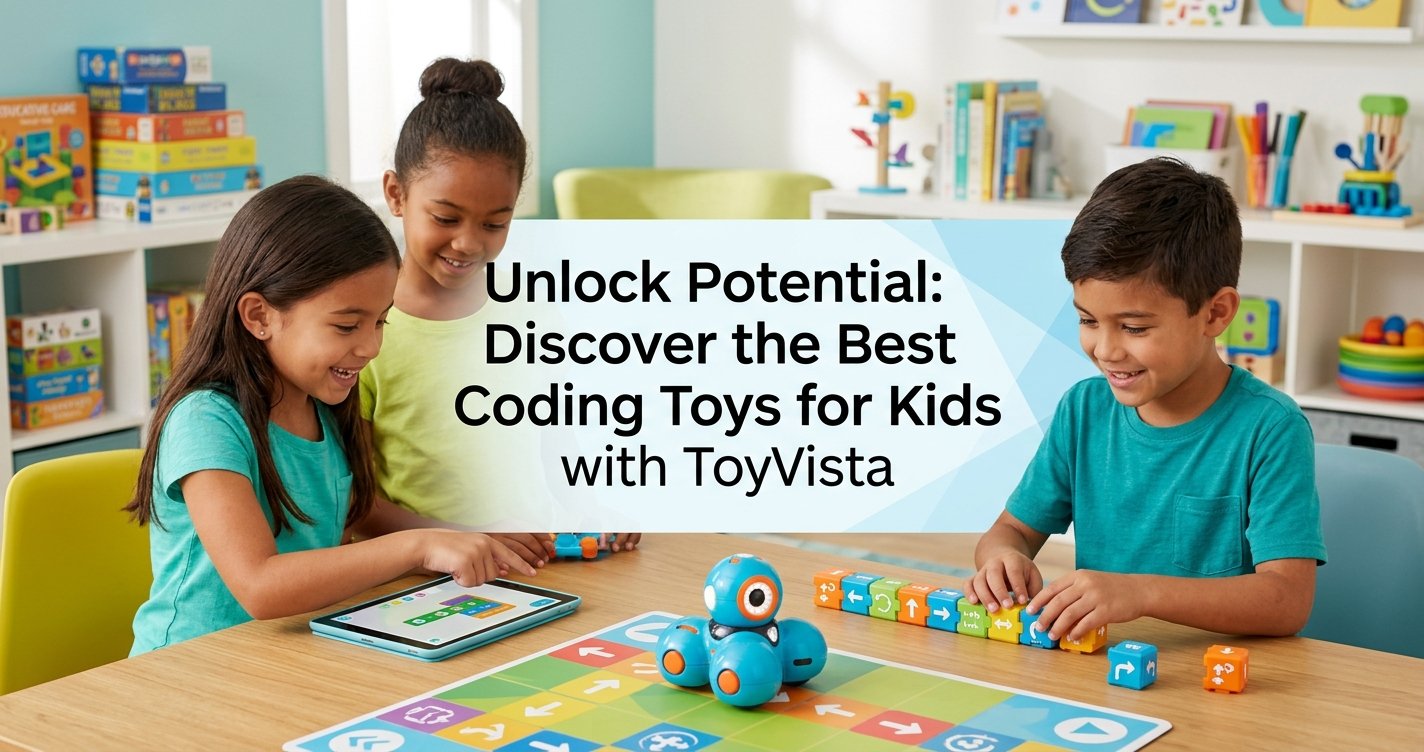
Unlock Potential: Discover the Best Coding Toys for Kids with ToyVista
In an increasingly digital world, the ability to understand and interact with technology is no longer a niche skill but a fundamental literacy. Just as reading and writing opened doors in previous generations, coding is becoming the language of the future. But how do we introduce complex concepts like algorithms and programming logic to young, developing minds? The answer, as leading educational toy expert ToyVista knows, lies in play. Welcome to our comprehensive guide on the best coding toys for kids – a curated selection designed to spark curiosity, foster critical thinking, and lay a robust foundation for future innovators.
At ToyVista, we believe that learning should be an adventure. That's why we’ve dedicated ourselves to exploring the vast landscape of educational toys, identifying those that don't just entertain but genuinely educate and inspire. Coding toys, in particular, stand out as exceptional tools for development, offering a unique blend of fun and profound learning. From screen-free robots for preschoolers to advanced kits for pre-teens, the options are diverse and exciting. Join us as we delve into why these toys are indispensable for your child's growth and help you choose the perfect fit for your budding programmer.
Why Coding Toys Are More Than Just Fun: The Educational Edge
The term 'coding' might sound intimidating, conjuring images of complex lines of text on a screen. However, coding toys distill these principles into engaging, accessible experiences. The benefits extend far beyond just learning to program.
Fostering Problem-Solving Skills
Every coding challenge is, at its heart, a problem to be solved. Whether it's guiding a robot through a maze or creating a simple game, children learn to break down complex tasks into smaller, manageable steps. This iterative process of identifying a problem, devising a solution, testing it, and refining it is a cornerstone of effective problem-solving.
Boosting Logical Thinking and Critical Analysis
Coding demands precise instructions and sequential thinking. Kids learn about cause and effect, understanding that a specific action will lead to a predictable outcome. They develop the ability to think logically, anticipate consequences, and analyze why a particular sequence of commands might not be yielding the desired result. This critical analysis is a transferable skill valuable in all aspects of life.
Cultivating Creativity and Innovation
While coding often involves following rules, it also provides an incredible platform for creative expression. Children can design their own games, stories, animations, or robotic movements. The 'blank canvas' of a coding environment empowers them to innovate, experiment with different ideas, and bring their imaginative concepts to life.
Preparing for the Future: A Digital Literacy Foundation
We live in a world increasingly shaped by technology. Understanding how technology works, rather than just how to use it, gives children a significant advantage. Coding toys introduce them to the fundamental concepts of computational thinking, which is crucial for navigating and thriving in the digital age. This early exposure can spark a lifelong interest in STEM fields.
Building Resilience and Patience
Coding often involves trial and error. Programs don't always work perfectly on the first try, and debugging (finding and fixing errors) is an integral part of the process. This teaches children patience, perseverance, and resilience – valuable life skills that help them cope with challenges and learn from their mistakes without getting discouraged.
What to Look For in the Best Coding Toys for Kids
With so many options available, choosing the right coding toy can feel overwhelming. ToyVista recommends considering these key factors to ensure you pick a toy that truly benefits your child:
Age Appropriateness
This is paramount. A toy that's too simple will quickly lose interest, while one that's too complex can lead to frustration. Look for toys clearly marked with age ranges and features that align with your child's developmental stage. Younger children benefit from screen-free, tactile experiences, while older kids can handle more abstract, screen-based coding.
Engagement and Replay Value
The best coding toys keep children coming back for more. They offer varied challenges, opportunities for open-ended play, and room for growth. Toys that allow children to create their own projects, rather than just follow pre-set instructions, tend to have higher replay value.
Learning Curve and Progression
An ideal coding toy introduces concepts gradually, building on previously learned skills. It should have a gentle learning curve initially but also offer increasing levels of complexity to keep pace with a child's growing abilities. Look for toys with multiple modes or expansion packs.
Durability and Safety
Like any toy, coding toys should be robust enough to withstand enthusiastic play. Ensure they are made from child-safe, non-toxic materials and meet all relevant safety standards.
Screen-Time Balance (Screen-based vs. Screen-free)
Coding toys come in both screen-free and screen-based formats. Screen-free options are excellent for younger children or for balancing overall screen time. Screen-based apps often provide richer visual feedback and more complex programming environments for older kids. Consider your family's approach to screen time when making a choice.
Educational Value and Curriculum Alignment
While not strictly necessary for every toy, some coding toys are designed with educational curricula in mind, aligning with STEM learning objectives. These can be particularly beneficial for supplementing school-based learning.
Top Picks: The Best Coding Toys for Kids Handpicked by ToyVista Experts
Now, let's dive into some of ToyVista's top recommendations, categorized by the type of coding experience they offer:
Screen-Free Wonders for Young Learners (Ages 3-6)
For the youngest aspiring coders, screen-free toys provide a tangible, hands-on introduction to fundamental concepts without the need for digital interfaces.
- Code & Go Robot Mouse Activity Set: This beloved toy teaches sequencing, critical thinking, and problem-solving. Kids program Colby the Robot Mouse to navigate a maze to find the cheese using directional coding cards.
- Botley the Coding Robot: Botley offers a more advanced screen-free experience, allowing children to program up to 150 steps, detect objects, and even follow black lines. It introduces concepts like loops and if/then logic in a fun, accessible way.
- Code-A-Pillar: Fisher-Price's Code-A-Pillar uses modular segments that light up and move in different directions. Arranging the segments in various orders teaches sequencing and basic programming logic to preschoolers.
Block-Based Coding Adventures (Ages 6-10)
These toys often bridge the gap between screen-free and text-based coding, using visual drag-and-drop blocks that represent commands, much like Scratch programming language.
- LEGO BOOST Creative Toolbox: Combining the joy of LEGO building with coding, BOOST allows kids to build five different multi-functional models and program them using a simple drag-and-drop interface on a tablet. It's an excellent introduction to robotics and engineering.
- Osmo Coding Awbie/Jam/Duo: Osmo uses physical blocks that interact with an iPad or Fire tablet, making coding tangible and interactive. Kids arrange physical blocks to guide characters, create music, or solve puzzles, learning coding fundamentals in a playful way.
- Kano Computer Kits: While a bit more involved, Kano kits allow children to build their own computer and then learn to code using a simplified, block-based system. It's a fantastic way to understand both hardware and software.
Robotics Kits for Aspiring Engineers (Ages 8+)
Robotics kits take coding to the next level, allowing children to build, program, and control their own machines. These kits often integrate sensors, motors, and more complex logic.
- LEGO Mindstorms Robot Inventor Kit: This advanced kit enables kids to build five unique, multi-functional robots and vehicles, then program them using a drag-and-drop coding environment based on Scratch. It's a powerful tool for learning robotics, engineering, and advanced coding concepts.
- Makeblock mBot Robot Kit: An affordable and robust entry into robotics, the mBot is easy to assemble and can be programmed with a block-based visual programming app or even Arduino code for more advanced users. It's a great platform for learning about robotics, electronics, and programming.
- For a truly immersive and engaging experience in robotics and coding, we highly recommend exploring this top-rated robotic building kit. It combines innovative design with intuitive programming, allowing children to construct their own programmable robots and bring them to life with code. This kit stands out for its comprehensive instructions, durable components, and the sheer variety of projects it enables, making it a fantastic choice for nurturing future engineers and coders.
App-Integrated Learning Platforms (Ages 6+)
These toys combine physical play with digital apps, offering a rich, interactive learning experience.
- Sphero BOLT/Mini: Sphero robots are programmable spheres that can be controlled and coded using a smartphone or tablet. Kids can draw paths, use block-based coding, or even JavaScript to make Sphero perform tricks, navigate obstacles, and light up.
- Ozobot Evo/Bit: Tiny, intelligent robots that can be programmed both screen-free (by drawing lines and color codes) and with a block-based editor. Ozobots are excellent for teaching coding fundamentals in a compact and highly engaging format.
Circuitry and Electronics Kits (Ages 8+)
These kits introduce the hardware side of computing, teaching children about circuits, electricity, and how they interact with code.
- Snap Circuits: While not strictly coding, Snap Circuits teach the fundamental principles of electronics, which are crucial for understanding how computers and robots work. Kids snap together components to build working circuits, lights, and sounds.
- littleBits Electronic Music Inventor Kit: This kit allows kids to build their own electronic instruments and learn about circuits, sound, and basic programming logic in a creative, musical context.
Advanced Text-Based Coding Entry Points (Ages 10+)
For older children ready for more advanced challenges, these tools introduce them to actual text-based coding languages.
- Micro:bit Go Kit: The Micro:bit is a small, programmable computer designed for education. Kids can use block-based coding (similar to Scratch) or Python to create projects ranging from simple games to wearable tech.
- Raspberry Pi Starter Kits: For the truly ambitious, a Raspberry Pi kit provides a full-fledged mini-computer that kids can set up and learn to code on using Python and other languages. It's an open-ended platform for endless projects.
Getting Started: Tips for Parents and Educators
Introducing coding toys into your child's playtime is an exciting step. Here are some tips from ToyVista to make the experience as rewarding as possible:
Start Early and Keep it Playful
The earlier children are introduced to computational thinking in a fun, non-pressured way, the more naturally they will grasp these concepts. Focus on exploration and discovery rather than strict adherence to instructions.
Encourage Exploration, Not Perfection
Coding is about experimenting. Encourage your child to try different approaches, even if they don't work immediately. Celebrate the process of learning and problem-solving, not just the successful outcome.
Join in the Fun!
Playing alongside your child not only strengthens your bond but also allows you to model problem-solving strategies and share in their excitement. You might even learn something new yourself!
Connect Coding to Real-World Applications
Help your child see how the concepts they're learning apply to the world around them. Discuss how coding powers their favorite apps, games, and even household appliances. This makes the learning feel more relevant and inspiring.
The Future is Coded: Empowering the Next Generation
The landscape of education is constantly evolving, and preparing children for the future means equipping them with skills that transcend traditional academic subjects. Coding toys are not just fleeting fads; they are powerful educational instruments that foster crucial cognitive abilities, creativity, and a deep understanding of the technological world.
By investing in the best coding toys for kids, you're not just buying a plaything; you're investing in a foundational skill set that will empower your child to be a creator, innovator, and problem-solver in whatever path they choose. At ToyVista, we are committed to helping you navigate this exciting journey, providing expert advice and a curated selection of toys that truly make a difference.
Conclusion
From screen-free robots that teach sequencing to advanced kits that delve into robotics and text-based programming, the world of coding toys offers something for every child. They are invaluable tools for developing logical thinking, problem-solving skills, and creativity, all while making learning incredibly fun. As experts in educational toys, ToyVista is proud to guide you through the options, ensuring your child gains the confidence and skills needed to thrive in the digital age.
Explore ToyVista's full range of educational toys and discover the perfect coding adventure for your child today!


