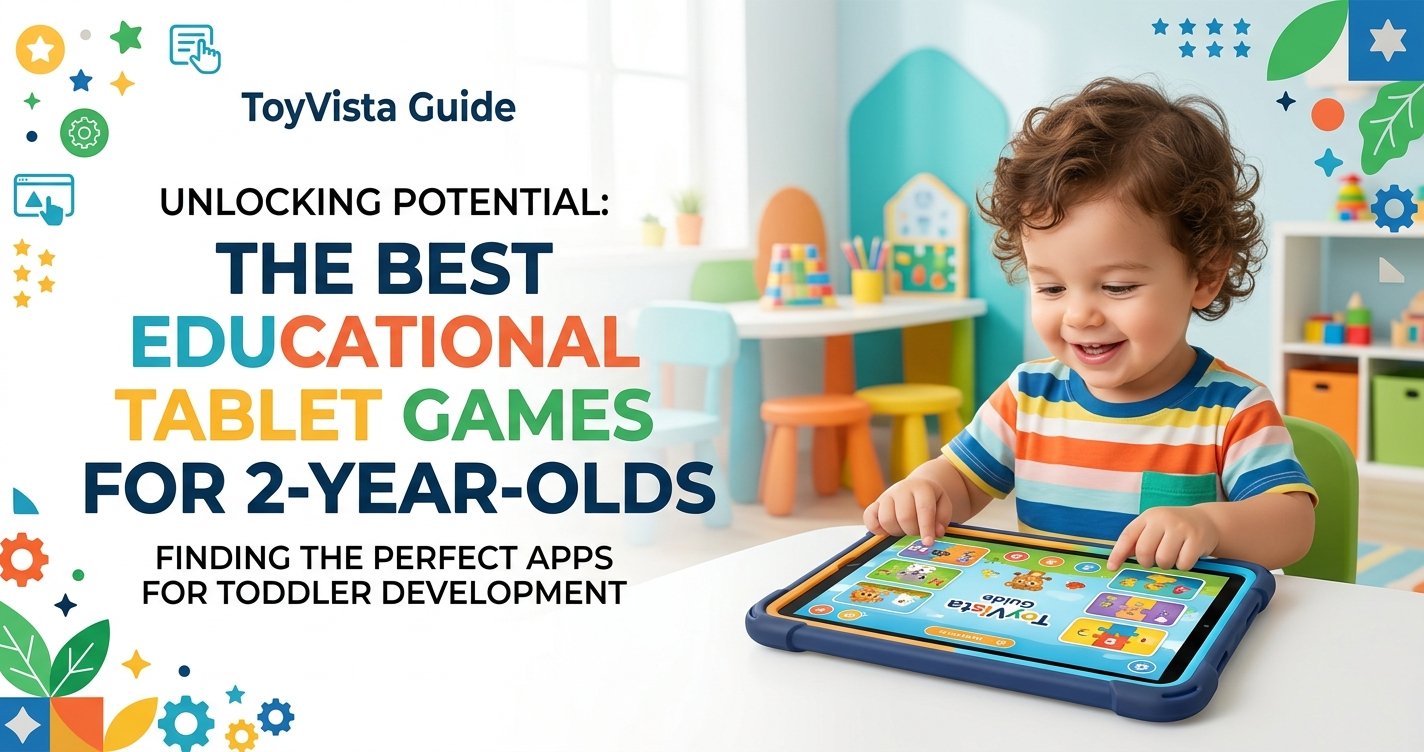
Unlocking Potential: The Best Educational Tablet Games for 2-Year-Olds (ToyVista Guide)
Welcome to ToyVista, your trusted partner in navigating the exciting world of educational toys and tools for young learners. In today's digital age, it's virtually impossible to shield our children completely from screens. For parents of two-year-olds, the thought of introducing tablets can bring a mix of excitement and apprehension. How do we ensure screen time is beneficial, not just a distraction? The answer lies in choosing the right content: educational tablet games for 2-year-olds.
Far from merely being digital babysitters, carefully selected tablet games can be powerful instruments for fostering early development. They can introduce foundational concepts, refine motor skills, and even spark creativity in a format that captivates a toddler's attention. At ToyVista, we believe in empowering parents with the knowledge to make informed choices, transforming screen time into a valuable learning experience.
This comprehensive guide will delve into why educational tablet games are worth considering, what to look for, popular categories, and crucial best practices for responsible screen time. Let's explore how to harness the power of technology to support your two-year-old's growth and curiosity.
Why Educational Tablet Games for 2-Year-Olds?
Many parents wonder if digital games are truly beneficial for such young children. When chosen wisely and used appropriately, educational tablet games offer several key advantages for two-year-olds:
Cognitive Development
Toddlers are natural explorers, and educational games can tap into this innate curiosity. Simple puzzle games, matching activities, and cause-and-effect scenarios encourage problem-solving skills. They learn to identify patterns, understand sequences, and make decisions, all crucial for cognitive growth. Games that require them to 'find the odd one out' or 'match the shapes' stimulate their developing brains in engaging ways, laying groundwork for more complex thinking later on.
Fine Motor Skills and Hand-Eye Coordination
Two-year-olds are refining their control over small muscles. Swiping, tapping, dragging, and dropping elements on a tablet screen are excellent exercises for developing fine motor skills and improving hand-eye coordination. These actions mimic skills needed for drawing, writing, and manipulating physical objects, helping them gain precision and control over their movements.
Language Acquisition and Early Literacy
Many educational games incorporate sounds, words, and simple narratives. Apps that identify objects, animals, or letters by name, or that feature interactive storybooks, can significantly boost a two-year-old's vocabulary. Hearing new words pronounced correctly and seeing them associated with images helps with language acquisition and can even plant the seeds for early literacy skills, making learning letters and sounds a fun, interactive experience rather than a chore.
Social-Emotional Learning (SEL)
While screen time is often seen as solitary, certain games can foster aspects of social-emotional learning. Games that involve identifying emotions through facial expressions, or simple role-playing scenarios, can help toddlers understand and express feelings. When parents co-play, they can use the game as a springboard for discussions about sharing, turn-taking, and empathy, even if the game itself doesn't directly involve multiple players.
Introduction to Technology in a Controlled Environment
We live in an increasingly digital world. Introducing technology in a controlled, educational setting at an early age can help children develop a healthy relationship with it. They learn that technology isn't just for entertainment but can be a tool for learning and exploration, fostering digital literacy from a young age in a safe and guided manner.
What to Look for in Educational Tablet Games for 2-Year-Olds
Not all apps are created equal. To ensure your two-year-old benefits most, focus on these key characteristics:
Age Appropriateness is Paramount
For a two-year-old, 'age-appropriate' means simple, intuitive interfaces with large, easy-to-tap buttons. The content should be straightforward, without complex menus or multi-step instructions that can lead to frustration. Look for games designed specifically for toddlers, often labeled 2+ or 3+ years.
Engaging and Interactive Design
Toddlers thrive on immediate feedback and sensory stimulation. Games with bright, appealing colors, clear audio cues, and animations that respond directly to their actions will hold their attention and reinforce learning. The interactivity should be meaningful, not just flashy.
Clear Learning Objectives
The best educational games have specific learning goals. Are they teaching colors, shapes, animal sounds, basic counting, or letter recognition? Look for apps that clearly state their educational focus and deliver on it through engaging activities. Avoid apps that are merely distracting or offer little to no educational value.
No In-App Purchases or Ads
This is non-negotiable for toddler apps. In-app purchases can be accidentally triggered, leading to unwanted charges, and ads are disruptive, often inappropriate, and can redirect your child to other content. Always opt for premium, ad-free versions or apps designed for children that explicitly state they have no in-app purchases.
Parental Controls and Time Limits
Even with the best content, managing screen time is crucial. Choose tablets or apps that allow you to set time limits and monitor usage. This ensures that digital learning complements, rather than replaces, other vital developmental activities.
Repetition with Variation
Toddlers learn through repetition, but too much of the same thing can lead to boredom. Look for games that offer variations on a theme – for example, a shape-matching game that introduces new shapes or different backgrounds. This keeps the child engaged while reinforcing the core learning concept.
Top Educational Tablet Game Categories for Toddlers
When searching for apps, here are some categories that consistently offer great educational value for two-year-olds:
Shape and Color Recognition Games
These are foundational. Games that ask toddlers to match shapes to outlines, sort objects by color, or identify specific colors are excellent for developing visual discrimination and categorization skills. They are typically simple, highly interactive, and provide clear feedback.
Letter and Number Introduction Games
While a two-year-old isn't ready for reading or complex math, games that introduce the alphabet and numbers 1-10 can be highly beneficial. Look for apps that show letters and numbers, pronounce them, and offer simple tracing or matching activities. The goal here is exposure and familiarity, not mastery.
Animal Sounds and Identification Games
Toddlers are fascinated by animals. Games that feature realistic animal sounds, show pictures of animals, and teach their names are incredibly engaging and help expand vocabulary and auditory discrimination. Many also teach about different habitats, adding another layer of learning.
Interactive Storybooks
Digital storybooks can bring narratives to life with animations, sound effects, and interactive elements. These can foster a love for reading, introduce new vocabulary, and develop comprehension skills. Choose stories with clear narration and simple plots that your two-year-old can follow.
Problem-Solving Puzzles
Simple drag-and-drop puzzles, where a child fits a piece into an outline, are fantastic for developing spatial reasoning, fine motor skills, and problem-solving abilities. Look for puzzles with large, distinct pieces and clear objectives, gradually increasing in complexity as your child grows.
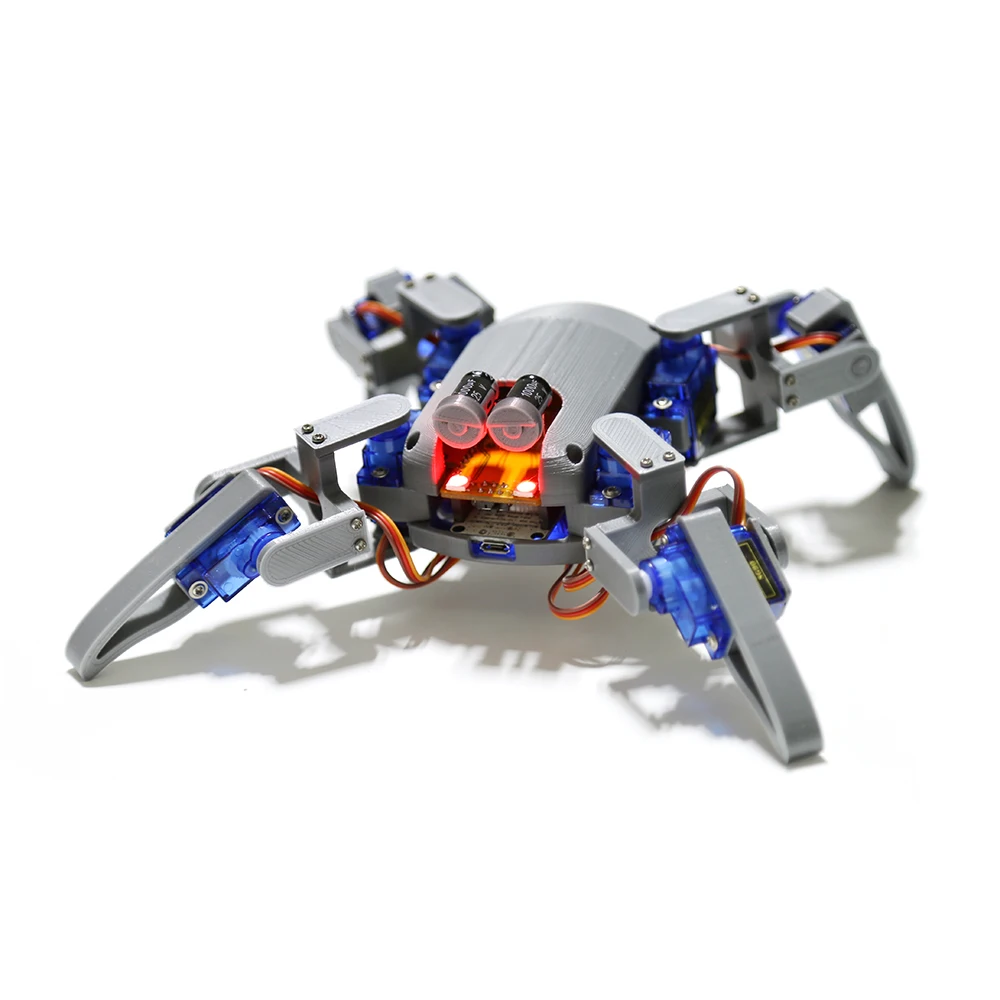
Just as digital games engage young minds with interactive learning, tangible toys also play a pivotal role in a child's holistic development. Balancing screen time with hands-on, physical play is essential for fostering a wide range of skills that digital platforms alone cannot fully address. For instance, fostering creativity, engineering thinking, and advanced problem-solving from a young age can be wonderfully achieved through kits like this top-rated robotic building kit. Such a kit encourages hands-on exploration, critical thinking, and fine motor dexterity in a different, yet equally valuable, way, offering a perfect complement to screen-based educational activities. At ToyVista, we advocate for a rich play environment that integrates both digital and physical learning tools to nurture well-rounded development.
Best Practices for Screen Time with 2-Year-Olds
Even the best educational games require thoughtful implementation. Here’s how to maximize their benefits and minimize potential drawbacks:
Keep it Short and Sweet
For two-year-olds, the American Academy of Pediatrics recommends very limited screen time, ideally less than an hour a day, and preferably with a parent. Keep individual sessions to 15-20 minutes maximum. Toddlers have short attention spans, and longer sessions can lead to overstimulation or disengagement.
Co-Play is Key
The most beneficial screen time is shared screen time. Sit with your child, talk about what they're seeing, ask questions, and help them navigate the game. 'What color is that?' 'Can you find the dog?' 'What sound does the cow make?' This interaction turns a solitary activity into a rich learning and bonding experience, reinforcing the educational content.
Set Clear Boundaries and Be Consistent
Establish clear rules about when and for how long tablets can be used. Consistency helps your child understand and accept these boundaries. For example, 'tablet time after breakfast for 15 minutes' or 'no tablet before bed.'
Prioritize Offline Play and Interaction
Remember that screen time is supplementary, not a replacement for traditional play, reading physical books, outdoor exploration, and social interaction. These experiences are fundamental for holistic development. Ensure a rich balance of activities throughout the day.
Choose Quality Over Quantity
It's better to have a few truly educational, high-quality apps than dozens of mediocre ones. Regularly review the apps on your child's tablet, deleting those that are no longer engaging or educational.
Create a "Digital Diet"
Think of screen time as part of a balanced 'digital diet.' Just as you ensure a variety of foods, ensure a variety of learning experiences. This includes physical play, creative arts, reading, and social interactions, with digital games being one small, nutritious component.
Common Pitfalls to Avoid
Even with good intentions, parents can sometimes fall into traps:
Using Tablets as a Babysitter
While tempting when you need a moment, consistently using a tablet to keep a child quiet or occupied without interaction can negate the educational benefits and lead to passive consumption rather than active learning.
Overlooking Content Quality
Just because an app is labeled 'educational' doesn't mean it truly is. Many apps are merely distracting. Always test apps yourself before giving them to your child, looking for genuine learning objectives and engagement.
Ignoring Your Child's Engagement Cues
If your two-year-old is constantly swiping away from the game, seems bored, or frustrated, it's a sign that the game isn't right for them at that moment. Don't force it; switch to a different activity.
Exposure to Inappropriate Content or Ads
Always double-check that apps are truly ad-free and do not contain links to external, inappropriate content. A toddler's accidental tap can lead them anywhere online, so vigilance is key.
Conclusion
The world of educational tablet games for 2-year-olds offers exciting opportunities for early learning and development. When chosen carefully and used thoughtfully, these digital tools can be invaluable assets in your child's developmental journey, fostering cognitive growth, fine motor skills, and language acquisition. At ToyVista, we champion a balanced approach, advocating for quality content, responsible screen time practices, and the integration of both digital and physical play experiences.
Remember, you are the most important guide in your child's learning adventure. By staying informed, setting boundaries, and actively participating in their screen time, you can ensure that technology serves as a positive force in their early years. Explore ToyVista's curated selection of educational toys and resources to further enrich your child's play and learning environment. Happy learning!