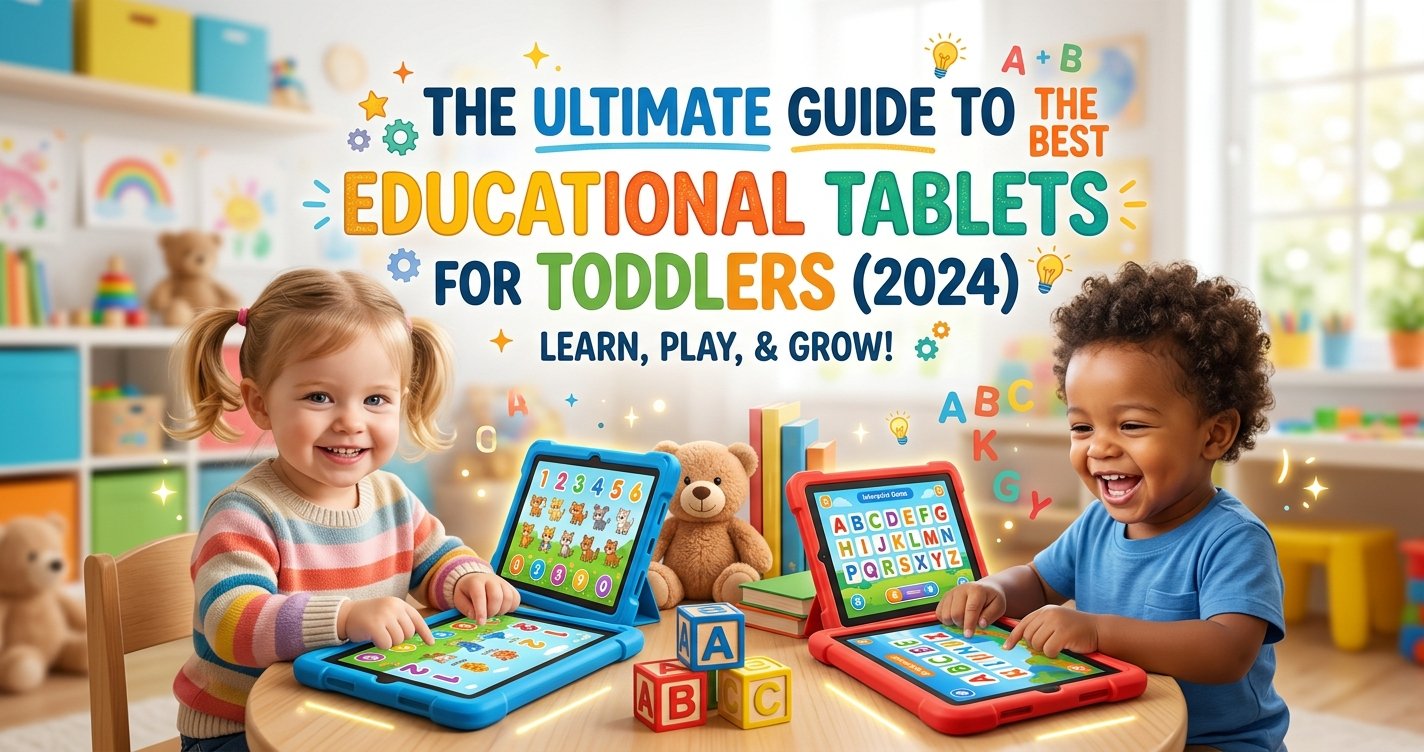
The Ultimate Guide to the Best Educational Tablets for Toddlers (2024)
In today's rapidly evolving digital landscape, the question for parents isn't *if* their toddler will encounter screens, but *how* and *what kind* of screens they'll interact with. As ToyVista, a leading expert in educational toys, we understand the delicate balance between embracing technology and ensuring healthy, enriching development for our youngest learners. Educational tablets, when chosen wisely and used thoughtfully, can be powerful tools to ignite curiosity, foster early learning, and prepare toddlers for a future deeply intertwined with technology.
However, the sheer volume of options can be overwhelming. How do you distinguish between a genuine educational aid and a mere distraction? What features truly matter for a two-year-old, and how can parents ensure screen time is productive and safe? This comprehensive guide will navigate you through the world of best educational tablets for toddlers, equipping you with the knowledge to make an informed decision that supports your child's growth and development.
Why Consider an Educational Tablet for Your Toddler?
The idea of a toddler using a tablet might raise eyebrows for some, but the benefits, when managed correctly, are undeniable. Educational tablets are designed to be interactive learning platforms, moving beyond passive viewing to active engagement.
- Early Literacy & Numeracy: Many apps introduce letters, numbers, shapes, and colors through engaging games and stories, laying foundational skills for school readiness.
- Problem-Solving & Critical Thinking: Puzzles, matching games, and simple coding apps encourage toddlers to think logically and develop problem-solving strategies.
- Creativity & Imagination: Drawing apps, music creation tools, and interactive storytelling platforms provide outlets for artistic expression and imaginative play.
- Fine Motor Skills: Tapping, swiping, and dragging on a screen can help refine hand-eye coordination and fine motor skills.
- Exposure to Technology: In an increasingly digital world, early, guided exposure helps children become comfortable and competent with technology in a constructive way.
It's crucial to remember that an educational tablet is a tool, not a babysitter. Its effectiveness hinges on parental involvement, content quality, and balanced usage.
Navigating the Digital Playground: Essential Features to Look For
When searching for the best educational tablet for your toddler, not all devices are created equal. Focus on these key features to ensure you're investing in a product that is safe, durable, and genuinely beneficial.
Durability & Toddler-Proof Design
Toddlers are notoriously clumsy. Drops, spills, and rough handling are inevitable. Look for tablets with:
- Robust Cases: Many toddler tablets come with thick, protective silicone or foam bumpers.
- Shatterproof Screens: While no screen is truly indestructible, some are designed to withstand more impact than others.
- Spill Resistance: A degree of water resistance can be a lifesaver against accidental juice spills.
Robust Parental Controls
This is arguably the most critical feature. Effective parental controls allow you to:
- Set Time Limits: Control exactly how long your child can use the tablet each day.
- Filter Content: Restrict access to age-inappropriate websites or apps.
- Manage Apps: Approve or block specific apps and prevent accidental purchases.
- Create Child Profiles: Customize settings and content for each child if you have multiple users.
Age-Appropriate & Engaging Content
The best hardware is useless without quality software. Prioritize tablets that offer:
- Curated App Stores: Access to a library of apps specifically vetted for educational value and age appropriateness.
- Pre-loaded Educational Apps: Many come with a suite of learning games and activities straight out of the box.
- Subscription Services: Some tablets offer access to extensive libraries of educational videos, e-books, and games for a monthly fee.
Screen Quality & Eye Safety
While toddlers don't need 4K resolution, a clear, bright screen is important. Also consider:
- Blue Light Filters: To reduce eye strain, especially during evening use.
- Anti-Glare Screens: For comfortable viewing in various lighting conditions.
Battery Life & Portability
A tablet that dies quickly or is too heavy isn't practical. Look for:
- Long Battery Life: At least 6-8 hours on a single charge is ideal for sustained play and travel.
- Lightweight Design: Easy for small hands to hold and carry.
Price & Value
Educational tablets range widely in price. Consider your budget and the tablet's longevity. A more expensive tablet might offer greater durability or a wider range of content, potentially saving you money in the long run.
Top Picks: Our Recommendations for Educational Excellence
While there are many excellent educational tablets on the market, the best educational tablets for toddlers often strike a balance between robust parental controls, durable design, and a rich library of learning content. Dedicated learning tablets, for instance, often come pre-loaded with age-appropriate content and feature simplified interfaces, making them ideal for younger toddlers. These devices often prioritize a walled-garden approach, ensuring that all available content is vetted for safety and educational value.
On the other hand, some parents opt for more versatile Android-based tablets that offer greater flexibility and a wider range of apps, provided they come with exceptionally strong parental control features. These can grow with your child, offering more advanced functionalities as they age, but require more active management from parents to ensure safe content consumption.
Beyond tablets, consider how other educational toys complement digital learning. Fostering early STEM skills and problem-solving is crucial for comprehensive development. That's why we often recommend toys that engage children physically and mentally, building foundational skills that even the best tablet apps can't fully replicate. A fantastic example of a toy that bridges this gap and encourages hands-on learning, creativity, and early engineering concepts is this top-rated robotic building kit. It allows toddlers to construct and experiment, developing fine motor skills and an understanding of cause and effect in a tangible way, offering a perfect counterpoint to screen-based activities.
Mastering Parental Controls: Safeguarding Your Child's Digital Journey
Even the best educational tablet for toddlers is only as good as its parental controls. Understanding and utilizing these features is paramount for a safe and beneficial experience.
- Setting Daily Time Limits: Most tablets allow you to specify how many minutes or hours your child can use the device per day, or even specific times of day it can be accessed. Consistency is key here.
- Content Filtering: Ensure you can block access to the internet browser, specific apps, or filter content based on age ratings.
- App Management: Review and approve every app your child downloads. Prevent in-app purchases to avoid unexpected bills.
- Creating a Safe Browser Environment: If the tablet has a browser, ensure it's restricted to a whitelist of approved, child-friendly websites or completely disabled.
- Usage Monitoring: Some tablets offer reports on which apps your child uses and for how long, providing valuable insights into their interests and learning patterns.
Regularly review and adjust these settings as your child grows and their needs change. Open communication with your child about screen time rules, even at a young age, can also foster a healthier relationship with technology.
The Power of Content: Choosing the Right Apps and Learning Platforms
The true educational value of a tablet lies in its content. When selecting apps and learning platforms, prioritize quality over quantity.
- Focus on Educational Categories: Look for apps that teach phonics, numbers, shapes, colors, basic science concepts, or introduce early coding skills through playful interaction.
- Interactive & Engaging: The best apps aren't just passive videos; they require interaction, problem-solving, and offer positive reinforcement.
- Story-Driven Learning: Apps that integrate learning into compelling narratives can capture a toddler's imagination and make lessons more memorable.
- Subscription Services vs. One-Time Purchases: Evaluate if a subscription service (like ABCmouse, PBS Kids+, or similar) offers enough value for your child's age, or if a collection of carefully selected one-time purchase apps is more suitable.
- Free vs. Paid Apps: While many free apps exist, often paid apps offer a more ad-free, higher-quality, and more focused learning experience. Read reviews and look for endorsements from educational organizations.
Remember to preview apps yourself before handing them over to your toddler. What might seem educational on the surface could be merely distracting or even inappropriate.
Balancing Screen Time with Real-World Exploration
Even with the best educational tablet for toddlers and meticulously curated content, balance is crucial. The American Academy of Pediatrics (AAP) recommends limiting screen time for children aged 2-5 to 1 hour per day of high-quality programming, co-viewed with a parent or caregiver.
Here’s how to ensure a healthy balance:
- Set Clear Boundaries: Establish consistent rules about when and where the tablet can be used. For example, no tablets during meals or before bedtime.
- Encourage Co-Viewing: Sit with your toddler, interact with the content, ask questions, and make it a shared learning experience. This enhances the educational value significantly.
- Prioritize Other Activities: Ensure your child has ample time for unstructured play, outdoor activities, reading physical books, social interaction with peers, and imaginative play. These are vital for holistic development that screens cannot replicate.
- Lead by Example: Be mindful of your own screen time habits. Children learn by observing.
Beyond the Screen: Holistic Toddler Development
While an educational tablet can be a valuable addition to your toddler's learning toolkit, it's just one piece of a much larger puzzle. Holistic development encompasses cognitive, emotional, social, and physical growth. Tablets can support cognitive development, but they cannot replace the richness of real-world experiences.
Activities such as building blocks, sensory play, drawing with crayons, running in a park, engaging in pretend play, and interacting with family members and other children are indispensable. These experiences build crucial social-emotional skills, foster creativity, develop gross motor skills, and deepen understanding of the world in tangible ways.
Consider the tablet as a supplementary tool – one that can enhance specific learning areas when used intentionally and in moderation. It should complement, not dominate, your toddler's daily activities.
Conclusion: Making the Smart Choice for Your Little Learner
Choosing the best educational tablet for toddlers is an investment in your child's early learning journey. By prioritizing durability, robust parental controls, and high-quality, age-appropriate content, you can transform a potential distraction into a powerful educational ally. Remember that the tablet is merely a tool; its true value is unlocked through thoughtful usage, active parental involvement, and a healthy balance with a wide array of real-world experiences.
At ToyVista, we believe in empowering parents with the knowledge and resources to make the best decisions for their children's development. With the right educational tablet and a balanced approach, you can confidently introduce your toddler to the digital world in a way that is both safe and incredibly enriching. Explore our full range of educational toys and resources to find more ways to inspire curiosity and foster a lifelong love of learning!