
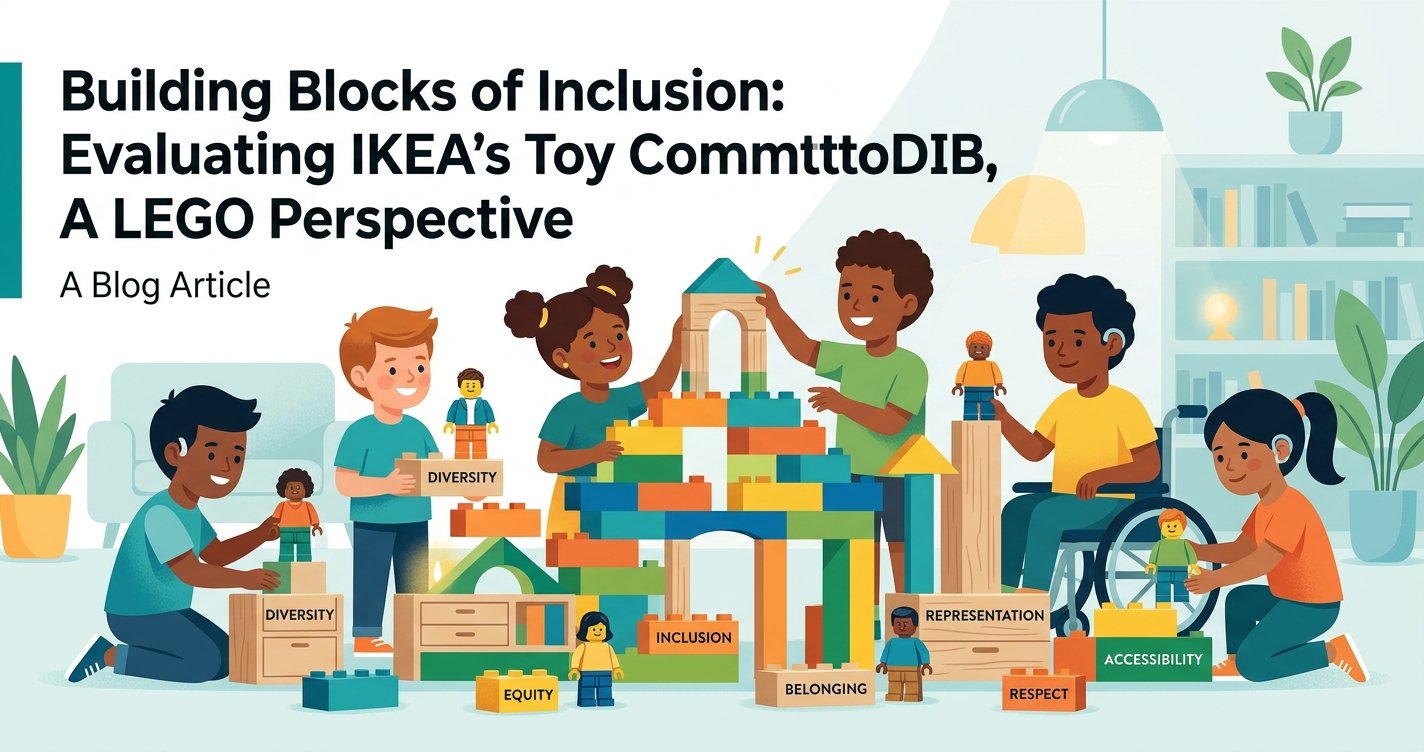
Building Blocks of Inclusion: Evaluating IKEA's Toy Commitment to DEIB, A LEGO Perspective
At ToyVista, we believe that toys are more than just objects of play; they are powerful tools for learning, development, and shaping a child's understanding of the world. In today's interconnected society, the principles of Diversity, Equity, Inclusion, and Belonging (DEIB) have become paramount, extending their influence into every aspect of our lives, including the toys our children engage with. As a leading expert in educational toys, we frequently evaluate how companies integrate these crucial values into their product lines.
IKEA, a global titan in home furnishings, has also carved out a unique niche in the toy market. Known for its affordable, functional, and often minimalist designs, IKEA's approach to children's products warrants a close examination through a DEIB lens. Especially interesting is their collaboration with LEGO, the ultimate benchmark in creative construction, through the BYGGLEK series. This article will delve deep into IKEA's toy strategy, assessing its commitment to DEIB, drawing comparisons with LEGO's own journey, and offering insights into the future of inclusive play.
IKEA's Philosophy of Play: Affordability, Accessibility, and Design
More Than Just Furniture: IKEA's Toy Vision
IKEA's foray into children's toys is deeply rooted in its overarching brand philosophy: to create a better everyday life for the many people. This translates into a toy range that emphasizes affordability, durability, and open-ended play. Their toys often feature simple designs, natural materials (where possible), and a focus on encouraging imagination rather than prescribing specific play outcomes. From the classic MULA wooden building blocks to the soft animal plushies and the LILLABO train sets, IKEA's toys are designed to be accessible to a wide demographic, fitting seamlessly into various home environments.
Inherently, IKEA's commitment to affordability and widespread availability supports the 'Equity' aspect of DEIB. By making well-designed, stimulating toys accessible to families across different economic spectrums, they help bridge potential play gaps. Their emphasis on open-ended play also fosters 'Inclusion', as it allows children of diverse backgrounds and developmental stages to engage with the toys in ways that are meaningful to them, without rigid instructions or cultural specificities.
The BYGGLEK Collaboration: A Bridge Between Worlds
The IKEA x LEGO BYGGLEK collection is a fascinating example of two industry giants merging their philosophies. Launched in 2020, BYGGLEK is not just a toy; it's a series of storage boxes integrated with LEGO studs, designed to encourage play while simultaneously tackling the perennial challenge of toy clutter. The concept is ingenious: children can build on, in, and around the boxes, turning storage into an extension of their creative play space.
This collaboration specifically speaks to 'Inclusion' by integrating play into everyday life, making it less of a separate activity and more of an ambient presence. It encourages creativity without imposing gender or cultural stereotypes, as the LEGO bricks themselves are universally appealing and the storage boxes are minimalist. However, being primarily a storage solution, its direct impact on 'Diversity' in terms of character representation is limited, relying instead on the child's own imaginative input.
Deconstructing DEIB: How IKEA's Toys Measure Up
Diversity in Design: Representation Matters
When evaluating IKEA's toys for diversity, we look at how well they represent the rich tapestry of human experience. IKEA's soft toys, for instance, feature a range of animals and imaginative creatures, which are inherently diverse in their own right. However, when it comes to human representation, IKEA's offerings are generally more abstract or generic. While this can sometimes be a strength, allowing children to project their own identities onto the toys, it also means there are fewer explicit examples of diverse skin tones, abilities, or cultural attire in their character-based toys compared to some other brands.
The BYGGLEK collection, being a system of boxes and generic LEGO bricks, is neutral in its representation. Its diversity comes from the infinite possibilities it offers, allowing children to create their own diverse worlds. In contrast, LEGO, with its vast array of minifigures and themed sets, has made more explicit strides in recent years to introduce diverse characters, including those with different skin tones, disabilities, and varied professions, directly addressing the need for visible representation.
Equity in Access: Bridging the Play Gap
Equity in the toy industry refers to ensuring fair access and opportunities for all children to engage in meaningful play. IKEA excels in this area primarily through its pricing strategy. By offering well-designed and durable toys at accessible price points, IKEA makes quality play experiences available to a broader segment of the population. This commitment to affordability is a cornerstone of their brand and a significant contributor to equity, as it reduces financial barriers to enriching play.
Furthermore, IKEA's global presence ensures that their toys are available in numerous countries, potentially reaching communities that might have limited access to other brands. While not all items are available everywhere, the general accessibility of the brand contributes positively to equity. However, true equity also involves designing toys that cater to specific needs, which is an area where IKEA, like many mainstream brands, could further innovate.
Inclusion in Play: Welcoming Every Child
Inclusion in toy design means creating products that are welcoming and usable by children of all abilities, genders, and cultural backgrounds. IKEA's design philosophy of simplicity and open-endedness naturally lends itself to inclusive play. Many of their toys, such as building blocks, art supplies, and role-play items, do not impose gender stereotypes and can be enjoyed by all children regardless of their gender identity. The abstract nature of many IKEA toys means they can be incorporated into various imaginative scenarios, allowing children to bring their own cultural contexts to their play.
For example, the BYGGLEK boxes, being simple containers with LEGO studs, offer a truly inclusive platform. They don't dictate what should be built or who should build it, fostering an environment where all children can participate. While IKEA doesn't explicitly market many specialized toys for children with disabilities, the robust and straightforward design of many of their products can inadvertently serve a wider range of abilities by being easy to grasp, manipulate, and understand.
Fostering Belonging: Creating Connections Through Play
Belonging is the feeling of being accepted and valued for who you are. Toys can foster belonging by allowing children to see themselves reflected in their play, or by facilitating shared experiences that build community. IKEA's emphasis on family-centric living extends to its toys, which often encourage collaborative play between children and adults. Products like play kitchens, dollhouses, and art easels are designed for shared activity, fostering a sense of connection and belonging within the family unit.
While IKEA's toys might not always offer explicit representation that directly instills a sense of belonging for every specific identity group, their universal appeal and focus on imaginative, collaborative play create a welcoming atmosphere. The BYGGLEK system, by integrating play into the home environment and encouraging co-creation, helps create shared spaces and activities where children and families can feel connected and a part of something larger.
The LEGO Standard: A Benchmark for DEIB in Toys?
LEGO's Journey Towards Inclusivity
LEGO, as a global leader in construction toys, has been on its own significant journey regarding DEIB. Historically, LEGO faced criticism for gender stereotyping and lack of diversity in its minifigures. However, in recent years, the company has made concerted efforts to diversify its product lines. They now offer minifigures with a wider range of skin tones, disabilities (e.g., minifigures in wheelchairs, with hearing aids), and professions, moving away from traditional gender roles. Themes like LEGO Friends have evolved to be more inclusive, and the company has launched initiatives to encourage girls in STEM.
LEGO's explicit focus on representation and its detailed character design give it a distinct advantage in directly addressing diversity and belonging. Their ability to tell stories through their sets also allows for the exploration of various cultures and narratives, enriching children's understanding of the world.
Where IKEA and LEGO Converge and Diverge on DEIB
The BYGGLEK collaboration beautifully illustrates both the convergence and divergence of IKEA and LEGO's DEIB approaches. They converge on the principle of open-ended, creative play that transcends gender boundaries. Both brands believe in empowering children to build their own worlds. Where they diverge is in their primary method of achieving DEIB goals. IKEA's strength lies in its systemic approach to equity through affordability and broad accessibility, making play opportunities available to the many.
LEGO, on the other hand, excels in explicit representation and detailed storytelling, directly addressing diversity and belonging through its vast array of characters and themed sets. While IKEA provides the minimalist, inclusive canvas, LEGO provides the diverse palette of characters and narratives to populate that canvas. The BYGGLEK boxes serve as a testament to how these two approaches can complement each other, offering an accessible platform for diverse creative expression.
The Crucial Role of DEIB in Educational Toys: A ToyVista Perspective
Beyond Fun: Why Inclusive Toys Are Essential for Development
From an educational standpoint, the integration of DEIB principles into toys is not merely a matter of political correctness; it is fundamental to holistic child development. Inclusive toys help children develop empathy, understand different perspectives, and foster a sense of self-worth. When children see themselves and others represented in their play, it validates their experiences and broadens their worldview. This exposure is crucial for developing critical thinking, social-emotional intelligence, and a positive identity.
Toys that promote diversity and inclusion prepare children for a diverse world, teaching them respect and understanding. They challenge stereotypes, encourage imaginative problem-solving, and build confidence. For parents and educators seeking to further enrich a child's understanding of diverse concepts through interactive play, consider exploring advanced options like this top-rated robotic building kit. Such innovative tools not only encourage STEM skills but also provide platforms for creative expression, allowing children to build and program diverse scenarios, fostering a deeper appreciation for inclusivity in design and function.
IKEA's Path Forward: Opportunities for Enhanced DEIB
While IKEA has a strong foundation in equity through affordability and inclusive play through open-ended design, there are clear opportunities for growth in explicit diversity and belonging. IKEA could consider introducing more diverse human characters in their soft toy lines, reflecting a wider range of skin tones, hair textures, and cultural attire. Expanding themes to include global cultures and varied family structures could also enhance belonging.
Furthermore, IKEA could leverage its design expertise to create more toys specifically designed for children with diverse abilities, moving beyond incidental accessibility to intentional inclusive design. By partnering with experts in child development and DEIB, IKEA has the potential to become an even stronger advocate for truly inclusive play experiences on a global scale.
Conclusion: IKEA's Playful Progress and the Future of Inclusive Toys
Evaluating IKEA's toys through the lens of DEIB reveals a company that, while not always explicit in its representation, inherently supports equity and inclusion through its core values of affordability and open-ended design. The BYGGLEK collaboration with LEGO exemplifies a thoughtful approach to integrating play into daily life, offering a versatile canvas for children's diverse imaginations. While LEGO has made more direct strides in character diversity, IKEA's strength lies in its foundational commitment to making quality play accessible to the many.
As the toy industry continues to evolve, the demand for DEIB-conscious products will only grow. IKEA is well-positioned to further enhance its contributions to this vital movement. By building on its strengths and consciously expanding its efforts in explicit representation and specialized inclusive design, IKEA can continue to empower children worldwide to play, learn, and grow in a world that truly celebrates diversity, champions equity, fosters inclusion, and cultivates a deep sense of belonging for all.


