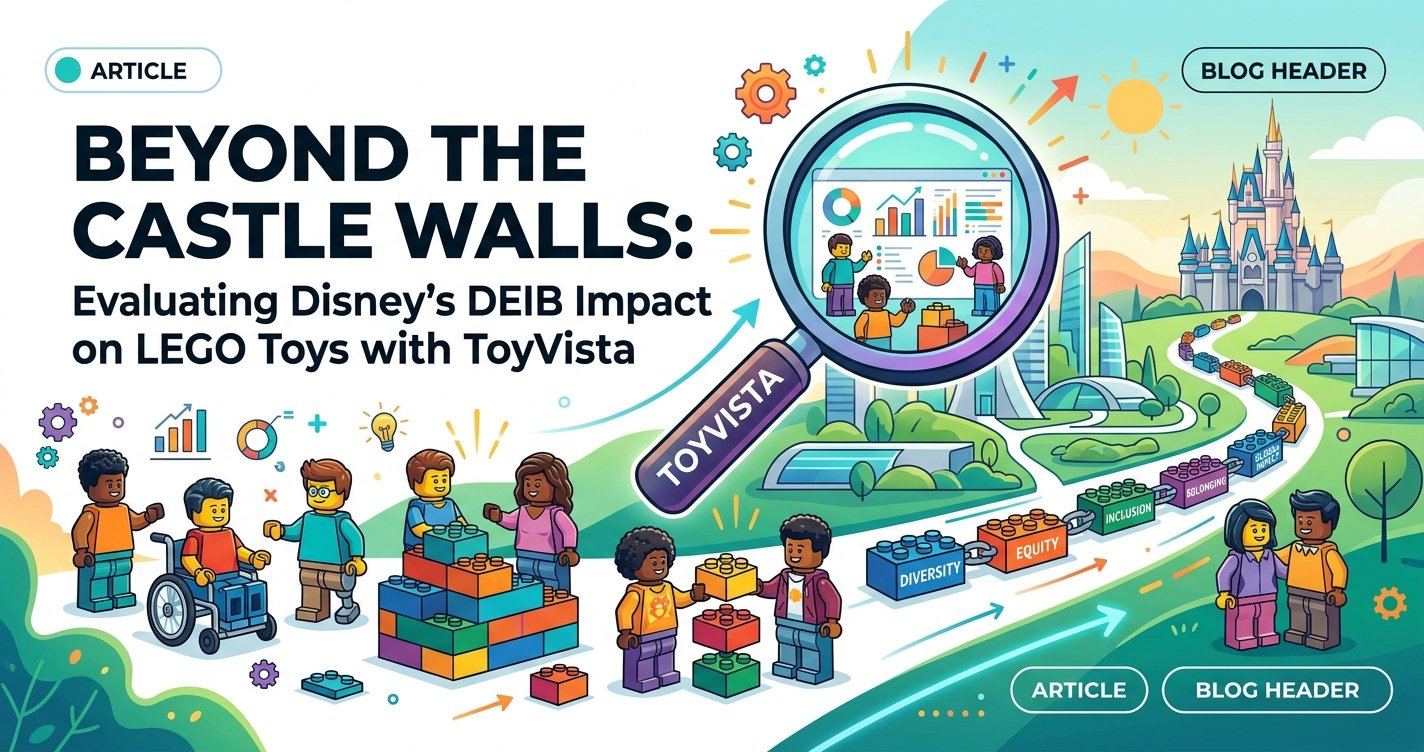
Beyond the Castle Walls: Evaluating Disney's DEIB Impact on LEGO Toys with ToyVista
At ToyVista, a leading expert in educational toys, we understand that playtime is much more than just fun and games. It's a foundational experience that shapes a child's understanding of the world, their place within it, and their capacity for empathy and connection. In an increasingly diverse global society, the principles of Diversity, Equity, Inclusion, and Belonging (DEIB) have become paramount, not just in schools and workplaces, but critically, in the toys we provide our children. Today, we embark on a crucial evaluation: assessing the toy company Disney, particularly its extensive collaboration with LEGO, through the lens of DEIB.
Disney, a titan in children's entertainment, has an unparalleled reach into homes worldwide. Its stories, characters, and merchandise – especially its LEGO lines – profoundly influence young minds. As responsible purveyors of educational play, ToyVista believes it's essential to scrutinize how these influential brands uphold and promote DEIB. Are Disney and LEGO truly reflecting the rich tapestry of humanity in their offerings? Do their toys foster a sense of belonging for every child? Let's delve deep into the colorful, brick-built world of Disney and LEGO to find out.
The Evolving Landscape of DEIB in Children's Toys
The conversation around Diversity, Equity, Inclusion, and Belonging in children's toys has gained significant momentum in recent years, and for good reason. Toys are powerful tools for learning and socialization. They introduce children to different roles, narratives, and identities. When toys lack diversity, they inadvertently send messages about who is valued, who belongs, and whose stories matter. Conversely, toys that embrace DEIB principles can be incredibly beneficial, fostering a more inclusive and empathetic generation.
Diversity in toys means representing a wide range of human characteristics: different skin tones, hair textures, body types, abilities, cultural backgrounds, family structures, and gender expressions. It’s about seeing oneself reflected in the world of play.
Equity goes a step further, ensuring that all children, regardless of their background or identity, have fair access to play experiences and are portrayed in a way that challenges stereotypes and promotes equal opportunities. This includes fair pricing, availability, and representation across product lines.
Inclusion is about creating environments and experiences where every child feels welcomed and valued. Inclusive toys encourage varied play patterns and narratives, allowing children to step into any role they choose, free from prescriptive gender or cultural norms.
Finally, Belonging is the ultimate goal: the feeling that one is an accepted and integral part of a group or community. When children see themselves and their experiences validated in their toys, it cultivates a deep sense of self-worth and connection. For ToyVista, these principles are not just buzzwords; they are the bedrock upon which truly educational and developmentally beneficial toys are built.
Disney's Legacy and Influence in the Toy Market
For nearly a century, Disney has captivated audiences with its enchanting stories and memorable characters. From classic animations to sprawling cinematic universes, Disney's narratives have become deeply woven into the fabric of childhood globally. This cultural omnipresence extends directly into the toy market, where Disney-branded merchandise consistently ranks among the top sellers. The sheer volume and variety of Disney toys, from action figures to plush dolls, dress-up costumes, and especially its extensive range of LEGO sets, make it a pivotal player in shaping children's play experiences.
The partnership between Disney and LEGO is particularly significant. LEGO, celebrated for its open-ended creative play and commitment to quality, provides a unique platform for Disney's intellectual properties. LEGO Disney sets allow children to build, rebuild, and interact with their favorite characters and fantastical worlds in a tangible, imaginative way. This collaboration amplifies the reach and impact of both brands, making their joint DEIB efforts (or lack thereof) all the more important to evaluate. As ToyVista often emphasizes, construction toys like LEGO are inherently educational, developing spatial reasoning, problem-solving skills, and creativity. When combined with rich narratives like Disney's, their potential for positive influence – including DEIB – is immense.
Disney's Contributions to Diversity: A Closer Look
Disney has made notable strides in diversifying its character roster, particularly in recent decades. Characters like Princess Tiana from The Princess and the Frog, Moana, Raya from Raya and the Last Dragon, and the entire cast of Encanto represent significant steps towards broader ethnic and cultural representation. Furthermore, characters like Black Panther have introduced powerful narratives of Black excellence and leadership into mainstream children's media. These diverse characters are frequently translated into LEGO sets, allowing children to engage with them through building and imaginative play.
However, while these efforts are commendable, the question remains: how deep does this diversity run? Are these characters merely token representations, or do they genuinely reflect a commitment to a wide array of human experiences? For instance, while ethnic diversity has improved, representation of different body types, disabilities, or neurodiversity is still relatively sparse across Disney's main character lineup and, consequently, in LEGO adaptations. While LEGO has introduced minifigures with disabilities in its City line, their integration into licensed Disney sets is less common. Furthermore, while there are more female protagonists, there's still room to diversify the types of roles and personalities offered to girls, moving beyond traditional princess archetypes, even when those princesses are strong and independent.
Examining Equity in Disney-LEGO Offerings
Equity in the toy market touches upon several dimensions, including accessibility, fair representation, and the promotion of equitable roles. From an accessibility standpoint, LEGO Disney sets, like many licensed products, can sometimes be on the higher end of the price spectrum. While LEGO offers a range of price points, ensuring that diverse stories and characters are available across all tiers – including more affordable options – is crucial for true equity. ToyVista recognizes that economic accessibility plays a significant role in whether a child can engage with these diverse narratives.
Regarding fair representation, while popular diverse characters like Moana or Elsa are well-represented, less prominent but equally valuable characters from diverse backgrounds may receive fewer dedicated sets or smaller roles within larger sets. Equity demands that all characters, regardless of their box office pull, receive proportional representation to solidify their place in children's play narratives. Moreover, examining the narratives embedded within the toys themselves is essential. Do the LEGO sets encourage equitable play, where all characters, regardless of gender or background, are portrayed as capable and equally important contributors to the story? Or do they sometimes reinforce subtle stereotypes, even unintentionally? This nuanced evaluation is key to understanding true equity.
Fostering Inclusion Through Disney-LEGO Toys
Inclusion is about ensuring every child feels like they belong in the world of play that Disney and LEGO create. This means designing toys that invite participation from all children, regardless of their identity. LEGO, by its very nature, is an incredibly inclusive toy system. Its modular bricks allow for endless creativity, enabling children to build characters, scenes, and stories that reflect their own imaginations and experiences. When combined with Disney's rich storytelling, the potential for inclusive play skyrockets. Children can re-enact scenes, create new adventures, and even invent their own diverse characters to populate Disney worlds.
However, inclusion also means actively challenging stereotypes. While Disney has made efforts to present more diverse female leads, there's still room to break traditional gender norms more explicitly in toy design and marketing. For instance, ensuring that adventurous, science-oriented, or leadership roles are consistently offered to both male and female characters, and that toys aren't implicitly or explicitly marketed along gender lines. The beauty of LEGO is its gender-neutral potential, and Disney's narratives can leverage this to promote truly inclusive play. Furthermore, the act of building itself can be a powerful tool for inclusion, fostering collaboration and shared creation among children from different backgrounds. Consider the endless possibilities for children to design and program their own unique characters and scenarios with this top-rated robotic building kit, allowing them to bring their diverse visions to life through technology and creative problem-solving. Such tools empower children to build worlds where everyone belongs, truly embodying the spirit of DEIB.
Belonging: Creating a Sense of Connection
The ultimate goal of DEIB efforts in toys is to cultivate a profound sense of belonging. For children, seeing themselves, their families, and their cultures reflected in their beloved toys can be incredibly affirming. When a child of color sees a LEGO minifigure that looks like them, or a child with a disability sees a character using a wheelchair in a Disney story, it sends a powerful message: "You are seen, you are valued, and you belong." This validation is crucial for developing self-esteem and a positive self-identity.
Disney's recent animated films like Encanto, with its focus on a multi-generational Colombian family and themes of self-acceptance, have resonated deeply with diverse audiences, creating a strong sense of cultural belonging. When these narratives are translated into LEGO sets, children can physically interact with and internalize these messages. However, the challenge for Disney and LEGO is to ensure that this sense of belonging extends beyond specific, high-profile "diverse" movies to permeate their entire product line. Can a child from any background, regardless of how common or uncommon their identity might be in mainstream media, find a piece of themselves within the vast Disney-LEGO universe? Creating truly diverse and inclusive toy lines means constantly striving to broaden this sense of connection for all children, fostering a world where every child feels they are part of the magic.
Challenges and Opportunities for Disney and LEGO DEIB
While Disney and LEGO have made significant progress, there remain clear challenges and exciting opportunities to further strengthen their DEIB commitments. One major area for improvement is expanding representation beyond ethnicity and gender. There's a pressing need for more characters and minifigures that reflect physical disabilities, neurodiversity, and a wider range of body types. Imagine a LEGO Disney princess with a prosthetic limb, or a hero character who uses a wheelchair – these representations can normalize differences and empower children with disabilities.
Another opportunity lies in challenging entrenched stereotypes more boldly. While many Disney princesses have evolved, the core narrative often still revolves around traditional beauty and romance. LEGO sets could push boundaries further by consistently featuring characters in non-traditional roles, fostering problem-solving over prettiness, and emphasizing diverse forms of strength and intelligence. The modular nature of LEGO is a perfect vehicle for this; it allows for customization and modification, empowering children to create their own inclusive narratives.
Furthermore, there's an opportunity for Disney to delve into even broader cultural narratives beyond those that have historically been blockbuster successes. Collaborating with LEGO on sets that highlight less commonly represented global cultures, myths, and historical figures could open up new worlds of learning and belonging for children. From ToyVista's perspective, this is where the true educational power of toys shines brightest. By consciously embedding DEIB principles into every stage of design and marketing, Disney and LEGO can not only meet consumer expectations but also proactively shape a more inclusive future for play and for the children who engage with it.
Conclusion: Building a More Inclusive World, One Brick at a Time
Our evaluation reveals that the partnership between Disney and LEGO has made commendable strides in integrating Diversity, Equity, Inclusion, and Belonging into their toy offerings. The introduction of ethnically diverse characters and empowered female protagonists in Disney narratives, subsequently translated into LEGO sets, represents a positive shift. These efforts help children see a broader reflection of humanity and foster a greater sense of belonging for many.
However, the journey towards full DEIB integration is ongoing. There is still significant room for growth, particularly in representing a wider spectrum of abilities, body types, and neurodiversity, and in consistently challenging traditional gender and cultural stereotypes across all product lines. As a leading expert in educational toys, ToyVista believes that toys are not just playthings; they are powerful educational tools that can either perpetuate biases or dismantle them. By continuing to innovate and prioritize DEIB, Disney and LEGO have the immense potential to further enrich children's play experiences, helping to build a generation that is more empathetic, inclusive, and connected.
As parents, educators, and toy enthusiasts, choosing toys that actively promote these values is crucial. Look for toys that celebrate diversity, encourage equitable play, foster inclusion, and ultimately, help every child feel a profound sense of belonging. Because when we build inclusive worlds in play, we equip our children to build a more inclusive world in reality. ToyVista remains committed to guiding you towards toys that not only entertain but also educate and inspire, helping every child reach their full potential.