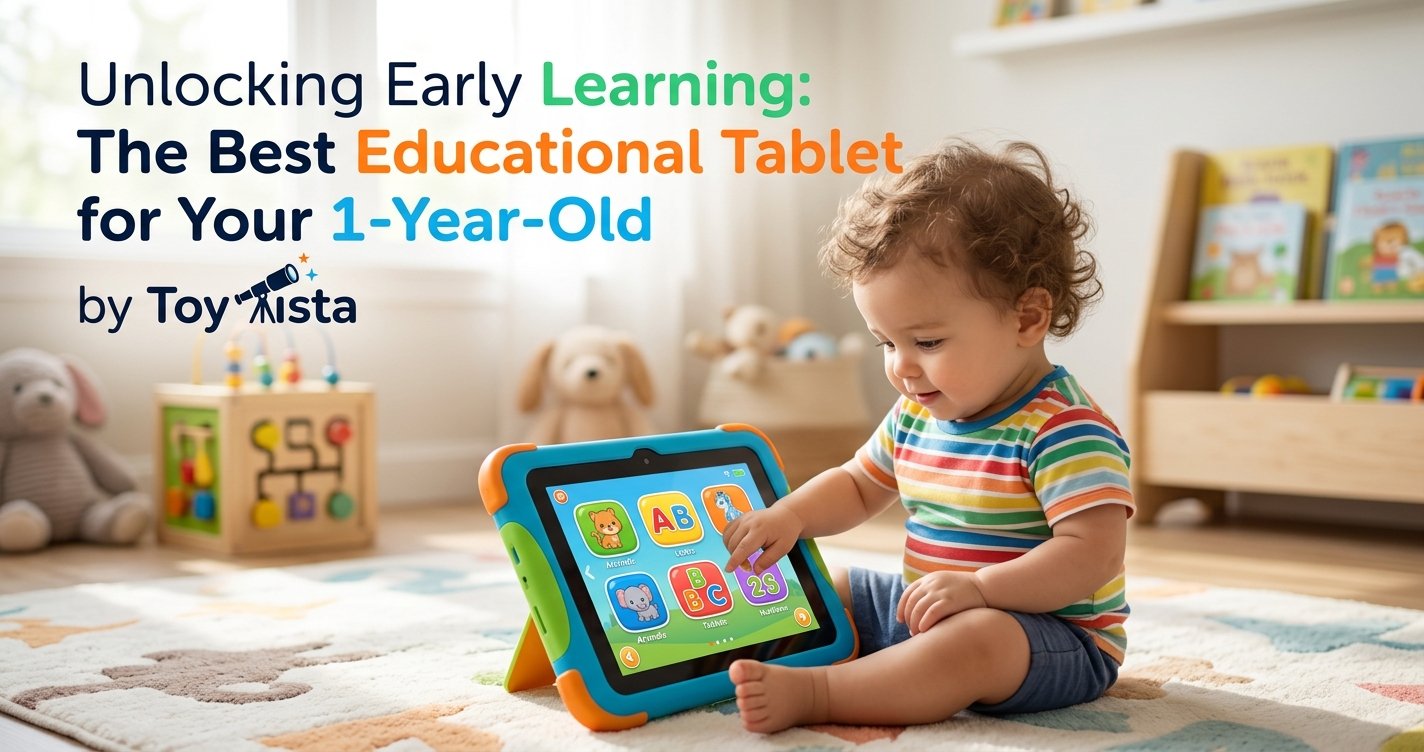
Unlocking Early Learning: The Best Educational Tablet for Your 1-Year-Old
Welcome to ToyVista, your trusted guide in navigating the exciting world of educational toys. As parents, we constantly seek the best tools to foster our children's development, and in today's digital age, the question often arises: Is an educational tablet suitable for a 1-year-old?
The journey of parenting a 1-year-old is filled with wonder, rapid growth, and countless milestones. From their first wobbly steps to their attempts at communication, every day brings new discoveries. In this era of pervasive technology, many parents ponder the role of digital devices in early childhood education. At ToyVista, we understand these curiosities and concerns. While the American Academy of Pediatrics (AAP) recommends avoiding screen time for children under 18 months (with the exception of video-chatting), the landscape of truly interactive, educational tablets designed for the youngest learners is evolving. For late 1-year-olds (12-18 months) and those approaching this threshold, a carefully chosen educational tablet can be a valuable, supplementary tool when used responsibly and interactively. This guide will help you understand the benefits, navigate the safety considerations, and choose the ideal educational tablet for your 1-year-old.
Why Consider an Educational Tablet for Your 1-Year-Old?
When introduced thoughtfully and with parental involvement, an educational tablet can offer unique developmental advantages for a 1-year-old. It's not about replacing traditional play but enhancing it with a different modality of learning.
Early Cognitive Development
Interactive apps on educational tablets can introduce fundamental concepts in engaging ways. For a 1-year-old, this often means cause-and-effect learning – tapping a character to hear an animal sound, pressing a button to see a color change, or dragging an object to complete a simple puzzle. These interactions help children understand the relationship between their actions and an outcome, a critical building block for cognitive processing.
Sensory Stimulation and Engagement
Tablets offer a rich multi-sensory experience. Bright colors, engaging sounds, and responsive touchscreens stimulate a 1-year-old's senses, capturing their attention and encouraging exploration. Apps that feature familiar objects, animals, and sounds can help reinforce vocabulary and recognition skills in an interactive format that traditional books might not offer in the same dynamic way.
Introduction to Digital Literacy (with Caveats)
While full digital literacy is years away, early exposure to touchscreens, swiping, and tapping can lay a very basic foundation for navigating future technology. For a 1-year-old, this is less about understanding complex interfaces and more about developing fine motor skills and hand-eye coordination through interaction with a responsive screen. It's crucial to remember this should always be supervised and treated as a co-learning experience.
Portability and Convenience for Parents
Let's be honest: there are moments when parents need a moment of calm, whether it's during travel, a doctor's appointment, or while preparing dinner. A well-chosen educational tablet, with its contained and engaging content, can offer a welcome distraction for a short period, providing a safe and stimulating activity for your little one, always under watchful eyes.
Navigating the Digital World: Safety and Screen Time Guidelines
Responsible integration of technology is paramount, especially for children this young. At ToyVista, we advocate for informed choices and adherence to expert recommendations.
AAP Recommendations and Best Practices
As mentioned, the American Academy of Pediatrics (AAP) advises against screen media use (other than video-chatting) for children younger than 18 months. For children 18 to 24 months, if parents choose to introduce digital media, they should select high-quality programming and co-view it with their child to help them understand what they’re seeing. This means that if you're considering an educational tablet for your 1-year-old, it’s best reserved for those closer to 18 months, and any interaction should be highly supervised and actively shared.
Parental Controls are Non-Negotiable
Any tablet introduced to a child, regardless of age, must have robust parental controls. These allow you to manage screen time limits, block inappropriate content, restrict internet access, and control app downloads. For a 1-year-old, the tablet should ideally be in a 'walled garden' environment, meaning they can only access pre-approved, age-appropriate educational content.
Prioritizing Interactive Play Over Passive Consumption
The key to beneficial screen time for toddlers is interaction. Avoid apps that are merely passive viewing experiences. Look for apps that require tapping, swiping, dragging, and responding. Furthermore, always engage with your child during tablet use. Point to objects, mimic sounds, ask questions, and narrate what's happening on the screen. This transforms screen time into a shared learning experience rather than isolated consumption.
What to Look for in an Educational Tablet for a 1-Year-Old
Choosing the right device for such a young user requires careful consideration of several factors beyond just the educational content.
Durability: Built for Tiny Hands and Tumbles
A 1-year-old's interactions with objects are, to put it mildly, robust. Tablets for this age group must be incredibly durable. Look for features like reinforced corners, shatter-resistant screens, and robust silicone or rubberized casings that can withstand drops, spills, and even the occasional chew. Many dedicated kids' tablets come with these features built-in, offering peace of mind.
Age-Appropriate Content: Focus on Basics
Content for a 1-year-old should be extremely simple and foundational. Think bright colors, large shapes, animal sounds, basic numbers (1-5), and simple cause-and-effect interactions. Avoid anything with complex narratives, fast-paced animations, or small, intricate details. The goal is exploration and discovery, not mastery of concepts.
Simplicity and Intuitive Interface
The interface should be straightforward enough for a toddler to navigate with minimal frustration. Large, colorful buttons, clear icons, and responsive touch functionality are essential. A 1-year-old isn't ready for menus or settings; the tablet should ideally open directly to a selection of age-appropriate activities.
Offline Capabilities
Many situations where a tablet might be useful (like car rides or waiting rooms) may lack reliable Wi-Fi. Ensure the tablet can store a good selection of games, videos, and books for offline use. This also minimizes the risk of accidental online navigation.
Screen Quality and Eye Safety
While a high-resolution screen isn't strictly necessary for a 1-year-old, a clear, bright display is important. Some tablets offer features like blue light filters or anti-glare screens, which can be beneficial for eye comfort. Always ensure the brightness is set to a comfortable level and maintain a good viewing distance.
Battery Life and Charging Safety
A good battery life means fewer interruptions and less frequent charging. More importantly, ensure the charging port and cable are sturdy and safely tucked away from curious little hands while charging. Always supervise charging and never let a child play with the tablet while it’s plugged in.
Top Educational Tablet Features for Toddlers
Beyond the hardware, the software and interactive elements are what truly make an educational tablet valuable for a 1-year-old.
Interactive Apps for Sounds, Shapes, and Colors
Look for apps that allow children to tap an animal to hear its sound, match simple shapes, or identify primary colors. These foundational activities build recognition and association skills.
Musical Exploration
Music is a powerful tool for early development. Tablets with simple piano keys, drum pads, or interactive songs and nursery rhymes can stimulate auditory processing and introduce rhythm.
Cause-and-Effect Learning Games
These are perhaps the most crucial for a 1-year-old. Games where a simple action (like touching a character) elicits an immediate, clear reaction (like a giggle or a bounce) are incredibly engaging and reinforce basic understanding of interaction.
Storytime and Nursery Rhymes
Interactive storybooks or animated nursery rhymes that allow tapping for sound effects or character movements can make reading a more dynamic experience, fostering early language development and a love for stories.
Beyond the Screen: A Holistic Approach to Early Learning
While tablets offer a unique gateway to early digital literacy and cognitive stimulation, remember that a balanced approach to play is paramount for holistic development. A child's growth encompasses not just cognitive skills, but also physical, social, and emotional milestones that are best fostered through a diverse range of experiences. Hands-on play, outdoor exploration, and social interaction remain irreplaceable.
The Importance of Hands-On Play
Nothing can truly replace the tactile experience of building blocks, manipulating play-doh, or stacking rings. These activities develop fine motor skills, spatial reasoning, and problem-solving abilities in a way that screen interaction cannot. Encourage a mix of open-ended play with traditional toys.
Fostering Social-Emotional Growth
Real-world interactions with caregivers, siblings, and other children are crucial for developing empathy, communication skills, and emotional regulation. Tablet use should never isolate a child; instead, it should be a shared experience or a brief, supervised activity that complements social play.
Outdoor Exploration and Physical Activity
Gross motor skills, sensory integration, and a connection with nature are vital for a 1-year-old. Time spent crawling, walking, climbing, and exploring outdoors contributes significantly to their physical and cognitive development, far beyond any screen experience.
As your little one blossoms from a curious toddler into an inquisitive preschooler and beyond, their learning needs will evolve. While an educational tablet lays foundational digital skills, the world of physical, tactile toys continues to offer unparalleled opportunities for growth. Imagine the joy of discovery as they move from tapping a screen to building their first tower of blocks, or later, to constructing intricate designs. For instance, once they're ready to explore more complex problem-solving, engineering principles, and hands-on construction, a toy like this top-rated robotic building kit can provide an unparalleled learning experience. It fosters creativity, critical thinking, and fine motor skills, offering a tangible sense of accomplishment that complements early digital learning by engaging different parts of the brain and encouraging physical manipulation and spatial reasoning. At ToyVista, we believe in supporting every stage of your child’s learning journey, from their first interactive touch on a tablet to their first successful robotic build.
ToyVista's Expert Recommendations for Educational Tablets
At ToyVista, our expertise lies in identifying toys that truly contribute to a child's development. When it comes to educational tablets for 1-year-olds (specifically those approaching 18 months), we emphasize a few core principles:
Prioritizing Learning Outcomes
Always ask: What is my child learning from this? Is it purely entertainment, or is there a clear educational goal? For a 1-year-old, this means basic skill reinforcement, not advanced concepts. Look for tablets that come pre-loaded with high-quality, educator-approved content.
The ToyVista Seal of Approval: What it Means
Our 'seal of approval' for any educational toy, including tablets, signifies that the product meets stringent standards for safety, durability, age-appropriateness, and genuine educational value. We look for intuitive design, engaging content, and features that support parental control and co-play. While we don't endorse specific brands here, we encourage parents to seek out products designed specifically for toddlers, often marketed as 'kids' tablets' rather than general-purpose devices.