
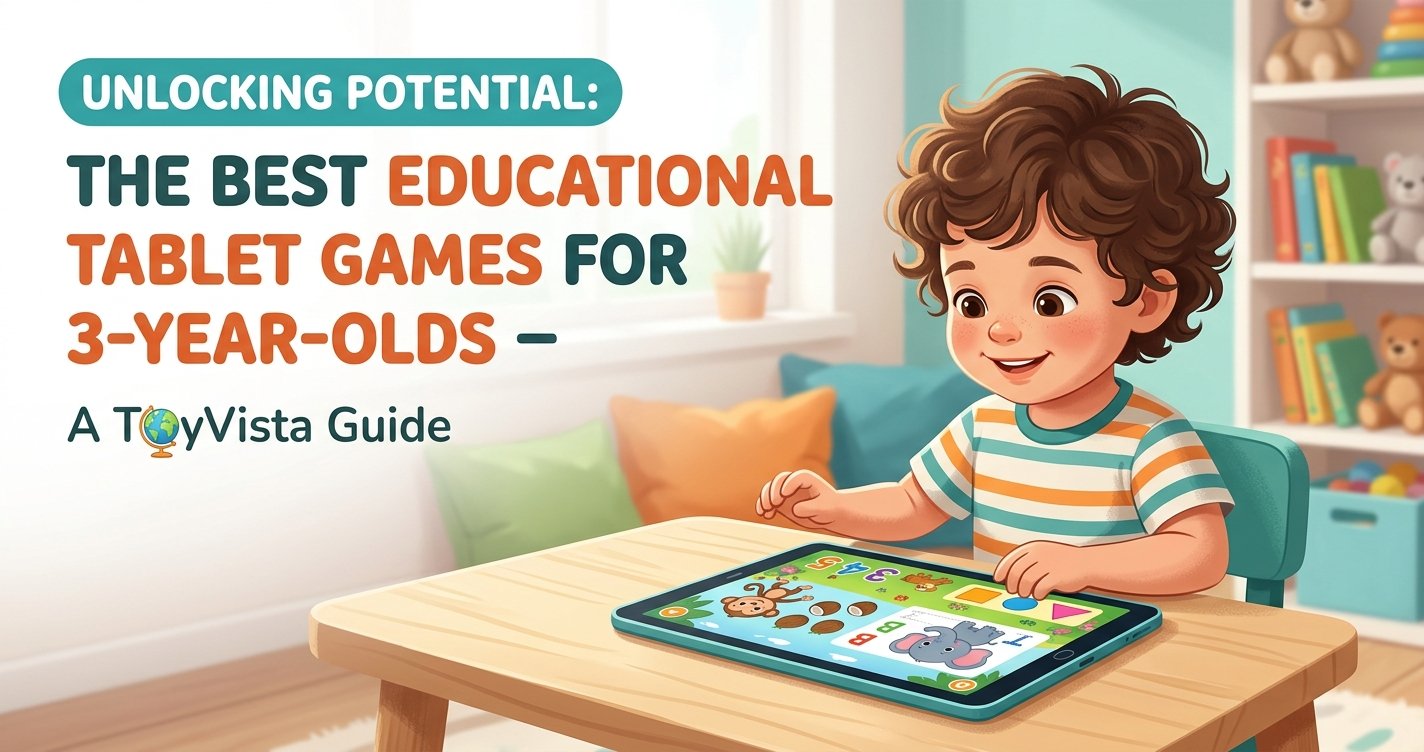
Welcome to ToyVista, your trusted guide in the fascinating world of educational toys and learning experiences. As parents, we constantly seek the best tools to foster our children's development, and in today's digital age, that often includes exploring screen-based learning. For parents of 3-year-olds, the thought of introducing tablets can bring a mix of excitement and apprehension. How do we ensure screen time is beneficial? What makes a tablet game truly educational for a toddler?
This comprehensive guide from ToyVista will delve into the world of educational tablet games specifically designed for 3-year-olds. We'll explore the incredible benefits these apps offer, what to look for in high-quality educational content, and how to integrate them thoughtfully into your child's daily routine. Our goal is to empower you to make informed choices, transforming your child's tablet into a powerful tool for cognitive growth, creativity, and early skill development.
The Digital Playground: Why Educational Tablet Games for 3-Year-Olds?
For many, the idea of a 3-year-old using a tablet might conjure images of passive entertainment. However, when chosen wisely, educational tablet games can be far more than just a distraction. They can be dynamic, interactive learning environments tailored to a toddler's unique developmental stage. At three years old, children are rapidly developing their language, problem-solving, and fine motor skills. Well-designed tablet games can tap into these emerging abilities, offering engaging ways to practice and reinforce new concepts.
These games can introduce foundational concepts like letters, numbers, shapes, and colors in a fun, multi-sensory format. The immediate feedback and interactive nature of apps keep young minds engaged, making learning feel like play. Moreover, the tactile experience of tapping, swiping, and dragging on a screen helps refine fine motor skills and hand-eye coordination, crucial steps in their physical development. When used in moderation and with parental guidance, educational tablet games can be a valuable supplement to traditional learning methods, preparing young learners for future academic success.
Beyond Entertainment: The True Value of Educational Apps
The distinction between entertaining apps and truly educational ones is crucial. While many apps are designed to simply hold a child's attention, the best educational tablet games for 3-year-olds have clear learning objectives. They are crafted by educators and child development experts to target specific skills, such as early literacy (recognizing letters and their sounds), numeracy (counting and number recognition), critical thinking (simple puzzles and sorting games), and creativity (digital art and music activities).
These apps often feature adaptive learning, adjusting difficulty levels based on the child's performance, ensuring they are always challenged but never overwhelmed. They can provide a safe and controlled environment for exploration, allowing children to experiment and learn from their mistakes without real-world consequences. This fosters a sense of independence and encourages a love for learning. ToyVista believes in harnessing technology's potential to enrich a child's early learning journey, transforming screen time into constructive, developmental play.
What Makes a Tablet Game Truly "Educational" for a Toddler?
With countless apps available, discerning which ones are truly beneficial for a 3-year-old can be daunting. ToyVista recommends focusing on several key criteria to ensure you're selecting high-quality educational content:
- Age-Appropriateness: The game's complexity, themes, and user interface should be perfectly suited for a 3-year-old's cognitive and motor abilities. Overly complex games can lead to frustration, while overly simplistic ones may bore them.
- Clear Learning Objectives: Does the app explicitly state what skills it aims to teach? Look for games that focus on specific educational outcomes rather than just general engagement.
- Interactive & Engaging: The best games require active participation, not just passive viewing. They should prompt responses, allow for exploration, and provide positive reinforcement.
- Ad-Free & Safe Environment: Pop-up ads, in-app purchases, and links to external content can be disruptive and unsafe for young children. Prioritize apps that offer a secure, ad-free experience.
- Positive Reinforcement: Games should provide gentle, encouraging feedback, celebrating successes without being overly stimulating or critical of errors.
- High-Quality Graphics & Audio: Engaging visuals and clear, pleasant audio enhance the learning experience. Avoid apps with jarring sounds or chaotic animations.
- Parental Controls: Look for apps that allow parents to track progress, set time limits, or customize content.
Interactive Learning: More Than Just Tapping
True interactive learning goes beyond simple touch responses. For a 3-year-old, it means engaging with the content in a way that requires thought and action. This could involve dragging shapes to fit corresponding holes, matching sounds to animals, tracing letters, solving simple picture puzzles, or sorting objects by color or size. These activities build foundational skills in problem-solving, critical thinking, and fine motor control.
The best apps often incorporate elements of storytelling or discovery, making the learning process an adventure. They might feature lovable characters who guide the child through challenges, or environments that encourage open-ended play. The goal is to make the child feel like an active participant in their learning journey, rather than just a spectator. This active engagement fosters deeper understanding and retention, making the learning experience more impactful and enjoyable for your little one.
Top Educational Tablet Game Categories for 3-Year-Olds
To help you navigate the vast landscape of educational apps, here are some of the most beneficial categories for 3-year-olds, each targeting essential developmental areas:
Alphabet & Phonics Games
These games introduce children to the alphabet, letter recognition (both uppercase and lowercase), and basic phonics sounds. They often feature tracing activities, matching letters to pictures, or simple word building. This category is crucial for laying the groundwork for early literacy skills and fostering a love for reading.
Number & Counting Games
Apps in this category focus on number recognition, counting (from 1 to 10 and beyond), and basic one-to-one correspondence. Children might count objects, connect dots in numerical order, or solve simple addition/subtraction puzzles using visual aids. These games build essential early math skills in an accessible and fun way.
Shape & Color Recognition Games
Learning shapes and colors is fundamental for cognitive development. These games typically involve identifying and matching shapes (circles, squares, triangles) and colors, often within engaging contexts like building virtual structures or sorting items. They enhance visual discrimination and categorization skills.
Problem-Solving & Logic Puzzles
Even at three, children can benefit from simple logic puzzles. Games in this category might include matching pairs, completing patterns, simple mazes, or sequencing tasks. These activities encourage critical thinking, spatial reasoning, and the ability to follow multi-step instructions, preparing their minds for more complex challenges.
Creative & Expressive Arts Games
These apps allow children to express themselves through digital art, music, and storytelling. From virtual coloring books and drawing pads to simple musical instruments and puppet shows, these games foster imagination, creativity, and fine motor skills. They provide a safe space for artistic exploration without the mess!
Navigating Screen Time: Best Practices for Parents
While educational tablet games offer incredible benefits, it's vital to approach screen time with a balanced and thoughtful strategy. ToyVista advocates for mindful media consumption, ensuring that digital learning complements, rather than replaces, other crucial forms of play and interaction. Here are some best practices:
- Set Time Limits: Experts recommend limiting screen time for 3-year-olds to about 30-60 minutes per day, broken into shorter segments. Consistency is key.
- Co-Play and Interact: Don't just hand over the tablet. Sit with your child, engage with the game, ask questions, and discuss what they're learning. This interaction enhances the educational value and strengthens your bond.
- Balance is Key: Ensure tablet time is part of a diverse daily routine that includes outdoor play, reading physical books, creative arts, and social interaction with family and peers.
- Choose the Right Device: Consider a kid-friendly tablet with robust parental controls and durable design. Many tablets offer dedicated 'kids modes' that curate content and restrict access.
- Review Apps Regularly: Periodically check the content your child is accessing. Apps can update, and new features might be introduced that change their suitability.
The "ToyVista" Approach: Blending Digital and Physical Learning
At ToyVista, we believe in a holistic approach to early childhood development. While digital tools like educational tablet games are powerful, they are most effective when integrated with hands-on, tangible play experiences. Physical toys encourage different types of skill development – gross motor skills, spatial reasoning, tactile exploration, and collaborative play – that are equally vital. For example, after an engaging session with a digital puzzle game, transitioning to a physical puzzle or building blocks can reinforce those same problem-solving and spatial awareness skills in a different medium.
This blend ensures a well-rounded developmental experience. Imagine your child learning about shapes and colors on a tablet, then applying that knowledge to build a tower with colorful blocks, or even assembling a robot. For instance, complementing digital learning with something like this top-rated robotic building kit can provide an incredible hands-on experience, fostering engineering skills, creativity, and critical thinking in a tangible way. It's about creating a rich learning ecosystem where digital and physical play support and enhance each other.
The Future is Bright: Empowering Young Minds with Technology
The digital landscape is an undeniable part of our children's future. By thoughtfully introducing educational tablet games, we're not just entertaining them; we're equipping them with essential digital literacy skills, fostering a positive relationship with technology, and opening doors to new ways of learning and exploring. For a 3-year-old, these early interactions can spark curiosity, build confidence, and develop foundational cognitive and motor skills that will serve them well throughout their academic journey and beyond.
The key lies in mindful selection and integration. By choosing high-quality, age-appropriate educational content and balancing screen time with a rich variety of other developmental activities, parents can leverage the power of tablets to truly unlock their child's potential. ToyVista is here to support you every step of the way, providing insights and recommendations to ensure your child's learning journey is both enriching and joyful.
Conclusion
Educational tablet games for 3-year-olds, when chosen and managed correctly, are powerful tools for early childhood development. They offer interactive, engaging, and personalized learning experiences that can significantly boost cognitive, motor, and social-emotional skills. From mastering the alphabet and numbers to sparking creativity and problem-solving abilities, the right apps can make learning an exciting adventure.
As experts in educational toys, ToyVista encourages parents to embrace technology as a supplementary learning resource, always prioritizing balance and active engagement. By following our guide on selecting quality apps and implementing best practices for screen time, you can confidently transform your child's tablet into a dynamic educational playground. Explore our resources for more insights and recommendations on blending digital innovation with classic educational play to give your child the best start possible.


