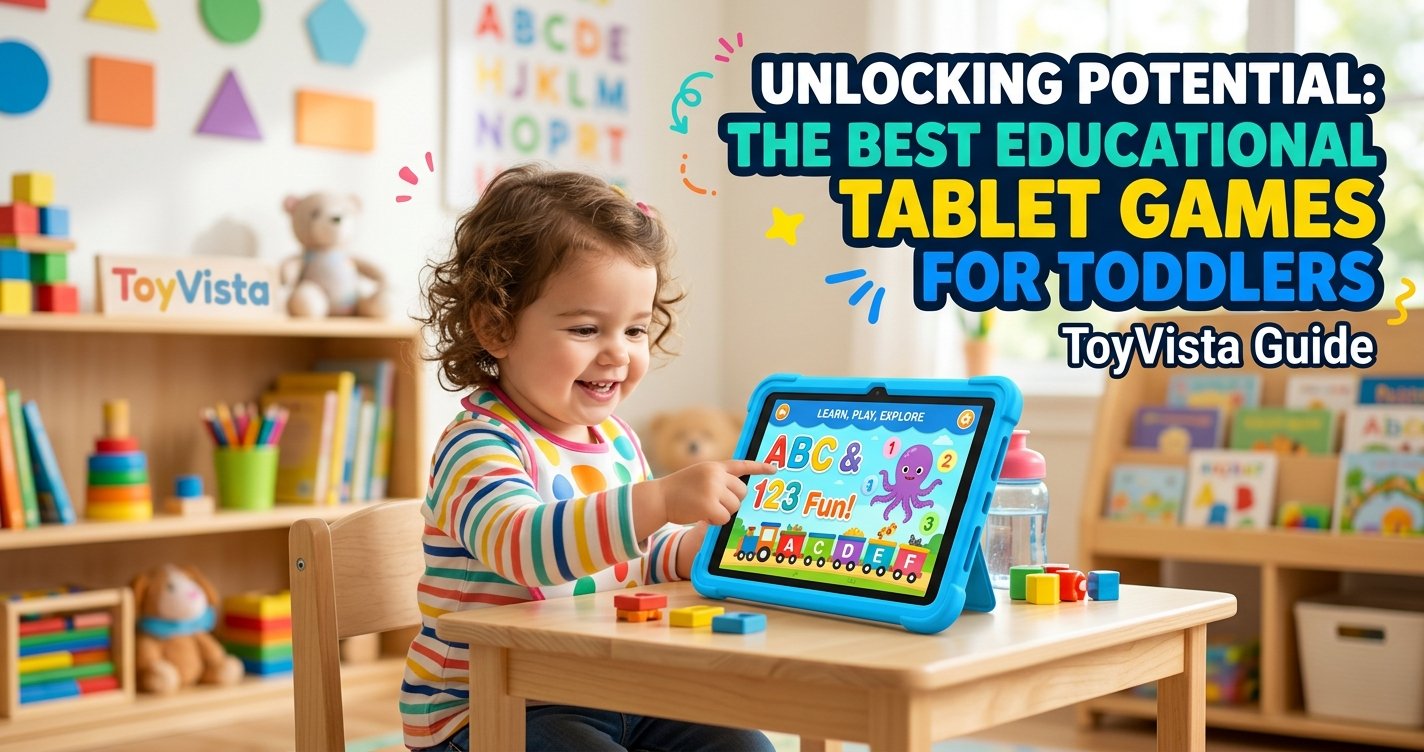
Unlocking Potential: The Best Educational Tablet Games for Toddlers (ToyVista Guide)
As parents, we constantly strive to provide our little ones with the best tools for growth and development. In today's digital age, that often includes navigating the world of screens. While "screen time" can sometimes carry a negative connotation, at ToyVista, we believe in the power of quality screen time – especially when it comes to educational tablet games for toddlers. Far from mere distractions, the right digital games can be powerful allies in fostering crucial early learning skills, creativity, and cognitive development.
With a myriad of apps available, distinguishing between truly educational content and simple entertainment can be a challenge. That's where ToyVista, your trusted expert in educational toys, comes in. We're here to guide you through the exciting landscape of tablet games that are not only engaging but also thoughtfully designed to support your toddler's unique learning journey.
The Digital Playground: Why Educational Tablet Games Matter for Toddlers
The early years are a period of rapid brain development, where children absorb information like sponges. While traditional toys and hands-on experiences remain irreplaceable, educational tablet games offer a unique supplementary avenue for learning that leverages technology in a child-friendly way.
Bridging the Gap: Screen Time vs. Screen Quality
The conversation around screen time often focuses on duration. However, the more critical aspect for toddlers is the quality of the content. Passive viewing of cartoons differs vastly from interactive engagement with a well-designed educational game. High-quality tablet games encourage active participation, problem-solving, and critical thinking, transforming a screen into a dynamic learning tool rather than just a passive entertainment device.
Developmental Benefits Beyond the Obvious
Beyond the immediate fun, educational tablet games for toddlers can contribute significantly to various developmental domains:
- Cognitive Skills: Enhancing memory, attention span, logical reasoning, and problem-solving through puzzles, matching games, and sequencing activities.
- Language Development: Expanding vocabulary, recognizing letters, understanding phonics, and practicing early reading skills through interactive stories and letter-tracing games.
- Numeracy Skills: Introducing numbers, counting, basic arithmetic concepts, and shape recognition in an engaging, visual manner.
- Fine Motor Skills: Improving hand-eye coordination and dexterity through touch, drag-and-drop, and tracing activities.
- Creativity and Imagination: Providing digital canvases for drawing, virtual building blocks, and imaginative play scenarios.
- Emotional and Social Learning: Some games incorporate scenarios that teach about emotions, sharing, and empathy.
What Makes a Tablet Game Truly "Educational" for Toddlers?
Not all games are created equal. To be truly educational for toddlers, a tablet game should possess specific characteristics that align with their developmental stage and learning needs.
Age-Appropriate Content is Key
Toddlers (typically ages 1-3) have different cognitive abilities and attention spans than preschoolers or older children. Educational games for this age group should feature simple, intuitive interfaces, clear instructions (often visual or audio-based), and concepts that are easy to grasp. Overly complex games can lead to frustration rather than learning.
Interactive and Engaging Features
The best educational games are highly interactive. They respond to a child's actions, provide immediate feedback, and encourage continuous engagement. This could involve tapping to make sounds, dragging objects to match, or tracing letters to reveal animations. Engagement is the cornerstone of effective digital learning for young children.
Promoting Core Skills: From ABCs to Problem-Solving
A truly educational game will have clear learning objectives. Does it teach letter recognition? Number counting? Shape sorting? Color identification? Does it introduce simple cause-and-effect relationships or basic problem-solving scenarios? Look for games that target specific foundational skills crucial for early childhood development.
Parental Controls and Safe Environments
For parents, safety is paramount. Educational tablet games should ideally be free from third-party advertisements, inappropriate content, and hidden in-app purchases. Robust parental control features, such as time limits and content filtering, are essential to ensure a safe and controlled digital environment for your toddler.
Navigating the World of Educational Tablet Games: A ToyVista Guide
With so many options, how do you choose? ToyVista recommends focusing on games that align with key developmental milestones and offer a balanced approach to learning.
Focus on Foundational Learning (Letters, Numbers, Shapes, Colors)
These are the building blocks of early education. Look for games that make learning ABCs, 123s, basic shapes, and vibrant colors an exciting adventure. Interactive flashcards, matching games, and simple puzzles are excellent for reinforcing these concepts.
Encouraging Creativity and Imagination
Digital drawing apps, virtual play-doh, or games that allow children to design and customize characters or environments can significantly boost creativity. These platforms provide a space for toddlers to express themselves without the mess, fostering imaginative thinking and artistic exploration.
Boosting Cognitive Skills (Memory, Logic, Problem-Solving)
Games that involve memory matching, simple sequencing, or basic logic puzzles are fantastic for cognitive development. They challenge toddlers to think, remember, and strategize in a fun, low-pressure environment. For instance, a game where they have to put objects in the correct order or find hidden items helps sharpen their observational and reasoning skills. As they master these early digital challenges, their minds become more adept at tackling complex tasks. This foundational understanding of logic and problem-solving is not only beneficial for screen-based activities but also translates beautifully into the physical world. For example, the skills honed through these games can lay the groundwork for engaging with more advanced STEM toys later on. Imagine a toddler who has developed a keen sense of spatial reasoning and sequential thinking through tablet games transitioning seamlessly to building and programming. This could be a natural progression towards something like this top-rated robotic building kit, which offers hands-on experience in engineering and coding. It's a testament to how well-chosen digital experiences can complement and enhance traditional play, preparing children for a future where technology and hands-on creation often intertwine.
Developing Fine Motor Skills and Hand-Eye Coordination
The act of tapping, dragging, and swiping on a tablet screen is an excellent workout for tiny fingers. Games that require precise movements, tracing paths, or connecting dots help refine fine motor skills and improve hand-eye coordination, essential for tasks like writing and drawing later on.
Top Features to Look for in Educational Tablet Games
When you're ready to download, keep an eye out for these crucial features:
Child-Friendly Interface
The interface should be intuitive, free of confusing menus, and easy for a toddler to navigate independently (within supervised limits). Large buttons, clear icons, and minimal text are ideal.
No In-App Purchases or Ads
Toddlers are highly susceptible to accidental clicks and persistent advertising. Opt for premium games that offer a complete experience without hidden costs or distracting ads that can pull them away from the learning objective.
Positive Reinforcement and Feedback
Games that offer gentle, encouraging feedback (e.g., "Great job!" or celebratory sounds) help build confidence and keep toddlers motivated to learn. Avoid games that use negative reinforcement or are overly critical.
Offline Play Options
The ability to play offline is a significant advantage, especially for travel or areas with limited internet access. This ensures consistent learning opportunities without relying on a constant connection.
Setting Healthy Screen Time Habits for Toddlers
Even with the best educational games, balance is key. Establishing healthy screen time habits from an early age is crucial for holistic development.
The "Less is More" Approach
Experts generally recommend limiting screen time for toddlers to short, supervised sessions. For children aged 18-24 months, aim for very limited, high-quality co-viewing with a parent. For 2-5 year olds, 30 minutes to an hour of high-quality programming per day is often suggested, always balanced with other activities. Quality over quantity should always be the guiding principle.
Co-Play and Engagement
The most effective way for toddlers to learn from educational games is when a parent or caregiver plays alongside them. This "co-play" allows you to engage with your child, explain concepts, ask questions, and reinforce what they are learning. It transforms screen time into a shared, interactive experience.
Balancing Digital and Physical Play
Remember that digital games are a supplement, not a replacement, for traditional play. Ensure your toddler has ample opportunities for physical activity, imaginative play with real toys, outdoor exploration, and social interaction with peers and family. A healthy mix of experiences is vital for comprehensive development.
Conclusion: Empowering Toddlers with Smart Digital Play
The world of educational tablet games for toddlers offers an exciting frontier for early learning. When chosen thoughtfully and used in moderation, these digital tools can significantly enhance cognitive skills, language development, creativity, and fine motor coordination. At ToyVista, we believe in empowering parents to make informed choices, transforming screen time from a potential concern into a powerful catalyst for growth.
By focusing on age-appropriate, interactive, and skill-building games, and by integrating them into a balanced routine that prioritizes co-play and diverse experiences, you can unlock a world of learning opportunities for your little one. Embrace the potential of smart digital play and watch your toddler thrive!