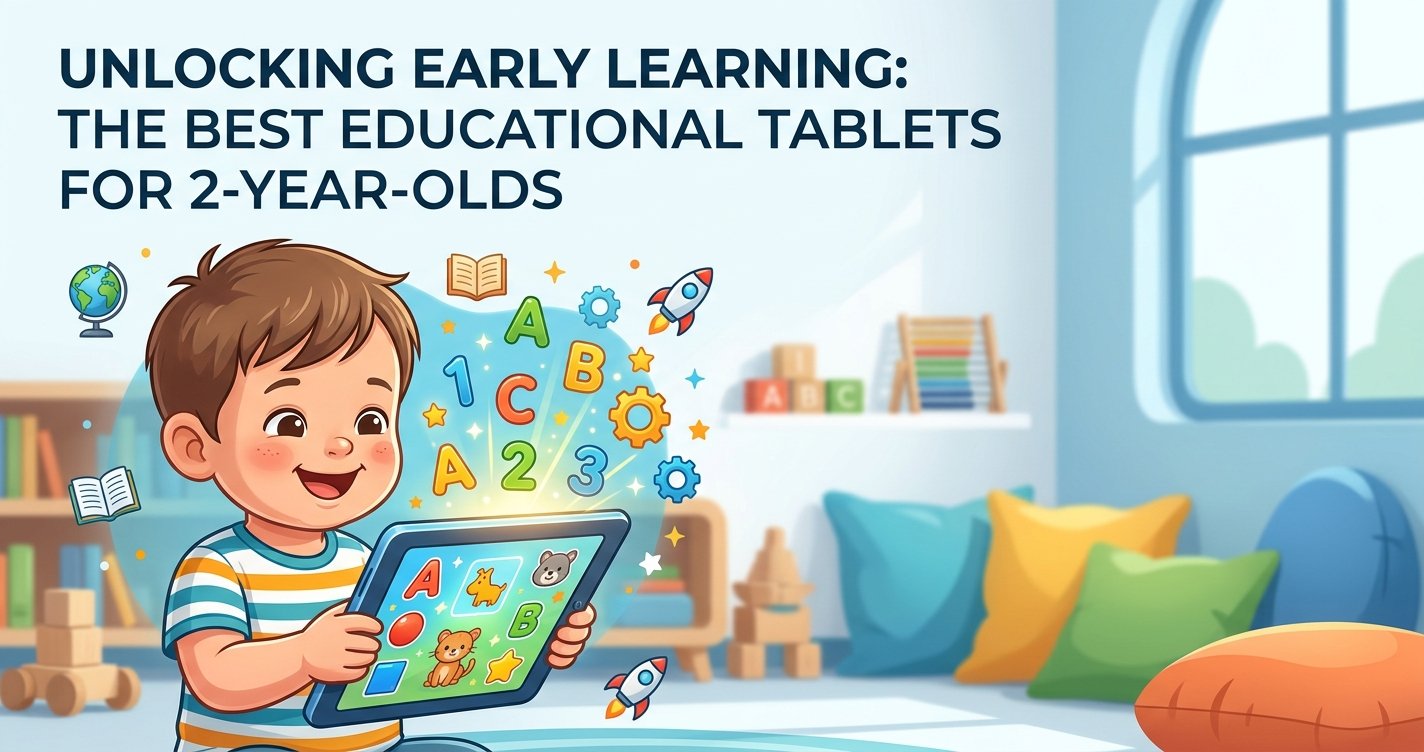
Unlocking Early Learning: The Best Educational Tablets for 2-Year-Olds
Welcome to the digital age, where even our youngest learners are curious about the glowing screens that capture our attention. As parents, the thought of introducing screen time to a 2-year-old often comes with a mix of excitement and apprehension. At ToyVista, a leading expert in educational toys, we understand these concerns and are here to guide you through the exciting world of educational tablets for 2-year-olds. Far from being mere entertainment devices, the right educational tablet can be a powerful tool for fostering early development, preparing your child for a future increasingly shaped by technology, and offering a gateway to structured learning in a fun, interactive way.
In this comprehensive guide, we'll explore why a well-chosen educational tablet can be a fantastic addition to your toddler's learning toolkit, what crucial features to look for, and how to integrate it responsibly into their daily routine. Get ready to discover how these innovative devices can support cognitive growth, fine motor skills, and even problem-solving abilities, all while keeping your little one engaged and curious.
Why Consider Educational Tablets for 2-Year-Olds?
The idea of a 2-year-old with a tablet might raise an eyebrow for some, but it's important to distinguish between passive screen time and active, educational engagement. Modern educational tablets are specifically designed with toddlers in mind, offering a curated environment that transforms screen interaction into a valuable learning experience. They are not meant to replace traditional play, but rather to complement it, introducing concepts that might be harder to convey through other means.
For a 2-year-old, the world is a giant classroom, and educational tablets can act as a personalized tutor, introducing foundational skills in a captivating format. These devices are carefully crafted to be age-appropriate, focusing on fundamental concepts like letters, numbers, shapes, and colors through interactive games and stories. This early exposure can significantly boost cognitive development, enhance fine motor skills, and even lay the groundwork for future problem-solving abilities. Moreover, by controlling the content and duration, parents can ensure that screen time is a constructive part of their child's day, rather than a distraction.
Cognitive Development and Early Learning
Educational tablets for 2-year-olds are a treasure trove for cognitive development. They offer a dynamic platform where toddlers can engage with interactive applications designed to teach fundamental concepts. Imagine your child tapping a screen to match shapes, hearing the names of colors as they sort them, or tracing letters with their finger. These activities are not just fun; they stimulate brain development, improve memory, and help children recognize patterns. Many apps focus on early literacy and numeracy, introducing the alphabet, counting, and simple words in an engaging, multi-sensory way. The immediate feedback from the tablet helps solidify learning, making it an effective tool for absorbing new information and expanding vocabulary.
Enhancing Fine Motor Skills and Hand-Eye Coordination
The act of interacting with a tablet screen is a fantastic exercise for developing fine motor skills and hand-eye coordination. A 2-year-old learns to swipe, tap, drag, and pinch – actions that require precision and control. These small, deliberate movements strengthen the muscles in their fingers and hands, which are crucial for later tasks like holding a crayon, using scissors, or tying shoelaces. The visual feedback from the screen helps them refine their movements, improving their ability to accurately touch specific targets. This interactive engagement bridges the gap between intention and action, providing a practical, enjoyable way for toddlers to hone these essential physical skills.
Fostering Problem-Solving and Creativity
Beyond basic learning, many educational tablet apps introduce simple problem-solving scenarios perfectly suited for a 2-year-old's developing mind. These might include completing a jigsaw puzzle, figuring out how to make a character move, or solving a basic matching game. Such activities encourage critical thinking and logical reasoning, teaching children cause and effect in an immediate and understandable way. Furthermore, apps that allow for digital drawing, storytelling, or creating music can significantly boost a child's creativity and imagination. They provide a canvas for self-expression without the mess, enabling toddlers to experiment with colors, sounds, and narratives in a boundless digital environment.
What to Look for in an Educational Tablet for a 2-Year-Old
Choosing the right educational tablet for your toddler is paramount. Not all tablets are created equal, especially when it comes to the unique needs of a 2-year-old. At ToyVista, we emphasize several key factors that ensure the device is safe, durable, and genuinely beneficial for early learning. Prioritizing these features will help you select a tablet that grows with your child and provides a positive, enriching experience.
Durability is Key: Built for Toddlers
Let's be realistic: a 2-year-old's hands are not always gentle, and drops are inevitable. Therefore, durability is arguably the most critical feature. Look for tablets specifically marketed for kids, often encased in rugged, shock-absorbent bumpers made from child-safe materials. These cases protect against bumps, drops, and even minor spills. Some tablets also feature shatter-resistant screens or come with screen protectors pre-installed. Opting for a device built to withstand the rigors of toddler play will save you headaches and ensure the tablet lasts through countless learning adventures.
Content That Truly Educates and Engages
The heart of an educational tablet lies in its content. For a 2-year-old, the apps and programs should be specifically designed for their developmental stage, focusing on foundational skills without being overwhelming. Seek out tablets that offer a curated library of age-appropriate, ad-free educational games, e-books, and videos. Content should be interactive, encourage participation, and provide positive reinforcement. Look for apps that teach letters, numbers, shapes, colors, animal sounds, and simple vocabulary. Avoid tablets that prioritize passive viewing or contain content with complex narratives or concepts beyond a toddler's comprehension. Many reputable brands partner with educators to develop their content, ensuring high educational value.
Robust Parental Controls and Safety Features
Parental controls are non-negotiable. A good educational tablet for a 2-year-old will offer comprehensive settings that allow you to manage screen time limits, filter web content (if applicable), restrict app access, and disable in-app purchases. This gives you peace of mind, knowing your child is only accessing safe and appropriate material for a set duration. Furthermore, consider safety features like blue light filters to protect young eyes and volume limiters to safeguard hearing. These features are crucial for maintaining a healthy and secure digital environment for your little one.
Holistic Learning: Combining Digital and Tangible Play
While educational tablets offer a fantastic gateway to digital literacy and early academics, it's crucial to remember that a child's development thrives on a diverse range of experiences. Tangible, hands-on play remains indispensable for fostering creativity, problem-solving, and fine motor skills in a different dimension. Balancing screen time with physical activity, imaginative play, and social interaction is key to holistic development. Tablets can introduce concepts, but hands-on activities allow children to manipulate objects, build, and interact with their physical environment, which is vital for understanding spatial relationships and developing practical skills.
For instance, as your child grows and develops an interest in engineering and robotics, a toy like this top-rated robotic building kit can provide an incredible foundation for STEM learning, encouraging construction, coding basics, and imaginative play. Such toys complement the abstract learning from tablets by providing concrete experiences that reinforce concepts like cause and effect, sequence, and design. They encourage children to think three-dimensionally and engage multiple senses, fostering a well-rounded approach to learning that leverages both digital and physical tools.
Setting Healthy Screen Time Habits for 2-Year-Olds
Introducing an educational tablet should always be accompanied by establishing healthy screen time habits from the outset. For 2-year-olds, moderation and parental involvement are key. The American Academy of Pediatrics (AAP) recommends limiting screen media use for children 18 to 24 months of age to high-quality programming, with parents co-viewing to help children understand what they're seeing. For children 2 to 5 years, the AAP suggests limiting screen use to 1 hour per day of high-quality programming. This guidance serves as a valuable benchmark, but ultimately, you know your child best and can adjust based on their individual needs and temperament.
Quality Over Quantity
When it comes to screen time for 2-year-olds, the quality of the content far outweighs the quantity. Five minutes spent actively engaging with an educational app that teaches phonics is more beneficial than 30 minutes of passively watching cartoons. Prioritize apps and programs that are interactive, encourage participation, and are free from distracting advertisements. Look for content that aligns with developmental milestones and sparks curiosity, rather than simply occupying your child's attention. High-quality educational content can truly make a difference in how your child perceives and utilizes technology.
Parental Involvement is Key
Co-viewing and co-playing with your 2-year-old on their educational tablet is crucial. This isn't just about supervision; it's about engagement. Sit with your child, talk about what they're seeing and doing, ask questions, and help them navigate new concepts. This shared experience enhances the learning process, strengthens your bond, and helps your child make connections between the digital world and their real-world experiences. Your involvement can turn a solo activity into a valuable interactive learning session, reinforcing lessons and making the experience more meaningful.
Frequently Asked Questions (FAQs) about Educational Tablets for Toddlers
Are tablets safe for 2-year-olds' eyes?
Modern educational tablets often come with features like blue light filters and adjustable brightness settings designed to minimize eye strain. However, it's still important to ensure your child takes regular breaks from the screen, maintains an appropriate viewing distance, and avoids using the tablet in dimly lit rooms. Limiting screen time also naturally reduces potential eye fatigue.
How much screen time is appropriate for a 2-year-old?
As mentioned, the American Academy of Pediatrics (AAP) suggests limiting screen use to 1 hour per day for children aged 2 to 5 years, focusing on high-quality, educational content. This hour should ideally be broken into shorter sessions. The key is balance and ensuring screen time doesn't replace other essential activities like outdoor play, reading, and social interaction.
Can educational tablets replace traditional toys and play?
Absolutely not. Educational tablets are a supplementary tool, not a replacement for traditional toys, imaginative play, or real-world experiences. Hands-on play with blocks, puzzles, art supplies, and outdoor activities are vital for developing a child's creativity, social skills, gross motor skills, and understanding of the physical world. Tablets should be integrated into a diverse play diet, not dominate it.
What if my child becomes too attached or addicted to the tablet?
Establishing clear boundaries and routines from the beginning is crucial. Use the parental controls to set time limits, and stick to them consistently. Encourage a variety of activities throughout the day, ensuring the tablet is just one option among many. If you notice signs of excessive attachment, gently redirect your child to other engaging activities, and consider reducing tablet access temporarily. Parental involvement and consistent limits are the best defense against over-reliance.
Conclusion: Empowering Your Toddler's Digital Journey
Choosing an educational tablet for your 2-year-old can be a fantastic decision when approached thoughtfully and responsibly. These devices offer a unique opportunity to introduce early learning concepts, enhance fine motor skills, and foster problem-solving abilities in an engaging, interactive format. By prioritizing durability, age-appropriate educational content, and robust parental controls, you can select a tool that truly supports your child's developmental journey.
Remember, the goal is not to replace traditional play but to complement it, creating a balanced and enriching learning environment. At ToyVista, we believe in empowering parents with the knowledge to make informed choices that benefit their children's growth. Embrace the potential of educational tablets as a part of a diverse and stimulating play diet, and watch your little one thrive as they explore the wonders of learning, both on and off the screen. Explore our curated selection of educational toys and resources to find the perfect tools for your child's bright future!