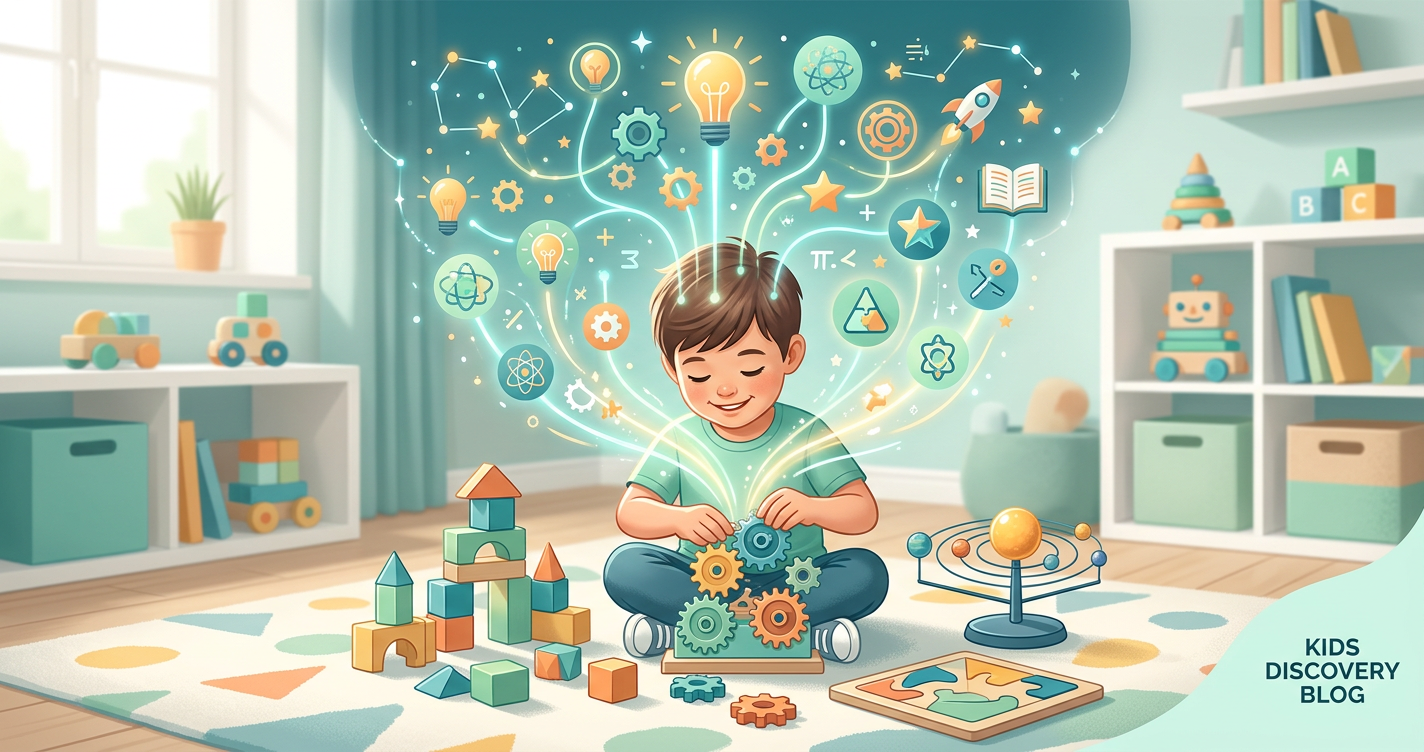
Children learn best through play. It's not just fun; it's fundamental to their growth. While all play contributes to development, educational toys are specifically designed to stimulate specific learning areas, particularly cognitive skills. From problem-solving to creativity, these seemingly simple objects are powerful tools for shaping young minds. In this post, we’ll explore the incredible benefits of educational toys on cognitive development, backed by evidence, and guide you on how to choose and use them effectively to help your child thrive.
Beyond Just Fun: What Are Educational Toys?
Educational toys are more than just playthings; they are tools crafted with a purpose. Unlike generic toys that might offer fleeting entertainment, educational toys are intentionally designed to engage children in ways that promote learning, critical thinking, and skill development. They challenge children to think, explore, and discover, often without them even realizing they're learning. Think beyond basic entertainment; these toys are catalysts for cognitive growth, encouraging curiosity and a deeper understanding of the world around them. this excellent toy product
The Brain-Boosting Powerhouse: How Educational Toys Impact Cognitive Development
Cognitive development refers to the construction of thought processes, including remembering, problem-solving, and decision-making, from childhood through adolescence to adulthood. Educational toys are exceptional at nurturing these crucial areas:
Problem-Solving and Critical Thinking
- Many educational toys, such as puzzles, building blocks, and logic games, inherently require children to identify problems and devise solutions.
- Whether it's figuring out how pieces fit together, balancing a structure, or navigating a maze, these activities foster analytical thinking and resilience. They learn to hypothesize, test, and adapt, essential skills for academic success and life.
Language and Communication Skills
- Toys that encourage storytelling, role-playing, or interaction with letters and numbers significantly boost language development.
- Puppets, doctor's kits, or alphabet blocks invite children to articulate thoughts, expand their vocabulary, and understand narrative structures. Engaging in pretend play also encourages children to express emotions and understand social cues, laying groundwork for effective communication.
Fine Motor Skills and Hand-Eye Coordination
- Activities like stacking rings, threading beads, or manipulating small construction pieces require precision and control.
- These toys help develop the small muscles in the hands and fingers, refining fine motor skills crucial for tasks like writing, drawing, and self-care. The coordination between what they see and what their hands do is continuously strengthened.
Creativity and Imagination
- Open-ended educational toys, like magnetic tiles, art supplies, or simple wooden blocks, provide endless possibilities.
- They don't dictate how a child should play, instead inviting them to invent stories, build unique structures, and explore their inner worlds. This fosters imaginative thinking, innovation, and the ability to think outside the box – qualities highly valued in today's rapidly changing world.
Memory and Attention Span
- Matching games, memory card sets, and sequential puzzles are excellent for honing a child's memory recall and ability to focus for extended periods.
- As children engage with these toys, they practice retaining information and concentrating on tasks, gradually increasing their attention span.
Early STEM Concepts
- Many educational toys introduce fundamental concepts in Science, Technology, Engineering, and Math (STEM) in an accessible, hands-on way.
- From simple machines to coding robots, these toys demystify complex subjects, sparking an early interest and aptitude for these critical fields. Children learn about cause and effect, spatial reasoning, patterns, and basic physics without even realizing it.
Evidence-Based Play: What the Research Says
Numerous studies underscore the profound impact of play on cognitive development. Researchers like Jean Piaget highlighted how children construct knowledge through active engagement with their environment. Dr. Laura Jana, author of "Brain Rules for Baby," emphasizes that early experiences, including play, literally build the architecture of a child's brain. The American Academy of Pediatrics advocates for play as essential for healthy brain development, stating it helps children develop abstract thinking, problem-solving, and literacy skills. Educational toys provide structured yet flexible avenues for this critical developmental work, turning playtime into powerful learning time.
Choosing the Right Educational Toys: A Parent's Guide
Navigating the world of educational toys can be overwhelming, but a few key principles can guide your choices:
- Age-Appropriateness: Always check age recommendations. Toys that are too simple might bore a child, while overly complex ones can lead to frustration. The goal is to provide a gentle challenge.
- Open-Endedness: Look for toys that can be used in multiple ways, encouraging creativity rather than dictating a single play pattern. Simple blocks, art supplies, or dress-up clothes are fantastic examples.
- Durability and Safety: Ensure toys are made from safe, non-toxic materials and are built to withstand enthusiastic play. Check for small parts for younger children.
- Child's Interests: While the goal is educational, the toy should also align with your child's natural curiosity and preferences. If they love animals, find animal-themed puzzles or building sets.
- Promotes Interaction: The best educational toys often encourage interaction – either with peers, caregivers, or by prompting questions and exploration from the child themselves.
Maximizing the Learning Experience: Tips for Engaging Play
Having the right toys is only half the battle; how you engage with them matters just as much:
- Play With Them: Your presence and interaction are invaluable. Join in, model different ways to play, and show genuine interest.
- Ask Open-Ended Questions: Instead of "What color is this?" try "What do you think would happen if...?" or "Tell me about what you've built." This encourages deeper thinking and communication.
- Follow Their Lead: Observe how your child naturally wants to play with a toy. Don't force a specific "educational" outcome if they're exploring in their own unique way. Their way might be just as, if not more, beneficial.
- Rotate Toys: Keep a selection of toys accessible and rotate others out periodically. This keeps play fresh and prevents boredom, making old toys feel new again.
- Create a Conducive Environment: Designate a play space that is safe, organized, and free from excessive distractions, allowing for focused engagement.
Conclusion
Educational toys are far more than just playthings; they are strategic investments in your child's future. By intentionally integrating them into playtime, you're not just providing entertainment; you're actively nurturing their cognitive development, fostering critical thinking, creativity, language skills, and an enduring love for learning. Remember, the goal isn't to turn every moment into a lesson, but to make learning a joyful, organic part of everyday play. So, embrace the power of purposeful play and watch your child's potential truly blossom.