Unlocking Potential: How Educational Toys Boost Cognitive Development in Young Children
As parents, we want the best for our children, and that often means providing them with every opportunity to learn and grow. In our fast-paced world, it's easy to overlook the profound power of something seemingly simple: play. Yet, within the realm of childhood play, a specific category — educational toys — stands out as a true catalyst for development. These aren't just fun distractions; they are carefully designed tools that actively engage young minds, fostering crucial cognitive development from infancy through the early school years.
This article will explore the fascinating link between educational toys and a child's brain development, offering evidence-based insights and practical advice on how to choose and utilize these powerful learning aids. Get ready to discover how investing in purposeful play can unlock your child's full potential and set them on a path to lifelong learning. this excellent toy product
Beyond Just Play: What Are Educational Toys?
When we talk about educational toys, we're not necessarily referring to items that look like miniature classrooms. Instead, these are toys specifically designed to stimulate a child's intellect, creativity, and problem-solving skills through hands-on interaction. Unlike passive entertainment, educational toys encourage active engagement, prompting children to experiment, explore, and discover on their own terms. They often focus on developing specific skills such as fine motor coordination, critical thinking, language acquisition, spatial awareness, and social-emotional intelligence.
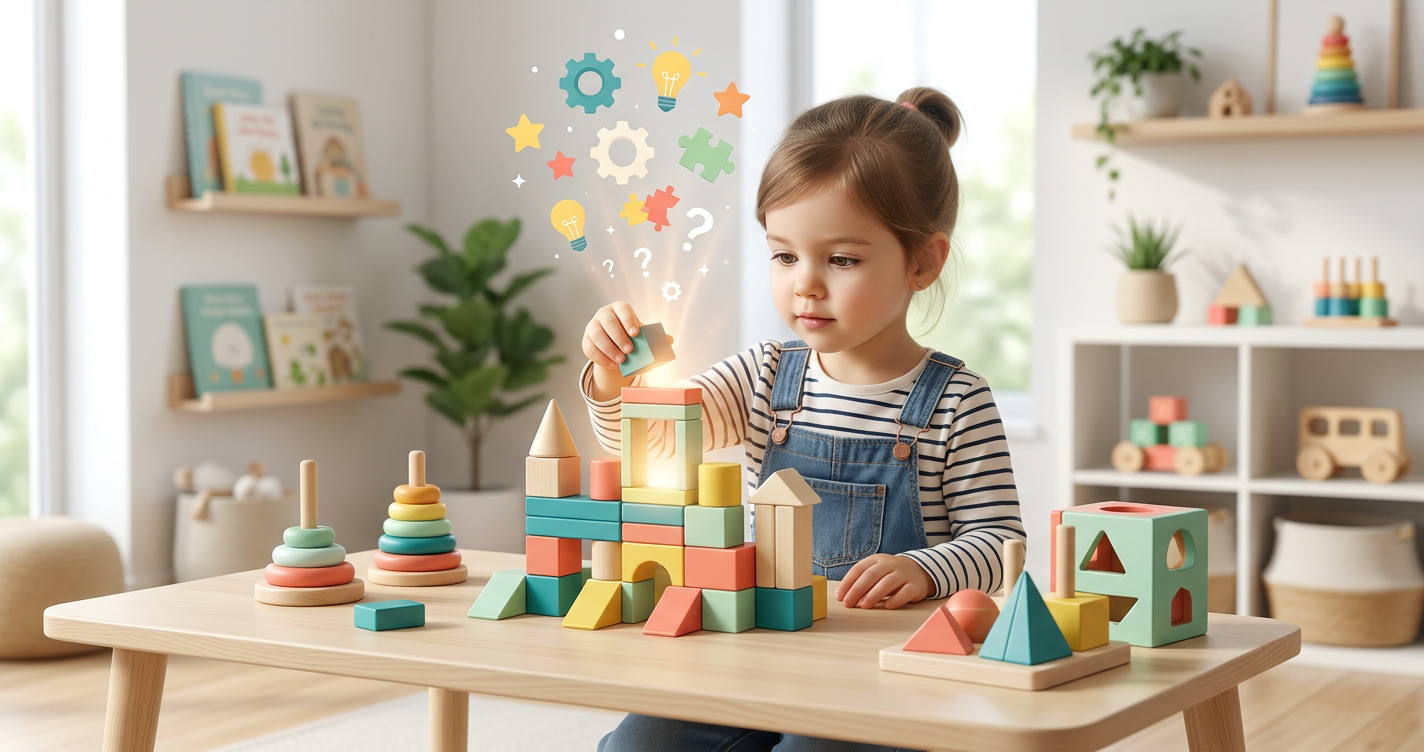
From simple wooden blocks that teach balance and geometry to complex STEM kits that introduce coding concepts, the common thread is purposeful engagement. They transform playtime into a rich learning experience, often without the child even realizing they're learning!
The Science Behind the Smiles: How Toys Shape Young Minds
The early years of a child's life are a period of incredible brain development. Synaptic connections are forming at an astonishing rate, laying the groundwork for all future learning. Research in developmental psychology consistently highlights the importance of enriched environments and active engagement in this process. Educational toys provide precisely this kind of enrichment, aligning perfectly with established theories of child development.
Building Blocks for the Brain: Key Cognitive Skills Enhanced by Play
- Problem-Solving & Critical Thinking: Puzzles, building sets, and strategy games challenge children to think logically, identify patterns, and devise solutions. This repeated practice strengthens neural pathways associated with executive functions.
- Language Development: Role-playing toys, puppets, and story-building kits encourage verbal expression, vocabulary expansion, and narrative skills. Even simple picture books can spark conversations and introduce new words.
- Spatial Reasoning: Blocks, construction toys, and shape sorters help children understand relationships between objects, sizes, and shapes, which is fundamental for later math and science understanding.
- Memory & Attention: Matching games, memory cards, and sequence puzzles require children to remember information and sustain focus, improving their attention spans and recall abilities.
- Creativity & Imagination: Open-ended toys like art supplies, dress-up clothes, and magnetic tiles foster imaginative play, allowing children to create their own worlds, stories, and solutions, crucial for innovative thinking.
- Fine Motor Skills & Hand-Eye Coordination: Manipulating small pieces, stacking, threading beads, and drawing all refine the delicate movements of the hands and fingers, essential for tasks like writing and self-care.
Psychologists like Jean Piaget emphasized that children learn by doing. Educational toys provide the concrete experiences necessary for children to construct their understanding of the world. Similarly, Lev Vygotsky's concept of the Zone of Proximal Development (ZPD) suggests that children learn best when challenged slightly beyond their current capabilities, often with the help of a more knowledgeable other or, indeed, a well-designed toy that scaffolds their learning journey.
Age-Appropriate Wonders: Choosing the Right Educational Toys
The key to maximizing the benefits of educational toys lies in selecting items that are appropriate for your child's developmental stage. What excites a toddler might bore a preschooler, and vice-versa. Here’s a guide to help you choose:
Infants (0-12 months): Sensory Exploration
At this stage, learning is primarily sensory. Look for toys that engage sight, sound, and touch. Examples include rattles, soft books with different textures, activity mats, stacking rings, and simple shape sorters with large pieces. These toys help with object permanence, cause-and-effect understanding, and early motor skills.
Toddlers (1-3 years): Early Problem Solvers
Toddlers are bursting with curiosity and developing their independence. Great choices include chunky puzzles, larger building blocks (like Duplo), musical instruments, push-and-pull toys, and simple pretend-play items (toy phones, kitchen sets). These foster fine motor skills, language development, basic problem-solving, and imaginative play.
Preschoolers (3-5 years): Building Foundations
Preschoolers are ready for more complex challenges and social interaction. Consider advanced puzzles, construction sets, art supplies (crayons, washable paints), dramatic play kits, early board games (like Candyland), and simple science exploration kits. These toys enhance critical thinking, social skills, pre-reading/math concepts, and creative expression.
Early School Age (5-8 years): Deepening Skills
Children in early elementary school are developing logical reasoning and a deeper understanding of the world. Look for more intricate building sets (LEGO, K'nex), science experiment kits, strategy board games, early coding toys, craft kits, and age-appropriate robotics. These encourage perseverance, logical thinking, engineering concepts, and collaborative play.
More Than Just the Toy: The Power of Engaged Play
While educational toys are invaluable tools, their true power is unleashed when coupled with engaged interaction. A toy, however brilliant, cannot replace the warmth and guidance of a parent or caregiver. Think of yourself as the facilitator of learning, not just the provider of toys.
- Play with Them: Get down on their level, join their imaginative world, and participate in their building projects. Your presence validates their play and provides opportunities for interaction.
- Ask Open-Ended Questions: Instead of telling them what to do, ask, “What do you think will happen if…?” or “How could we make this stronger?” This encourages critical thinking and independent problem-solving.
- Encourage Exploration, Don't Just Provide Answers: Allow them to struggle a little and discover solutions on their own. The process of figuring things out is often more valuable than the end product.
- Talk About What They're Doing: Narrate their actions, introduce new vocabulary, and discuss the concepts they're engaging with. “You’re stacking the red block on top of the blue one!” or “That car is going so fast!”
- Limit Screen Time: While digital learning tools have their place, excessive screen time can displace the hands-on, interactive play that is crucial for brain development. Prioritize physical toys and real-world interactions.
Cultivating a Learning Environment: Tips for Parents
Creating an environment that nurtures cognitive growth doesn't require a playroom full of expensive gadgets. A thoughtful approach to toys and play can make all the difference:
- Rotate Toys Regularly: Children can become overwhelmed by too many options. Store some toys away and bring them out periodically to renew interest and engagement.
- Create a Designated Play Space: A comfortable, safe area where toys are accessible encourages independent play and exploration.
- Prioritize Quality Over Quantity: A few well-chosen, durable educational toys will offer more value and last longer than a mountain of flimsy, single-purpose items.
- Observe Your Child's Interests: Pay attention to what your child gravitates towards. If they love animals, seek out animal-themed puzzles or science kits. Tailoring toys to their passions will increase engagement.
- Embrace Open-Ended Toys: Toys that can be used in multiple ways (blocks, art supplies, loose parts) encourage creativity and last longer through different developmental stages.
Conclusion
Educational toys are far more than mere playthings; they are vital instruments in shaping a child's cognitive landscape. By providing opportunities for problem-solving, creative expression, language acquisition, and fine motor skill development, these toys lay a robust foundation for future academic success and overall well-being. As parents, our role is to thoughtfully select age-appropriate toys and, most importantly, to engage actively in the play process, transforming simple playtime into extraordinary learning experiences. So, go ahead, encourage that block tower to tumble, that puzzle piece to fit, and watch with delight as your child’s potential truly begins to unlock.