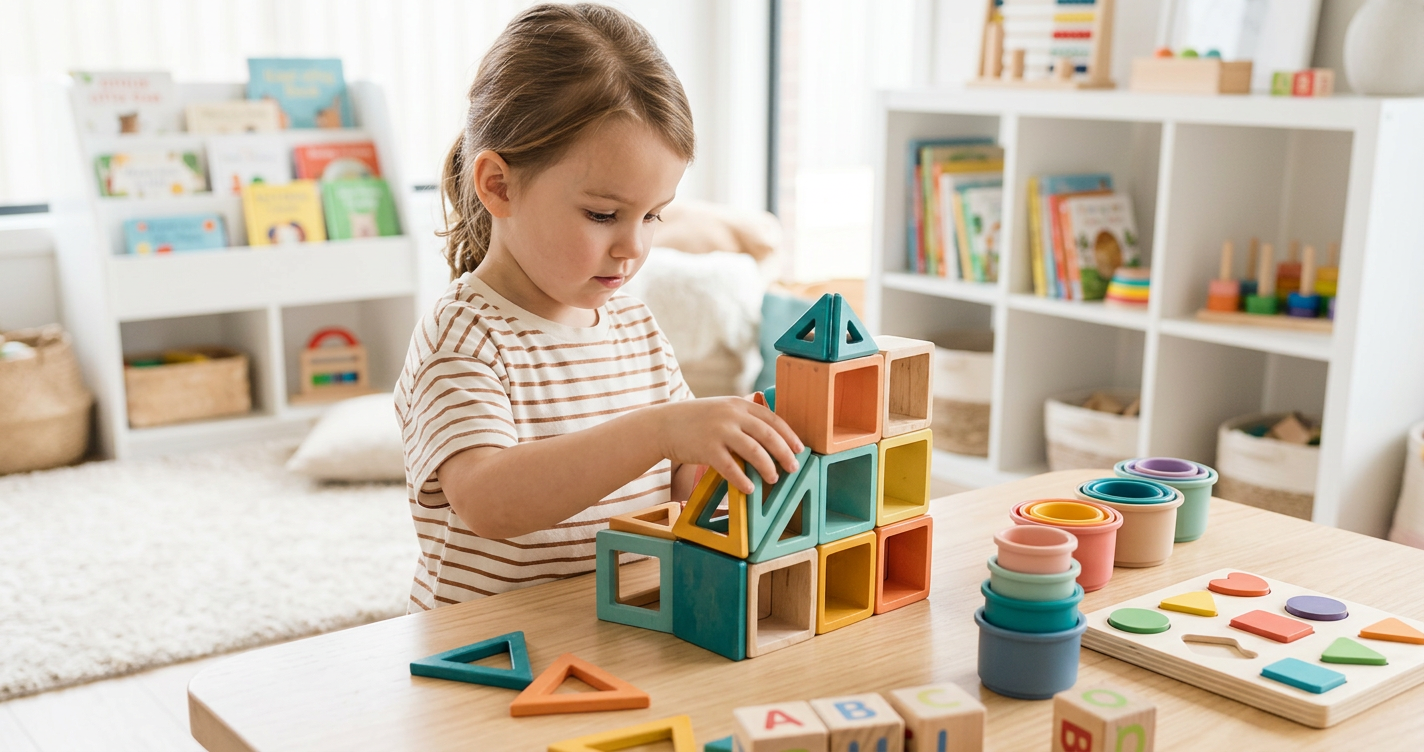
As parents, we all want the best for our children – to see them thrive, grow, and reach their full potential. In a world brimming with screens and passive entertainment, it’s easy to overlook the profound impact that well-chosen, hands-on play can have on a child’s developing mind. Enter educational toys: far more than mere distractions, these powerful tools are designed to stimulate, challenge, and nurture the very foundations of your child’s intellect. But how exactly do they work their magic? And how can you ensure you’re choosing the right ones?
This comprehensive guide will take you on a journey through the fascinating world of educational toys and their crucial role in cognitive development. We’ll explore what cognitive development truly means, uncover how specific toys target key skills, discuss age-appropriate choices, and provide actionable tips for making informed decisions. Get ready to empower your child’s learning journey, one playful moment at a time! this excellent toy product
What Exactly is Cognitive Development? Understanding Your Child's Growing Mind
Before we dive into the toys, let's clarify what we mean by cognitive development. Simply put, it's the process by which a child constructs their understanding of the world around them. It encompasses the development of thinking, reasoning, problem-solving, memory, language, and perception.
From the moment they are born, children are little scientists, constantly observing, experimenting, and making sense of their environment. Every interaction, every new experience, every moment of play contributes to building complex neural pathways in their brain. Cognitive development isn't just about 'getting smarter'; it's about developing the foundational skills that enable a child to learn, adapt, and interact effectively throughout their entire life. It’s about how they learn to think, remember, and understand the world, laying the groundwork for academic success and crucial life skills.
How Educational Toys Nurture Key Cognitive Skills
Educational toys are specifically crafted to engage children in ways that promote specific cognitive functions. They’re not just about memorization, but about active exploration and discovery. Here’s a closer look at how these learning toys support various aspects of brain growth:
Problem-Solving and Critical Thinking
- Puzzles and Building Blocks: From simple knob puzzles for toddlers to complex LEGO sets or intricate brain teasers for older children, these toys demand strategic thinking. Children learn about spatial relationships, trial and error, sequencing, and perseverance as they figure out how pieces fit together or how to construct a stable structure.
- Logic Games and Strategy Board Games: These activities encourage children to think several steps ahead, anticipate outcomes, and adapt their strategies based on new information. This is foundational for developing strong critical thinking skills.
Memory and Attention Span
- Matching Games: Classic memory games where children flip cards to find pairs are excellent for strengthening working memory and visual recall.
- Sequence-Based Toys: Toys that require children to follow a series of steps or remember a pattern (like 'Simon Says' type games) enhance both memory and sustained attention, crucial for future academic tasks.
Creativity and Imagination
- Open-Ended Play Materials: Blocks, art supplies, playdough, dress-up costumes, and dollhouses don’t come with a prescribed way to play. They invite children to invent stories, create worlds, and express themselves freely, fostering imaginative thinking and divergent problem-solving. Research consistently shows that imaginative play is a cornerstone of cognitive flexibility.
Language and Communication
- Puppets and Storytelling Kits: These encourage children to construct narratives, use descriptive language, and engage in dialogue, significantly boosting their vocabulary and communication skills.
- Alphabet and Phonics Toys: While seemingly simple, these toys introduce foundational literacy skills, linking sounds to letters and building early reading readiness.
Spatial Reasoning and Motor Skills
- Construction Toys and Shape Sorters: Manipulating objects in 3D space, understanding shapes, sizes, and orientations, and coordinating hand-eye movements are all vital aspects of spatial reasoning and fine motor development, which are interconnected with cognitive growth.
By engaging with these types of toys, children aren’t just having fun; they’re actively building, refining, and strengthening the neural connections that underpin all future learning.
Age-Appropriate Play: Matching Toys to Developmental Stages
One of the keys to maximizing the benefits of educational toys is choosing ones that are appropriate for your child’s developmental stage. A toy that's too simple will bore them; one that's too complex will frustrate them. Here’s a general guide:
Infants (0-12 Months): Sensory Exploration and Cause & Effect
- Focus: Sensory stimulation, grasping, tracking, cause-and-effect.
- Toys: Rattles, soft books, activity mats, unbreakable mirrors, stacking rings, soft blocks, musical toys that respond to touch.
Toddlers (1-3 Years): Fine Motor, Language, and Early Problem-Solving
- Focus: Walking, talking, exploring, developing independence, early problem-solving.
- Toys: Shape sorters, simple puzzles (1-5 pieces), push-and-pull toys, large building blocks, chunky crayons, picture books, play kitchens, musical instruments.
Preschoolers (3-5 Years): Imagination, Pre-Academic Skills, and Social Play
- Focus: Imaginative play, social interaction, pre-reading/math concepts, fine-tuning motor skills.
- Toys: Dress-up clothes, art supplies, complex building sets (LEGO Duplo, magnetic tiles), board games (simple rules), alphabet/number games, science exploration kits (magnifying glass, nature items).
School-Aged Children (5+ Years): STEM, Strategy, and Complex Problem-Solving
- Focus: Logical thinking, scientific concepts, advanced problem-solving, strategy, collaboration.
- Toys: Robotics kits, advanced building sets (LEGO, K'nex), coding games, chemistry sets, intricate board games, model kits, creative writing journals, musical instruments.
Remember, these are guidelines. Every child develops at their own pace, so observe your child's interests and abilities when making selections.
Beyond the Toy: The Power of Interactive Play
While the right toy is a fantastic starting point, its true potential is often unlocked through interaction. An educational toy is merely a prop; the real learning happens through engagement and dialogue.
- Join In: Sit down and play with your child. Ask open-ended questions like, “What are you building there?” or “What do you think will happen if…?” This models curiosity and encourages them to articulate their thoughts.
- Expand on Their Play: If they’re stacking blocks, suggest building a bridge or a tower for a specific character. If they’re doing a puzzle, talk about the colors or shapes of the pieces.
- Encourage Exploration: Resist the urge to 'fix' a problem for them immediately. Guide them with questions, but allow them the satisfaction of figuring things out on their own. This builds resilience and self-efficacy.
- Value the Process, Not Just the Product: Focus on the effort and the learning taking place, rather than just the completed puzzle or perfect drawing.
The shared experience of playing together not only strengthens cognitive skills but also fosters emotional development, communication, and a stronger parent-child bond. This social interaction is a powerful catalyst for brain growth.
Choosing the Right Educational Toys: A Parent's Practical Guide
With so many options available, selecting the best child development toys can feel overwhelming. Here are some practical tips to help you make informed choices:
- Prioritize Open-Endedness: Toys that can be used in multiple ways (e.g., blocks, playdough, art supplies) often offer more long-term cognitive benefits than single-purpose toys. They encourage creativity and imagination.
- Consider Durability and Safety: Toys should be well-made, non-toxic, and free from small parts for younger children to prevent choking hazards. Look for reputable brands and safety certifications.
- Match Interests, Not Just Age: While age-appropriateness is important, also consider what genuinely captures your child’s attention. A child passionate about dinosaurs might learn more from a dinosaur excavation kit than a generic science kit.
- Look for Versatility: Can the toy grow with your child? Can it be used in conjunction with other toys?
- Avoid Overstimulation: Sometimes, less is more. Toys with too many lights, sounds, and buttons can be overstimulating and limit a child's own initiative to explore.
- Think 'Active' Over 'Passive': Choose toys that require your child to do something – manipulate, build, imagine, solve – rather than just passively watch.
- Read Reviews and Do Research: Look for evidence-based recommendations and reviews from other parents or educators.
- Don't Break the Bank: Educational toys don't have to be expensive. Many classic, simple toys (blocks, balls, art supplies) offer immense developmental value.
The Long-Term Benefits: Setting Your Child Up for Success
Investing in educational toys and engaging in thoughtful play isn't just about boosting current cognitive abilities; it's about laying a robust foundation for future success. Children who regularly engage with stimulating, interactive play experiences tend to develop stronger problem-solving skills, better adaptability, increased curiosity, and a lifelong love for learning. These are the qualities that prepare them not only for academic achievements but also for navigating the complexities of adulthood and thriving in an ever-changing world.
Empower Their Potential, One Playtime at a Time
The journey of cognitive development is a marvelous adventure, and as parents, we have the incredible opportunity to be our children’s first and most influential guides. By thoughtfully selecting educational toys and, more importantly, by actively engaging in play with them, you’re doing more than just providing entertainment. You’re nurturing their innate curiosity, strengthening their developing minds, and empowering them with the essential skills they need to learn, grow, and flourish. So, go ahead – embrace the power of play and watch your child’s brainpower truly blossom!