Unlocking Potential: How Educational Toys Supercharge Cognitive Development in Young Children
Every parent dreams of giving their child the best possible start in life. We pour over books, seek advice, and strive to create an enriching environment. Amidst this quest, one powerful, yet often underestimated, tool stands out: the educational toy. Far from mere distractions, these thoughtfully designed playthings are dynamic catalysts, actively shaping the cognitive landscape of our little ones.
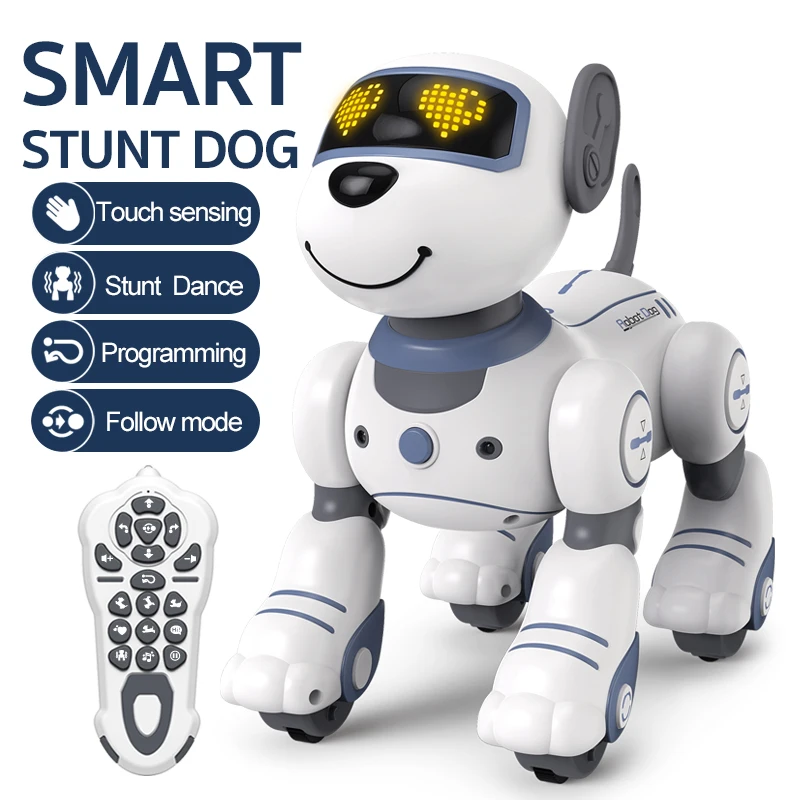
From their first curious grasp to their imaginative role-playing, children are constantly learning, absorbing, and processing the world around them. Play isn't just fun; it's their fundamental work, and educational toys are their essential tools. This post will explore the profound connection between play with educational toys and the remarkable surge in cognitive development during early childhood. We'll dive into the science, offer practical advice, and empower you to make informed choices that truly supercharge your child's potential. this excellent toy product
Understanding the Marvel of Early Cognitive Development
Before we explore the toys, let's briefly marvel at what's happening inside a young child's brain. Cognitive development refers to the growth of abilities like thinking, reasoning, problem-solving, memory, language, and attention. It's the process by which children come to understand the world.
During the early years, a child's brain is a superhighway of neural connections forming at an astonishing rate. Research consistently shows that the experiences children have in their early years directly influence brain architecture, laying the foundation for all future learning and behavior. For instance, studies published in journals like Child Development highlight how early interactions and stimulating environments significantly impact executive functions – skills like planning, working memory, and self-regulation – which are crucial for academic success and life skills.
This incredible period of rapid growth means that every interaction, every exploration, and every moment of play is a learning opportunity. Educational toys are specifically designed to tap into this natural curiosity and fuel these crucial developmental processes.
The Direct Link: How Educational Toys Nurture Key Cognitive Skills
Educational toys aren't just about memorizing facts; they're about building the foundational skills that enable deeper learning. Here's how they work their magic across various cognitive domains:
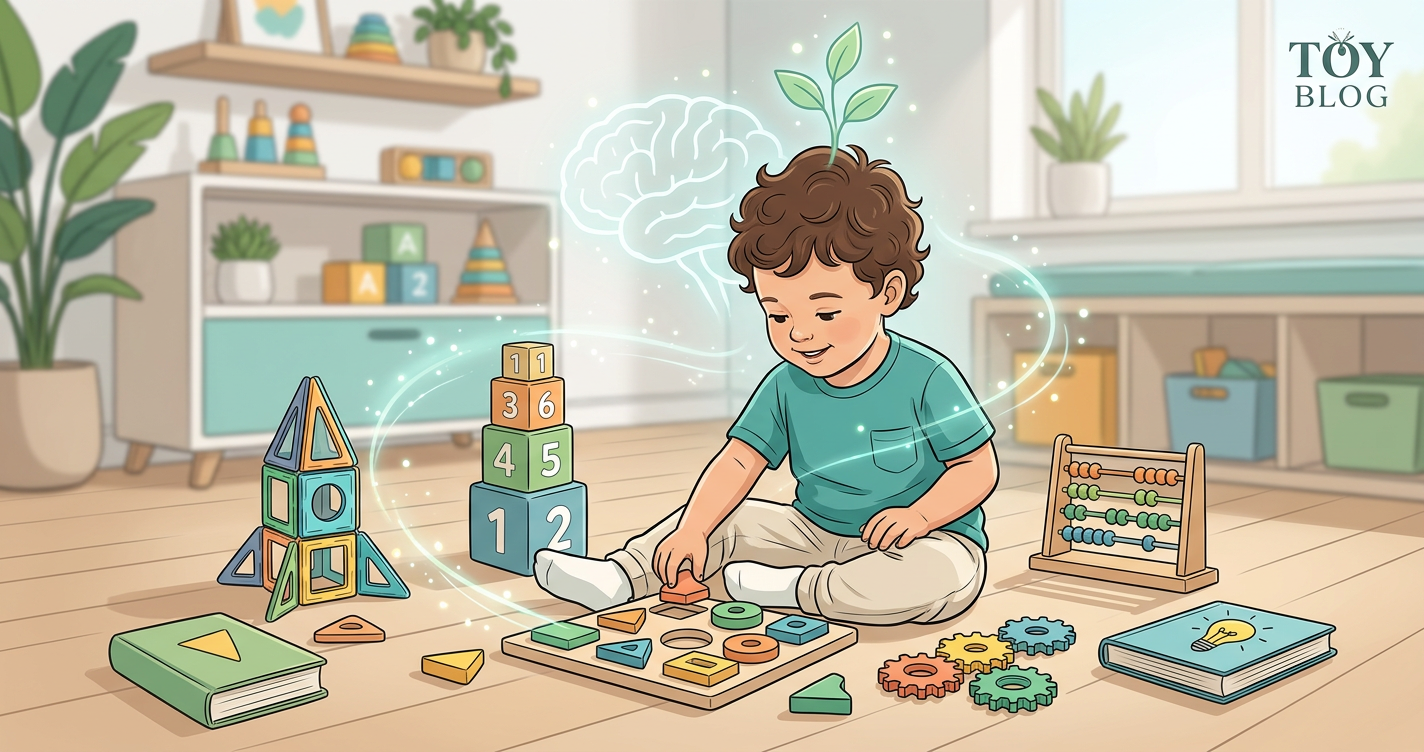
- Problem-Solving & Critical Thinking: Think about a child tackling a shape sorter or a building block challenge. They're not just playing; they're hypothesizing, testing, failing, and trying again. Puzzles, construction sets (like LEGOs or magnetic tiles), and even simple stacking cups encourage children to analyze, strategize, and find solutions. They learn about cause and effect, spatial relationships, and persistence.
- Memory & Attention: Matching games, memory cards, and sequence puzzles are fantastic for honing a child's working memory and sustained attention. Even toys that require following multi-step instructions, like assembling a small model, gently push children to remember steps and focus on the task at hand.
- Language & Communication: Role-playing sets (kitchens, doctor's kits, puppet theaters), alphabet blocks, and interactive storybooks actively promote language acquisition. Children use new vocabulary, practice sentence structure, and engage in dialogue. When playing with others, they learn to articulate their ideas and understand different perspectives, boosting both verbal and non-verbal communication skills.
- Spatial Reasoning: This critical skill, essential for subjects like math and science, involves understanding objects in space. Building blocks, geometric shape sets, and even simple stacking toys help children visualize, rotate, and manipulate objects mentally. They learn about balance, symmetry, and how different shapes fit together.
- Creativity & Imagination: Open-ended toys like art supplies, play-doh, dress-up clothes, and plain wooden blocks are boundless canvases for imagination. When children engage in imaginative play, they're developing narrative skills, exploring different roles, and creating their own worlds. This process fosters divergent thinking – the ability to generate multiple ideas – which is a cornerstone of innovation.
- Fine Motor Skills & Hand-Eye Coordination: While often seen as physical skills, manipulating small parts, drawing, or lacing beads directly impacts cognitive development. The brain areas responsible for motor control are closely linked to cognitive functions. Improving dexterity and hand-eye coordination enables children to interact more effectively with their environment, leading to richer learning experiences.
Each interaction, each success, and even each moment of frustration that leads to a breakthrough strengthens neural pathways, literally building a more capable brain.
Beyond Academics: The Holistic Benefits of Playful Learning
The impact of educational toys extends far beyond just academic readiness. They contribute to a child's holistic development, shaping well-rounded individuals ready to navigate the complexities of life. For instance, a child learning to share building blocks or take turns during a board game is developing crucial social skills. Learning to cope with the frustration of a challenging puzzle builds resilience and emotional regulation.
Mastering a new skill with an educational toy also significantly boosts a child's self-confidence and self-esteem. This sense of accomplishment encourages further exploration and a positive attitude towards learning. These emotional and social competencies are intrinsically linked to cognitive growth, creating a powerful feedback loop where better social-emotional health supports greater cognitive engagement, and vice-versa.
Choosing the Right Educational Toys: A Parent's Guide
With an overwhelming array of options, selecting the 'right' educational toy can feel daunting. Here’s an evidence-based approach to help you make thoughtful choices:
- Prioritize Age-Appropriateness: A toy that's too simple will quickly bore a child, while one that's too complex can lead to frustration. Check manufacturer age recommendations, but also consider your child's individual developmental stage and interests. The best toys offer a slight challenge, encouraging growth without overwhelming.
- Embrace Open-Ended Play: These are toys that can be used in multiple ways, fostering creativity and imagination. Examples include building blocks, art supplies, play silks, or simple animal figurines. They don't have a single 'right' way to play, allowing children to direct their own learning. Research from institutions like the American Academy of Pediatrics emphasizes the importance of open-ended, unstructured play.
- Look for Engagement, Not Just Entertainment: The best educational toys require active participation from the child. They encourage interaction, exploration, and problem-solving, rather than passive observation. While flashing lights and sounds can be entertaining, ensure the toy offers genuine opportunities for learning and discovery.
- Consider Durability and Safety: Always choose toys made from non-toxic materials, free from small parts that could be choking hazards for young children. Durability ensures the toy can withstand enthusiastic play and be enjoyed for years.
- Follow Your Child's Interests: If your child is fascinated by animals, find animal-themed puzzles or building sets. If they love creating, invest in quality art supplies. When a child is genuinely interested, their engagement and learning potential skyrocket.
- Less is Often More: A cluttered playroom can be overwhelming. A few high-quality, versatile educational toys are often more beneficial than a room full of single-purpose gadgets. Consider rotating toys to keep them fresh and engaging.
Integrating Educational Play into Daily Life
The power of educational toys isn't solely in their purchase; it's in how they're used. Here are a few ways to maximize their impact:
- Be Present and Engaged: Play *with* your child! Your interaction is a powerful catalyst. Ask open-ended questions like, "What do you think will happen if...?" or "Tell me about what you're building." This verbal interaction strengthens language skills and encourages deeper thinking.
- Create a Play-Rich Environment: Designate a space where toys are easily accessible and organized. A child who can independently choose their play materials is more likely to engage in self-directed learning.
- Allow for Unstructured Play: While guided play has its place, also give children ample time to explore and experiment with toys on their own terms. This fosters independence, problem-solving, and imaginative thinking.
- Connect Play to Real Life: If your child is playing with a toy kitchen, talk about cooking real meals. If they're building with blocks, point out similar structures in your neighborhood. This helps them see the relevance of their play to the wider world.
Conclusion: The Enduring Power of Playful Learning
The journey of cognitive development in young children is a miraculous one, and as parents, we have the incredible privilege of nurturing it. Educational toys are not just frivolous purchases; they are thoughtful investments in your child's future. They are the building blocks for critical thinking, the spark for imagination, and the foundation for a lifelong love of learning.
By understanding the science behind cognitive growth, choosing age-appropriate and engaging toys, and actively participating in their play, you can unlock a world of potential for your child. So, embrace the power of playful learning, watch your child's mind flourish, and enjoy every moment of discovery and growth. The best educational toy is ultimately the one that inspires curiosity, encourages exploration, and brings a smile to your child's face as they build, imagine, and learn.