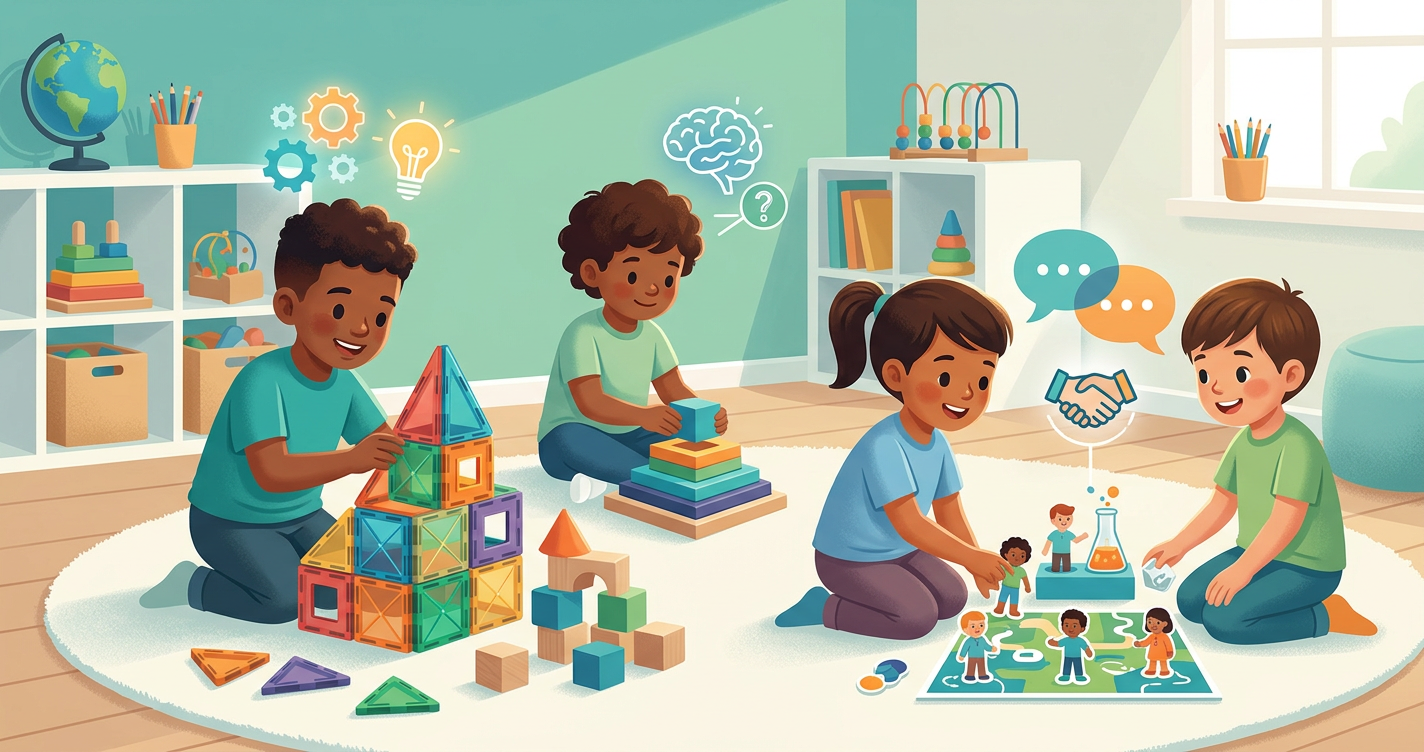
As parents, we all want the best for our children. We dream of them growing into happy, well-adjusted, and intelligent individuals. While love, nutrition, and a supportive environment are foundational, there's a powerful, often underestimated tool right at our fingertips: educational toys. More than just colorful distractions, these carefully designed playthings are secret agents in your child's developmental journey, actively shaping their cognitive abilities and nurturing their social-emotional intelligence. But how exactly do they work their magic? Let's dive deep into the fascinating world of educational play and uncover the profound impact these toys have on your child's developing mind and heart.
What Exactly Are Educational Toys? More Than Just 'Smart' Play
Before we explore the benefits, let's clarify what we mean by 'educational toys.' It's not just about flashcards or complex puzzles. An educational toy is any plaything designed to stimulate learning, encourage discovery, and promote skill development through engaging, hands-on interaction. This can range from simple building blocks that teach spatial reasoning and balance, to elaborate science kits that introduce complex concepts like chemistry or physics, or even imaginative play sets that foster empathy and social scripts. this excellent toy product
The key is that they aren't just passive entertainment. They invite children to experiment, problem-solve, create, and interact, transforming playtime into a powerful learning experience. They embrace the principle that children learn best when they are actively engaged and enjoying themselves.
Boosting Brainpower: The Cognitive Superpowers of Educational Play
One of the most immediate and observable benefits of educational toys is their incredible capacity to enhance cognitive development. From infancy through the school years, these toys are constantly challenging children to think, reason, and understand the world around them.
Problem-Solving and Critical Thinking
Think about a child trying to fit a square peg into a square hole, or figuring out how to balance a stack of blocks without it toppling over. These aren't just simple tasks; they are early lessons in problem-solving. Puzzles, building sets, logic games, and even simple shape sorters require children to analyze, strategize, and learn from trial and error. This iterative process builds crucial critical thinking skills, teaching them to approach challenges with a curious and persistent mindset.
- Puzzles: Develop spatial reasoning, pattern recognition, and fine motor skills.
- Building Blocks/Construction Sets: Foster creativity, engineering principles, and understanding of balance and structure.
- Logic Games: Enhance deductive reasoning, sequencing, and strategic planning.
Language and Literacy Development
Many educational toys are fantastic for nurturing early language skills. Toys that involve storytelling, letter recognition, or even simple matching games with words can significantly boost a child's vocabulary and understanding of language structure. Puppet shows encourage dialogue, while alphabet puzzles and magnetic letters introduce phonics and word formation in a playful, accessible way. Research consistently shows a strong link between early exposure to language-rich play and later literacy success.
- Storytelling Kits/Puppets: Encourage narrative development, imaginative play, and verbal expression.
- Alphabet & Number Toys: Introduce foundational concepts for reading and math.
- Interactive Books: Promote early literacy skills and a love for reading.
Memory and Concentration
Educational toys often demand sustained attention and memory recall. A memory matching game, for instance, directly trains visual memory. Constructing a complex model requires remembering a sequence of steps. Even open-ended play with a dollhouse can involve recalling social scenarios and character roles. These playful exercises strengthen a child's ability to focus, concentrate, and retain information, skills that are invaluable in academic settings and everyday life.
- Memory Games: Directly train visual and short-term memory.
- Complex Building Projects: Require sustained focus and sequential memory.
- Board Games: Encourage rule-following and strategic recall.
Nurturing Little Hearts: Social and Emotional Growth Through Play
While cognitive benefits are often highlighted, the impact of educational toys on a child's social and emotional development is equally profound. Play is a child's natural language, and through it, they learn to navigate the complexities of human interaction and emotion.
Cooperation and Sharing
Many educational toys, especially board games, building sets, or dramatic play props, are designed for multiple players. When children play together, they naturally learn to share resources, take turns, and cooperate towards a common goal. This can be challenging at first, but with gentle guidance, these experiences become powerful lessons in teamwork and compromise, laying the groundwork for healthy relationships later in life.
- Board Games: Teach turn-taking, fair play, and handling wins/losses gracefully.
- Collaborative Building Sets: Encourage shared goals and division of labor.
- Dramatic Play Sets (e.g., kitchen, doctor's office): Foster role-playing and understanding of social roles.
Empathy and Emotional Intelligence
Dollhouses, action figures, and dramatic play costumes aren't just for fun; they are powerful tools for developing empathy. When children engage in pretend play, they step into different roles, experiencing situations from another's perspective. They might comfort a 'sick' teddy bear, negotiate a 'sale' at a toy store, or resolve a 'conflict' between two action figures. These scenarios help them understand emotions, develop problem-solving strategies for social situations, and build emotional intelligence.
- Dolls & Action Figures: Facilitate imaginative role-playing and understanding of emotions.
- Puppets: Allow children to explore different personalities and social interactions safely.
- Art Supplies: Provide an outlet for emotional expression and creativity.
Communication Skills
Playing with others naturally requires communication. Children learn to articulate their ideas, listen to others, negotiate, and express their needs. Educational toys often provide a context for rich verbal exchange, whether it's describing their latest block creation, explaining the rules of a game, or narrating a fantastical story during pretend play. This active use of language refines their communication skills, making them more effective at expressing themselves and understanding others.
- Story Cubes/Cards: Promote collaborative storytelling and verbal fluency.
- Walkie-Talkies/Play Telephones: Encourage dialogue and active listening.
- Group Science Experiments: Require children to discuss observations and share findings.
Beyond the Playroom: Long-Term Impact on Success
The skills fostered by educational toys aren't confined to childhood. The cognitive agility, problem-solving prowess, social competence, and emotional resilience developed through play form the bedrock for future academic success and lifelong learning. Children who engage with these toys tend to be more curious, adaptable, and confident learners. They are better equipped to handle challenges, collaborate with peers, and think creatively – qualities highly valued in school, careers, and personal relationships.
By investing in educational toys, you're not just buying a plaything; you're investing in your child's future, helping them build a robust foundation for a lifetime of growth and achievement.
Choosing the Right Educational Toys: A Parent's Guide
With so many options, how do you pick the best educational toys for your child? Here are some friendly tips:
- Age-Appropriateness: Always check the recommended age range. Toys that are too simple will bore, while those too complex will frustrate.
- Open-Ended Play: Look for toys that can be used in multiple ways, encouraging creativity rather than dictating a specific outcome. Blocks, art supplies, and dramatic play sets are excellent examples.
- Child's Interests: Tailor your choices to your child's natural curiosities. If they love animals, consider animal-themed puzzles or science kits. If they're fascinated by construction, building toys are a great fit.
- Durability and Safety: Ensure toys are well-made, non-toxic, and free from small parts that could be choking hazards for younger children.
- Encourage Interaction: The best educational toys often invite parent-child interaction, creating opportunities for shared learning and bonding.
- Balance Screen Time: While some digital educational apps can be beneficial, prioritize physical, hands-on toys that engage all senses and encourage gross and fine motor skills.
Making the Most of Educational Play
Simply having educational toys isn't enough; it's how they're used that truly matters. Here’s how you can maximize their impact:
- Join In! Play alongside your child. Ask open-ended questions like, “What are you building?” or “What do you think will happen if…?” This interaction models curiosity and encourages deeper thinking.
- Create a Play-Friendly Environment: Designate a space where toys are easily accessible and organized, inviting your child to explore independently.
- Rotate Toys: Keep a selection of toys out and store others away, rotating them every few weeks. This keeps playtime fresh and prevents boredom.
- Follow Their Lead: Allow your child to direct the play. Even if it seems they’re not using a toy “correctly,” their unique exploration is a learning process.
- Celebrate Efforts, Not Just Outcomes: Praise their persistence, creativity, and problem-solving attempts, rather than just the finished product.
Conclusion: Empowering Your Child Through Play
Educational toys are far more than just playthings; they are powerful catalysts for growth, shaping your child's cognitive abilities, nurturing their social understanding, and building their emotional resilience. By thoughtfully selecting and engaging with these wonderful tools, you're not just providing entertainment – you're laying a robust foundation for a future filled with curiosity, intelligence, and meaningful connections. So, embrace the magic of educational play, and watch your child's superpowers flourish!