In a world that’s constantly evolving, the ability to think critically and solve complex problems isn't just a nice-to-have skill; it’s a fundamental necessity for success and well-being. As parents and educators, we instinctively want to equip our children with the best tools for their future. While traditional schooling plays a vital role, what if we told you that some of the most powerful learning happens not in a classroom, but on the living room floor, surrounded by colourful blocks and intriguing gadgets? Welcome to the wonderful world of educational toys, where play isn't just fun – it's a profound catalyst for developing the sharpest young minds.
This post will explore how thoughtfully chosen educational toys can be much more than mere entertainment. We'll delve into the science behind play-based learning and highlight specific types of toys that actively cultivate critical thinking and problem-solving skills, empowering your child to navigate challenges with confidence and creativity. Get ready to transform playtime into powerful learning time! this excellent toy product
Beyond Rote Learning: Why Critical Thinking Matters More Than Ever
Before we dive into the toys, let's clarify what we mean by critical thinking and problem-solving, especially in the context of childhood development. Critical thinking isn't about being critical in a negative sense; it’s the objective analysis and evaluation of information to form a judgment. For kids, this means asking 'why?', 'how?', and 'what if?' They learn to observe, analyze, synthesize, and evaluate information, rather than just passively absorbing it.
Problem-solving, on the other hand, is the process of finding solutions to complex or difficult issues. It involves identifying a problem, brainstorming solutions, testing them out, and adapting as needed. These skills are intertwined; critical thinking helps us understand the problem, and problem-solving helps us find a way forward.
Why are these so crucial today? Our children are growing up in an era of unprecedented information overload and rapid technological change. Memorizing facts is less important than knowing how to evaluate those facts, adapt to new situations, and innovate solutions to problems that haven't even been conceived yet. From navigating social dynamics to excelling in future careers, critical thinking and problem-solving are the bedrock of resilience, adaptability, and lifelong learning.
The Play-Based Advantage: How Toys Spark Cognitive Growth
It might seem counterintuitive that 'playing' could be more effective than structured lessons for developing complex cognitive abilities. However, decades of research in child development confirm that play is the brain's favourite way to learn. When children play, they are actively engaged, motivated, and often self-directed. This intrinsic motivation creates optimal conditions for neural pathways to form and strengthen.
Educational toys, specifically designed with developmental goals in mind, leverage this natural inclination. They transform abstract concepts into tangible, interactive experiences. Instead of being told a principle, a child discovers it through experimentation. This hands-on, experiential learning fosters deeper understanding and retention than passive instruction. As developmental psychologist Lev Vygotsky suggested, play allows children to operate within their “zone of proximal development,” pushing their cognitive boundaries in a safe, engaging environment.
Think about it: when a child is trying to build a stable tower with blocks, they're not just stacking; they're experimenting with balance, gravity, and structural integrity. When they’re completing a puzzle, they’re engaging in spatial reasoning, pattern recognition, and strategic planning. These are the foundational building blocks for more advanced critical thinking and problem-solving in later life.
Types of Educational Toys That Build Brainpower
Not all toys are created equal when it comes to fostering these specific skills. Here are some categories of educational toys that are particularly effective:
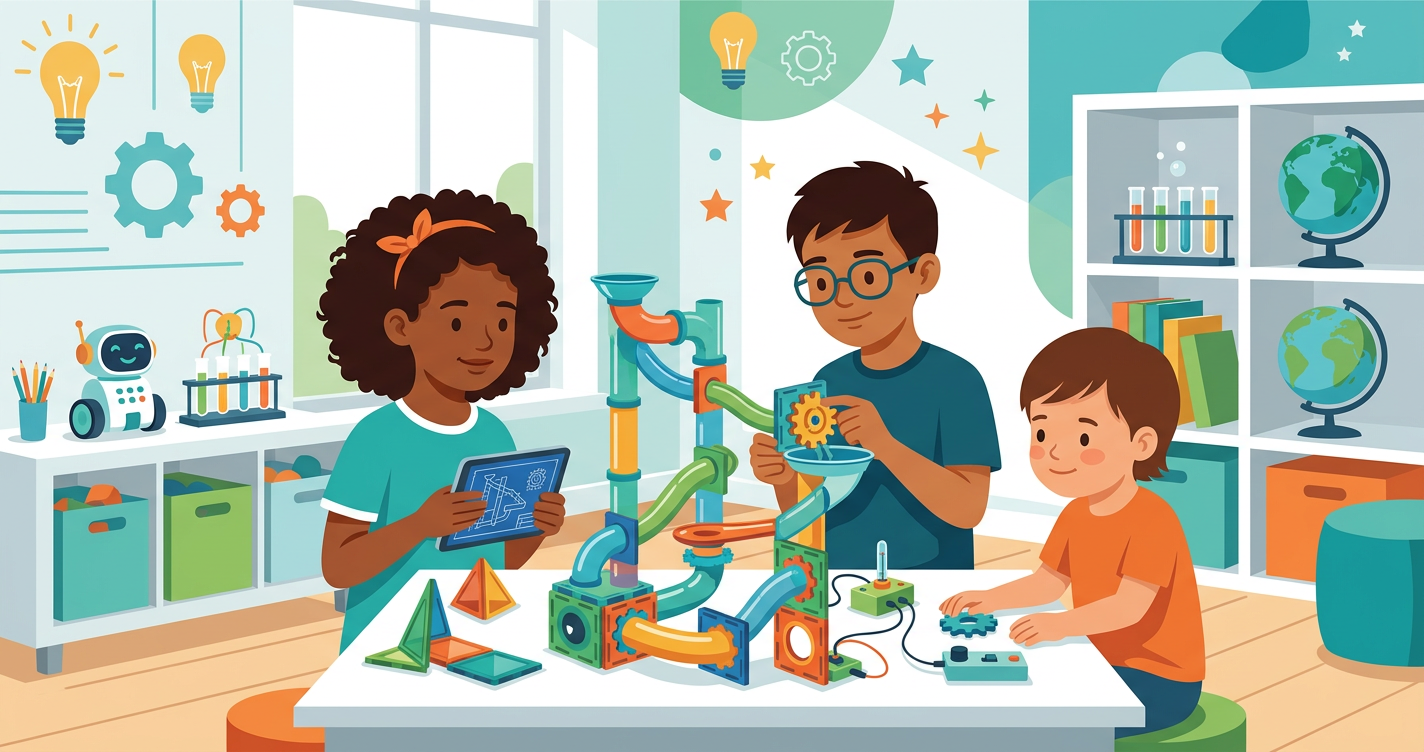
- Construction and Building Toys (LEGO, Magna-Tiles, Wooden Blocks): These timeless classics are powerhouses for development. Children learn about spatial reasoning, balance, geometry, and engineering principles. They encounter problems like 'why did my tower fall?' and must critically analyze their design, then problem-solve by adjusting their approach. They plan, execute, and iterate, developing resilience in the face of failure.
- Puzzles and Logic Games (Jigsaw Puzzles, Brain Teasers, Rush Hour): Puzzles are direct trainers for problem-solving. Jigsaw puzzles enhance pattern recognition, spatial awareness, and the ability to work towards a goal. Logic games, like Rush Hour or traditional Sudoku, demand deductive reasoning, forward planning, and sequential thinking. They teach children to break down a larger problem into smaller, manageable steps.
- STEM Kits (Robotics, Coding Games, Science Experiment Kits): STEM (Science, Technology, Engineering, Math) toys are explicitly designed to introduce these disciplines. Robotics kits challenge children to follow instructions, troubleshoot mechanical issues, and understand cause and effect. Coding games, often screen-based but increasingly physical, teach algorithmic thinking, debugging, and logical sequencing – essential skills for the digital age. Science kits allow for hands-on experimentation, hypothesis testing, and observation, embodying the scientific method.
- Strategy Board Games (Chess, Checkers, Ticket to Ride, Catan Junior): Beyond simple roll-and-move games, strategy board games require players to think several moves ahead, anticipate opponents' actions, and adapt their plans. They teach decision-making under uncertainty, risk assessment, and understanding consequences. These social interactions also foster negotiation and turn-taking, adding another layer of complex problem-solving.
- Open-Ended Play Materials (Play-Doh, Art Supplies, Dress-Up Clothes): While less structured, open-ended materials are vital for imaginative problem-solving and creative critical thinking. When a child uses Play-Doh to sculpt a creature, they're solving the problem of how to represent their idea. In dramatic play, they create narratives, resolve conflicts between characters, and experiment with different social roles, all of which require flexible thinking and imaginative solutions.
Guiding Your Child's Journey: Maximizing the Impact of Educational Toys
Simply buying the right toy isn't enough; how you engage with your child and the play environment you create are equally important. Here are some tips to truly unlock the potential of educational toys:
- Observe and Engage, Don't Direct: Let your child lead the play. Observe what they're trying to achieve, and then ask open-ended questions like, 'What are you trying to build?' or 'What do you think will happen if you try that?' This encourages them to articulate their thought process and consider alternatives.
- Embrace Productive Struggle: It’s tempting to jump in and solve a problem for your child when they’re frustrated. Resist the urge! Allowing them to struggle a bit (within reason) builds resilience and teaches them that failure is a part of the learning process. Offer encouragement and prompts, rather than solutions. 'What's another way you could try?' is far more powerful than 'Just put this piece here.'
- Create a Conducive Environment: Ensure there's dedicated space and time for uninterrupted play. Rotate toys to keep things fresh and interesting, but also allow for deep dives into preferred activities. A cluttered, overstimulating environment can hinder focused play.
- Model Critical Thinking: Children learn by example. Narrate your own problem-solving process aloud sometimes. 'Hmm, I can't find my keys. Where did I last see them? I checked my bag, maybe they're on the counter?' This shows them how to approach a problem systematically.
- Prioritize Age-Appropriateness (and Beyond): While age guidelines are helpful, focus more on your child's individual developmental stage and interests. A toy that's too easy will bore them, and one that's too difficult will lead to frustration. The sweet spot is a toy that offers a challenge just beyond their current capabilities, encouraging growth.
The Long-Term Benefits: Beyond Childhood Play
The skills honed through engaging with educational toys extend far beyond the playroom. Children who regularly engage in critical thinking and problem-solving through play often demonstrate:
- Stronger Academic Performance: They are better equipped to tackle complex math problems, analyze literature, conduct scientific experiments, and write persuasive essays.
- Enhanced Creativity and Innovation: The ability to think differently and come up with novel solutions is a direct output of flexible, critical thinking.
- Greater Adaptability: As they encounter new challenges, they possess the mental frameworks to break down problems and find effective solutions.
- Improved Resilience and Self-Efficacy: Successfully overcoming challenges through their own efforts builds confidence and teaches them to persevere.
- Better Decision-Making Skills: They learn to weigh options, consider consequences, and make informed choices, a skill invaluable throughout life.
In essence, you're not just buying a toy; you're investing in your child's cognitive toolkit, preparing them for a future that demands sharp minds and innovative spirits.
Conclusion: Embrace Thoughtful Play for Brighter Futures
Educational toys are far more than just playthings; they are powerful instruments for cultivating critical thinking and problem-solving skills in children. By engaging with construction sets, puzzles, STEM kits, strategy games, and open-ended materials, children are not just having fun – they are actively building the neural connections and mental models necessary to thrive in an increasingly complex world. As parents and caregivers, our role is to thoughtfully select these tools and then provide the space, encouragement, and guidance for our children to explore, experiment, and ultimately, discover the incredible power of their own minds.
So, next time you're looking for a gift or just setting up playtime, remember the profound impact a well-chosen educational toy can have. It's an investment in a brighter, more capable future for the little critical thinkers and problem solvers in your life. Happy playing, happy learning!