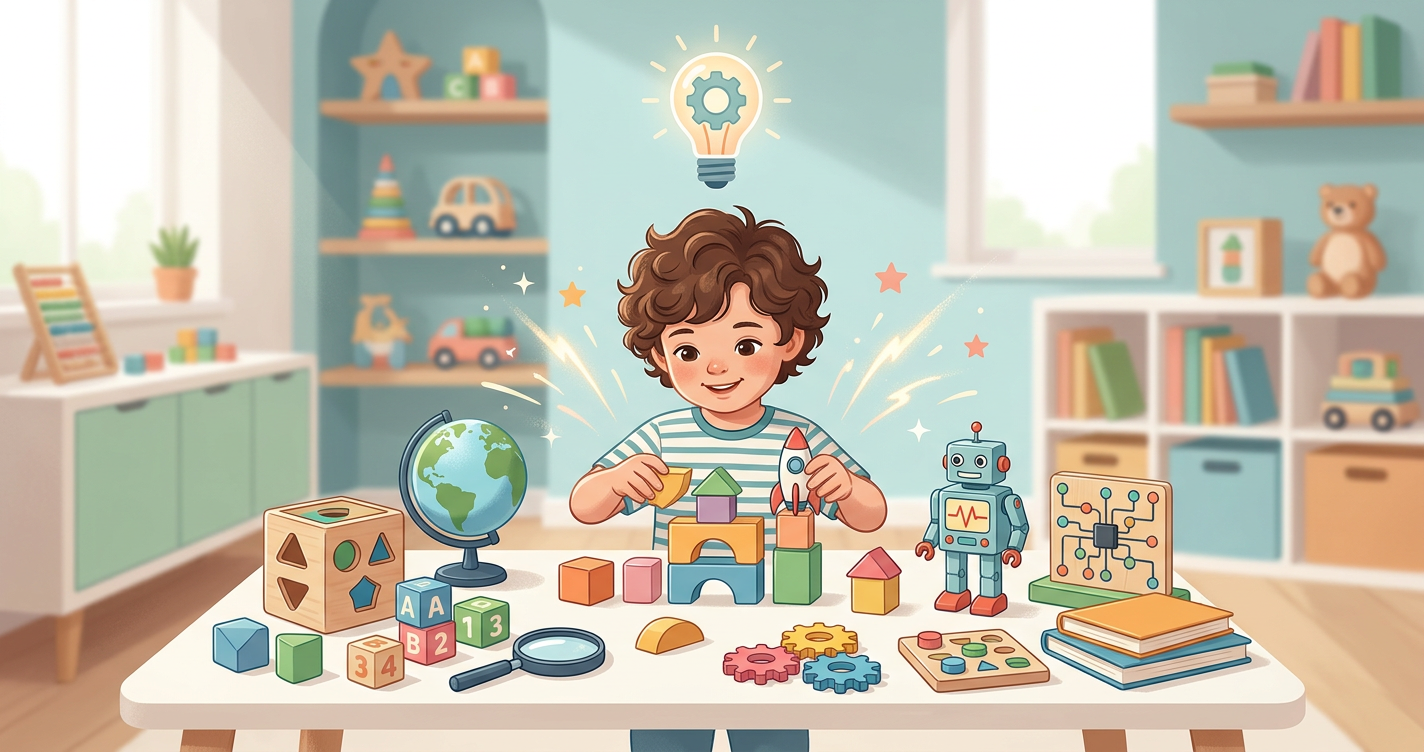
As parents, we all dream of giving our children the best start in life. In a world increasingly dominated by screens, it’s easy to wonder how we can truly foster their growth, curiosity, and intelligence. The answer, often overlooked in its simplicity, lies in the timeless power of play, especially when guided by thoughtfully chosen educational toys. Far from being just sources of fleeting entertainment, these incredible tools are vital allies in nurturing your child’s early development, laying robust foundations for future success.
This isn't just about fun and games; it's about strategic learning that happens naturally as children explore their world. From boosting cognitive skills to enhancing social-emotional intelligence, educational toys are silent mentors, guiding young minds through crucial developmental milestones. Let's dive into how these powerful playthings can truly supercharge your child's journey. this excellent toy product
What Exactly Are "Educational Toys"? Beyond the Classroom!
When you hear "educational toys," you might first picture flashcards or ABC blocks. While those certainly fit the bill, the concept is much broader and more exciting! An educational toy isn't just something that teaches explicit academic facts; it's any toy that stimulates a child's mind, encourages discovery, and supports their developmental journey across various domains. It’s about engagement, exploration, and experience.
Think building blocks that teach spatial reasoning, puzzles that hone problem-solving, art supplies that spark creativity, or even simple role-play sets that foster empathy and communication. The key is that they invite active participation and learning through doing, rather than passive observation. These toys are designed to challenge, inspire, and help children grasp concepts at their own pace, making learning an joyful adventure rather than a chore.
The Brain on Play: The Science-Backed Benefits
The idea that play is crucial for development isn't just anecdotal; it's firmly supported by decades of research in child psychology and neuroscience. When children engage with educational toys, their brains are actively forming new neural connections, essentially wiring themselves for future learning. This active engagement is vastly different from the passive consumption often associated with screen time.
For instance, a child stacking blocks isn't just building a tower; they're experimenting with gravity, balance, and spatial relationships. A child completing a puzzle is developing critical thinking, pattern recognition, and problem-solving skills. These seemingly simple actions are complex cognitive workouts that strengthen executive functions – skills like planning, memory, and self-regulation – which are critical for academic success and life skills later on. Educational toys provide the concrete experiences that turn abstract concepts into tangible understanding, making them incredibly effective tools for brain development.
Beyond ABCs: How Educational Toys Boost Holistic Development
The beauty of well-chosen educational toys is their ability to nurture a child's entire being. They don't just target one area; they provide a rich tapestry of developmental opportunities.
1. Cognitive Skills: Building Little Thinkers
- Problem-Solving & Critical Thinking: Puzzles, building sets (like LEGOs or magnetic tiles), and logic games challenge children to strategize, anticipate outcomes, and find solutions.
- Memory & Concentration: Matching games, memory cards, and intricate building tasks improve focus and recall.
- Spatial Reasoning: Blocks, shape sorters, and construction toys help children understand shapes, sizes, and how objects fit together in space.
- Early STEM Concepts: Simple science kits, gear toys, and coding robots introduce foundational concepts in Science, Technology, Engineering, and Math in an accessible, fun way.
2. Fine & Gross Motor Skills: Developing Coordination
- Fine Motor Skills: Play-Doh, lacing beads, threading activities, drawing, and manipulating small pieces in puzzles strengthen the small muscles in hands and fingers, essential for writing and self-care tasks.
- Gross Motor Skills: Ride-on toys, balance bikes, large building blocks, and outdoor play equipment encourage running, jumping, climbing, and balancing, developing strength, coordination, and body awareness.
3. Language & Communication: Fostering Expression
- Vocabulary Expansion: Storytelling puppets, interactive books, alphabet toys, and dramatic play sets introduce new words and contexts.
- Narrative Skills: Role-playing with dolls or action figures encourages children to create stories, develop plots, and express ideas.
- Conversational Practice: Playing together naturally leads to dialogue, asking questions, and responding, building crucial communication skills.
4. Social-Emotional Learning: Nurturing Kind Hearts
- Empathy & Perspective-Taking: Dollhouses, kitchen sets, and doctor kits allow children to role-play different scenarios, understanding others' feelings and roles.
- Sharing & Turn-Taking: Board games, cooperative building projects, and group play activities teach vital lessons in collaboration, patience, and negotiation.
- Emotional Regulation: Creative play offers an outlet for expressing feelings, while problem-solving challenges can teach resilience and managing frustration.
5. Creativity & Imagination: Unleashing Inner Artists
- Open-Ended Play: Art supplies (crayons, paints, clay), dress-up clothes, and natural materials like sticks and stones encourage imaginative scenarios and self-expression without predefined rules.
- Innovative Thinking: When children are free to invent, adapt, and transform, they develop innovative thinking skills that are invaluable in any field.
Choosing Wisely: A Parent's Guide to Educational Toy Selection
With countless options available, how do you pick the best educational toys for your child? Here are some key considerations:
- Age Appropriateness: Ensure the toy aligns with your child's current developmental stage and capabilities. A toy too simple will bore them; one too complex will frustrate them.
- Open-Ended Play Potential: Look for toys that can be used in multiple ways, encouraging imagination rather than dictating a single play outcome. Think classic wooden blocks, art supplies, or simple dolls. Montessori-inspired toys often excel here.
- Durability & Safety: Choose well-made, non-toxic materials that can withstand enthusiastic play and meet safety standards.
- Engagement Factor: Does it genuinely capture your child's interest? The most educational toy is one they actually want to play with!
- Quality Over Quantity: A few thoughtfully chosen, versatile toys are far more beneficial than a room full of single-purpose gadgets.
- Reflect Interests: Observe what your child is naturally drawn to. If they love animals, animal-themed puzzles or veterinarian play sets will be more engaging.
The Magic Ingredient: Parental Engagement
While educational toys are fantastic tools, they truly come alive with your involvement. Your presence, encouragement, and interaction are the catalysts that deepen the learning experience. Playing alongside your child isn't just about supervising; it's about connecting, modeling behavior, and expanding their play.
Ask open-ended questions like, "What if we tried building it this way?" or "How do you think the dolly feels?" Narrate their actions, introduce new vocabulary, and celebrate their efforts and discoveries. This shared experience not only amplifies the educational benefits but also strengthens your bond, creating cherished memories and a supportive learning environment.
Long-Term Impact: Building Foundations for Future Success
The investment you make in quality educational toys and, more importantly, in play itself, pays dividends far beyond early childhood. The cognitive, motor, language, and social-emotional skills honed through play are the bedrock for school readiness, successful transitions into formal education, and ultimately, lifelong learning and adaptability. Children who engage in rich, varied play experiences tend to be more resilient, curious, creative, and emotionally intelligent – qualities that are essential for navigating an ever-changing world.
Embrace the Power of Play!
Educational toys are more than just items; they are gateways to discovery, creativity, and profound development. By thoughtfully selecting these tools and actively engaging in play with your child, you're not just filling their toy box – you're nurturing their potential, igniting their curiosity, and equipping them with the essential skills to thrive. So, embrace the joy of play, watch your child learn and grow, and celebrate every milestone on their incredible journey!