The Magic of Play: Where Learning Truly Begins
As parents and caregivers, we all want the best for our children – to see them thrive, explore, and develop into confident, capable individuals. Often, we think of learning as something that happens in a classroom, with books and structured lessons. But what if we told you that some of the most profound learning experiences happen through the joyous, unbridled activity of play? This isn't just a hunch; it's a concept deeply rooted in child development research, known as play-based learning.
In this comprehensive guide, we'll dive into the fascinating world of educational toys and how they serve as powerful tools, transforming playtime into a dynamic learning environment. We’ll explore the science behind why play is so crucial, how specific types of educational toys foster essential skills, and how you can make informed choices to support your child’s unique journey of discovery. Get ready to unlock the incredible potential that lies within every giggle, every stack, and every imaginative adventure! this excellent toy product
More Than Just Fun: The Science Behind Play-Based Learning
Why is play so effective for learning? Experts agree that children are not passive recipients of information; they are active constructors of their own understanding. When children play, they are naturally curious, motivated, and engaged. This active engagement is the bedrock of deep, meaningful learning.
Think about a toddler stacking blocks. They’re not just having fun; they’re experimenting with gravity, balance, spatial reasoning, and problem-solving. When the tower topples, they learn about cause and effect. When they try again, they’re practicing persistence. Studies consistently show that play-based learning enhances cognitive flexibility, creativity, language development, and social-emotional skills far more effectively than rote memorization or overly structured activities, especially in early childhood. It allows children to process information at their own pace, make connections, and develop a genuine love for exploration.
Unlocking Potential: Key Developmental Areas Boosted by Educational Toys
Educational toys are specifically designed to stimulate growth in various developmental domains. They aren't just scaled-down versions of adult tools; they're thoughtfully crafted to align with a child's developmental stage, providing just the right amount of challenge and opportunity for discovery.
Cognitive Skills & Problem Solving
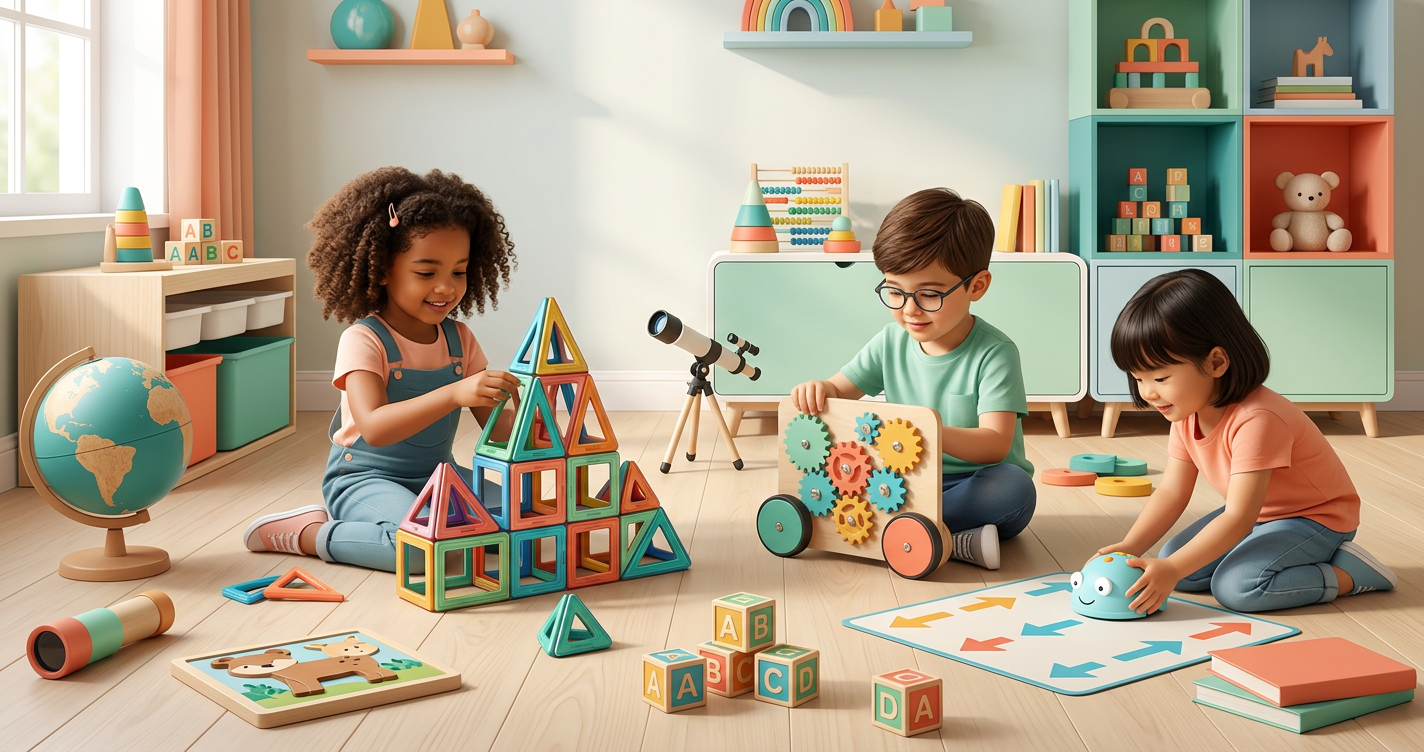
From simple puzzles for toddlers to complex building sets for preschoolers, educational toys are masters at honing cognitive abilities. Shape sorters teach categorization and spatial awareness. Puzzles enhance pattern recognition, critical thinking, and fine motor control. Building blocks, magnetic tiles, and construction kits encourage planning, structural understanding, and creative problem-solving as children design and execute their ideas. These activities lay crucial groundwork for later academic success in subjects like math and science.
Fine & Gross Motor Skills
Every time a child grasps a crayon, threads a bead, or manipulates a small piece of a toy, they are refining their fine motor skills – the precise movements of small muscles in the hands and fingers. Playdough, lacing beads, art supplies, and even simple stacking cups are fantastic for this. Meanwhile, toys like ride-ons, balance bikes, large building blocks, and outdoor play equipment develop gross motor skills, improving balance, coordination, strength, and agility. These physical skills are essential not just for sports, but for everyday tasks and school readiness, like handwriting.
Language & Communication
Role-playing sets, puppet theaters, and even simple play kitchens spark imaginative scenarios that naturally encourage verbal expression. Children narrate stories, assign roles, and engage in dialogue, expanding their vocabulary and improving their sentence structure. Storytelling toys, alphabet puzzles, and interactive books introduce letters, sounds, and early literacy concepts in a fun, pressure-free way. When parents join in, asking open-ended questions and engaging in conversation, the learning potential skyrockets.
Social & Emotional Intelligence
Sharing, taking turns, negotiating, and understanding different perspectives are vital social skills that educational toys can help cultivate. Dollhouses, action figures, cooperative board games, and dramatic play costumes provide opportunities for children to practice empathy, resolve conflicts, and learn about social norms. Through imaginative play, children also process emotions, manage frustrations (when a tower falls!), and build self-confidence, all of which contribute to strong emotional intelligence.
Early STEM Foundations
STEM (Science, Technology, Engineering, and Mathematics) learning isn't just for older kids. Preschoolers can engage with foundational STEM concepts through play. Simple science kits that explore magnets or light, gears and cogs sets, early coding robots, and even sand and water tables introduce principles of physics, cause and effect, and logical thinking. These toys demystify complex subjects, fostering curiosity and a positive attitude towards STEM from an early age.
Choosing the Right Educational Toys for Every Age and Stage
With an overwhelming array of options, selecting the 'best' educational toys can feel daunting. Here’s a simple guide to help you make informed choices:
- Age-Appropriateness is Key: Always check the age recommendations. Toys that are too simple will bore a child, while those that are too complex can lead to frustration. The sweet spot is a toy that offers a gentle challenge.
- Prioritize Open-Ended Play: Toys that can be used in multiple ways (e.g., blocks, playdough, art supplies) encourage creativity and last longer in terms of developmental value than single-purpose toys.
- Focus on Engagement, Not Just Features: A toy with flashing lights and sounds might seem exciting, but often, simpler toys that require more active participation from the child offer deeper learning.
- Consider Your Child's Interests: If your child loves animals, look for animal-themed puzzles or veterinarian role-play sets. Tapping into their natural curiosities will maximize engagement.
- Durability & Safety: Choose well-made toys from reputable brands that are free from harmful chemicals and durable enough to withstand enthusiastic play.
Beyond the Toy: Cultivating a Learning Environment
Remember, an educational toy is just a tool. Its true power is unleashed when coupled with a supportive and stimulating environment. Here’s how you can amplify the learning:
- Join In and Interact: Play with your child! Ask open-ended questions ("What do you think will happen if...?"), offer suggestions, and narrate their actions. Your engagement is invaluable.
- Create a "Yes" Space: Designate a safe, accessible area where children can freely explore their toys without constant supervision or fear of making a mess.
- Rotate Toys: To keep interest high and prevent clutter, rotate toys regularly. Put some away for a few weeks, and when they reappear, they’ll feel fresh and exciting again.
- Balance Structured Play with Free Exploration: While some guided play can be beneficial, ensure there's ample time for children to lead their own play, follow their instincts, and create their own rules.
Common Myths About Educational Toys Debunked
Let's clear up some misconceptions that might hold you back from embracing educational play:
- Myth 1: Educational toys have to be expensive. Reality: Many of the best educational tools are simple and affordable – think blocks, art supplies, cardboard boxes, or even natural elements like sticks and stones. Creativity and interaction are far more valuable than a high price tag.
- Myth 2: They replace real-world interaction. Reality: Quite the opposite! Educational toys, especially those that encourage role-playing or cooperative games, often facilitate richer interactions between children and between children and adults.
- Myth 3: They make kids "smarter" instantly. Reality: Educational toys are not magic bullets. They are catalysts for development, supporting a child's natural learning process over time. Consistent engagement and a nurturing environment are what truly foster growth.
The Long-Term Impact: Why Investing in Educational Play Matters
The benefits of integrating educational toys and play-based learning extend far beyond early childhood. Children who experience rich, engaging play develop a strong foundation for school readiness, including better attention spans, problem-solving skills, and a positive attitude towards learning. They are more likely to become resilient, curious, and intrinsically motivated individuals who enjoy exploring new ideas and challenges throughout their lives.
By fostering a love for learning through play, we’re not just preparing children for school; we're equipping them with the critical thinking, creativity, and adaptability needed to thrive in an ever-changing world. It's an investment in their future happiness and success.
Embrace the Power of Play
Educational toys are not just frivolous playthings; they are powerful allies in your child's developmental journey. By understanding the science of play and making thoughtful choices, you can transform everyday moments into extraordinary learning opportunities. So, next time you see your child immersed in play, remember: they’re not just having fun – they’re building their future, one imaginative adventure at a time. Embrace the power of play, and watch your child flourish!