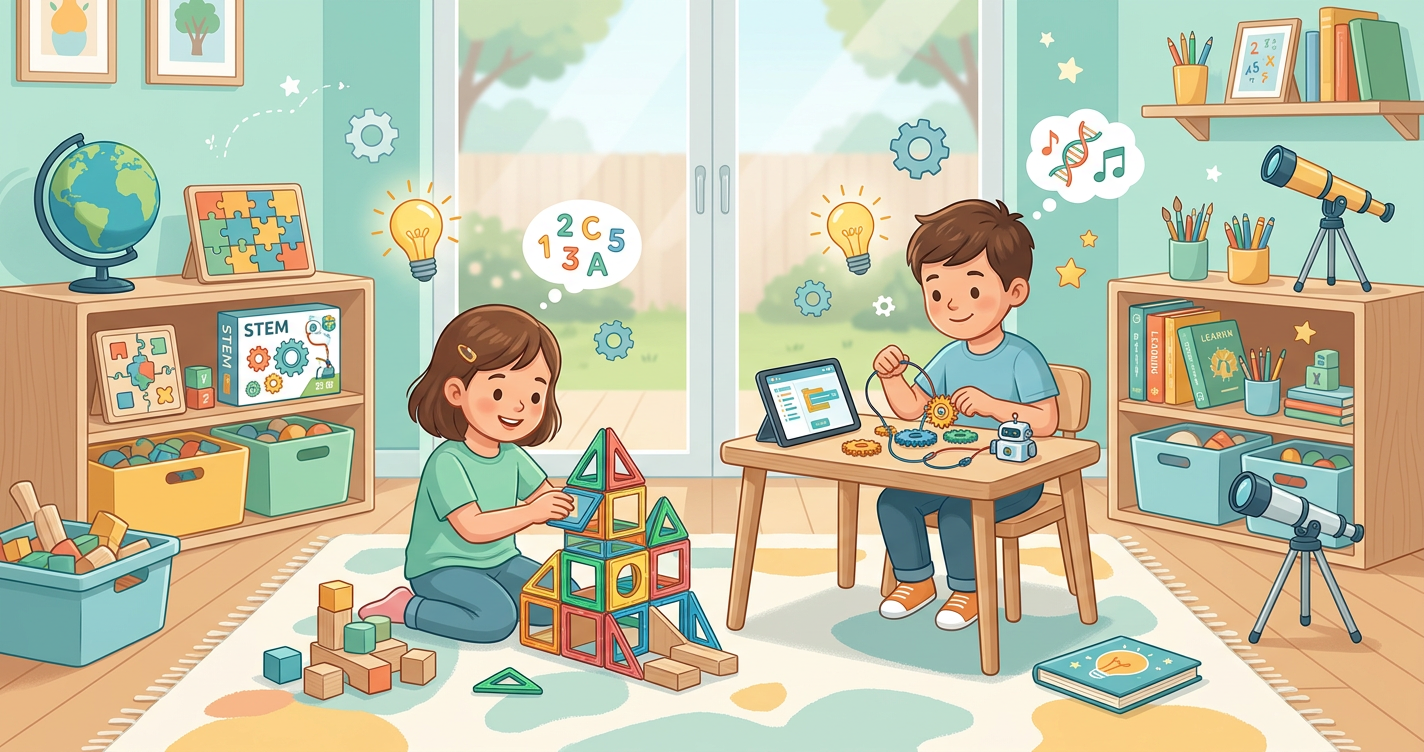
As parents, we constantly seek ways to nurture our children's growth and help them reach their full potential. While formal lessons and structured activities have their place, the magic often happens in the most unexpected — and delightful — arena: the playroom. Far from being mere entertainment, play is the primary way children learn about themselves, others, and the world around them. When we introduce well-chosen educational toys into this natural learning environment, we aren't just providing fun; we're supercharging their cognitive, social, emotional, and physical development.
But what exactly makes a toy 'educational'? And how can parents harness the incredible power of play-based learning to foster truly meaningful growth? Let's dive into the science, the strategies, and the sheer joy of learning through play. this excellent toy product
What is Play-Based Learning, and Why Does It Matter?
At its heart, play-based learning is an approach where children learn through exploration, experimentation, and interaction. It’s child-led, hands-on, and intrinsically motivating. Unlike rote memorization, play-based learning allows children to construct their own understanding of concepts by actively engaging with their environment and the people within it.
Educational toys are the perfect tools for this approach. They are designed not just to occupy a child, but to stimulate curiosity, encourage problem-solving, and build foundational skills. Think beyond traditional 'academic' subjects; play-based learning with educational toys helps develop:
- Creativity and Imagination: Building fantastical worlds with blocks or acting out stories with puppets.
- Critical Thinking: Figuring out how a puzzle piece fits or why a tower collapses.
- Social-Emotional Skills: Learning to share, negotiate, and empathize during cooperative games.
- Language and Communication: Describing actions, narrating play, and asking questions.
- Fine and Gross Motor Skills: Manipulating small objects or engaging in active play.
This holistic development is crucial because it builds a strong foundation for future academic success and lifelong learning. When children discover the joy of learning through play, they become active participants in their education, fostering a love for discovery that lasts far beyond childhood.
The Science Behind Play: A Deep Dive into Developmental Benefits
The idea that play is essential for development isn't just anecdotal; it's backed by extensive research in psychology, neuroscience, and education. Experts consistently emphasize that play is not a break from learning, but rather a vital component of it.
Cognitive Development: Building Brainpower
Engaging with educational toys directly impacts a child's cognitive functions. For instance:
- Problem-Solving: Puzzles, building sets, and strategy games challenge children to think critically and devise solutions. This strengthens neural pathways associated with logical reasoning.
- Memory and Attention: Remembering rules of a game, recalling where a specific block belongs, or focusing on completing a task all bolster memory and attention spans.
- Spatial Reasoning: Constructing structures with blocks or navigating a maze toy helps children understand spatial relationships, a key skill for mathematics and science.
- Language Acquisition: Role-playing, storytelling with figures, or even simply describing what they are doing while playing with a toy enriches vocabulary and narrative skills.
Neuroscience shows that during play, children's brains are highly active, forming new connections and strengthening existing ones. This period of rapid brain development is optimally supported by varied, engaging play experiences.
Social-Emotional Growth: Learning to Connect and Cope
Beyond academics, educational toys are powerful tools for social and emotional learning:
- Empathy and Perspective-Taking: Playing with dolls, action figures, or in a dramatic play setting (e.g., a toy kitchen or doctor's kit) allows children to step into different roles, understanding others' feelings and viewpoints.
- Cooperation and Negotiation: Board games and collaborative building projects teach children to share, take turns, follow rules, and resolve conflicts peacefully.
- Emotional Regulation: Play can be a safe outlet for expressing emotions, processing experiences, and developing self-control. Frustration over a challenging puzzle, for example, offers an opportunity to practice persistence and emotional resilience.
These skills are not just important for navigating childhood friendships; they are fundamental for success in school, relationships, and future careers.
Physical Development: From Fine Motor to Gross Motor Mastery
Educational toys also play a crucial role in physical development:
- Fine Motor Skills: Manipulating small blocks, threading beads, drawing with crayons, or fastening buttons on a doll's clothes all refine the small muscle movements in the hands and fingers, essential for writing and self-care.
- Gross Motor Skills: Push-pull toys, tricycles, balance boards, or even active building with large blocks encourage larger body movements, balance, coordination, and strength.
A child's physical development is intrinsically linked to their cognitive abilities, as movement and sensory experiences provide critical input for brain development.
Choosing the Right Educational Toys for Every Stage
With an overwhelming array of toys available, selecting the 'best' educational toys can feel daunting. The key is to consider your child's developmental stage, interests, and the potential for open-ended play.
Infants (0-12 Months): Sensory Exploration
- Focus: Sensory stimulation, cause-and-effect, object permanence.
- Examples: Rattles, soft books with different textures, tummy time mats, unbreakable mirrors, stacking cups, simple shakers.
Toddlers (1-3 Years): Discovery and Movement
- Focus: Fine and gross motor skills, language development, problem-solving, imaginative play.
- Examples: Shape sorters, nesting dolls, chunky puzzles, building blocks (large), push-pull toys, musical instruments, durable picture books, simple dolls/animals.
Preschoolers (3-5 Years): Creativity and Social Skills
- Focus: Pre-literacy and numeracy, complex problem-solving, dramatic play, fine motor refinement.
- Examples: LEGO DUPLO or similar construction sets, art supplies (crayons, paint, playdough), dress-up clothes, doctor's kits, toy kitchens, board games that require turn-taking, magnetic tiles, simple science kits.
School-Aged Children (5+ Years): Critical Thinking and Specialization
- Focus: STEM concepts, strategy, coding, logical reasoning, deeper interests.
- Examples: Advanced LEGO sets, robotics kits, chemistry sets, complex board games (e.g., chess, Catan Junior), coding games, craft kits, model building.
Remember, the best educational toys are often those that allow for multiple uses and encourage children to use their imagination rather than dictating how they should play.
Maximizing the Learning Potential: Beyond Just the Toy
Having the right educational toys is only half the battle. How you facilitate play, and the environment you create, significantly impacts the learning outcomes.
- Join In: Play with your child! Your presence and engagement can deepen their learning. Ask open-ended questions like, 'What happens if...?' or 'How did you build that?'
- Follow Their Lead: Allow your child to direct the play. Resist the urge to correct or dictate. Child-led play fosters independence and creativity.
- Create a Stimulating Environment: Designate a play area that is safe, accessible, and organized. Rotate toys periodically to keep them fresh and interesting.
- Limit Screen Time: While digital tools have their place, excessive screen time can displace opportunities for hands-on, imaginative play that is crucial for foundational development.
- Embrace Mess and Experimentation: Learning often involves trial and error, and sometimes, a little mess. Encourage experimentation and celebrate efforts, not just perfect outcomes.
Your role as a facilitator is to provide the resources and the encouragement, allowing your child's natural curiosity to lead the way.
Dispelling Common Myths About Educational Toys
Despite their proven benefits, educational toys sometimes face misconceptions:
- Myth: Educational toys are boring. Reality: The most effective educational toys are incredibly engaging because they tap into a child's natural desire to explore, create, and solve. They offer open-ended possibilities that keep children captivated for hours.
- Myth: Only 'gifted' children need educational toys. Reality: All children benefit immensely from toys that stimulate their development. Educational toys are designed to support universal developmental milestones, not just accelerate them for a select few.
- Myth: Expensive toys are always better. Reality: Some of the most valuable educational toys are simple and affordable – blocks, art supplies, or even repurposed household items. The value comes from how they are used, not their price tag.
- Myth: Educational toys replace unstructured play. Reality: They enhance it! Educational toys provide structure and purpose within free play, offering tools for children to express their ideas and explore concepts.
Embrace the Power of Play
In a world that often rushes children towards academic milestones, it's vital to remember the profound power of play. Educational toys are not just objects; they are catalysts for discovery, creativity, and essential skill development. By thoughtfully selecting these tools and actively engaging in your child's playtime, you're not just providing entertainment; you're investing in their holistic growth, fostering a lifelong love for learning, and building a foundation for a bright, curious, and capable future. So, let the games begin, and watch your child flourish!