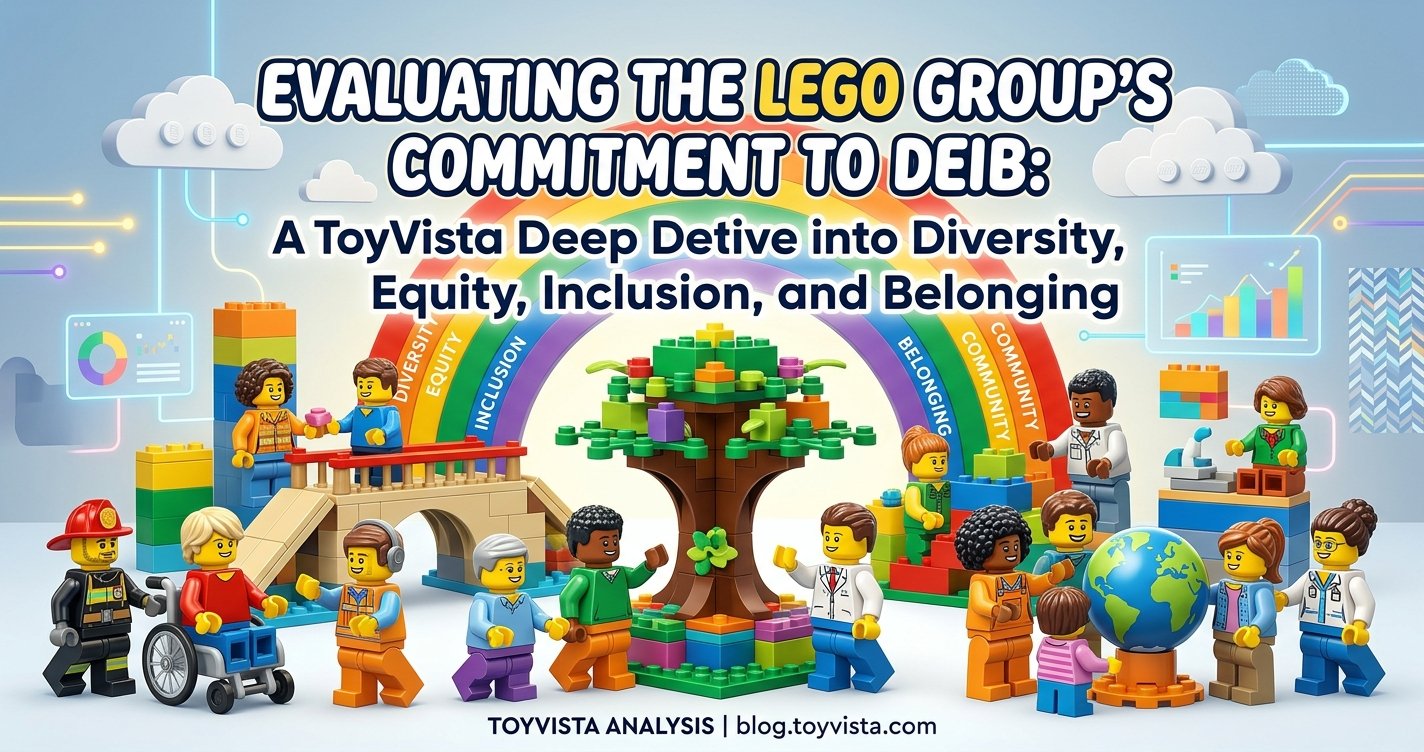
Evaluating The LEGO Group's Commitment to DEIB: A ToyVista Deep Dive into Diversity, Equity, Inclusion, and Belonging
At ToyVista, a leading expert in educational toys, we understand that play is not just about fun; it's a powerful tool for learning, development, and shaping a child's understanding of the world. In today's increasingly interconnected society, the principles of Diversity, Equity, Inclusion, and Belonging (DEIB) have become paramount, extending their influence into every sector, including the global toy industry. Few companies hold as much sway over childhood imagination and development as The LEGO Group. With its iconic bricks and endless creative possibilities, LEGO has been a cornerstone of play for generations.
But how does this global giant measure up when we evaluate the toys company LEGO on LEGO DEIB initiatives? As advocates for comprehensive and enriching play experiences, ToyVista believes it's crucial to examine how industry leaders like LEGO are integrating DEIB into their products, marketing, and corporate culture. This deep dive will explore LEGO's journey, achievements, and ongoing challenges in fostering a more diverse, equitable, and inclusive world, one brick at a time.
LEGO's Global Footprint and Enduring Influence
For over 90 years, LEGO has transcended its origins as a small Danish carpentry workshop to become one of the most recognized and beloved brands worldwide. Its interlocking plastic bricks are more than just toys; they are tools for creativity, problem-solving, and storytelling. From intricate architectural models to fantastical worlds, LEGO empowers children (and adults) to build their dreams. This immense reach means that LEGO has a unique responsibility and opportunity to influence how children perceive themselves and others. Their products are often among the first encounters children have with different roles, characters, and narratives, making their approach to DEIB particularly impactful.
The ubiquity of LEGO products in homes, schools, and playrooms globally underscores the importance of a thorough evaluation of the toys company LEGO on LEGO DEIB. As educational toy experts, we see firsthand how play experiences shape young minds. When a company with LEGO's influence champions diversity, equity, inclusion, and belonging, it sends a powerful message that resonates far beyond the toy box, contributing to a more understanding and accepting future generation.
Understanding DEIB: Why It Matters in the Toy Industry
Before we delve into LEGO's specific actions, let's clarify what DEIB entails. Diversity refers to the presence of differences in a given setting—race, ethnicity, gender, sexual orientation, socio-economic status, age, physical abilities, religious beliefs, political beliefs, or other ideologies. Equity is about fairness, ensuring everyone has access to the same opportunities, which often requires providing different levels of support based on individual needs. Inclusion is about creating an environment where everyone feels welcome, respected, and valued, and can fully participate. Finally, Belonging is the emotional outcome of successful inclusion—the feeling of being accepted for who you are, with your unique contributions valued.
In the toy industry, DEIB is not merely a corporate buzzword; it's a fundamental aspect of responsible product development and marketing. Toys that reflect diverse realities help children develop empathy, challenge stereotypes, and see themselves and others represented positively. When children don't see themselves in the toys they play with, it can subtly convey a message of exclusion. Conversely, toys that promote diversity and inclusion foster a sense of belonging and self-worth, making DEIB central to our mission at ToyVista to provide truly educational and enriching play experiences.
LEGO's DEIB Journey: A Closer Look at Their Commitments
The LEGO Group has publicly articulated its commitment to DEIB, recognizing its role in shaping children's futures. Their efforts span various facets, from product design to internal company culture. Let's evaluate the toys company LEGO on LEGO DEIB across these key areas.
Representation in Products and Minifigures
Historically, LEGO minifigures were largely yellow, designed to be racially ambiguous. While this had its own intention, the modern approach has evolved significantly. Today, LEGO offers a much broader range of skin tones, hair textures, and facial expressions in its minifigures and characters. Sets like LEGO City and LEGO Friends, for instance, feature characters with various skin tones, disabilities (e.g., minifigures in wheelchairs), and diverse professions, breaking away from traditional gender stereotypes. They've also introduced sets that celebrate different cultures and lifestyles, providing children with a more accurate and representative reflection of the diverse world they live in. This evolution is critical for ensuring that all children can find characters they identify with, fostering a sense of belonging and validating their identities through play.
Promoting Inclusivity Through Storytelling and Campaigns
Beyond the physical bricks, LEGO utilizes its storytelling platforms—including animated series, movies, and marketing campaigns—to champion inclusivity. They often feature diverse families, characters with different abilities, and narratives that challenge gender norms. Campaigns like 'Rebuild the World' frequently showcase children from various backgrounds engaging in creative play, emphasizing that imagination knows no bounds. By consciously crafting inclusive narratives, LEGO helps to dismantle stereotypes and encourage children to embrace individuality and diversity, both in their play and in their interactions with the real world. These efforts are vital in shaping positive attitudes towards DEIB from an early age.
Accessibility and Play for All
A significant stride in LEGO's DEIB journey is its commitment to accessibility. The introduction of LEGO Braille Bricks is a remarkable example of this. These bricks, designed with studs that correspond to Braille letters and numbers, provide a playful and engaging way for visually impaired children to learn Braille. This initiative goes beyond simple representation; it actively creates equitable learning opportunities, demonstrating a deep understanding of inclusive design. Furthermore, LEGO has explored digital accessibility in its online platforms and strives to make its physical stores welcoming and navigable for all visitors, embodying the principle that play should be universally accessible.
Workplace Diversity and Culture at The LEGO Group
Evaluating LEGO's DEIB efforts wouldn't be complete without looking internally. The LEGO Group emphasizes fostering a diverse and inclusive workplace culture. They aim to attract and retain talent from various backgrounds, recognizing that a diverse workforce brings different perspectives and drives innovation. Their commitments include equitable hiring practices, leadership development programs designed to promote diversity, and the creation of employee resource groups (ERGs) that support various communities within the company. By cultivating an environment where employees feel valued, respected, and empowered to bring their authentic selves to work, LEGO reinforces its DEIB values from the inside out, ensuring that the principles they promote externally are also lived internally.
Challenges and Opportunities for Growth
While LEGO has made commendable progress in its DEIB journey, like any large corporation, there are always areas for continued growth and improvement. One ongoing challenge is the depth of cultural representation. While diverse skin tones are present, ensuring nuanced and authentic portrayals of various cultures and traditions requires continuous engagement with diverse communities. Similarly, while strides have been made in challenging gender stereotypes, some product lines or themes could still benefit from a more expansive view of gender roles and interests.
The toy industry, by its nature, is constantly evolving, and so too must DEIB efforts. Opportunities for growth include further exploring neurodiversity in play, expanding representation for LGBTQ+ families, and consistently reviewing product lines to ensure they don't inadvertently perpetuate any biases. The key is continuous dialogue, self-reflection, and proactive engagement with the communities they serve. For instance, fostering diverse skill sets through innovative play is crucial. Products like this top-rated robotic building kit exemplify how advanced educational toys can engage all children, regardless of their background, in STEM learning. Such offerings are vital in ensuring that equitable access to skill-building is part of the broader DEIB commitment, providing tools that empower every child to explore and excel in areas that were once considered niche or inaccessible.
The Impact of LEGO's DEIB Efforts on Children and Families
The tangible impact of LEGO's DEIB efforts cannot be overstated. When children see themselves represented in their toys—whether it's a minifigure with a prosthetic leg, a character from a different cultural background, or a girl building a space rocket—it sends a powerful message: 'You belong. You are capable. Your story matters.' This validation is crucial for building self-esteem and a positive self-image. For children from majority groups, diverse toys foster empathy, understanding, and an appreciation for differences, preparing them for a multicultural world.
For families, LEGO's commitment to DEIB provides an opportunity for meaningful conversations about diversity, equity, and inclusion. It allows parents to choose toys that align with their values and help raise globally conscious citizens. As experts in educational toys, ToyVista firmly believes that play is a mirror to society, and when that mirror reflects a diverse, equitable, and inclusive world, it benefits everyone.
Conclusion
In conclusion, when we evaluate the toys company LEGO on LEGO DEIB, it's clear that The LEGO Group has made significant and commendable progress. From diversifying its minifigures and product narratives to launching innovative accessibility initiatives like Braille Bricks and fostering an inclusive internal culture, LEGO demonstrates a genuine commitment to integrating Diversity, Equity, Inclusion, and Belonging into its core operations. While there are always opportunities for deeper engagement and continuous improvement, LEGO stands as a powerful example of how a global toy company can leverage its influence to promote positive societal values.
At ToyVista, we applaud these efforts and encourage other toy manufacturers to follow suit. The future of play is inclusive, and by prioritizing DEIB, companies like LEGO are not just selling toys; they are building a better, more understanding world for the next generation. We look forward to seeing LEGO continue to innovate and lead in this crucial area, ensuring that every child, everywhere, feels seen, valued, and empowered to build their dreams.