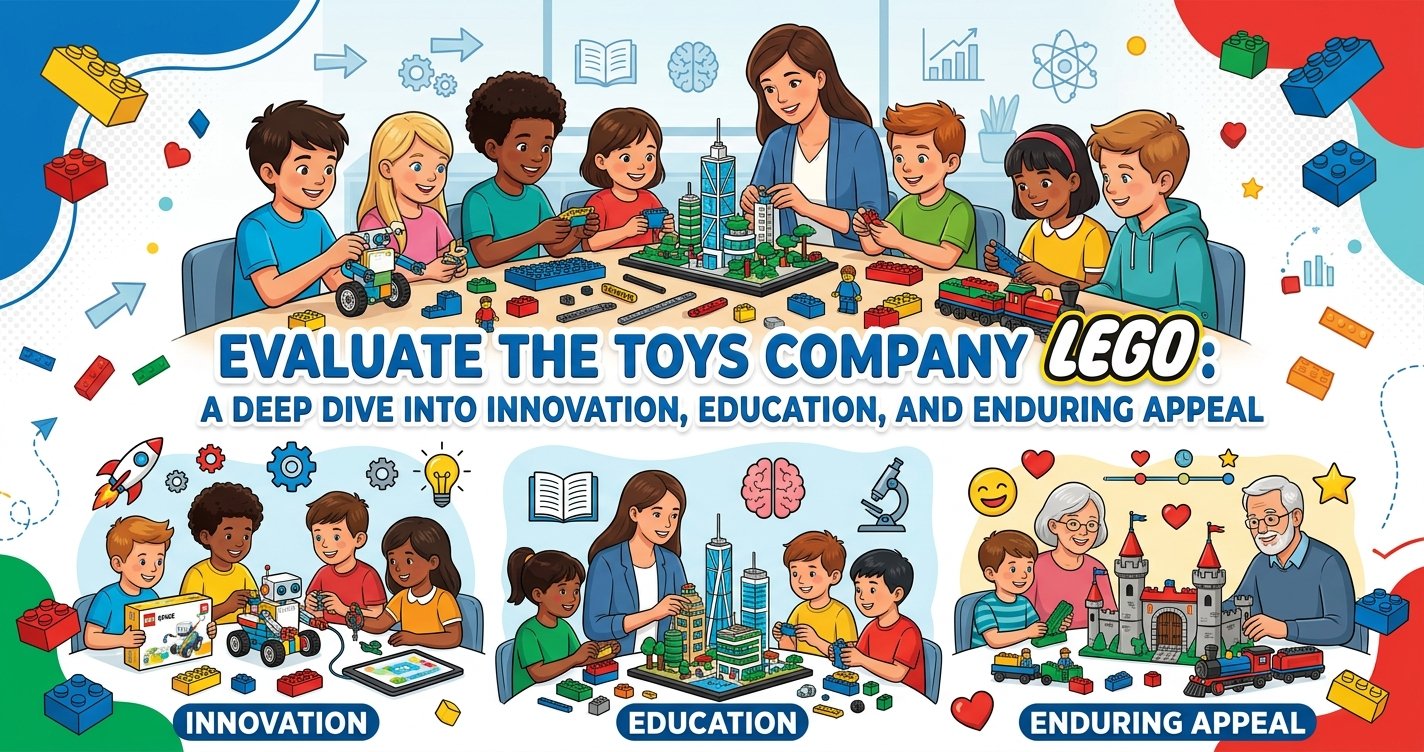
Few companies have captured the hearts and minds of generations quite like LEGO. From humble beginnings in a small Danish workshop to a global empire of interlocking plastic bricks, LEGO has become synonymous with creativity, imagination, and play. But beyond the nostalgic appeal, how does the LEGO Group truly stand up to scrutiny? As leading experts in educational toys, ToyVista is uniquely positioned to thoroughly evaluate the toys company LEGO, examining its legacy, strengths, innovations, and challenges.
The Enduring Legacy of LEGO: A Brief History
To truly understand and evaluate the toys company LEGO, one must appreciate its rich history. The story began in 1932 when Ole Kirk Christiansen, a master carpenter from Billund, Denmark, founded his company. Initially producing wooden toys, ladders, and ironing boards, Christiansen's business faced hard times during the Great Depression. It was in 1934 that he coined the name LEGO, a portmanteau of the Danish words "leg godt," meaning "play well." Unbeknownst to him, the word also translates to "I put together" in Latin, a serendipitous foreshadowing of the company's future.
From Wooden Toys to Plastic Bricks
The pivotal moment arrived in 1947 when Christiansen discovered plastic injection molding technology. Inspired by a plastic building block toy from the UK, he began producing his own version in 1949, calling them 'Automatic Binding Bricks.' These early bricks, though innovative, lacked the robust interlocking system that would become LEGO's hallmark. It was his son, Godtfred Kirk Christiansen, who refined the design, patenting the iconic 'stud-and-tube' coupling system in 1958. This invention revolutionized building toys, ensuring the bricks clicked together securely yet could be easily disassembled, laying the foundation for the LEGO System of Play.
Innovation and Expansion
The 1960s saw the introduction of LEGO wheels, opening up possibilities for vehicles, and the first LEGO train. The development of the LEGO minifigure in 1978 was another game-changer, adding personality and narrative potential to sets. From then on, LEGO’s expansion has been relentless, moving from generic building sets to complex themed lines like LEGO City, LEGO Castle, LEGO Space, and eventually, highly successful licensed themes. This continuous innovation in design and product offerings cemented LEGO’s place as a global leader.
Core Strengths: What Makes LEGO a Juggernaut?
When we evaluate the toys company LEGO, its core strengths immediately become apparent, distinguishing it in a competitive market.
Unparalleled Quality and Durability
LEGO bricks are renowned for their exceptional quality and durability. Made from high-grade ABS plastic, they can withstand years of play, being assembled, disassembled, and reassembled countless times without losing their 'clutch power.' This commitment to quality ensures that LEGO sets are often passed down through generations, making them a sustainable investment in play and learning.
The Power of Open-Ended Play and Creativity
At its heart, LEGO is an open-ended toy. While many sets come with detailed instructions to build specific models, the true magic lies in the ability to deconstruct and rebuild, to combine sets, and to create entirely new structures from scratch. This fosters boundless creativity, encouraging children (and adults) to think outside the box, experiment with designs, and bring their imaginative visions to life. It’s a system designed for limitless possibilities, which is a cornerstone of effective educational play.
Educational Value and STEM Integration
For ToyVista, a crucial aspect to evaluate the toys company LEGO is its educational impact. LEGO excels in this area, naturally integrating numerous STEM (Science, Technology, Engineering, and Mathematics) principles. Building with LEGO bricks develops spatial reasoning, problem-solving skills, and an understanding of structural integrity. Children learn about balance, leverage, and cause-and-effect as they construct. Advanced sets, particularly within the LEGO Technic and Mindstorms lines, delve deeper into mechanical engineering, robotics, and even basic programming, offering hands-on learning experiences that are both engaging and highly effective.
Broad Appeal Across Ages and Interests
LEGO's demographic reach is incredibly vast. From DUPLO sets for toddlers to intricate Creator Expert models for adult enthusiasts (AFOLs - Adult Fans of LEGO), there's a LEGO product for almost every age group and interest. Their extensive range of themes, from fantasy and sci-fi to real-world cities and vehicles, ensures that children can find sets that resonate with their passions, further fueling their engagement and imaginative play.
Strong Brand Identity and Community
LEGO has cultivated one of the most recognizable and beloved brands globally. Its iconic logo, distinct minifigures, and consistent product quality have built immense trust and loyalty. Beyond just selling toys, LEGO has fostered a vibrant global community through official fan groups, online platforms like LEGO Ideas (where fans can submit designs for potential official sets), and LEGO conventions. This strong community aspect adds significant value, turning consumers into passionate advocates.
Diversification and Innovation: Beyond the Classic Brick
The LEGO Group hasn't rested on its laurels. Its willingness to innovate and diversify its offerings has been key to its sustained success.
Embracing Digital Play and Robotics
Recognizing the evolving landscape of play, LEGO has strategically moved into digital and robotics integration. Products like LEGO Mindstorms, LEGO Boost, and LEGO SPIKE Prime combine physical building with coding and programming, preparing children for a future increasingly shaped by technology. These sets teach computational thinking, logical sequencing, and debugging in a fun, tactile way. For those keen to explore the cutting edge of educational play, products like this top-rated robotic building kit offer an excellent entry point into coding and engineering principles, showcasing LEGO's commitment to evolving educational tools and making advanced concepts accessible to young minds.
Themed Sets and Licensing Success
LEGO's pioneering work in licensed themes, particularly with Star Wars in 1999, opened up new avenues for growth. This strategy allowed LEGO to tap into existing fan bases and bring beloved characters and worlds into the brick-built universe. Successive licenses with franchises like Harry Potter, Marvel, DC Comics, and Disney have kept the brand fresh and relevant, attracting new generations of builders and collectors.
Sustainability Efforts and Future Vision
In response to growing environmental concerns, LEGO has made significant strides in sustainability. They aim for all core products and packaging to be made from sustainable materials by 2030. The establishment of the LEGO Sustainable Materials Centre and investments in plant-based plastics (like those used for botanical elements) demonstrate a genuine commitment to reducing their ecological footprint. This forward-thinking approach is crucial when we evaluate the toys company LEGO's long-term viability and ethical standing.
Challenges and Criticisms: Where LEGO Faces Hurdles
No company is without its challenges, and a comprehensive evaluation of the toys company LEGO requires acknowledging its hurdles.
Price Point Considerations
One of the most common criticisms leveled against LEGO is its premium price point. While the quality and durability are undeniable, the cost of larger sets can be prohibitive for some families. This can limit accessibility, despite LEGO's efforts to offer a range of products across different price tiers.
The "Instructional" vs. "Creative" Debate
Modern LEGO sets often come with highly detailed, step-by-step instructions. While this ensures a satisfying building experience for complex models, some critics argue it can stifle truly open-ended creative play. The emphasis on building a specific model, rather than free-form construction, might reduce the time children spend innovating their own designs. However, LEGO actively promotes rebuilding and free play through initiatives like 'Rebuild the World,' encouraging builders to go beyond the instructions.
Environmental Impact (Despite Efforts)
Despite significant investments in sustainable materials and packaging, the sheer volume of plastic produced by LEGO still presents an environmental challenge. The transition to fully sustainable materials is a massive undertaking, and the company continues to face scrutiny regarding its overall carbon footprint and plastic waste contribution.
Competition in the Educational Toy Market
While LEGO holds a dominant position, the educational toy market is increasingly crowded. Competitors offer alternative building systems, STEM kits, and digital learning tools, constantly pushing the boundaries of what's available. LEGO must continue to innovate and demonstrate its unique educational value to maintain its leadership.
Evaluating LEGO's Impact on Child Development
From ToyVista’s perspective, the developmental benefits of LEGO play are paramount.
Fostering Problem-Solving and Critical Thinking
Following instructions to build a complex model requires careful attention, sequencing, and spatial awareness. When children deviate or create their own designs, they engage in trial-and-error, learn from mistakes, and develop ingenious solutions to structural or aesthetic challenges. This hands-on problem-solving is invaluable for cognitive development.
Enhancing Fine Motor Skills and Spatial Reasoning
Manipulating small bricks, connecting them precisely, and detaching them strengthens fine motor skills and hand-eye coordination. The act of visualizing a 3D object from 2D instructions or imagining a structure before building it significantly boosts spatial reasoning abilities, which are critical for subjects like mathematics and engineering.
Encouraging Storytelling and Imaginative Play
Once a LEGO model is built, it often becomes a prop for imaginative play. Children create narratives around their LEGO creations, developing characters, plots, and dialogue. This storytelling aspect enhances language development, social skills (when playing with others), and emotional intelligence, transforming bricks into worlds of adventure.
ToyVista's Perspective: Why LEGO Remains a Top Pick
When we comprehensively evaluate the toys company LEGO, it's clear why it consistently ranks as a top recommendation from ToyVista. Its unwavering commitment to quality, its inherent capacity for open-ended creative play, and its strong educational value make it an exemplary toy for children across various developmental stages. The company's proactive approach to innovation, particularly in integrating STEM and robotics, ensures its relevance in a rapidly changing world. While challenges like price and environmental impact are valid considerations, LEGO's ongoing efforts to address these issues, coupled with its profound positive impact on child development, solidify its position as a leader in the educational toy landscape.
Conclusion: LEGO's Enduring Legacy of Play and Learning
In conclusion, to evaluate the toys company LEGO is to assess a titan of the toy industry, a company that has not only shaped generations of play but continues to evolve and inspire. Its legacy is built on the simple, yet profound, idea of interlocking bricks that unlock infinite possibilities. From fostering essential STEM skills to nurturing creativity and imagination, LEGO's contribution to child development is immense and undeniable. Despite facing modern challenges, its dedication to quality, innovation, and educational value ensures that the LEGO Group will continue to be a cornerstone of playrooms and classrooms worldwide for many years to come, truly living up to its name: 'play well.'