
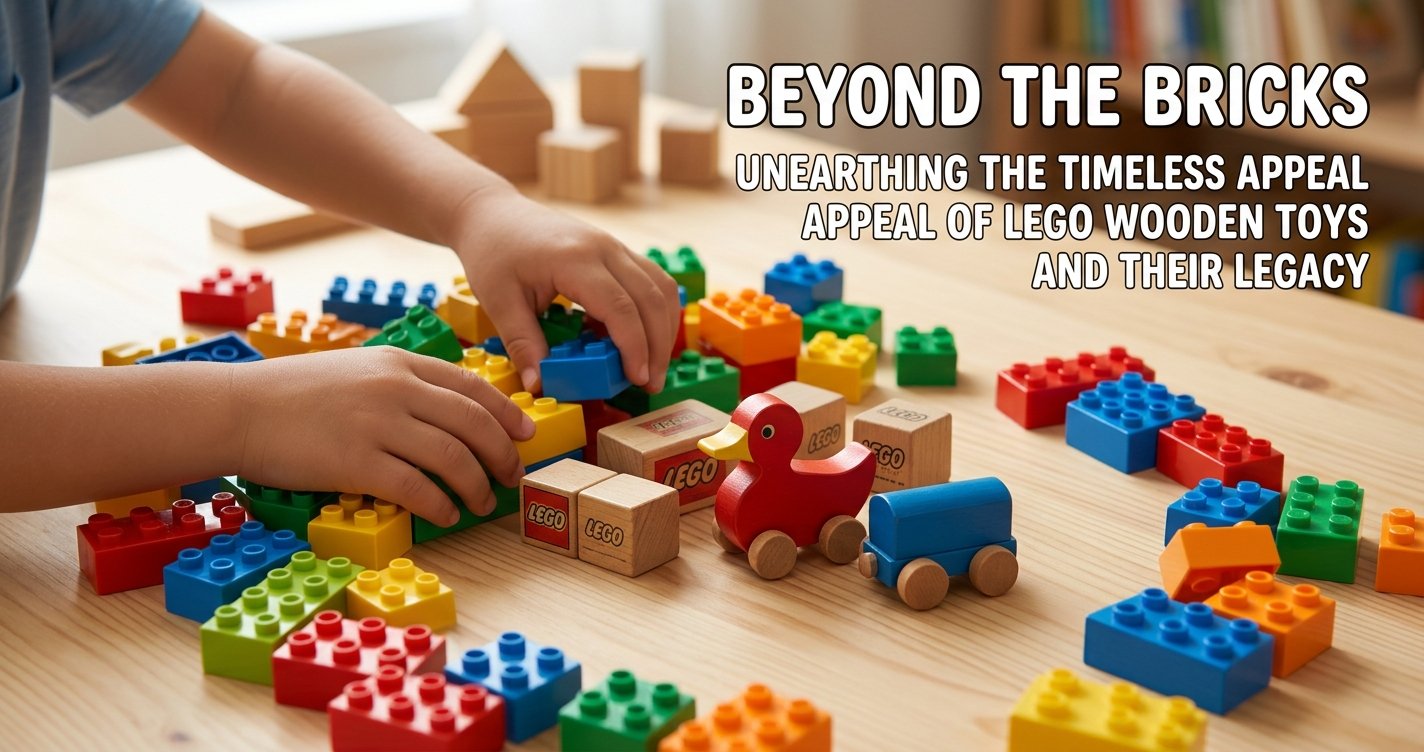
Beyond the Bricks: Unearthing the Timeless Appeal of Lego Wooden Toys and Their Legacy
Welcome to ToyVista, your trusted guide in the world of educational toys. Today, we're embarking on a fascinating journey back in time, exploring a concept that might surprise even the most ardent Lego enthusiasts: Lego wooden toys. Before the iconic plastic bricks became a global phenomenon, Lego had humble, handcrafted beginnings rooted deeply in the tradition of wooden toy making. This rich history not only highlights Lego's foundational commitment to quality and imaginative play but also underscores the enduring value of wooden toys in fostering crucial developmental skills.
In an age dominated by digital screens and fleeting trends, the simple elegance and profound educational benefits of wooden toys continue to captivate parents and educators alike. Join us as we delve into Lego's wooden origins, celebrate the timeless appeal of these classic playthings, and discover how their spirit continues to inspire modern educational play.
The Enduring Charm of Wooden Toys: A Foundation for Growth
Wooden toys possess an intrinsic allure that transcends generations. Their natural warmth, tactile feel, and satisfying weight offer a sensory experience unlike any other. For centuries, they have been the cornerstone of early childhood development, providing children with tools for exploration, creativity, and problem-solving long before plastic or digital alternatives existed. At ToyVista, we firmly believe in the power of open-ended play, and wooden toys exemplify this philosophy perfectly.
The benefits extend beyond mere aesthetics. Wooden toys are renowned for their durability, often becoming cherished heirlooms passed down through families. They encourage imaginative play by not dictating a specific outcome, allowing children to invent their own stories and scenarios. Furthermore, their simple designs often necessitate more active engagement from the child, fostering fine motor skills, hand-eye coordination, and spatial reasoning.
A Legacy of Craftsmanship and Sustainability
Beyond their developmental advantages, wooden toys stand as a testament to craftsmanship and sustainability. Unlike many mass-produced items, quality wooden toys are often made with care, reflecting a dedication to detail and longevity. Many contemporary wooden toy manufacturers prioritize eco-friendly practices, using sustainably sourced wood and non-toxic finishes, aligning perfectly with the values of environmentally conscious families.
This commitment to natural materials and robust construction means fewer toys ending up in landfills and more opportunities for children to connect with the natural world through their playthings. It’s a choice that benefits both children and the planet.
Lego's Roots: A Surprising Wooden Beginning
To truly understand the legacy of Lego wooden toys, we must journey back to 1932, to the workshop of a master carpenter in Billund, Denmark. This is where the story of Lego, one of the world's most beloved toy companies, began – not with plastic bricks, but with beautifully crafted wooden playthings.
Ole Kirk Christiansen, the founder of Lego, started his business producing wooden toys, among other household items, after his carpentry business was hit hard by the Great Depression. His commitment to quality was unwavering, famously telling his son, Godtfred, "Only the best is good enough." This motto, born from the creation of sturdy wooden ducks, cars, and building blocks, became the bedrock of the Lego brand, a principle that continues to guide the company today.
From Master Carpenter to Global Icon: The Early Wooden Toys
The early Lego wooden toys were diverse and ingenious. They included pull-along animals like the iconic wooden duck with moving beaks and flapping wings, wooden cars, trucks, and trains, and various construction sets that pre-dated the interlocking bricks. These toys were characterized by their robust construction, smooth finishes, and vibrant, non-toxic paints. They were designed to withstand rigorous play, fostering imagination and hands-on exploration.
These early wooden creations laid the groundwork for Lego's future success. They taught the company about toy design, manufacturing processes, and, most importantly, the desires of children for engaging, high-quality play experiences. The principles of modularity and systematic play, which would later define the plastic brick system, were subtly present even in these wooden predecessors.
The Evolution from Wood to Plastic: A Necessary Transition
While the wooden toys were popular and well-regarded, Lego's pivotal shift to plastic began in the late 1940s. Ole Kirk Christiansen purchased a plastic molding machine, initially producing plastic rattles and other items. It was his son, Godtfred, who recognized the immense potential of the "Automatic Binding Bricks" – an interlocking plastic brick system he encountered. After significant refinement and innovation, the Lego System of Play with its now-famous "stud-and-tube" coupling system was patented in 1958.
This transition was driven by several factors: plastic allowed for greater precision, consistency, and mass production, enabling Lego to create a truly universal system of play where every brick could connect with every other brick. While the wooden toys were eventually phased out, their spirit of quality, creativity, and systematic play undoubtedly lived on, embedded deep within the DNA of the plastic brick empire.
Bridging the Gap: Modern Wooden Toys Inspired by Lego's Spirit
Even without official "Lego wooden toys" in current production, the principles established by Lego's founders and the timeless appeal of wooden construction continue to thrive. Today, many innovative wooden toy companies draw inspiration from Lego's legacy, creating wooden building blocks, interlocking systems, and open-ended construction sets that echo the original ethos of imaginative, hands-on play.
These modern wooden toys often feature geometric shapes, magnetic connections, or intricate interlocking designs that challenge children to think spatially, develop problem-solving skills, and unleash their inner architect. They provide a wonderful alternative or complement to plastic construction sets, offering a different tactile experience and often a more organic aesthetic.
Open-Ended Play and STEM Principles in Wood
The best wooden building toys, much like Lego, excel at fostering open-ended play. There are no fixed instructions, no single "right" way to build, encouraging children to experiment, fail, and try again. This process is invaluable for developing creativity, resilience, and critical thinking. Furthermore, many wooden construction sets naturally introduce fundamental STEM (Science, Technology, Engineering, and Mathematics) principles, from understanding balance and gravity to exploring geometry and structural integrity.
Children learn about cause and effect, weight distribution, and stability through direct, tactile experience. These foundational understandings are crucial stepping stones for more complex learning later on, demonstrating that educational play can be both simple and profoundly impactful.
The Tactile Advantage: Why Wood Still Appeals in a Digital Age
In an increasingly digital world, the importance of tactile play cannot be overstated. Wooden toys offer a rich sensory experience – the feel of smooth wood, the sound of blocks clattering together, the natural scent of the material. This multi-sensory engagement is vital for healthy brain development and provides a grounding experience that contrasts with the often two-dimensional world of screens.
The inherent simplicity of wooden toys encourages children to use their imaginations more actively, filling in the gaps that highly detailed or electronic toys might leave. This imaginative effort strengthens cognitive pathways and fosters a deeper connection to the play experience.
ToyVista's Commitment to Educational Play
At ToyVista, we are passionate about curating a selection of toys that not only entertain but also educate and inspire. Our philosophy is rooted in the belief that play is a child's most important work, and the right toys can make all the difference. We champion toys that encourage creativity, critical thinking, problem-solving, and a lifelong love of learning, whether they are crafted from natural wood or cutting-edge robotics.
Understanding the foundational skills developed through classic wooden building toys is essential. These skills – spatial reasoning, fine motor control, and systematic thinking – are transferable and incredibly valuable as children grow and engage with more advanced educational tools. For instance, the logical progression from understanding how wooden blocks fit together can lead to grasping the intricate mechanisms of modern engineering. If you're looking to challenge older children with advanced construction and programming concepts, exploring options like this top-rated robotic building kit can be an excellent next step. It allows children to apply and expand upon the foundational principles learned from simpler building sets, bridging the gap between tangible construction and the exciting world of robotics and coding.
We strive to offer a diverse range of high-quality educational toys that cater to every age and developmental stage, ensuring that every child has the opportunity to learn and grow through play.
Choosing the Right Wooden Toys for Your Child
When selecting wooden toys, whether they evoke the spirit of original Lego wooden toys or are contemporary designs, consider a few key factors to ensure they are the best fit for your child and your values.
Safety and Sustainability: What to Look For
- Materials: Opt for toys made from sustainably sourced wood (FSC certified is a good indicator).
- Finishes: Ensure paints and finishes are non-toxic, water-based, and child-safe.
- Construction: Look for sturdy, well-sanded pieces with no sharp edges or small parts that could be choking hazards for young children.
- Reputation: Choose reputable brands known for their commitment to safety standards.
Encouraging Creativity and Engagement
- Open-Ended Design: Prioritize toys that can be used in multiple ways, encouraging imaginative play rather than prescriptive outcomes.
- Age Appropriateness: While many wooden toys are timeless, consider your child's developmental stage to ensure the toy is challenging but not frustrating.
- Complementary Play: Think about how the new wooden toy might integrate with existing toys to expand play possibilities.
- Child's Interest: Ultimately, choose toys that align with your child's current interests to maximize engagement and enjoyment.
The Enduring Legacy of Play
The story of Lego wooden toys is a powerful reminder that the essence of great play lies not in the material, but in the principles of quality, creativity, and educational value. From Ole Kirk Christiansen's workshop to the modern classrooms and playrooms of today, the spirit of thoughtful, engaging, and enriching play endures.
At ToyVista, we celebrate this legacy by offering a wide array of educational toys, both classic and innovative, that continue to build strong foundations for learning and growth. We invite you to explore our curated selection and discover the perfect toys to inspire the next generation of builders, thinkers, and dreamers.


