
As parents, we’re constantly seeking ways to give our children the best start in life. In the world of developmental tools, educational toys often top the list. We meticulously research, compare, and invest in products promising to teach our little ones everything from ABCs to coding. But what if the most profound learning doesn't come from a toy with a predefined outcome, but from one that invites endless possibilities?
Welcome to the transformative world of open-ended play – a powerful, often underestimated, approach to child development that leverages the very best of educational toys. This isn't just about keeping kids busy; it's about nurturing innovators, critical thinkers, and emotionally resilient individuals. Let's explore why giving your child the freedom to explore without a script is their ultimate secret superpower. this excellent toy product
What Exactly Is Open-Ended Play?
Before diving into its myriad benefits, let’s clarify what open-ended play truly means. Unlike closed-ended play, which has a specific goal or a “right” way to play (think puzzles with one solution or a game with fixed rules), open-ended play is characterized by its lack of a predetermined outcome or set of instructions. It's about the process, not the product.
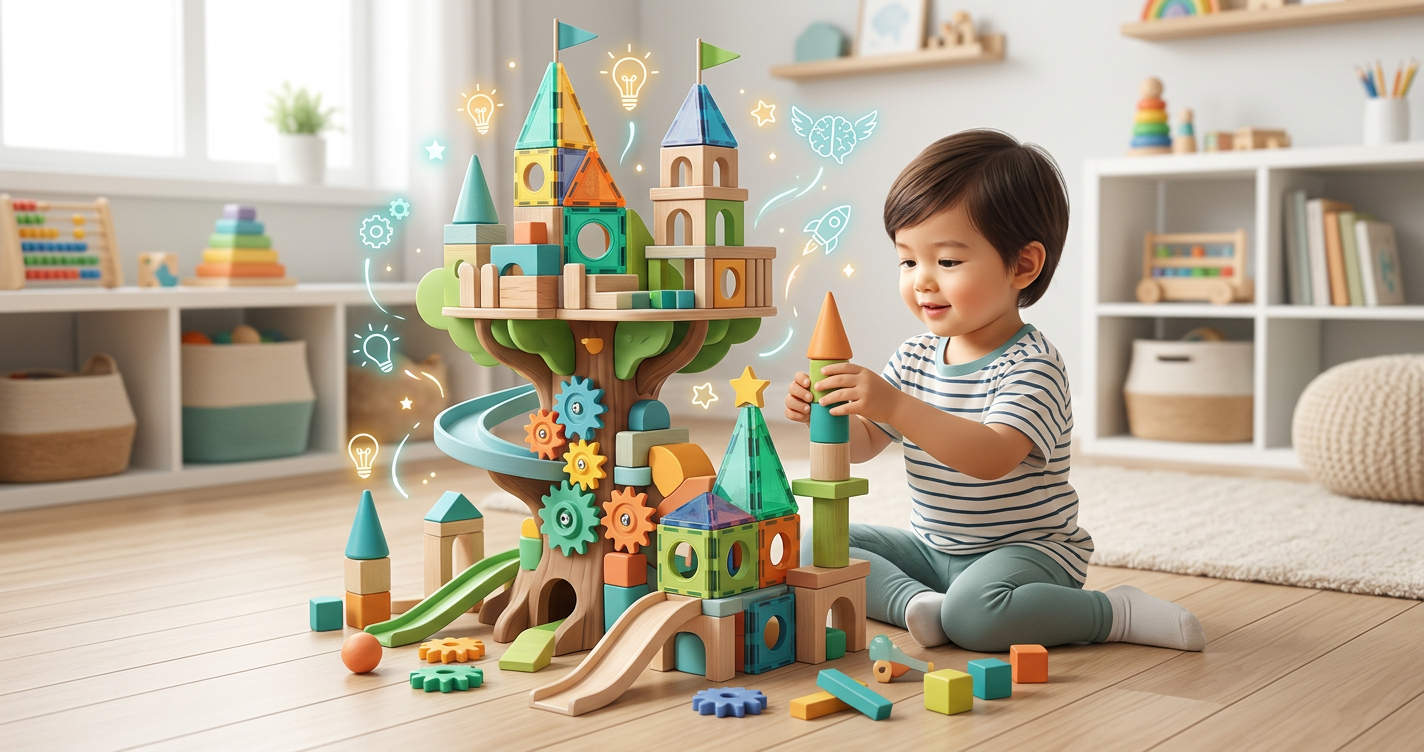
In open-ended play, children are the architects of their own adventures. They decide what to build, how to create, and what stories to tell. The toys themselves are versatile, adaptable, and can be used in countless ways. Imagine a simple set of wooden blocks: they can become a towering castle, a speeding train, a cozy home for dolls, or an abstract sculpture. The child's imagination is the only limit, making every play session a unique journey of discovery.
Cognitive Canvas: How Open-Ended Play Sharpens Young Minds
The beauty of open-ended play lies in its ability to engage multiple cognitive functions simultaneously. When a child is building with blocks or creating a world in a sandpit, they’re not just having fun; they’re engaging in complex problem-solving. They’re experimenting with balance, gravity, and spatial reasoning. What happens if I stack this block here? How can I make this tower taller without it toppling?
- Problem-Solving & Critical Thinking: Children encounter challenges and must devise solutions, fostering logical thought and analytical skills.
- Flexibility & Adaptability: When one idea doesn't work, they learn to pivot, try new approaches, and embrace trial and error – invaluable life skills.
- Executive Functions: This type of play strengthens working memory, attention, and self-regulation as children plan, execute, and adapt their play scenarios. Research consistently shows a strong correlation between early play experiences and the development of these crucial executive functions, which are foundational for academic and life success.
By providing a rich environment for exploration, open-ended educational toys become tools for cognitive gymnastics, building robust mental frameworks.
Fueling the Imagination: Where Creativity Takes Flight
In a world increasingly driven by innovation, fostering creativity is more important than ever. Open-ended play is the ultimate incubator for imagination. Without prescribed rules or expectations, children are free to invent, to dream, and to create entirely new worlds. A blanket over chairs transforms into a magical cave, a stick becomes a wizard's wand, and a collection of pebbles can be a thriving city.
Encouraging Innovation and Storytelling
- Unique Creations: Every child’s creation is their own, reinforcing their sense of individuality and capability.
- Narrative Development: As children play, they often narrate their actions, developing complex storylines, characters, and settings. This rich internal dialogue is a precursor to strong literacy skills and abstract thought.
- Abstract Thinking: Using one object to represent another (e.g., a block as a phone) strengthens abstract reasoning, a key component of higher-level thinking.
This freedom to imagine isn't just about fun; it's about building the mental muscles needed to innovate and think outside the box in their future academic and professional lives.
The Emotional Intelligence Playground: Building Resilience and Social Skills
Beyond cognitive and creative benefits, open-ended play is a powerful catalyst for social-emotional development. When children engage in self-directed play, they practice crucial skills that help them navigate their feelings and interact positively with others.
- Self-Regulation: Children learn to manage frustration when a tower falls or a story takes an unexpected turn. They practice patience, perseverance, and emotional control.
- Empathy & Social Skills: In collaborative open-ended play, children negotiate roles, share materials, and resolve conflicts. They learn to understand different perspectives, practice compromise, and develop empathy for their playmates.
- Self-Esteem & Autonomy: The ability to create something entirely from their own vision fosters a strong sense of accomplishment and self-worth. They learn to trust their own ideas and decision-making abilities.
These are the foundational components of emotional intelligence, equipping children to handle life's challenges with grace and confidence. Research from organizations like the American Academy of Pediatrics consistently highlights play as essential for developing social-emotional skills, reducing stress, and building resilience in children.
A Symphony of Words: Boosting Language and Communication
Observe children engaged in open-ended play, and you'll often hear a rich tapestry of language. They talk to themselves, to their toys, and to their playmates. This constant verbalization is a goldmine for language development.
- Vocabulary Expansion: As they describe their creations and actions, children naturally encounter and use a wider range of words.
- Narrative Skills: Creating stories during play helps children understand story structure, character development, and sequencing – critical pre-reading and writing skills.
- Conversational Fluency: Engaging in dialogue with others during play hones their ability to express ideas, listen, and respond appropriately, strengthening their communication skills.
From describing the texture of playdough to explaining the intricate workings of their block city, children are constantly practicing and refining their linguistic abilities in a natural, engaging context.
Integrating Open-Ended Play: Practical Tips for Parents
Ready to unlock this superpower in your child? Here's how you can encourage more open-ended play at home:
Choosing the Right Educational Toys
Focus on versatility and simplicity. Excellent examples include:
- Building Blocks (wooden, magnetic, or LEGO DUPLO): The ultimate open-ended toy.
- Art Supplies: Crayons, paper, paint, playdough, craft sticks, pipe cleaners – anything that allows for free creation.
- Loose Parts: Collections of natural items (stones, leaves, sticks), fabric scraps, cardboard tubes, buttons – everyday objects that can be anything.
- Dress-Up Clothes & Props: Encourage imaginative role-playing.
- Sand & Water Tables: Sensory experiences that invite endless exploration.
Creating an Inviting Environment
- Designate a Play Space: A corner or room where toys are accessible and messes are tolerated (within reason!).
- Simplify & Rotate: Too many toys can be overwhelming. Offer a curated selection and rotate them every few weeks to keep things fresh and interesting.
- Be a Facilitator, Not a Director: Provide the materials, but resist the urge to dictate how they should be used. Ask open-ended questions like, “What are you building?” or “Tell me about your creation,” instead of giving instructions.
Embrace the Mess
Open-ended play can sometimes be messy, but that's often where the deepest learning happens. A little paint on the table or sand on the floor is a small price to pay for the immense developmental benefits. Involve your child in cleanup to teach responsibility.
When to Introduce Open-Ended Toys?
The wonderful thing about open-ended educational toys is that they are suitable for nearly all ages, from toddlers to school-aged children. Infants can explore the textures and shapes of simple blocks, while preschoolers can construct elaborate imaginary worlds, and older children can design complex engineering feats. The complexity of play evolves with the child's development, making these toys a long-term investment in their growth.
Embrace the Power of Play
In our fast-paced, goal-oriented world, it’s easy to overlook the quiet power of open-ended play. Yet, the evidence is clear: by providing opportunities for self-directed exploration with versatile educational toys, we equip our children with far more than just academic knowledge. We empower them to be creative, resilient, critical thinkers who can adapt to new challenges and thrive in an ever-changing world.
So, take a deep breath, trust your child’s innate curiosity, and let them play. The amazing abilities they’ll uncover might just surprise you – and set them on a path to a truly limitless future. The greatest lessons are often learned when there are no instructions at all.


