Unlock Brilliance: The Power of Play-Based Learning with Educational Toys
As parents, we all dream of watching our children thrive, grow, and develop into confident, capable individuals. In our modern world, there's often a push towards early academic achievement, leading to questions about the 'best' way to educate young minds. But what if we told you that one of the most powerful tools for learning isn't a textbook or a lecture, but something far more intuitive and enjoyable? We're talking about play-based learning, brilliantly amplified by the magic of educational toys.
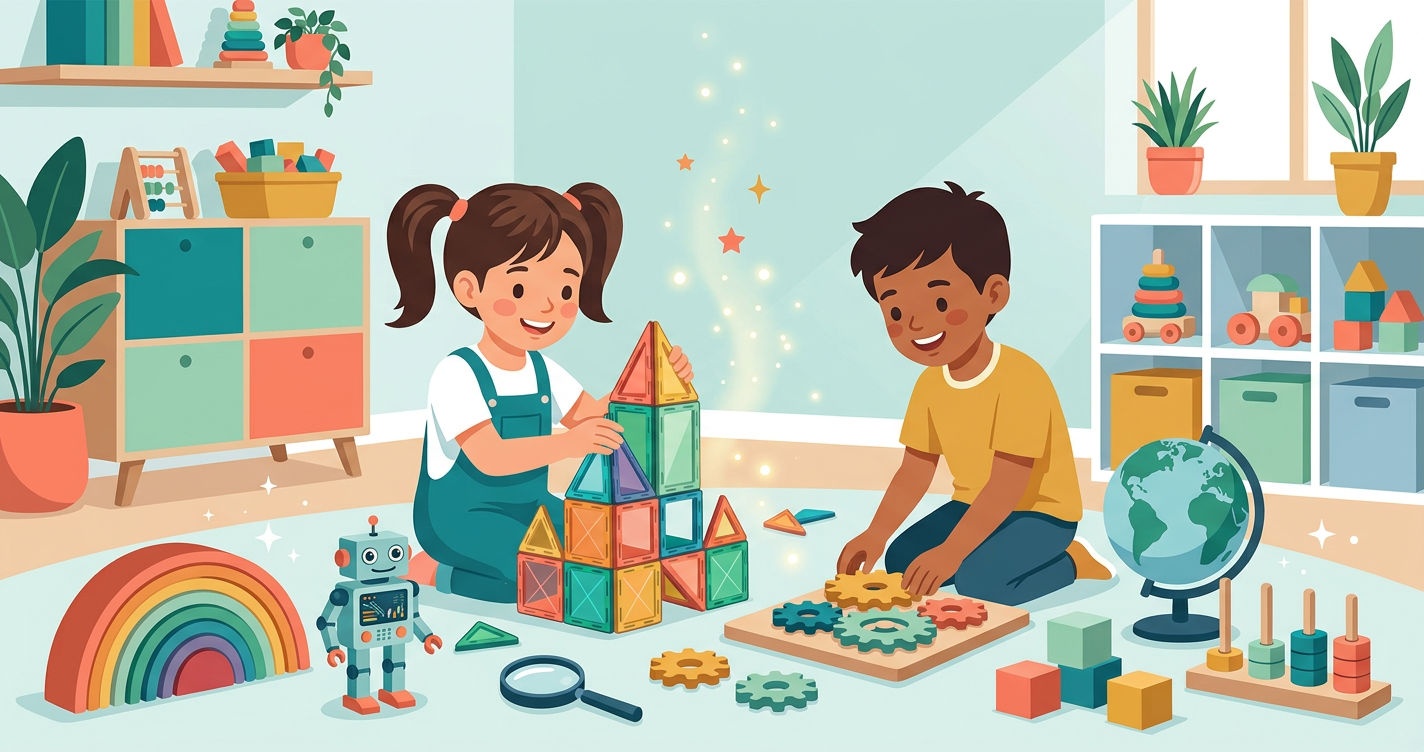
Imagine a child deeply engrossed in building a towering fort, meticulously arranging blocks, or excitedly explaining a story to their stuffed animals. This isn't just idle time; it's a profound learning experience. In this post, we'll explore the incredible science behind why play isn't just fun, but absolutely crucial for your child's development, and how educational toys can become their most valuable learning companions. this excellent toy product
What Exactly is Play-Based Learning?
At its heart, play-based learning is exactly what it sounds like: children learn through play. It's a pedagogical approach that recognizes play as a child's natural way of making sense of the world around them. Unlike rote memorization or structured lessons, play-based learning is often:
- Child-initiated: The child chooses the activity, fostering intrinsic motivation.
- Process-oriented: The journey of discovery is more important than the end product.
- Enjoyable: It's inherently fun, making learning a positive experience.
- Experiential: Children learn by doing, touching, manipulating, and interacting.
- Holistic: It engages multiple areas of development simultaneously – cognitive, social, emotional, and physical.
This approach isn't new; educational pioneers like Froebel and Montessori championed the idea centuries ago. Modern research consistently validates their insights, showing that a playful environment fosters deeper understanding, critical thinking, and a lifelong love of learning.
The Science Behind the Fun: How Play Fuels Development
It's not just a hunch; countless studies underscore the profound impact of play on a child's brain development and overall well-being. When children play, their brains are actively firing, forming new neural connections at an astonishing rate. Here’s how play, especially with the right tools, nurtures various developmental domains:
Cognitive Skills: Building Brainpower Block by Block
Play is a powerhouse for cognitive development. When a child solves a puzzle, plans a strategy in a game, or figures out how to make a structure stand, they're engaging in complex problem-solving. This builds:
- Memory and Attention: Remembering rules, sequences, or where they left a particular toy.
- Logical Thinking: Understanding cause and effect, predicting outcomes.
- Creativity and Imagination: Inventing scenarios, characters, and solutions. Research from the American Academy of Pediatrics highlights play's role in developing imagination and flexibility of thought, which are crucial for innovation.
- Language Development: Narrating play, asking questions, and interacting with others expands vocabulary and communication skills.
Social-Emotional Growth: Learning to Connect and Empathize
Play is a natural laboratory for social and emotional learning. Through role-playing, sharing toys, or collaborating on a building project, children learn vital life skills:
- Cooperation and Negotiation: Learning to share, take turns, and compromise.
- Empathy: Stepping into different roles helps children understand other perspectives and feelings.
- Emotional Regulation: Dealing with frustration, winning and losing gracefully, and expressing emotions in a safe context.
- Self-Confidence: Mastering new skills through play boosts self-esteem and a sense of accomplishment.
Physical Development: Mastering Movement and Dexterity
From stacking rings to riding a bike, play is fundamental for physical development:
- Fine Motor Skills: Manipulating small objects (e.g., beads, LEGO bricks), drawing, cutting – essential for writing and self-care.
- Gross Motor Skills: Running, jumping, climbing, balancing – crucial for coordination, strength, and overall physical health.
- Hand-Eye Coordination: Activities like catching a ball or threading beads refine this crucial skill.
Educational Toys: Your Child's Learning Sidekicks
While any toy can be educational if used creatively, educational toys are specifically designed to stimulate development and encourage specific learning outcomes through play. They are not merely distractions; they are tools that invite exploration, problem-solving, and imaginative engagement. Think of them as catalysts for discovery, carefully crafted to align with developmental milestones and learning objectives.
They span a vast range, from classic wooden blocks that foster spatial reasoning to modern STEM kits that introduce coding concepts. Here are a few examples:
- STEM Toys (Science, Technology, Engineering, Math): These toys, like building sets, simple circuit kits, or beginner coding robots, encourage critical thinking, problem-solving, and an understanding of scientific principles.
- Montessori-Inspired Toys: Often made from natural materials, these toys focus on practical life skills, sensorial exploration, and self-directed learning, fostering independence and concentration.
- Open-Ended Toys: Simple items like blocks, play-dough, art supplies, or dolls don't have a single 'right' way to play. They encourage imagination, creativity, and allow children to lead their own narratives.
- Puzzles and Games: Excellent for developing logic, pattern recognition, spatial awareness, and strategic thinking.
The beauty of educational toys is their ability to make learning feel effortless and fun, integrating new concepts seamlessly into a child's natural play patterns.
Choosing the Right Educational Toys: A Parent's Guide
With an overwhelming array of options available, selecting the best educational toys can feel daunting. Here’s a friendly guide to help you choose wisely:
- Consider Age Appropriateness: Always check age recommendations. Toys designed for older children can be frustrating, while those for younger children might not offer enough challenge. Safety is also paramount, especially regarding small parts.
- Prioritize Open-Ended Play: Look for toys that can be used in multiple ways, rather than those with a single function. Blocks, art supplies, dress-up clothes, and magnetic tiles offer endless possibilities and fuel imagination far longer than single-use gadgets.
- Observe Your Child's Interests: What truly captures your child's attention? If they love animals, consider animal-themed puzzles or building sets. If they're fascinated by how things work, a simple engineering kit might be perfect. Engagement is key to learning.
- Focus on Durability and Safety: Choose toys made from non-toxic, robust materials that can withstand enthusiastic play. Quality often trumps quantity.
- Think About Skill Development: Does the toy encourage fine motor skills, problem-solving, language, or social interaction? Aim for a variety to support holistic development.
Maximizing the Magic: Tips for Parents
Having the right toys is only half the battle. Your involvement and approach to play can significantly enhance the learning experience:
- Join In! Play with your child. Your presence, questions, and shared joy validate their play and offer opportunities for modeling language, problem-solving, and social skills.
- Follow Their Lead: Resist the urge to direct their play. Let them explore, make mistakes, and discover solutions independently. Ask open-ended questions like, "What are you building?" or "What happens next?" instead of giving instructions.
- Create a Conducive Environment: Ensure toys are easily accessible and organized. A designated play space, even a small one, signals that play is valued.
- Don't Overdo It: A few high-quality, engaging toys are far better than a room full of clutter. Rotate toys periodically to keep interest fresh and prevent overwhelm.
- Embrace the Mess: Learning often involves exploration, and exploration can be messy! Encourage sensory play (e.g., sand, water, play-dough) and don't shy away from creative projects that might lead to a little disarray.
Unlocking a Lifetime of Learning
The journey of childhood is one of constant discovery, and play is its most joyful vehicle. By embracing play-based learning and thoughtfully incorporating educational toys, you're not just providing entertainment; you're investing in your child's future. You're fostering curiosity, building resilience, nurturing creativity, and laying a robust foundation for academic success and lifelong well-being.
So, step back, observe, and join in the fun. Watch as your child naturally unlocks their potential, one playful moment at a time. The world is their classroom, and with the right educational toys and your encouraging presence, there's no limit to what they can achieve.