
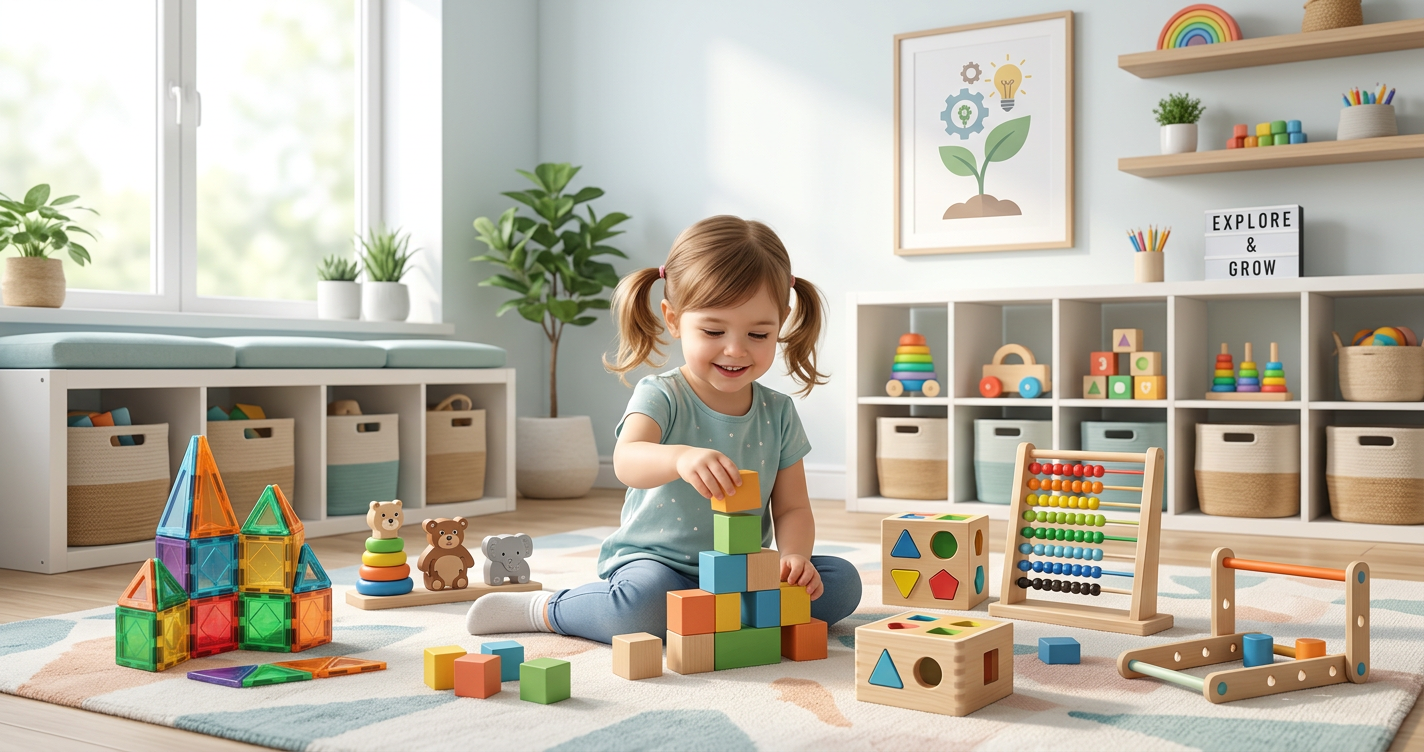
Hey there, amazing parents and caregivers! Ever watched your child completely engrossed in building a towering block castle, meticulously arranging puzzle pieces, or creating an imaginary world with their favorite figures? What looks like simple fun is actually a powerhouse of learning – it’s play-based learning in action! In a world often focused on early academic pressure, it's easy to overlook the profound impact of play. But here’s a comforting truth: play isn't just a break from learning; it IS learning. And when thoughtfully paired with educational toys, it becomes an incredibly effective, joyful, and natural way for children to develop critical skills that last a lifetime.
This isn't about rote memorization or structured lessons at a young age. It's about empowering children to explore, experiment, and understand the world around them at their own pace. Educational toys are fantastic tools in this journey, acting as catalysts for curiosity, creativity, and cognitive growth. Let's dive into the fascinating world of play-based learning and discover how you can harness its power with the right educational toys to nurture your child's boundless potential. this excellent toy product
What Exactly is Play-Based Learning?
At its core, play-based learning is an approach where children learn through engaging in playful activities. It’s child-initiated and child-directed, meaning the child takes the lead, driven by their natural curiosity and intrinsic motivation. Unlike traditional classroom settings where a teacher dictates the lesson, in play-based learning, the 'lessons' emerge organically from the child's interactions with their environment, peers, and, of course, their toys.
Think of it as a low-stakes laboratory where children can test hypotheses, make discoveries, and learn from 'failures' (which are just opportunities to try again!). When a child stacks blocks and they tumble, they're not just playing; they're learning about gravity, balance, and problem-solving. When they engage in pretend play, they're developing language, social skills, and empathy. Educational toys simply provide richer, more focused tools to enhance these natural learning processes, offering specific challenges and opportunities for discovery.
The Science Behind the Smiles: Why Play Works Wonders for Development
It's not just a hunch; decades of research in child development, psychology, and neuroscience consistently highlight the critical role of play in healthy growth. Experts like Jean Piaget, Lev Vygotsky, and Maria Montessori, pioneers in early childhood education, all emphasized the importance of active, self-directed exploration. Here’s how play, especially with the right educational toys, fuels various aspects of your child's development:
Cognitive Development: Building Brainpower Brick by Brick
- Problem-Solving: Puzzles, building sets, and strategy games challenge children to think critically, plan, and find solutions.
- Memory & Attention: Games that require remembering patterns, sequences, or rules sharpen these vital cognitive functions.
- Language & Literacy: Storytelling with puppets, pretend play, and even letter-matching toys expand vocabulary and narrative skills.
- Early Math Concepts: Sorting blocks by color or size, counting pieces, or understanding spatial relationships through construction toys lays foundational mathematical understanding.
Social & Emotional Growth: Learning to Connect and Understand
- Empathy & Perspective-Taking: Role-playing with dolls or action figures helps children explore different emotions, social scenarios, and understand others' viewpoints.
- Cooperation & Negotiation: Group play with board games or collaborative building projects teaches sharing, turn-taking, and conflict resolution.
- Self-Regulation: Learning to manage frustration when a tower falls or waiting for a turn in a game builds emotional resilience and self-control.
Physical Skills: Moving, Doing, Growing
- Fine Motor Skills: Manipulating small pieces, drawing, lacing beads, or using play dough strengthens the small muscles in hands and fingers, essential for writing and self-care.
- Gross Motor Skills: Outdoor play equipment, ride-on toys, or even large building blocks encourage running, jumping, balancing, and coordination.
Creativity & Problem-Solving: Innovators in Training
- Imagination: Open-ended toys like art supplies, dress-up clothes, or simple wooden blocks invite children to create their own narratives and worlds.
- Innovation: Experimenting with different ways to use materials or solve challenges fosters divergent thinking and resourcefulness.
Educational Toys: More Than Just Fun and Games
The beauty of educational toys lies in their ability to seamlessly blend entertainment with genuine learning opportunities. They are designed not just to entertain, but to stimulate specific developmental areas, often without the child even realizing they're 'learning'. From classic wooden blocks to modern STEM kits, these toys are crafted to engage children in active exploration and discovery.
Think beyond flashy gadgets. Some of the most effective educational toys are surprisingly simple:
- Building Blocks (Wooden, LEGO, Magna-Tiles): Foster spatial reasoning, fine motor skills, creativity, and early engineering concepts.
- Puzzles & Shape Sorters: Enhance problem-solving, cognitive processing, hand-eye coordination, and shape recognition.
- Art Supplies (Crayons, Paint, Play-Doh): Unleash creativity, develop fine motor skills, and encourage self-expression.
- Pretend Play Sets (Kitchens, Doctor Kits, Dress-Up Clothes): Boost social-emotional development, language skills, and imaginative play.
- STEM Kits (Science experiment sets, Robotics for kids, Coding games): Introduce foundational concepts in Science, Technology, Engineering, and Math in an engaging, hands-on way.
- Musical Instruments: Develop auditory skills, rhythm, coordination, and a love for music.
Choosing the Right Educational Toys: A Parent's Guide
With an overwhelming array of options, selecting the 'best' educational toys can feel daunting. Here’s a friendly guide to help you choose toys that genuinely support your child's growth:
Age Appropriateness Matters (But Don't Be Rigid!)
Toy manufacturers provide age recommendations for safety and developmental suitability. While these are good starting points, remember that every child develops at their own pace. Observe your child's interests and abilities; a toy might be labeled for 3+, but if your 2.5-year-old is showing advanced interest and capability, it might be perfect! Conversely, don't push a toy they're not ready for.
Open-Ended vs. Single-Purpose: Embrace Versatility
Prioritize open-ended toys that can be used in multiple ways. A set of plain wooden blocks can become a castle, a car, an animal enclosure, or anything your child imagines. A single-purpose toy, like a talking robot that only says pre-programmed phrases, offers limited long-term play value. Open-ended toys encourage creativity, problem-solving, and sustained engagement.
Durability and Safety First
Always check for safety certifications (e.g., CE mark, ASTM F963). Ensure toys are made from non-toxic materials, free from small parts for young children, and built to withstand enthusiastic play. Durable toys are not only safer but also more sustainable.
Consider Your Child's Interests (and Expand Them!)
What fascinates your child? Do they love animals, building, music, or stories? Lean into these interests, but also introduce toys that gently nudge them into new areas. If they love cars, introduce a set of ramps and tracks that teach physics. If they love drawing, try a clay set for 3D creation.
Maximizing the Magic: Tips for Engaging Play
Having the right toys is only half the equation. Your involvement and approach to play are just as crucial. Here’s how you can make playtime truly impactful:
- Be Present, Not Prescriptive: Join in the play without taking over. Follow your child’s lead, ask open-ended questions (“What are you building there?” “Tell me about your story”), and offer suggestions rather than instructions.
- Create a 'Yes' Environment: Designate a safe, accessible play space where your child can freely explore without constant 'no's'. This fosters independence and confidence.
- Rotate Toys: Keep a selection of toys available and store others away. Rotating toys every few weeks can reignite interest and make old favorites feel new again, preventing overwhelm and encouraging deeper engagement with fewer items.
- Embrace Mess: Learning often involves exploration and experimentation, which can get messy. A little paint on the table or scattered blocks is a small price for big learning!
- Talk About Play: After playtime, engage your child in conversation. “What was your favorite part?” “What did you learn about balancing those blocks?” This helps them articulate their experiences and solidify their learning.
Empowering Future Learners, One Playtime at a Time
The journey of childhood is one of constant discovery, and play is the engine that drives it. By embracing play-based learning and thoughtfully selecting educational toys, you're not just providing entertainment; you're investing in your child's holistic development. You're fostering a love for learning, building essential life skills, and nurturing their natural curiosity in a way that feels joyful and authentic.
So, the next time you see your child immersed in play, know that you're witnessing the incredible process of growth in action. Encourage it, support it, and most importantly, enjoy it. Because in every giggle, every triumphant build, and every imaginative adventure, your child is unlocking their incredible potential, one playful moment at a time. You've got this, and your child is thriving because of it!


