As parents, we all want the best for our children, especially during those magical, formative early years. Every giggle, every discovery, every wobbly step is a building block in their incredible journey. While we often think of "learning" as something that happens in a classroom, the truth is, a child's most profound learning experiences often happen through something far more enjoyable: play!
Enter educational toys. Far from being just fancy gadgets or academic tools, these aren't just about fun and games; they are powerful catalysts that ignite curiosity, foster critical skills, and lay the groundwork for a lifetime of learning. In this post, we'll explore how thoughtfully chosen educational toys aren't just a luxury, but a vital component in nurturing every facet of your child's early childhood development, from their tiny brains to their budding social skills. this excellent toy product
What Exactly Are "Educational Toys"? More Than Just Brainy Gadgets!
When you hear "educational toy," what comes to mind? Perhaps alphabet blocks, puzzles, or science kits? While these certainly qualify, the definition is much broader and more exciting! An educational toy isn't just something that teaches a specific academic subject; it's any toy that stimulates a child's mind, encourages exploration, and helps them develop new skills through active engagement.
- They are active, not passive: Unlike screens that offer passive entertainment, educational toys require interaction. Children manipulate, build, imagine, and problem-solve.
- They encourage discovery: Instead of rote memorization, these toys invite children to discover principles, test hypotheses, and understand cause and effect.
- They are developmentally appropriate: Good educational toys are designed to meet a child at their current stage, offering just enough challenge to foster growth without causing frustration.
Think of them as tools that empower children to become little scientists, engineers, artists, and storytellers, all while having a blast!
The Cognitive Canvas: Painting Bright Futures with Problem-Solving and Critical Thinking
Early childhood is a period of incredible brain development, where billions of neural connections are forming at an astonishing rate. Educational toys are like superfoods for these developing brains, providing the rich nutrients they need to thrive. They are instrumental in boosting cognitive development, which encompasses thinking, understanding, and reasoning.
Puzzles and Building Blocks: Foundations of Logic
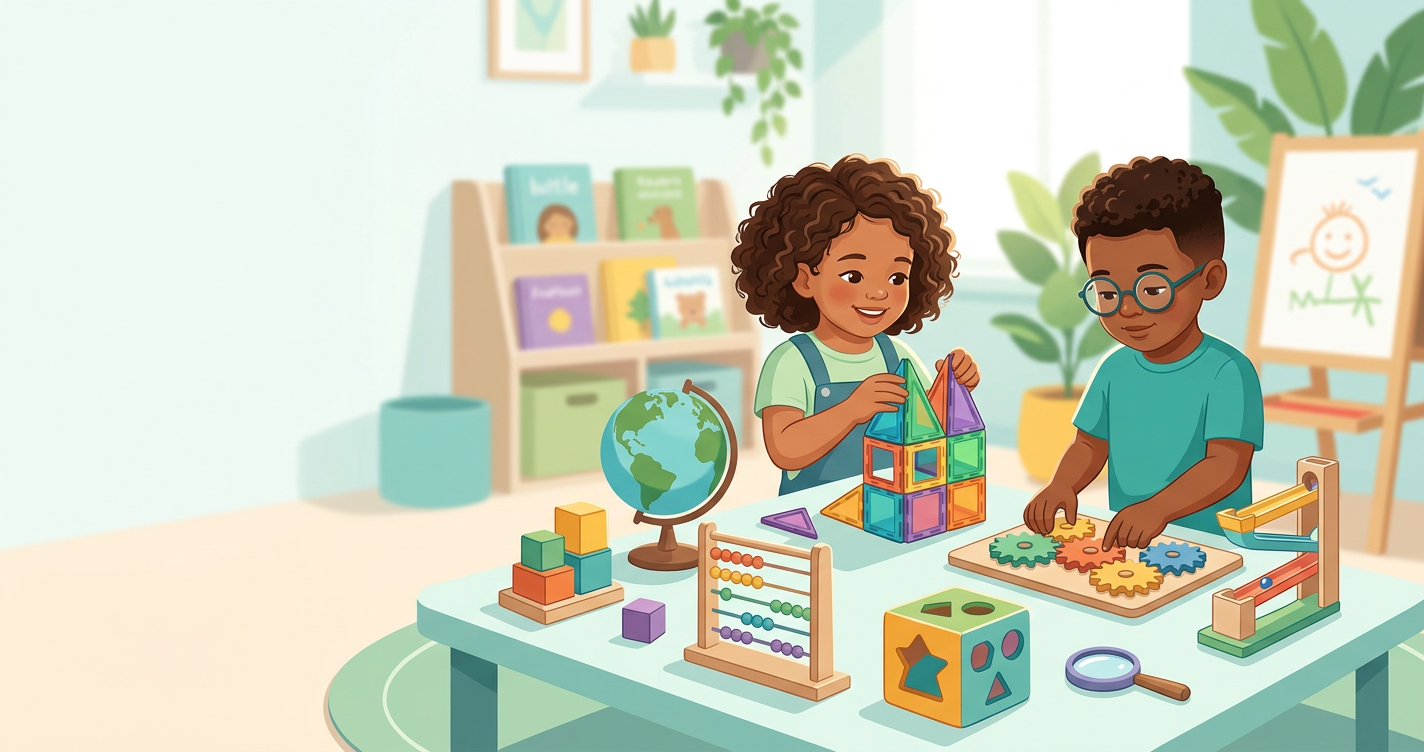
From simple shape sorters for toddlers to intricate block sets for preschoolers, these classics are cognitive powerhouses. When a child tries to fit a square peg into a square hole, or stack blocks to build a tower that doesn't tumble, they are:
- Developing problem-solving skills: They learn through trial and error, figuring out what works and what doesn't.
- Enhancing spatial reasoning: Understanding how objects relate to each other in space, a crucial skill for math and science.
- Improving memory: Remembering patterns, sequences, and solutions to past challenges.
- Boosting concentration: Focusing on a task until it's complete, a skill vital for future academic success.
Research consistently shows that engaging in complex play, especially with construction toys, is linked to stronger mathematical abilities and improved spatial visualization later in life, highlighting the profound impact of these seemingly simple activities.
Nurturing Little Hearts and Hands: Social-Emotional Growth and Motor Skill Mastery
Development isn't just about what happens in the brain; it's also about how children interact with the world and control their bodies. Educational toys play a crucial role in fostering both social-emotional intelligence and essential motor skills.
Role-Playing and Dolls: Cultivating Empathy and Social Graces
When children engage in pretend play – whether it's caring for a baby doll, running a make-believe store, or dressing up as a superhero – they are actively developing vital social-emotional skills:
- Empathy: Stepping into another's shoes, understanding different perspectives and emotions.
- Cooperation and Negotiation: Sharing toys, taking turns, and compromising during group play.
- Emotional Regulation: Expressing feelings safely through play scenarios, processing experiences.
- Communication: Practicing dialogue, listening, and expressing their thoughts.
These experiences are the bedrock for forming healthy relationships and navigating social situations throughout life, preparing them for complex interactions.
Fine and Gross Motor Skills: Building Strength and Dexterity
Every movement your child makes refines their motor skills. Educational toys provide the perfect playground for this development:
- Fine Motor Skills: Toys like lacing beads, playdough, art supplies, and small construction sets require precise hand-eye coordination and finger dexterity. These skills are fundamental for tasks like writing, buttoning clothes, and self-feeding.
- Gross Motor Skills: Push-and-pull toys, tricycles, balance boards, and large building blocks encourage movement, balance, and coordination of larger muscle groups. This builds physical confidence and supports overall physical health.
By engaging these skills, children gain greater control over their bodies, which in turn boosts their independence and self-esteem, setting them up for physical competence.
The Language Lab and Creative Hub: Fostering Communication and Imagination
The ability to communicate effectively and express oneself creatively are cornerstones of human experience. Educational toys are incredible catalysts for developing both.
Storytelling and Language Development: Words Come to Life
Toys like puppets, picture books, and alphabet blocks do more than just entertain; they immerse children in a world of words and stories:
- Vocabulary Expansion: Learning new words as they interact with and describe their toys.
- Narrative Skills: Creating their own stories, understanding plot, characters, and sequence.
- Communication Practice: Engaging in conversations about their play, asking questions, and expressing ideas.
When you talk to your child about their play, describing what they're doing or what the toy is, you're actively enriching their language environment, laying strong foundations for literacy.
Unleashing Creativity and Imagination: The Sky's the Limit!
Open-ended toys are the true champions of creativity. Unlike toys with a single purpose, items like building blocks (again!), art supplies, dress-up clothes, and even simple natural materials (sticks, stones) allow children to invent, transform, and explore without limits.
- Divergent Thinking: There's no "right" way to play, encouraging children to think of multiple possibilities and solutions.
- Imaginative Play: Creating entire worlds, characters, and scenarios, which is crucial for abstract thinking and problem-solving later in life.
- Self-Expression: Providing a safe outlet for children to express their unique ideas, feelings, and understanding of the world.
This kind of play fosters a flexible mind, capable of innovation and adaptability – essential qualities for the future.
Beyond the Shelf: Choosing the Right Educational Toys for Your Child
With an overwhelming array of toys available, how do you pick the "right" educational ones? Here are some friendly, evidence-based tips to guide your choices:
- Prioritize Age-Appropriateness: Always check age recommendations for safety and developmental suitability. A toy that's too simple will bore them; one that's too complex will frustrate them.
- Look for Open-Ended Potential: Toys that can be used in multiple ways (blocks, art supplies, play kitchen items) offer more longevity and foster greater creativity than single-purpose, highly structured toys.
- Consider Durability and Safety: Choose well-made toys from non-toxic materials that can withstand enthusiastic play. Safety certifications are a good sign.
- Follow Your Child's Interests: The best educational toy is one your child genuinely enjoys! If they're fascinated by animals, look for animal-themed puzzles or figurines for imaginative play.
- Aim for Variety: A diverse collection that targets different developmental areas (physical, cognitive, social, creative) will provide a more holistic learning experience.
- Less is Often More: A few high-quality, engaging toys are often better than a room full of clutter. Too many choices can be overwhelming.
Making Playtime Count: Tips for Engaging with Educational Toys
Remember, a toy's educational value isn't solely in its design; it's also in how it's used. Your involvement can amplify its impact significantly!
- Be a Play Partner: Don't just hand over a toy and walk away. Get down on the floor, play with your child, ask open-ended questions ("What are you building next?"), and narrate actions ("Oh, the red car is going very fast!").
- Create an Inviting Play Environment: Make toys accessible and organized. A dedicated play space encourages independent exploration and makes clean-up easier.
- Limit Screen Time: While screens have their place, excessive screen time can displace valuable hands-on, imaginative play. Prioritize opportunities for active engagement with physical toys.
- Encourage Exploration, Not Perfection: Let your child lead the play. There's no "right" way to build a block tower or draw a picture. Focus on the process of discovery and effort, not just the end result.
- Rotate Toys: To keep things fresh and maintain interest, consider rotating toys in and out of storage. This makes old favorites feel new again.
Unlocking Potential: The Lasting Impact of Playful Learning
Educational toys are more than just playthings; they are silent teachers, patient guides, and powerful tools in the hands of our youngest learners. They provide a safe, engaging, and joyful environment for children to develop crucial cognitive abilities, build robust social-emotional skills, master physical coordination, and unleash boundless creativity.
By thoughtfully integrating these toys into your child's early years and actively participating in their play, you're not just offering momentary entertainment. You're investing in their holistic development, nurturing their innate curiosity, and equipping them with the foundational skills they need to thrive in school and throughout life. So, embrace the power of play – it's truly where the magic of learning begins!