
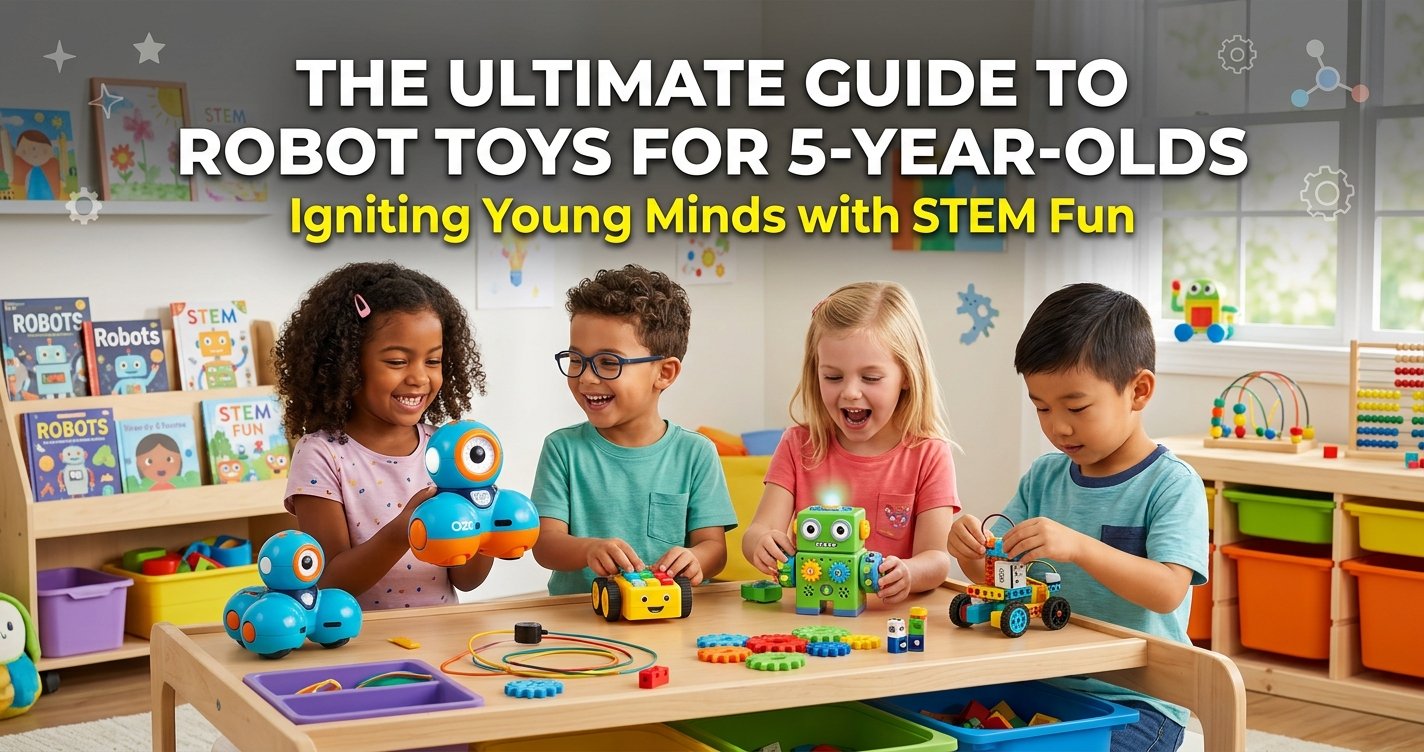
In the vibrant world of childhood, where imagination knows no bounds and every day is an adventure, few toys capture the awe and wonder of a 5-year-old quite like robots. At ToyVista, a leading expert in educational toys, we understand that play is not just about entertainment; it's a powerful catalyst for learning and development. Robot toys, in particular, offer a unique blend of excitement and education, making them an ideal choice for curious minds ready to explore the fundamentals of technology, problem-solving, and creativity.
As your child approaches their fifth birthday, they are entering a crucial phase of cognitive and motor skill development. They're more adept at understanding instructions, engaging in imaginative play, and beginning to grasp cause-and-effect relationships. This makes robot toys for 5-year-olds incredibly valuable tools, transforming playtime into an enriching experience that lays the groundwork for future STEM (Science, Technology, Engineering, and Mathematics) success. But with countless options available, how do you choose the perfect robotic companion for your budding engineer or scientist? This comprehensive guide from ToyVista will walk you through everything you need to know, from the educational benefits to what to look for, ensuring you make an informed decision that sparks joy and learning.
Why Robot Toys are Perfect for 5-Year-Olds: Beyond Just Fun
Robot toys are far more than just cool gadgets; they are dynamic educational instruments disguised as playthings. For a 5-year-old, the benefits extend across multiple developmental domains:
Fostering Early STEM Skills
At the heart of robot toys lies the opportunity to introduce foundational STEM concepts in an accessible and engaging way. Children learn about basic mechanics as they assemble parts, understand simple coding logic through programmable movements, and develop problem-solving skills when a robot doesn't perform as expected. This hands-on exploration cultivates an early appreciation for engineering principles and computational thinking, setting the stage for more advanced learning later on.
Boosting Creativity and Imagination
Robots often serve as protagonists in elaborate imaginative scenarios. A child might envision their robot as an intrepid space explorer, a helpful household assistant, or a valiant protector. This kind of open-ended play encourages storytelling, role-playing, and the development of rich narrative abilities. Whether it's designing a mission for their robot or customizing its appearance, children are constantly engaging their creative faculties.
Developing Fine Motor Skills and Hand-Eye Coordination
Many robot toys require children to manipulate small parts, press buttons, or use remote controls. These actions are excellent for refining fine motor skills, improving dexterity, and enhancing hand-eye coordination. The precision needed to guide a robot or connect its components contributes significantly to their physical development, which is crucial for tasks like writing and drawing.
Enhancing Cognitive Development
Playing with robots often involves understanding sequences, predicting outcomes, and grasping cause-and-effect relationships. If I press this button, the robot moves forward. If I program these steps, the robot will navigate an obstacle course. This type of logical thinking is fundamental to cognitive development, helping children build mental models of how the world works and how their actions can influence outcomes.
Encouraging Social-Emotional Growth
While some robot toys are designed for individual play, many also facilitate social interaction. Children can play together, collaborating to program a robot, share control of a remote, or even create elaborate scenarios involving multiple robots. This fosters teamwork, communication, negotiation, and empathy, as they learn to share and work towards a common goal.
What to Look for When Choosing Robot Toys for 5-Year-Olds
Selecting the perfect robot toy requires careful consideration. Here's what ToyVista experts recommend you prioritize:
Age Appropriateness and Safety
This is paramount. For 5-year-olds, look for toys clearly labeled for their age group. Avoid small parts that could be choking hazards. Ensure the toy is made from non-toxic, durable materials that can withstand enthusiastic play without breaking easily and posing new hazards.
Educational Value
Does the robot toy offer more than just passive entertainment? Look for features that encourage learning, such as basic coding functions, building components, or interactive problem-solving challenges. The best robots for this age group integrate learning seamlessly into play.
Ease of Use
A 5-year-old should be able to operate the robot independently or with minimal adult assistance. Complex controls or intricate programming interfaces can quickly lead to frustration. Look for intuitive buttons, simple remote controls, or visual programming methods that are easy for young children to grasp.
Durability and Quality
Children at this age are active and sometimes a bit rough with their toys. Invest in a robot made from high-quality, sturdy materials that can endure drops, bumps, and consistent play. A durable toy lasts longer and provides better value.
Engagement and Replay Value
Will the robot hold your child's interest beyond the initial unboxing? Toys with multiple play modes, expandable features, or open-ended possibilities tend to offer greater replay value. A robot that can be reprogrammed for different tasks or integrated into other play scenarios will provide lasting engagement.
Battery Life and Maintenance
Consider the type and number of batteries required. Rechargeable options are often more economical and environmentally friendly in the long run. Also, check how easy it is to clean and maintain the toy, especially if it's meant for indoor and outdoor play.
Top Picks: Best Robot Toys for 5-Year-Olds from ToyVista Experts
Based on our extensive experience and dedication to educational play, ToyVista has identified several types of robot toys that consistently delight and educate 5-year-olds:
-
Entry-Level Coding Robots: These robots introduce fundamental coding concepts without screens. Children use physical buttons or color-coded cards to program sequences of movements, teaching them about algorithms and debugging in a tangible way. They learn to plan, execute, and correct their robot's path, developing critical computational thinking skills.
-
Remote Control Robots with Simple Functions: For pure fun and developing hand-eye coordination, simple remote control robots are excellent. Look for ones with large, easy-to-press buttons for forward, backward, left, and right movements. Some even have fun sound effects or lights, adding to the interactive experience. These are great for setting up obstacle courses or engaging in friendly races.
-
Transforming or Building Robots: These toys combine the excitement of robots with the creative challenge of construction. Children can assemble different robot forms, fostering spatial reasoning and problem-solving. They learn how various parts fit together and contribute to the overall functionality of the robot. For a fantastic blend of building, creativity, and simple robotics, we highly recommend checking out this top-rated robotic building kit. It allows young engineers to construct various robot models, encouraging hands-on learning and imaginative play as they bring their mechanical creations to life, all while reinforcing basic engineering principles in an accessible format.
-
Interactive Companion Robots: Some robots are designed to be companions, responding to voice commands, touching, or even mimicking emotions. These can help foster social-emotional development, encouraging imaginative conversations and nurturing a sense of responsibility as children care for their robotic friend. They often feature educational games or storytelling modes.
-
Art Robots: A truly unique category, art robots allow children to create drawings or patterns by programming their movements. This blends STEM with artistic expression, showing children how technology can be a tool for creativity. They learn about geometry, angles, and precision in a fun, visual way.
How to Maximize the Learning Fun with Robot Toys
A robot toy's educational potential truly shines when parents or caregivers engage with the child during playtime. Here are some tips from ToyVista to enhance the learning experience:
Play Together
Join in the fun! Sit with your child, help them with initial setup, and explore the robot's features together. Your presence and enthusiasm can significantly boost their engagement and confidence. It also provides an opportunity for you to model problem-solving and critical thinking.
Encourage Exploration
Resist the urge to show them "the right way" immediately. Let your child experiment with the robot. Allow them to discover its functions, test different commands, and even make mistakes. Learning from trial and error is a vital part of the STEM process.
Ask Open-Ended Questions
Instead of just telling them what to do, ask questions that stimulate critical thinking. "What do you think will happen if we press this button?" "How can we make the robot go around that chair?" "What kind of story can we create with our robot today?" These questions encourage them to think creatively and logically.
Integrate with Other Play
Don't limit the robot to its designated play area. Encourage your child to incorporate their robot into their existing play worlds. Can the robot help their dolls build a house? Can it deliver messages between toy figures? This expands imaginative play and shows the versatility of technology.
Celebrate Small Victories
Acknowledge their efforts and achievements, no matter how small. Whether they successfully program a simple movement or figure out how to attach a part, positive reinforcement builds self-esteem and encourages continued engagement with the toy.
Addressing Common Concerns About Robot Toys
It's natural for parents to have questions or concerns when introducing new types of toys. Here are some common ones we hear at ToyVista:
Screen Time vs. Hands-On Play
Many educational robot toys for 5-year-olds are designed for completely hands-on interaction, minimizing or eliminating screen time. Even those with app integration often use the screen as a tool for programming rather than passive viewing, encouraging active participation. Prioritize robots that emphasize physical interaction and tangible manipulation over purely screen-based play.
Overwhelm and Complexity
The key here is choosing age-appropriate toys. For a 5-year-old, simplicity is best. Start with robots that have clear, intuitive functions and gradually introduce more complex features as your child grows and masters the basics. ToyVista always emphasizes clear age grading on our products for this very reason.
Cost vs. Value
While some robot toys can be a significant investment, consider their long-term educational value and replay potential. A well-chosen robot toy can provide years of learning and entertainment, making it a worthwhile investment in your child's development. Look for toys that grow with your child, offering different levels of challenge.
Conclusion: Igniting a Passion for Discovery
Choosing the right robot toys for 5-year-olds is an exciting step towards nurturing a child's natural curiosity and setting them on a path of discovery. These engaging gadgets are more than just playthings; they are powerful educational tools that introduce vital STEM skills, spark creativity, enhance motor development, and foster crucial cognitive abilities. At ToyVista, we believe in the power of play to shape bright futures.
By focusing on age-appropriateness, educational value, ease of use, and durability, you can select a robot companion that will inspire countless hours of imaginative play and meaningful learning. So go ahead, explore the fascinating world of robot toys, and watch as your 5-year-old transforms into a confident, creative, and curious explorer of technology. Happy playing and happy learning!


