
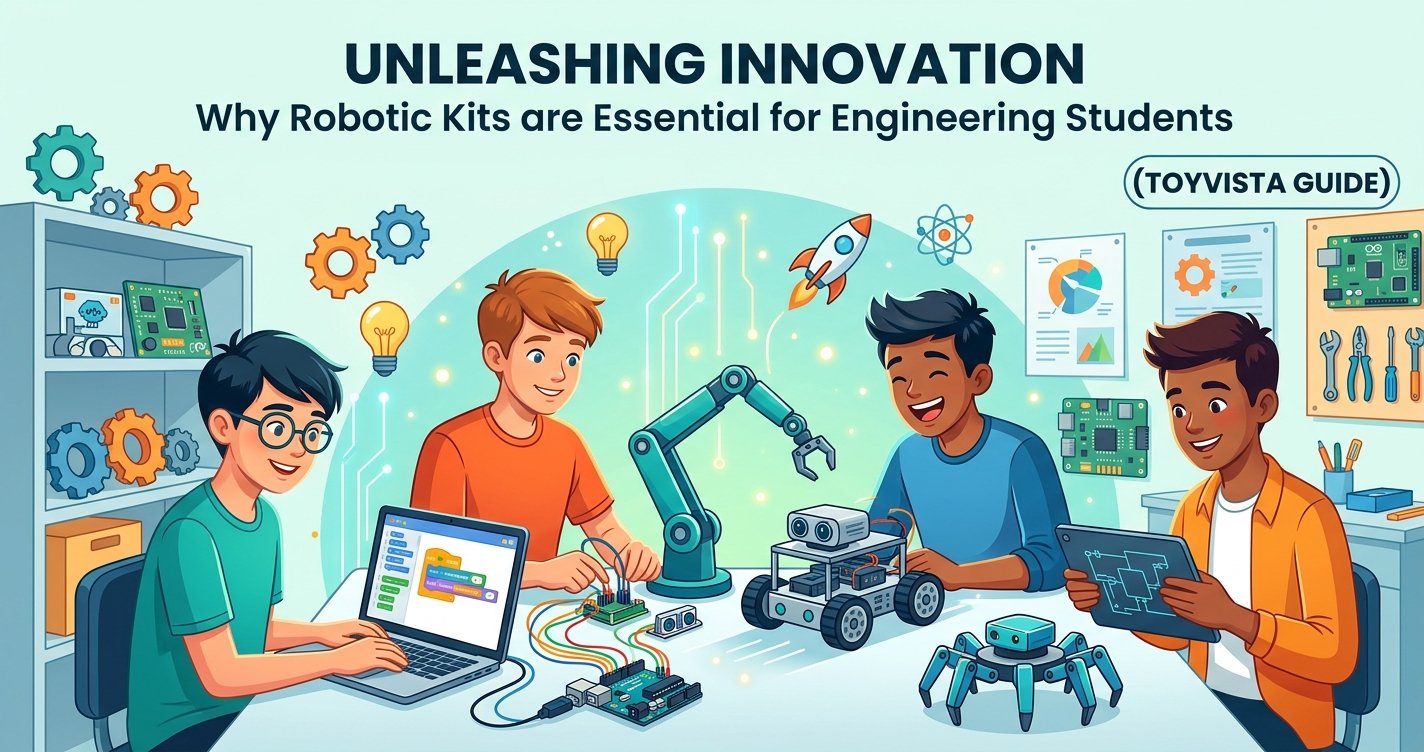
In the dynamic world of engineering, theoretical knowledge, while foundational, is only one piece of the puzzle. True mastery and innovation emerge when concepts leap from textbooks and into tangible, interactive experiences. For aspiring engineers, particularly those navigating the complexities of robotics, electronics, and programming, the right tools are not just helpful – they are essential. This is where robotic kits for engineering students become invaluable. At ToyVista, a leading expert in educational toys and tools, we understand the profound impact hands-on learning has on developing the next generation of innovators. These kits are more than just toys; they are sophisticated learning platforms designed to challenge, inspire, and equip students with the practical skills demanded by the modern engineering landscape.
From understanding circuit design and sensor integration to mastering complex programming logic and mechanical assembly, robotic kits offer a holistic learning environment. They transform abstract principles into concrete realities, allowing students to experiment, fail, iterate, and ultimately succeed in building functional machines. Whether you're a first-year student grappling with basic electronics or a seasoned senior tackling a capstone project, there's a robotic kit tailored to elevate your engineering journey. Join us as we explore why these kits are indispensable, what features to prioritize, and how they are shaping the future of engineering education.
Why Robotic Kits are Indispensable for Engineering Students
The journey to becoming a proficient engineer is multifaceted, requiring a blend of analytical prowess, creative problem-solving, and practical application. Robotic kits serve as a powerful catalyst in this development, offering benefits that extend far beyond traditional classroom learning.
Bridging Theory and Practice
Engineering curricula are rich with theoretical concepts – Kirchhoff's laws, PID controllers, kinematics, Boolean logic, and more. While lectures and textbooks provide the necessary foundational understanding, it's in the application where true comprehension blossoms. Robotic kits provide a tangible arena to apply these theories. Students can build a circuit to understand Ohm's Law in action, program a robot arm to grasp objects using inverse kinematics, or implement a line-following algorithm to see control theory come alive. This direct link between theory and practice solidifies learning and makes complex ideas more intuitive.
Fostering Problem-Solving and Critical Thinking
Robotics is inherently about problem-solving. A robot isn't working? Is it a wiring issue, a coding bug, or a mechanical flaw? Diagnosing and rectifying these issues demands critical thinking, systematic troubleshooting, and an iterative approach. Robotic kits force students to think like engineers, breaking down complex problems into manageable parts, testing hypotheses, and learning from failures. This iterative process of design, build, test, and refine is a core skill for any successful engineer.
Hands-On Experience with Real-World Technologies
Modern engineering relies heavily on microcontrollers, sensors, actuators, and various programming languages. Robotic kits expose students to these components and technologies in a practical, hands-on manner. They learn how to interface sensors (ultrasonic, infrared, IMUs), control motors (servos, stepper, DC), and program microcontrollers (Arduino, Raspberry Pi) – skills that are directly transferable to professional engineering roles in automation, mechatronics, aerospace, and more. This early exposure builds confidence and competence with industry-standard tools and methodologies.
Cultivating Innovation and Creativity
Beyond following instructions, the best robotic kits encourage customization and independent design. Once a student masters the basics, they are empowered to modify, enhance, and invent. Can the robot navigate a maze more efficiently? Can it pick up different types of objects? Can it communicate wirelessly? These open-ended challenges spark creativity and innovation, allowing students to personalize their projects and explore novel solutions. This creative freedom is crucial for nurturing the inventive spirit essential for groundbreaking engineering.
Preparing for Future Careers
The global demand for engineers skilled in robotics, automation, and AI is skyrocketing. Companies across industries, from manufacturing and healthcare to logistics and exploration, are seeking professionals who can design, build, and maintain intelligent systems. Early engagement with robotic kits provides students with a significant head start, equipping them with a robust portfolio of practical projects and a deep understanding of robotic principles, making them highly attractive candidates in a competitive job market.
What to Look for in Robotic Kits for Engineering Students
Choosing the right robotic kit can significantly impact a student's learning trajectory. With a plethora of options available, it's crucial to select a kit that aligns with educational goals, skill levels, and future aspirations. Here are key features to consider:
Advanced Functionality and Customization
For engineering students, basic movement is not enough. Look for kits that offer advanced functionalities such as object detection, obstacle avoidance, line following, remote control capabilities, and even basic machine learning integration. More importantly, the kit should be open-ended, allowing for easy expansion with additional sensors, actuators, and custom components. Modularity and compatibility with standard electronic components are huge advantages.
Programming Capabilities (Python, C++, Arduino IDE)
The programming environment is paramount. While visual block-based programming can be great for beginners, engineering students need kits that support text-based programming languages like C++ (especially for Arduino), Python (for Raspberry Pi and AI applications), or even Java. Kits that offer multiple programming options or allow for seamless transition from block to text coding are ideal, catering to different learning stages and project complexities.
Durability and Expandability
Engineering projects often involve repeated assembly, disassembly, and rigorous testing. A good kit should feature durable components that can withstand frequent use. Furthermore, consider its expandability. Can you easily add new modules, integrate third-party components, or even 3D print custom parts to enhance its capabilities? Kits that grow with the student's skills offer long-term value.
Comprehensive Documentation and Support
Even the most intuitive kits require good documentation. Look for kits that come with clear, detailed assembly instructions, well-commented code examples, circuit diagrams, and troubleshooting guides. Access to online tutorials, forums, and a responsive support community can be incredibly beneficial when students encounter challenges or want to explore advanced topics.
Community and Project Ideas
A vibrant online community surrounding a particular kit or platform (like Arduino or Raspberry Pi) is a treasure trove of knowledge. Students can find countless project ideas, share their creations, get help, and collaborate with peers globally. Kits that are popular within academic and hobbyist circles often provide this invaluable network effect, fostering continuous learning and inspiration.
Top Robotic Kits Recommended by ToyVista for Engineering Students
At ToyVista, we meticulously curate our selection to ensure students have access to the most effective and engaging learning tools. When it comes to robotic kits for engineering students, we look for robustness, versatility, and genuine educational value. Here are some categories and a standout recommendation that exemplify what engineering students need:
Arduino-Based Robotics Kits
Arduino is a cornerstone for many engineering students due to its simplicity, versatility, and vast community support. Kits based on Arduino microcontrollers are excellent for learning basic electronics, sensor integration, motor control, and C++ programming. They are often modular, allowing students to experiment with various shields and components. These kits are perfect for understanding the fundamentals of embedded systems and mechatronics.
Raspberry Pi Robotics Kits
For students ready to delve into more complex programming, operating systems, and AI applications, Raspberry Pi-based kits are ideal. These kits allow for Python programming, computer vision, machine learning integration, and advanced networking. They bridge the gap between embedded systems and full-fledged computing, preparing students for roles in advanced automation and intelligent systems design.
Advanced Modular Robotics Systems
Beyond specific microcontrollers, some kits offer highly modular systems designed for advanced engineering projects. These often feature robust mechanical components, high-precision actuators, and sophisticated control boards, allowing for the construction of complex robotic arms, mobile platforms, and even humanoid robots. They are geared towards students undertaking capstone projects or advanced research.
Featured Recommendation: The Ultimate Engineering Robotics Lab Kit
For those seeking a comprehensive, high-quality, and expandable platform that truly pushes the boundaries of engineering education, we highly recommend this advanced robotic building kit. This particular kit stands out for its robust construction, versatile programming options (supporting both block-based for initial learning and Python/C++ for advanced projects), and extensive array of sensors and actuators. It provides students with everything needed to build complex mobile robots, robotic arms, and even implement basic AI functionalities like object recognition and autonomous navigation. Its detailed curriculum and active online community make it an exceptional choice for engineering students from various disciplines looking to gain practical, real-world robotics experience.
Integrating Robotic Kits into Engineering Curriculum and Personal Projects
The true power of robotic kits is unleashed when they are strategically integrated into both formal education and personal development. They serve as versatile tools that can enhance learning outcomes and foster a passion for engineering.
Classroom Applications
Universities and colleges are increasingly incorporating robotic kits into their engineering curricula. They can be used in introductory courses to teach basic electronics and programming, in mechatronics labs to demonstrate control systems, or in advanced robotics courses for complex project development. Group projects centered around these kits promote teamwork, communication, and project management skills – all vital for future engineers. They provide a standardized yet flexible platform for experimentation and learning across an entire class.
Capstone Projects and Research
For senior engineering students, robotic kits can form the backbone of ambitious capstone projects or undergraduate research initiatives. Students can leverage the kit's components and programming environment to design and build prototypes for specialized tasks, test innovative algorithms, or explore novel applications of robotics. The modularity and expandability of advanced kits make them ideal for these complex, self-directed endeavors, allowing students to focus on their unique contributions rather than building every component from scratch.
Personal Skill Development and Portfolio Building
Beyond academic requirements, robotic kits are fantastic for personal skill development. Students can use them to explore areas of interest not covered in their curriculum, teach themselves new programming languages, or simply build for the joy of creation. Each completed project, especially those that solve a real-world problem or demonstrate a unique capability, becomes a valuable addition to a student's engineering portfolio. A robust portfolio showcasing practical robotics projects can significantly differentiate a job applicant in a competitive market.
The Future of Engineering Education with Robotics
The landscape of engineering is continuously evolving, with robotics and artificial intelligence at its forefront. The engineers of tomorrow will need to be adept not just at traditional disciplines but also at integrating intelligent systems into every facet of design and operation. Robotic kits are not merely a trend; they are a fundamental component in preparing students for this future.
As technology advances, so too will the capabilities of these educational kits. We can expect to see more sophisticated AI and machine learning integrations, enhanced sensor arrays, and greater connectivity (IoT robotics). Virtual and augmented reality might also play a larger role, allowing students to simulate and test their robotic designs in immersive environments before physical construction. The emphasis will remain on hands-on, experiential learning, ensuring that engineering students graduate with not just theoretical knowledge but also the practical intuition and problem-solving skills to innovate and lead.
Conclusion
The journey through engineering is one of constant discovery and application. For students eager to make their mark in this exciting field, robotic kits for engineering students are indispensable companions. They provide a bridge between abstract concepts and tangible creations, fostering critical thinking, creativity, and practical skills that are vital for success. At ToyVista, we are committed to empowering the next generation of engineers by providing access to the best educational tools available.
Investing in a high-quality robotic kit is an investment in an engineer's future. It's an opportunity to experiment, innovate, and build the foundational knowledge and practical expertise that will drive tomorrow's technological advancements. Explore our curated selection today and take the next step in your engineering adventure!


