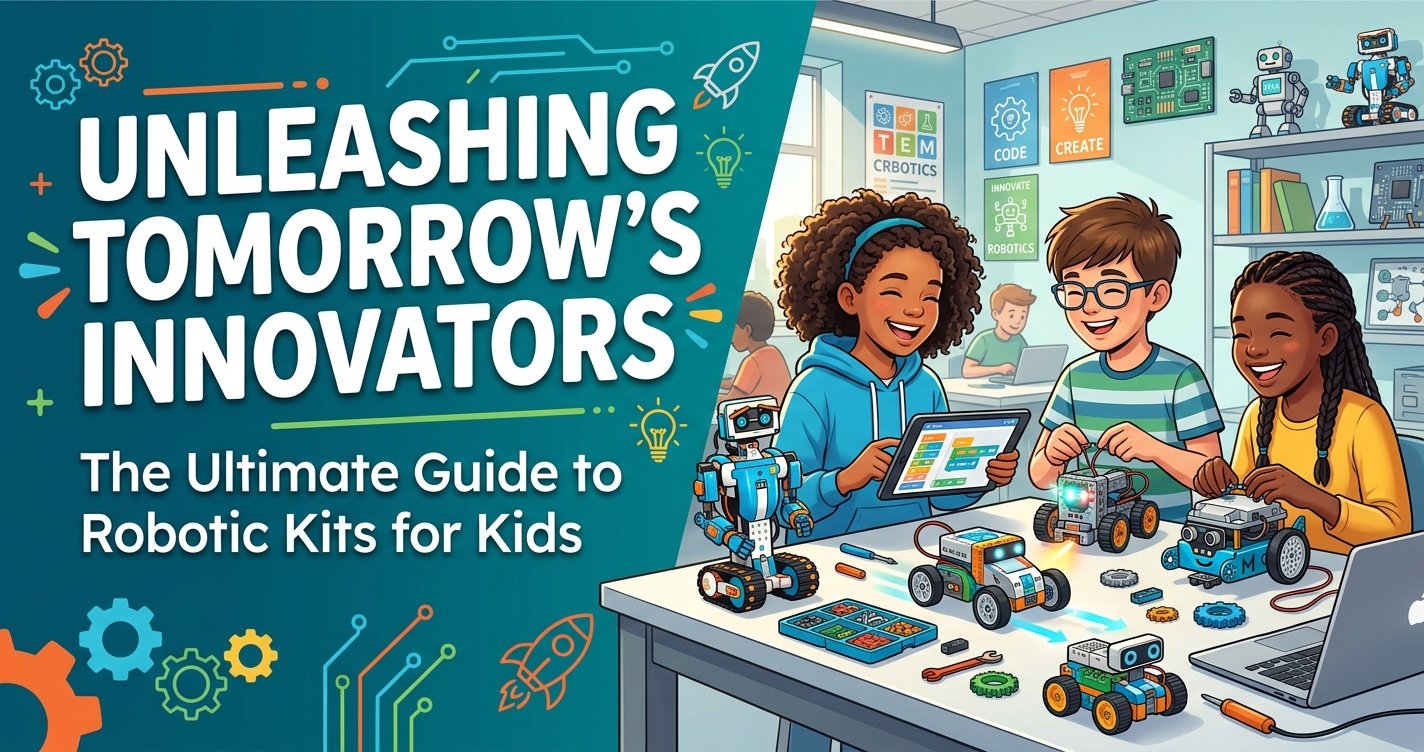
In an era defined by rapid technological advancement, preparing our children for the future means equipping them with more than just traditional academic knowledge. It means fostering critical thinking, problem-solving skills, creativity, and a deep understanding of STEM (Science, Technology, Engineering, and Mathematics) principles. At ToyVista, a leading expert in educational toys, we believe there's no better way to ignite these essential skills than through the captivating world of robotic kits for kids.
Robotics, once a niche field for scientists and engineers, has become an accessible and incredibly engaging learning tool for young minds. These kits offer a unique blend of hands-on building, imaginative play, and practical application of scientific concepts. They transform abstract ideas into tangible experiences, allowing children to construct, program, and interact with their own creations. But with so many options available, how do you choose the right robotic kit to inspire your child? This comprehensive guide will walk you through the immense benefits, key considerations, and top recommendations for finding the perfect robotic adventure for your budding inventor.
Why Robotic Kits Are a Game-Changer for Kids' Development
More than just toys, robotic kits are powerful educational instruments that contribute significantly to a child's holistic development. They go beyond mere entertainment, offering a structured yet playful pathway to essential life skills.
Fostering STEM Skills Early On
At the heart of every robotic kit lies a strong emphasis on STEM. Children learn about mechanical engineering as they assemble gears and motors, electrical engineering as they connect circuits, computer science as they program their robot's actions, and mathematics as they understand movement, distance, and angles. This hands-on exposure demystifies complex subjects, making them relatable and exciting from a young age. It lays a foundational understanding that can spark a lifelong interest in these critical fields.
Cultivating Problem-Solving and Critical Thinking
Building a robot rarely goes perfectly the first time. Wires might be misplaced, code might have a bug, or a component might not fit as expected. These challenges are not roadblocks but opportunities. Robotic kits inherently teach children to troubleshoot, analyze problems, and devise creative solutions. They learn to break down complex tasks into smaller, manageable steps, a vital skill applicable to every aspect of life.
Igniting Creativity and Innovation
While many kits come with instructions for specific builds, the true magic often happens when children begin to experiment. They might modify designs, add new functions, or program their robot to perform entirely new tasks. This process of innovation encourages children to think outside the box, imagine possibilities, and bring their unique ideas to life. It’s a powerful lesson in seeing an idea through from concept to creation.
Enhancing Patience and Persistence
Robotics can be challenging, and success often requires multiple attempts. This process naturally builds patience and persistence. Children learn that setbacks are part of the learning journey and that effort often leads to rewarding outcomes. The satisfaction of seeing their robot finally come to life after overcoming difficulties is a powerful motivator.
Preparing for the Future
The world our children will inherit will be increasingly automated and driven by technology. A basic understanding of robotics and programming is no longer a niche skill but a fundamental literacy. Engaging with robotic kits helps children become not just consumers of technology, but creators and innovators who are comfortable navigating and shaping the technological landscape of tomorrow.
What to Look for in the Best Robotic Kits for Kids
With a diverse market of robotic kits, selecting the ideal one requires careful consideration. Here are the key factors ToyVista recommends you keep in mind:
Age Appropriateness and Skill Level
Kits range from simple snap-together models for preschoolers to complex programmable robots for pre-teens and teenagers. Always check the manufacturer's recommended age range. A kit that's too simple might quickly bore an older child, while one that's too complex can lead to frustration for a younger one. Look for kits that offer progressive challenges, allowing children to grow with the toy.
Ease of Assembly and Instructions
Clear, step-by-step instructions are paramount, especially for younger children or those new to robotics. Visual guides, detailed diagrams, and well-organized components make the building process enjoyable rather than daunting. Some kits even offer app-based instructions or 3D interactive guides, which can be a huge plus.
Educational Value and Learning Objectives
Consider what specific skills the kit aims to teach. Does it focus on basic circuits, mechanical principles, block-based coding, or advanced programming languages? Does it come with lesson plans or suggested experiments? The best kits seamlessly integrate learning into play, making educational concepts feel like discoveries rather than chores.
Durability and Safety
Children's toys need to withstand enthusiastic play. Look for kits made from robust, non-toxic materials. Ensure there are no small, easily swallowed parts for very young children, and that all electrical components are safely enclosed. Reputable brands prioritize safety and quality in their designs.
Replay Value and Expandability
A good robotic kit isn't a one-and-done activity. Does it offer multiple build options? Can it be reprogrammed for different tasks? Are there expansion packs or additional modules available to extend its capabilities? Kits that encourage ongoing experimentation and creativity provide long-term engagement and better value.
Our Top Picks: Exploring the World of Robotic Kits
At ToyVista, we've curated a selection of robotic kits that excel in educational value, engagement, and quality. While the 'best' kit always depends on your child's specific interests and age, here are some examples of what's available and what makes them stand out:
For younger children (ages 5-8), simple snap-together kits that introduce basic concepts like motion, cause-and-effect, and simple machine principles are ideal. These often require no coding, focusing purely on the mechanical build and immediate gratification of seeing their creation move. They are excellent for developing fine motor skills and following instructions.
As children grow (ages 8-12), kits that introduce block-based coding environments become incredibly popular. These visual programming interfaces, often inspired by Scratch, allow kids to drag and drop code blocks to create sequences of commands. This intuitive approach teaches fundamental programming logic without the frustration of syntax errors. Many kits in this category include sensors (like IR or ultrasonic) and motors, allowing for more complex behaviors such as obstacle avoidance or line following. They often come with various build configurations, from cars to humanoid robots, encouraging diverse projects.
For those looking for an excellent entry point into sophisticated building and programmable robotics, this top-rated robotic building kit offers a fantastic blend of mechanical construction and coding challenges. It provides comprehensive instructions for multiple robot designs, allowing children to build everything from a remote-controlled car to a bipedal walker. The kit often integrates with a user-friendly app for programming, making the coding aspect accessible and fun. This particular kit stands out for its robust components and the versatility it offers, ensuring hours of engaging STEM learning and creative play. It's a superb choice for children ready to delve deeper into both the hardware and software aspects of robotics, fostering a genuine sense of accomplishment as they see their programmed creations come to life.
For advanced young learners (ages 12+), kits might introduce text-based coding languages like Python or C++, often integrated with microcontrollers like Arduino or Raspberry Pi. These kits offer a deeper dive into electronics, advanced sensor integration, and more complex programming logic, preparing them for real-world engineering challenges.
Getting Started with Robotic Kits: Tips for Parents and Educators
Introducing your child to robotics can be a rewarding experience for the whole family. Here are some tips to maximize the learning and fun:
Start Simple and Build Confidence
Don't jump straight to the most complex kit. Begin with a simpler model that aligns with their age and interest. Success in early stages builds confidence and encourages them to tackle more challenging projects later on.
Encourage Exploration, Not Perfection
The goal isn't just to build the robot perfectly according to instructions. Encourage your child to experiment, make mistakes, and find their own solutions. Ask open-ended questions like, "What do you think would happen if...?" or "How could we make it do something different?"
Make it a Family Activity
Building and programming robots can be a wonderful bonding experience. Work together, share ideas, and celebrate successes. Your involvement shows them that learning can be fun and collaborative.
Connect to Real-World Applications
Help your child see how robotics applies to the real world. Discuss how robots are used in manufacturing, medicine, space exploration, or even everyday household tasks. This contextualization makes the learning more meaningful and exciting.
The Future is Now: The Enduring Impact of Robotic Kits
The benefits of robotic kits extend far beyond the immediate joy of building a moving creation. They cultivate a mindset of curiosity, resilience, and innovative thinking that will serve children well throughout their lives. In a rapidly evolving world, the ability to understand, interact with, and even create technology is becoming as fundamental as reading and writing. Robotic kits provide a playful yet profound pathway to this essential modern literacy.
By engaging with these educational toys, children develop not just technical skills, but also crucial soft skills like collaboration, communication, and problem-solving – attributes highly valued in any future career path. They learn to embrace challenges, iterate on ideas, and experience the immense satisfaction of bringing their imagination to life through engineering and code. These experiences build self-efficacy and a belief in their own capabilities as creators and innovators.
Furthermore, robotic kits can spark an early passion for STEM fields, guiding children towards potential academic and career paths they might not have otherwise considered. They move beyond abstract classroom theories, demonstrating the practical, exciting, and often surprising applications of science and mathematics in a tangible way. This hands-on, experiential learning is often far more impactful and memorable than traditional methods.
Conclusion
Investing in robotic kits for kids is an investment in their future. It's about providing them with the tools, knowledge, and confidence to thrive in a technologically driven world. At ToyVista, we are passionate about empowering the next generation of thinkers, builders, and innovators. We carefully select each product to ensure it offers the highest educational value, engaging play, and lasting quality.
Whether your child is taking their first steps into the world of gears and circuits or is ready to tackle complex programming challenges, there's a robotic kit out there waiting to unlock their potential. Explore our extensive collection today and discover the perfect robotic adventure that will inspire curiosity, foster creativity, and build the essential skills for tomorrow's leaders and problem-solvers. Let's build a brighter future, one robot at a time!