
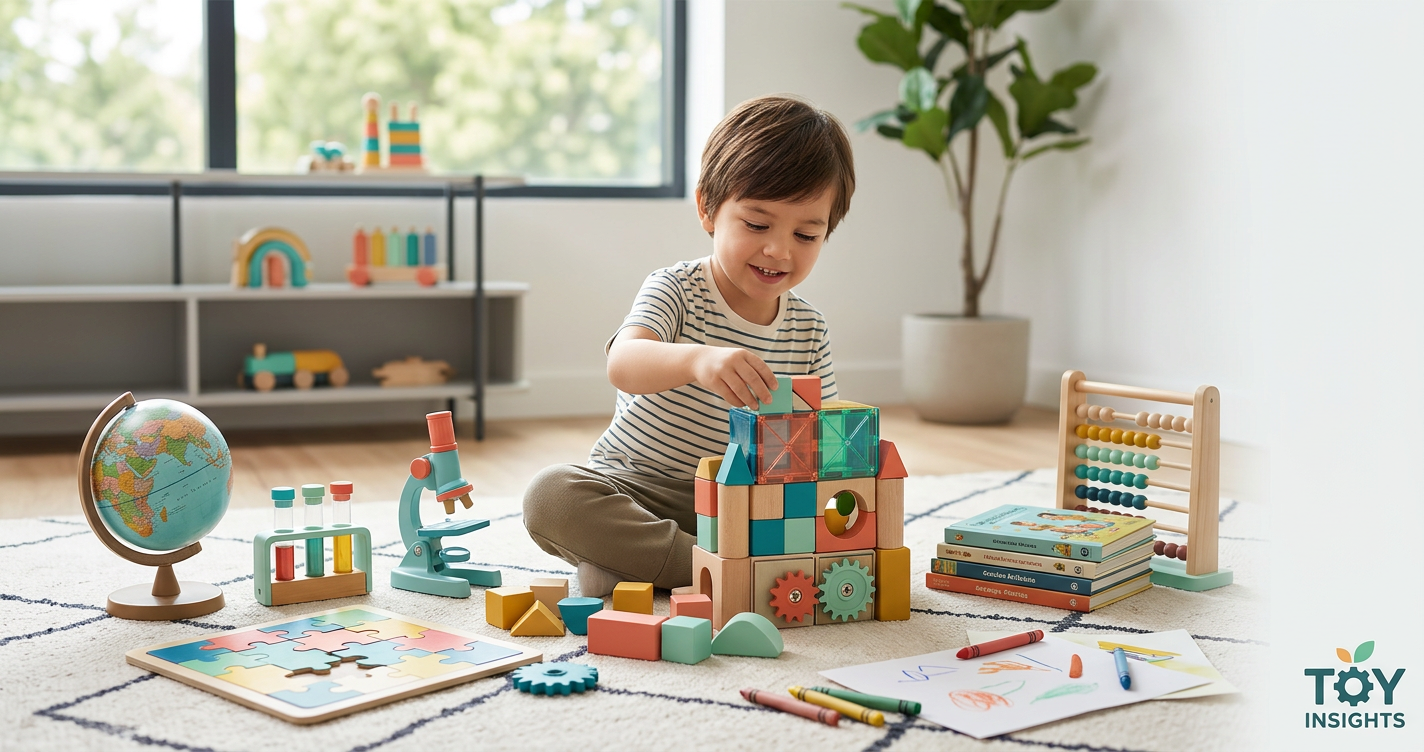
In a world buzzing with screens and fleeting digital distractions, the humble educational toy often gets overlooked. Yet, far from being just another plaything, these specially designed tools are powerful catalysts for growth, shaping young minds and bodies in profound ways. But what exactly makes an educational toy 'educational'? And how does science back up their importance?
Join us on a journey to uncover the fascinating science behind play and discover why thoughtfully chosen educational toys are not just fun, but absolutely vital for fostering holistic development in children, from their earliest days right through to their school years. We'll explore how these seemingly simple objects can boost cognitive functions, nurture emotional intelligence, refine motor skills, and ignite a lifelong passion for learning. this excellent toy product
Beyond Fun and Games: The True Purpose of Educational Toys
At its core, play is a child's natural way of learning about the world. Educational toys elevate this natural inclination by providing structured, yet open-ended, opportunities for discovery. Unlike conventional toys that might offer passive entertainment, educational toys are intentionally designed to stimulate specific developmental areas, encouraging active engagement, problem-solving, and critical thinking.
Think of it this way: a flashing, noisy toy might grab attention, but does it invite interaction that builds skills? An educational toy, on the other hand, might feature interlocking gears that teach cause and effect, or blocks that require spatial reasoning to stack. The key difference lies in the deliberate intention to foster learning outcomes, often rooted in pedagogical principles like those of Montessori, Piaget, or Reggio Emilia. They are not just distractions; they are developmental tools.
Brain Boosters: Cognitive Development in Action
The human brain undergoes an incredible period of growth and wiring during childhood. Educational toys are like personal trainers for this developing brain, offering exercises that strengthen crucial cognitive muscles. From infancy, toys that encourage cause and effect (like a rattle or a pop-up toy) begin to lay the groundwork for understanding logical sequences. As children grow, puzzles, building sets, and strategy games become invaluable.
Enhancing Problem-Solving & Critical Thinking
Consider a classic wooden block set. A child isn't just stacking; they're experimenting with balance, gravity, and structural integrity. They encounter problems ("Why did my tower fall?") and devise solutions ("Maybe I need a wider base!"). This iterative process of hypothesis, experimentation, and revision is the foundation of scientific thinking. Similarly, age-appropriate puzzles challenge spatial reasoning and pattern recognition, sharpening the brain's ability to analyze and synthesize information. Research consistently shows that engaging with such activities in early childhood significantly correlates with stronger academic performance later on.
Boosting Memory and Attention Spans
Memory games, sequencing activities, and even role-playing scenarios where children recall specific details (like a doctor's visit) help improve both short-term and long-term memory. Toys that require sustained focus, like intricate building projects or crafting kits, also play a vital role in extending attention spans – a crucial skill in our increasingly distracting world.
Nurturing Emotional Intelligence and Social Skills
Learning isn't just about intellect; it's about understanding and navigating the complex world of emotions and social interactions. Educational toys provide safe, engaging arenas for children to practice these essential life skills.
Developing Empathy and Cooperation
Dollhouses, action figures, and kitchen sets aren't just for make-believe; they are powerful tools for imaginative play that helps children explore different roles, perspectives, and emotions. When children engage in pretend play, they step into someone else's shoes, fostering empathy and understanding. Board games and cooperative building projects, on the other hand, teach invaluable lessons in sharing, turn-taking, negotiation, and conflict resolution – all cornerstones of healthy social development. Research from institutions like Yale's Child Study Center highlights the profound impact of imaginative play on social-emotional learning.
Building Communication Skills
Whether it's narrating a story with puppets or explaining the rules of a game to a friend, educational toys naturally encourage verbal communication. Children learn to articulate their ideas, listen to others, and express their feelings in constructive ways, laying the groundwork for effective communication throughout their lives.
Little Hands, Big Skills: Enhancing Fine and Gross Motor Development
Before children can write their names or tie their shoes, they need to develop a range of motor skills. Educational toys are expertly designed to strengthen these physical capabilities, from the smallest finger movements to full-body coordination.
Refining Fine Motor Skills and Hand-Eye Coordination
Activities like threading beads, manipulating small puzzle pieces, building with LEGOs, or using play dough all target fine motor skills – the precise movements of the hands and fingers. These activities build dexterity, strengthen hand muscles, and improve hand-eye coordination, which are foundational for tasks like writing, drawing, and self-care (buttoning clothes, zipping jackets). The development of these skills is not just about physical ability; it's deeply intertwined with cognitive development, as the brain maps and refines these complex movements.
Boosting Gross Motor Skills and Balance
For younger children, toys like push-and-pull carts, ride-on vehicles, balance bikes, or even large building blocks encourage gross motor skills – the use of larger muscle groups for movement and coordination. These activities help children develop balance, spatial awareness, strength, and agility, contributing to overall physical health and confidence in their bodies. Active play with these toys is crucial for healthy development, providing the sensory input and physical challenge needed for growing bodies and minds.
Sparking Creativity and Imagination: The Wellspring of Innovation
Perhaps one of the most magical aspects of educational toys is their ability to ignite and nourish a child's innate creativity and imagination. In a world increasingly valuing innovation, fostering these traits from an early age is paramount.
Encouraging Open-Ended Play
The best educational toys are often those that are open-ended – meaning they don't have a single "right" way to play. Art supplies, construction sets, loose parts, and dress-up clothes invite children to invent stories, design structures, and express themselves without boundaries. This type of play is critical for developing divergent thinking, the ability to generate multiple solutions to a problem, which is a hallmark of creative genius.
Fueling Storytelling and Abstract Thinking
When children create elaborate scenarios with their toys, they are practicing narrative skills, sequencing events, and even grappling with abstract concepts. A simple stick might become a magic wand, a sword, or a fishing rod. This imaginative flexibility is a powerful cognitive exercise that builds problem-solving skills and enhances language development, allowing children to explore possibilities beyond the immediate and tangible.
How to Choose the Right Educational Toys: A Parent's Guide
With so many options available, selecting the best educational toys can feel overwhelming. Here's a friendly, evidence-based guide to help you make informed choices:
- Age-Appropriateness is Key: Always check the recommended age range. Toys too simple will bore, while those too complex will frustrate. The goal is to provide a "just right" challenge.
- Consider Your Child's Interests: If your child loves animals, look for animal-themed puzzles or building sets. Engagement is maximized when the toy aligns with their passions.
- Prioritize Open-Ended Play: Opt for toys that can be used in multiple ways, like blocks, art supplies, or play dough, over single-function toys. These foster creativity and last longer.
- Look for Durability and Safety: Choose toys made from non-toxic, sturdy materials that can withstand enthusiastic play. Safety certifications (like CE or ASTM) are a good indicator.
- Balance Screen Time with Hands-On Play: While digital learning tools have their place, ensure a rich environment of physical, interactive toys for foundational development.
- Less is Often More: A few high-quality, versatile educational toys are often more beneficial than a mountain of novelty items. Rotate toys to keep interest fresh.
- Play With Them: The most educational aspect of any toy is often the interaction it facilitates between a child and a caring adult. Your engagement amplifies the learning.
The Power of Play: A Lifelong Investment
Educational toys are far more than mere entertainment; they are scientifically proven tools that lay the groundwork for a child's future success and well-being. By thoughtfully selecting toys that stimulate cognitive abilities, nurture emotional intelligence, refine motor skills, and spark boundless creativity, we empower children to become curious, resilient, and capable individuals.
Embrace the power of play. It's an investment in a child's holistic development, fostering a love for learning that lasts a lifetime. So, next time you're considering a toy, remember the profound impact it can have – it’s not just about playtime, it’s about building a brighter future, one playful discovery at a time.


