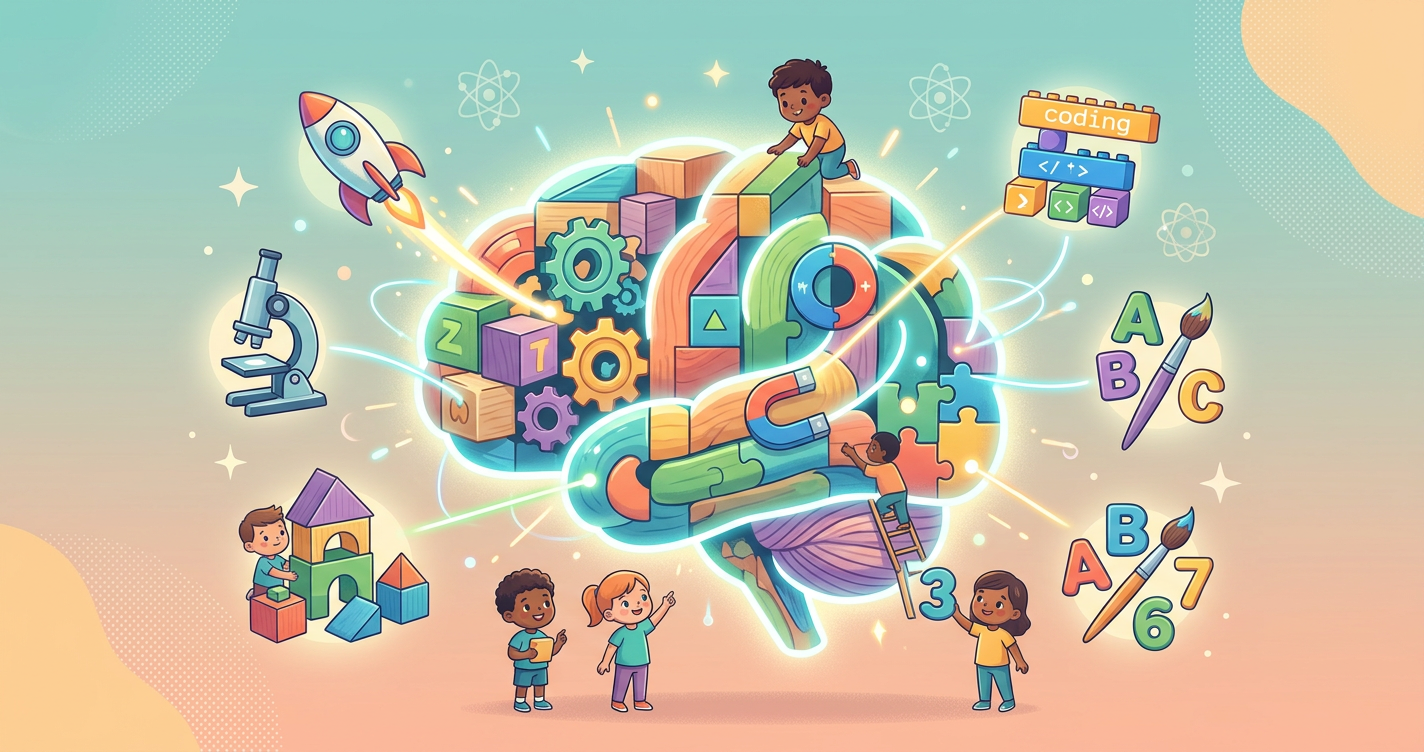
As parents, we often see playtime as a chance for our children to unwind, burn off energy, or simply be entertained. But what if we told you that every giggle, every stack of blocks, and every imaginative adventure is actually a powerful workout for your child's developing brain? It's true! The world of educational play is far more than just 'fun and games'; it's a meticulously designed pathway for cognitive, social, emotional, and physical growth, backed by fascinating scientific insights.
In a world brimming with digital distractions, understanding the profound impact of purposeful play has never been more crucial. This isn't about replacing joy with rigid learning; it's about harnessing the natural curiosity and exploratory spirit of childhood to foster lifelong skills. Let's dive into the captivating science behind how educational toys and play experiences literally shape young minds, building the foundation for future success and happiness. this excellent toy product
What Exactly is "Educational Play"?
Before we explore the science, let's clarify what we mean by "educational play." It's not about flashcards disguised as toys or rote memorization. Instead, educational play is an active, engaging process where children learn through exploration, experimentation, and interaction. Unlike passive entertainment, which often involves simply watching or receiving information, educational play requires children to think, problem-solve, create, and adapt.
Think of it as a child's natural curriculum. When a child builds a tower, they're learning about balance and gravity. When they engage in pretend play, they're developing empathy and language skills. When they solve a puzzle, they're honing spatial reasoning and persistence. The "education" isn't explicitly taught; it's absorbed and constructed by the child through their own actions and discoveries.
More Than Just Learning ABCs: Holistic Development
While many might associate "educational toys" with academic subjects like reading or math, the scope of educational play is much broader. It’s about fostering holistic development, addressing every facet of a child's growth:
- Cognitive Skills: Problem-solving, critical thinking, memory, concentration, logic, creativity.
- Social-Emotional Skills: Empathy, cooperation, negotiation, sharing, self-regulation, emotional expression.
- Physical Skills: Fine motor skills (pincer grasp, dexterity), gross motor skills (balance, coordination), spatial awareness.
- Language and Communication: Vocabulary expansion, storytelling, active listening, expressing ideas.
These interconnected areas of development lay the groundwork for a well-rounded individual, far beyond what any single academic lesson can achieve.
The Brain-Building Power of Play: A Scientific Look
Our brains are incredibly adaptable, especially during early childhood. From birth to age five, a child's brain undergoes rapid development, forming more than one million new neural connections every second! Educational play acts as a powerful catalyst for this process, stimulating different brain regions and strengthening these crucial connections.
Neuroscience research consistently highlights that active engagement, novelty, and social interaction during play are key ingredients for optimal brain development. When children play, their brains are not just active; they are actively building and refining the neural architecture that will support all future learning and behavior.
Cognitive Growth: Problem-Solving & Critical Thinking
How do toys teach problem-solving? Consider a child trying to fit a square peg into a round hole. They experiment, observe the results, and adjust their strategy. This simple act is the very essence of problem-solving. Building blocks, shape sorters, puzzles, and even strategy board games all provide opportunities for children to:
- Hypothesize: "What if I try this piece here?"
- Test: Attempting to place the piece.
- Analyze: "It doesn't fit."
- Adjust: Trying a different piece or orientation.
- Persist: Continuing until the solution is found.
These experiences teach children to think flexibly, to not give up in the face of challenges, and to understand cause and effect – fundamental skills for academic success and navigating life's complexities.
Social-Emotional Smarts: Empathy & Collaboration
Play is a natural laboratory for social-emotional learning. When children engage in pretend play, they step into different roles, experiencing the world from another's perspective. Playing "doctor" or "teacher" helps them understand social roles, rules, and emotions. Group play, whether building a fort together or playing a board game, teaches invaluable lessons in:
- Sharing and Turn-Taking: Learning to wait and respect others' needs.
- Negotiation and Compromise: Resolving conflicts and finding common ground.
- Empathy: Understanding and responding to the feelings of others.
- Cooperation: Working together towards a common goal.
These interactions are vital for developing strong social bonds, emotional intelligence, and the ability to navigate complex social situations throughout their lives.
Beyond Academics: Nurturing Creativity and Motor Skills
The benefits of educational play extend far beyond what’s typically measured in a classroom. It’s about nurturing the whole child, including their innate desire to create and their physical capabilities.
Sparking Imagination: The Creative Advantage
Open-ended toys are champions of creativity. A simple set of wooden blocks can become a castle, a car, a robot, or anything a child imagines. Art supplies, dress-up clothes, and even natural elements like sticks and stones encourage divergent thinking – the ability to come up with multiple solutions or ideas. This kind of play:
- Fosters Innovation: Encourages children to think outside the box and invent new scenarios.
- Develops Storytelling: Helps children construct narratives, understand plot, and express themselves verbally.
- Builds Confidence: Empowers children to trust their own ideas and bring them to life.
In a rapidly changing world, the ability to be creative and adaptable is more valuable than ever, and play is where these muscles are first flexed.
Fine & Gross Motor Skills: Hand-Eye Coordination & Physical Dexterity
Many educational toys are designed with physical development in mind. Activities like stacking rings, lacing beads, manipulating small puzzle pieces, or drawing with crayons refine fine motor skills – the precise movements of the hands and fingers. These skills are critical precursors to writing, tying shoelaces, and using utensils.
Meanwhile, toys that encourage movement, like balance bikes, tunnels, or simple balls, contribute to gross motor skills – the coordination of larger muscle groups. This not only builds physical strength and agility but also enhances spatial awareness and helps children understand their bodies in space, which is linked to cognitive processing.
Choosing the Right Tools: What to Look for in Educational Toys
With so many options available, selecting truly educational toys can feel overwhelming. Here are some key characteristics to look for:
- Open-Ended: Toys that can be used in multiple ways encourage creativity and imagination (e.g., blocks, LEGOs, art supplies).
- Age-Appropriate: The toy should match your child's developmental stage – challenging enough to engage, but not so difficult as to cause frustration.
- Engaging & Interactive: Look for toys that require active participation rather than passive observation.
- Durable & Safe: Prioritize quality materials that will withstand repeated play and meet safety standards.
- Promotes Social Interaction: Toys that can be played with others encourage cooperation and communication.
- Sparks Curiosity: Toys that encourage exploration, experimentation, and discovery.
Remember, sometimes the simplest toys are the most educational. A cardboard box can be a rocket ship, a car, or a house – limited only by imagination.
It's Not Just the Toy, It's the Interaction
While the right educational toy is a fantastic starting point, its true potential is unlocked through interaction. Your involvement as a parent or caregiver is incredibly powerful. Playing with your child, asking open-ended questions ("What do you think will happen next?"), narrating their actions ("You're building a very tall tower!"), and encouraging their efforts amplifies the learning experience.
It’s about being present, observing their play, and gently guiding rather than dictating. This shared experience strengthens your bond and provides a secure environment for your child to explore, take risks, and learn from their mistakes.
Embrace the Power of Play!
The science is clear: educational play is not a luxury, but a fundamental necessity for healthy child development. It’s how children make sense of the world, develop crucial skills, and build the resilient, creative, and intelligent brains they’ll rely on for a lifetime. By thoughtfully choosing toys and actively engaging in your child's play, you're not just providing entertainment; you're investing in their future, nurturing their potential, and fostering a lifelong love of learning. So go ahead, embrace the power of play – it’s the most fun you’ll ever have shaping a brilliant mind!