Unlocking Brilliance: How STEM Toys Supercharge Early Childhood Development
As parents, we all want the best for our children, especially when it comes to their development and future success. In a rapidly evolving world driven by innovation, equipping our little ones with the right skills from an early age is more crucial than ever. While traditional play is undeniably vital, there's a special category of educational toys that goes above and beyond: STEM toys. These aren't just mere playthings; they are powerful tools designed to ignite curiosity, foster critical thinking, and build a strong foundation for future learning in science, technology, engineering, and mathematics.
You might hear 'STEM' and picture complex equations or advanced robotics, but the truth is, STEM learning begins with simple, hands-on exploration in early childhood. From stacking blocks to building circuits, STEM toys offer a playful gateway into understanding the world around us. This post will delve into what makes STEM toys so impactful for young minds, explore their incredible benefits, and guide you on how to best integrate them into your child's play. this excellent toy product
What Exactly Are STEM Toys? A Foundation for Future Innovators
STEM is an acronym for Science, Technology, Engineering, and Mathematics. When we talk about STEM toys, we're referring to playthings specifically designed to introduce children to these core concepts in an engaging, age-appropriate manner. They are not about rote memorization but rather about encouraging experimentation, problem-solving, and discovery.
- Science: Toys that explore natural phenomena, biology, physics, and chemistry through observation and experimentation. Think magnifying glasses, beginner chemistry sets, or growing kits.
- Technology: While it might sound intimidating, this can be as simple as understanding how things work, basic coding, or using simple machines. Examples include robotic kits for kids or circuit boards.
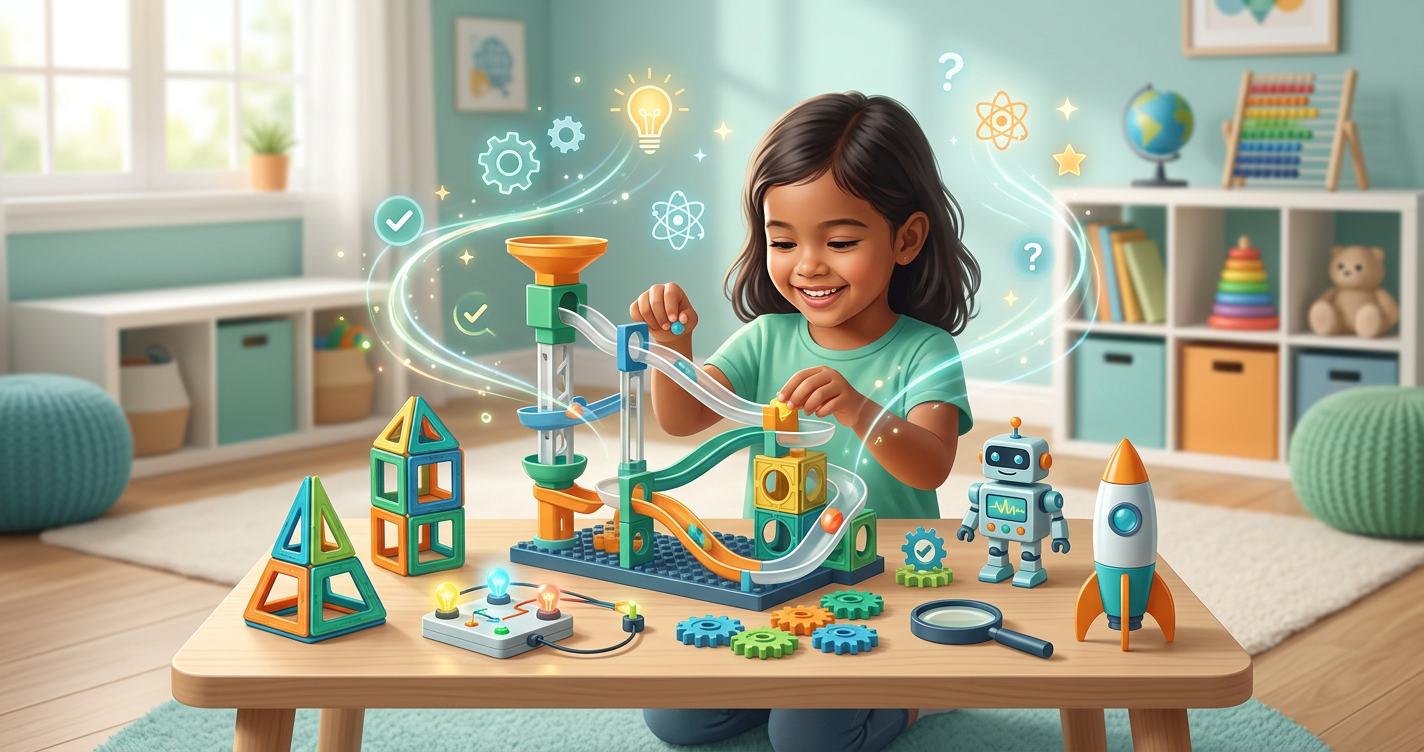
- Engineering: Focuses on design, construction, and problem-solving. Building blocks, LEGOs, K'nex, magnetic tiles, and construction sets are prime examples.
- Mathematics: Involves understanding numbers, patterns, shapes, measurement, and logic. Puzzles, sorting games, counting toys, and pattern blocks fall into this category.
The beauty of STEM toys lies in their ability to integrate these subjects, often simultaneously, through open-ended play. They transform abstract concepts into tangible, exciting experiences that young children can grasp and enjoy.
The Core Benefits: Why STEM Toys Matter for Young Minds
The impact of STEM toys on early childhood development is profound and multi-faceted. Research consistently shows that engaging with these types of toys can significantly enhance a child's cognitive, social, and emotional growth.
Fostering Critical Thinking and Problem-Solving Skills
Perhaps the most significant benefit of STEM toys is their ability to cultivate critical thinking. Unlike toys with a single, predetermined outcome, many STEM toys are open-ended, requiring children to experiment, hypothesize, and adapt. When a tower tumbles or a circuit doesn't light up, children learn to analyze what went wrong and devise new strategies. This iterative process of trial and error builds resilience and a systematic approach to challenges.
- Encourages children to ask 'why' and 'how.'
- Develops logical reasoning through cause-and-effect scenarios.
- Promotes analytical skills as children evaluate different solutions.
Sparking Creativity and Innovation
While often associated with logic, STEM toys are powerful catalysts for creativity. When given a set of building blocks or magnetic tiles, children aren't just following instructions; they're imagining new structures, designing unique machines, and innovating solutions to self-imposed challenges. This freedom to create and innovate nurtures imaginative play and encourages children to think outside the box, a vital skill in any field.
Building Foundational Math and Science Concepts
Long before formal schooling, STEM toys provide a hands-on introduction to fundamental mathematical and scientific principles. Children naturally explore concepts like gravity, balance, spatial reasoning, measurement, and patterns while playing. Sorting blocks by color or size introduces classification, building a ramp teaches about inclines and speed, and observing a plant grow from a seed illustrates basic biology. These early experiences make abstract concepts concrete and relatable, laying a solid groundwork for academic success.
Enhancing Fine Motor Skills and Hand-Eye Coordination
Many STEM toys involve intricate manipulation, such as connecting small pieces, aligning gears, or carefully placing components. This engagement significantly refines fine motor skills, strengthens hand muscles, and improves hand-eye coordination – all essential for tasks like writing, drawing, and daily self-care. The precision required in building and experimenting helps develop dexterity and control.
Cultivating a Growth Mindset and Resilience
The nature of STEM exploration often involves setbacks and challenges. A bridge might collapse, or an experiment might not yield the expected results. These moments, however, are invaluable learning opportunities. STEM toys teach children that mistakes are part of the learning process, encouraging them to persist, try different approaches, and celebrate effort as much as outcome. This fosters a 'growth mindset' – the belief that abilities can be developed through dedication and hard work – which is crucial for lifelong learning and problem-solving.
Choosing the Right STEM Toys for Different Ages
Selecting the perfect STEM toy depends largely on your child's age and developmental stage. The key is to choose toys that are challenging enough to be engaging but not so complex that they lead to frustration.
- Toddlers (1-3 years): Focus on simple building blocks, stacking cups, shape sorters, and sensory exploration kits. These introduce basic concepts of cause and effect, shapes, and sizes.
- Preschoolers (3-5 years): Introduce magnetic tiles, larger LEGO Duplo sets, simple gears, beginner puzzles, and science exploration kits like magnifying glasses or nature collection tools. Emphasis is on creative construction and early problem-solving.
- Early School Age (5-8 years): More complex building sets (standard LEGO, K'nex), simple circuit kits, beginner coding robots, logic puzzles, and more involved science experiment kits. These encourage more structured problem-solving and an understanding of basic mechanics and programming.
Always prioritize safety, durability, and open-endedness. The best STEM toys are those that can be played with in multiple ways, growing with your child's imagination and abilities.
Beyond the Toy: Maximizing the STEM Play Experience
While STEM toys are powerful on their own, parental involvement can amplify their benefits exponentially. You don't need to be an expert; simply being present, asking questions, and encouraging exploration makes a huge difference.
- Ask Open-Ended Questions: Instead of telling your child what to do, ask, “What do you think will happen if...?” or “How could we make this stronger?”
- Observe and Encourage: Pay attention to what fascinates your child. If they love building, provide more building materials. If they're curious about nature, explore science kits.
- Celebrate Effort, Not Just Outcomes: Praise their persistence and creative attempts, even if the final result isn't perfect.
- Create a Supportive Environment: Designate a space for STEM play where materials are accessible and mess is acceptable.
Conclusion: Investing in Future Innovators
Investing in STEM toys for your child is more than just buying another plaything; it's an investment in their future. By providing opportunities for hands-on exploration, critical thinking, and creative problem-solving from an early age, you're not just nurturing a love for science and math, but also fostering essential life skills. These skills — adaptability, resilience, innovation, and curiosity — are the cornerstones of success in any path they choose. So, embrace the power of STEM play, watch your child's brilliance unfold, and empower them to become the innovators and problem-solvers of tomorrow.