
As parents, we constantly seek ways to nurture our children's growth, spark their curiosity, and prepare them for a bright future. In a world increasingly shaped by innovation and technology, one category of educational tools stands out as particularly potent: STEM toys. STEM, an acronym for Science, Technology, Engineering, and Mathematics, might sound like subjects best left for school, but the truth is, the foundational thinking skills they cultivate are crucial from the earliest ages.
Far from just being 'smart' toys, STEM educational toys are designed to engage children in hands-on exploration, problem-solving, and creative thinking. They tap into a child's natural inclination to discover, question, and build, transforming playtime into a powerful learning experience. This post will delve into the profound benefits of integrating STEM toys into early childhood, exploring how they not only foster critical cognitive skills but also lay the groundwork for a lifelong love of learning and innovation. this excellent toy product
What Exactly Are STEM Toys? Beyond the Buzzword
When you hear "STEM toys," your mind might conjure images of complex robotics kits or advanced coding games. While those certainly fall under the umbrella, the world of STEM toys is far broader and more accessible, especially for young children. At its core, a STEM toy is any plaything that encourages kids to explore concepts related to science, technology, engineering, or mathematics through active engagement.
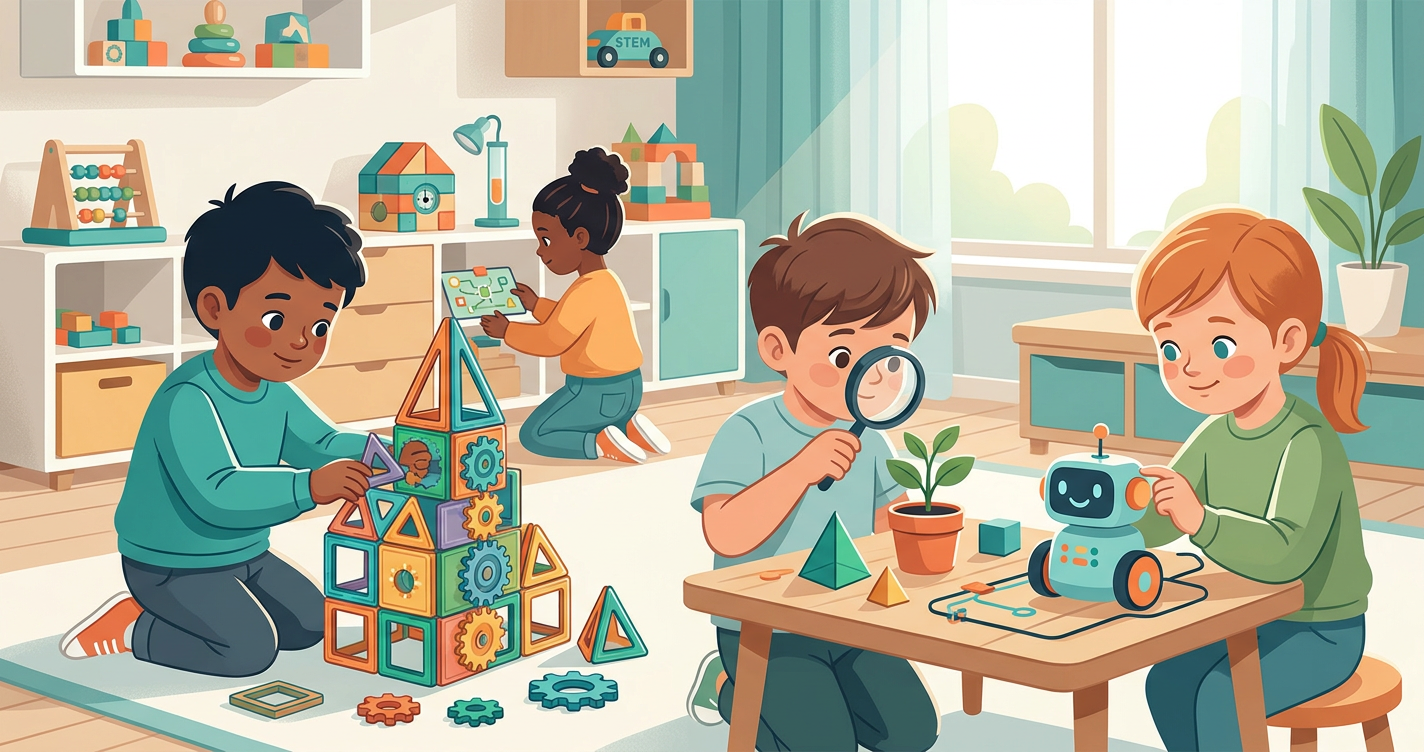
These aren't just toys that teach facts; they are tools that teach children how to think. They invite experimentation, encourage children to test hypotheses (even if they don't know that word yet!), and prompt them to design solutions to challenges. Examples for early childhood include:
- Science: Simple magnifying glasses, nature exploration kits, color mixing sets.
- Technology: Basic circuit boards, talking robots that introduce coding concepts, interactive learning tablets.
- Engineering: Building blocks (wooden, LEGO, magnetic tiles), gears, construction sets, marble runs.
- Mathematics: Shape sorters, counting toys, pattern blocks, scales for comparing weight.
The beauty of these toys lies in their open-ended nature. They often lack a single "right" way to play, empowering children to explore multiple possibilities and develop their own unique solutions.
Why Early Exposure to STEM is a Game-Changer for Little Minds
The early years of a child's life are a period of incredible brain development, forming billions of neural connections that will shape their future learning and behavior. Research consistently shows that engaging children in stimulating activities during this critical window significantly enhances their cognitive abilities.
Introducing STEM concepts early isn't about creating future scientists or engineers (though it certainly can!). It's about nurturing essential cognitive skills that benefit every aspect of life. Early STEM exposure helps to:
- Cultivate Natural Curiosity: Children are born investigators. STEM toys fuel this innate desire to understand how the world works, transforming "why?" into an opportunity for discovery.
- Build Foundational Pathways: Engaging with STEM concepts in play strengthens neural connections related to logic, spatial reasoning, problem-solving, and critical thinking. These pathways become the building blocks for more complex learning later on.
- Develop a Growth Mindset: When children experiment with STEM toys, they learn that failure is a natural part of the learning process. An unstable block tower or a marble run that doesn't quite work teaches perseverance and adaptability, fostering resilience.
By providing these experiences, we're not just giving them toys; we're giving them a head start in developing minds that are agile, curious, and capable.
The Unpacking of Play: Core Benefits of STEM Toys
Beyond general cognitive benefits, STEM toys offer a treasure trove of specific developmental advantages that are invaluable during early childhood.
Fostering Problem-Solving and Critical Thinking Skills
Every time a child tries to fit a puzzle piece, balance blocks, or figure out why their magnetic creation keeps falling over, they're engaging in problem-solving. STEM toys inherently present challenges that require children to think critically, analyze situations, and devise solutions. This might involve trial and error, logical reasoning, or spatial awareness. These are not abstract academic exercises; they are practical, hands-on lessons in overcoming obstacles, which is a life skill far beyond the playroom.
Igniting Creativity and Innovation
While often associated with logic, STEM is also a powerful driver of creativity. Open-ended STEM toys, like building blocks or art supplies that explore scientific principles (e.g., color mixing, crystallization), encourage children to imagine, design, and innovate. There's no single "right" way to build a fort or construct a ramp, allowing children to express their unique ideas and see their creative visions come to life. They learn that there are multiple paths to a solution, fostering flexible thinking.
Sharpening Fine Motor Skills and Hand-Eye Coordination
Many STEM toys require precise manipulation – connecting small LEGO bricks, twisting gears, fitting circuit pieces, or carefully placing magnetic tiles. These actions are excellent for developing fine motor skills, hand-eye coordination, and dexterity. These physical skills are crucial for everyday tasks like dressing, eating, and eventually, handwriting. The more opportunities children have to refine these movements, the more confident and capable they become in navigating their physical world.
Developing Early Math and Scientific Concepts
Without formal lessons, children absorb fundamental mathematical and scientific concepts through STEM play. They learn about:
- Math: Counting, sorting, patterns, shapes, sizes, measurement (e.g., comparing heights of towers), spatial reasoning (how objects fit together).
- Science: Cause and effect (what happens when I push this? If I drop this?), gravity, balance, observation, prediction, and basic physics (e.g., ramps and motion).
This experiential learning makes abstract concepts tangible and understandable, building a strong, intuitive foundation long before they encounter these topics in a classroom setting.
Enhancing Social-Emotional Development
While often seen as individual activities, many STEM toys lend themselves beautifully to cooperative play. Children learn to share, communicate ideas, negotiate, and collaborate when building a large structure or working on a simple science experiment together. Even solo play with challenging STEM toys builds patience, perseverance, and a sense of accomplishment, boosting self-confidence and emotional regulation when they successfully complete a task.
Choosing the Right STEM Toys: A Parent's Guide
With so many options, selecting the best STEM toys can feel overwhelming. Here are some tips to guide your choices:
- Age-Appropriateness: Always check age recommendations. Toys that are too complex can lead to frustration, while those too simple might not challenge them enough.
- Open-Ended Play: Prioritize toys that can be used in multiple ways, rather than those with a single, predetermined outcome. This encourages creativity and sustained engagement.
- Durability and Safety: Children's toys should be robust enough to withstand enthusiastic play and meet all safety standards, especially for younger children who might still put objects in their mouths.
- Consider Their Interests: If your child loves animals, look for nature-themed science kits. If they're fascinated by cars, building sets that create vehicles might be a hit. Tapping into their passions makes learning more enjoyable.
- Hands-On Experience: The best STEM toys involve tactile interaction, allowing children to manipulate objects and see immediate results.
Remember, you don't need to break the bank. Simple items like cardboard boxes, measuring cups, and natural materials can also be fantastic STEM tools!
Beyond the Toy Box: Maximizing STEM Learning at Home
Having the right toys is only part of the equation. How parents engage with their children during STEM play can significantly amplify the learning experience.
- Be a Facilitator, Not a Director: Resist the urge to show them the "right" way. Instead, observe, provide gentle guidance, and let them lead the exploration.
- Ask Open-Ended Questions: Instead of telling them what to do, ask questions like, "What do you think will happen if...?", "How could we make this stronger?", or "What other ways could you try?" This encourages critical thinking and active participation.
- Encourage Experimentation and Failure: Frame mistakes as learning opportunities. "That didn't work this time. What did we learn? What could we try differently?" This builds resilience and a positive attitude towards challenges.
- Connect to the Real World: Point out how STEM concepts apply to everyday life. "Look, the bridge is like the one we built!" or "Why do you think the ball rolled faster down that ramp?"
- Create a Supportive Environment: Dedicate a space and time for focused play. Show genuine interest in their discoveries and celebrate their efforts, not just their successes.
Conclusion
The journey of early childhood is a remarkable period of rapid learning and discovery. By thoughtfully integrating STEM toys into playtime, we offer our children more than just entertainment; we equip them with a powerful toolkit for navigating the complexities of the modern world.
These educational toys are not just preparing them for school; they are preparing them for life – fostering resilient problem-solvers, imaginative innovators, and curious thinkers. So, next time you're considering a new addition to the toy box, remember the transformative potential of STEM. Invest in play that builds, questions, explores, and inspires, and watch as your child’s potential truly unlocks.


