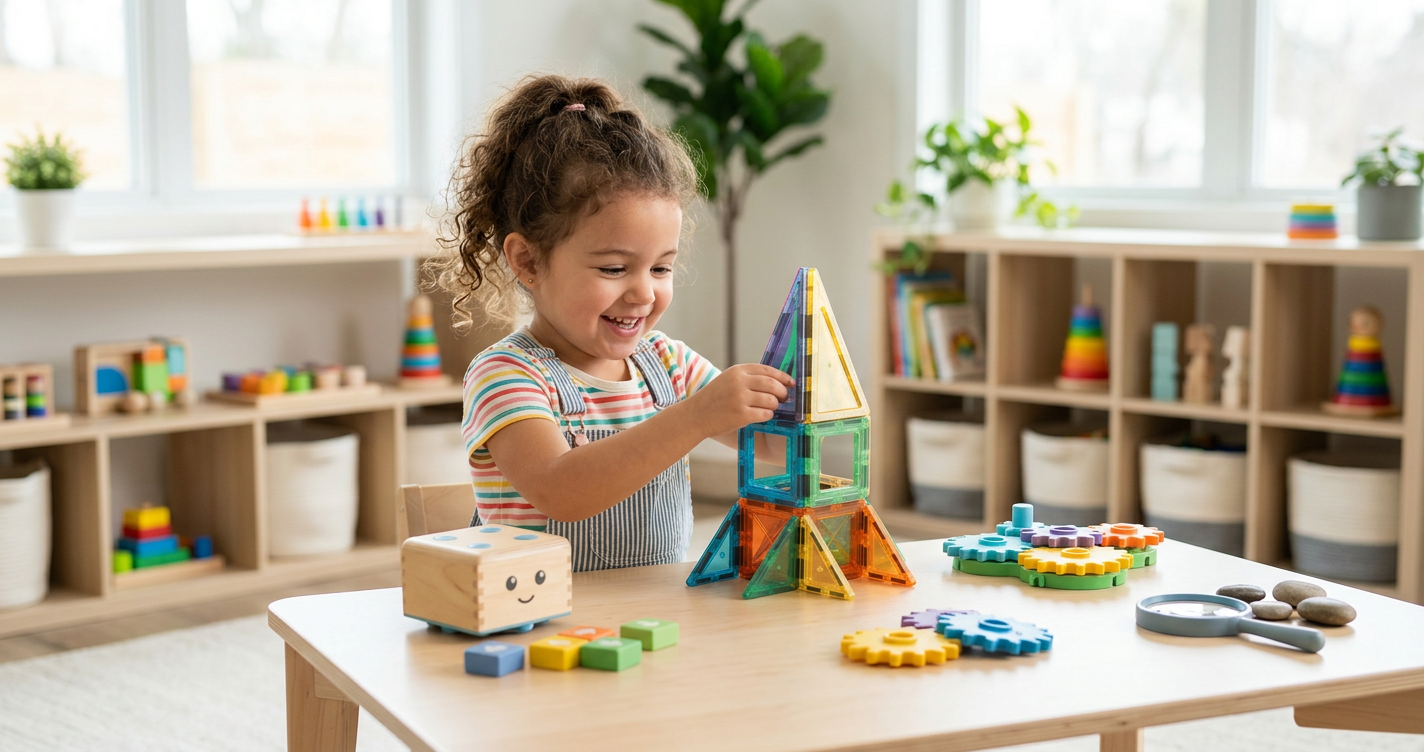
In a world increasingly driven by science, technology, engineering, and mathematics (STEM), giving our children a head start in these crucial areas isn't just a trend; it's an investment in their future. But how do we introduce complex concepts to tiny minds without turning learning into a chore? The answer lies in the magic of play, specifically through educational STEM toys. These aren't just gadgets; they are gateways to discovery, designed to spark curiosity, foster problem-solving skills, and build a strong foundation for lifelong learning.
You might be wondering, what exactly makes a toy a 'STEM toy,' and how can a simple block or a circuit kit truly influence a child's development? The evidence is compelling. Research consistently highlights the critical importance of early experiences in shaping brain architecture and cognitive abilities. By engaging with STEM toys, children aren't just passing the time; they are actively experimenting, hypothesizing, and learning fundamental principles that will serve them well throughout their academic and professional lives. This article will delve into the profound, evidence-based impact of STEM toys on early childhood development, exploring how they nurture not only intellect but also creativity, resilience, and crucial life skills. this excellent toy product
What Exactly Are STEM Toys, Anyway?
Before we dive into their benefits, let's clarify what we mean by STEM toys. STEM stands for Science, Technology, Engineering, and Mathematics. A STEM toy is essentially any plaything specifically designed to introduce children to these four disciplines in an engaging, hands-on way. They are more than just 'smart' toys; they are tools that encourage active learning, exploration, and discovery.
- Science: Toys that explore natural phenomena, biology, chemistry, or physics. Think magnifying glasses, science kits, or magnetic building sets.
- Technology: Toys that introduce basic coding, robotics, or digital literacy concepts, often without screens. Examples include coding robots, circuit boards, or interactive learning systems.
- Engineering: Toys that challenge children to design, build, and construct. Building blocks, LEGOs, K'nex, and even fort-building kits fall into this category.
- Mathematics: Toys that help children understand numbers, patterns, shapes, logic, and spatial reasoning. Puzzles, abacuses, pattern blocks, and shape sorters are great examples.
The beauty of STEM toys is their integrated approach. Often, a single toy can touch upon multiple STEM areas, providing a holistic learning experience that mirrors real-world problem-solving.
The Science Behind the Play: Boosting Cognitive Skills
The earliest years of a child's life are a period of incredible brain development. STEM toys act as catalysts, stimulating neural pathways and strengthening cognitive functions. When a child manipulates a building block or tries to figure out how a simple machine works, they are engaging in complex cognitive processes.
- Problem-Solving: Every STEM toy presents a mini-challenge. How do I make this tower stand? How does this gear turn that one? This constant cycle of identifying a problem, strategizing, attempting a solution, and evaluating the outcome hones critical problem-solving skills from a very young age.
- Critical Thinking: STEM toys encourage children to ask 'why?' and 'how?'. They learn to observe, analyze, and make logical deductions. For instance, a child playing with a ramp and various objects learns about gravity and friction through direct experimentation, fostering an understanding of cause and effect.
- Spatial Reasoning: Many STEM toys, particularly those focused on engineering and mathematics, significantly enhance spatial reasoning – the ability to understand and reason with shapes and space. This skill is crucial not only for future STEM careers but also for everyday tasks like reading maps or packing a suitcase.
- Memory and Attention: Engaging with STEM toys often requires sustained attention and memory recall. Remembering how pieces fit together or the steps in a simple experiment strengthens these vital cognitive functions.
Research published in journals like Child Development consistently shows a correlation between early engagement with construction toys and improved spatial reasoning abilities in later childhood, underscoring the long-term cognitive benefits.
Engineering Future Innovators: Fostering Creativity and Practical Skills
Beyond pure intellect, STEM toys are powerful tools for nurturing creativity and developing practical, hands-on skills. They transform abstract concepts into tangible experiences, allowing children to become creators and innovators.
- Creativity and Imagination: While often associated with logic, STEM also thrives on creativity. Building a unique structure, designing a new machine, or experimenting with different materials encourages imaginative thinking and divergent problem-solving. There's no single 'right' way to play with many STEM toys, empowering children to explore their own ideas.
- Fine Motor Skills: Manipulating small parts, connecting circuits, or carefully placing blocks all contribute to the development of fine motor skills and hand-eye coordination, which are essential for writing, drawing, and countless other daily activities.
- Resilience and Perseverance: Not every experiment works on the first try, and not every tower stands tall immediately. STEM toys teach children the invaluable lesson of trial and error. They learn that failure is not an end but an opportunity to learn, adjust, and try again, building resilience and perseverance – qualities far beyond academic success.
- Design Thinking: From a young age, children learn the basics of design thinking: understanding a challenge, brainstorming solutions, prototyping, testing, and refining. These are fundamental processes used by engineers and designers worldwide.
Math Made Fun: Laying Foundational Numerical Literacy
For many adults, mathematics can evoke feelings of anxiety. STEM toys offer a playful antidote, introducing mathematical concepts in an intuitive and enjoyable manner, laying a strong, positive foundation for numerical literacy.
- Number Sense and Counting: Toys that involve sorting, matching, or counting objects naturally introduce number concepts. Even simple board games often reinforce counting and sequence.
- Patterns and Sequencing: Pattern blocks, sorting games, and building toys help children recognize and create patterns, a fundamental skill in mathematics and logical reasoning. Understanding patterns helps children predict, organize, and make connections.
- Geometry and Shapes: Playing with blocks, puzzles, and shape sorters familiarizes children with basic geometric shapes, their properties, and how they relate to each other in space.
- Measurement and Estimation: Simple activities like comparing the length of two toy cars or estimating how many blocks it takes to reach a certain height introduce foundational concepts of measurement and estimation in a practical context.
By making math a hands-on, tangible experience, STEM toys help demystify it, transforming it from an abstract subject into an accessible and engaging part of play.
Tech-Savvy Tots: Introducing Technology Responsibly
In our increasingly digital world, introducing technology responsibly is crucial. Many modern STEM toys offer screen-free or limited-screen ways to engage with technological concepts, preparing children for the digital age without excessive exposure.
- Early Coding Concepts: Toys like coding robots teach foundational programming concepts such as sequencing, loops, and conditional logic through physical play. Children program the robot's movements, learning cause and effect in a technological context.
- Robotics Basics: Simple robotic kits allow children to build and control their own creations, understanding basic mechanics, sensors, and actuators.
- Circuitry and Electronics: Snap circuits or similar kits introduce the basics of electricity and how circuits work, fostering an understanding of how everyday electronic devices function.
The goal isn't to turn every child into a programmer but to demystify technology, fostering a comfort level and foundational understanding that will be invaluable in a tech-driven future. These toys emphasize creation and interaction over passive consumption.
Beyond Academics: Developing Crucial Life Skills
The impact of STEM toys extends far beyond academic readiness. They are powerful tools for developing essential social and emotional skills that are vital for navigating life.
- Collaboration and Communication: Many STEM activities are enhanced when children work together. Building a complex structure or solving a challenging puzzle as a team fosters communication, negotiation, and collaborative problem-solving.
- Patience and Focus: Constructing a model or conducting a simple experiment requires patience and sustained focus. Children learn to concentrate on a task, developing their attention span.
- Self-Confidence: Successfully completing a challenge, building a functional creation, or solving a puzzle provides a significant boost to a child's self-esteem and confidence in their own abilities.
- Adaptability: When experiments don't go as planned, children learn to adapt, modify their approach, and think creatively to find alternative solutions.
These skills, nurtured through playful exploration, are transferable to all aspects of life, empowering children to be more adaptable, confident, and effective individuals.
Choosing the Best STEM Toys for Your Child (and How to Play With Them!)
With so many options, choosing the right STEM toy can feel overwhelming. Here are a few tips:
- Age-Appropriateness: Always check the recommended age range. Toys too simple will bore a child, while those too complex can lead to frustration.
- Open-Ended Play: Look for toys that can be used in multiple ways, encouraging creativity rather than following strict instructions. Blocks, magnetic tiles, and simple circuit kits are excellent for this.
- Child's Interests: Observe what your child is naturally drawn to. Do they love building? Are they fascinated by how things work? Lean into their existing curiosities.
- Durability and Safety: Ensure the toys are well-made, non-toxic, and safe for your child's age group.
- Hands-On Engagement: The best STEM toys require active participation, not just passive observation.
Remember, the toy is just one part of the equation. Your involvement is key! Sit down with your child, ask open-ended questions like, 'What do you think will happen if...?' or 'How else could we build this?', and celebrate their efforts and discoveries, regardless of the outcome. Model curiosity and a love for learning.
Conclusion: Investing in a Future of Curiosity and Innovation
Educational STEM toys are far more than just playthings; they are powerful catalysts for holistic early childhood development. By engaging children in hands-on exploration of science, technology, engineering, and mathematics, we are not only preparing them for academic success but also nurturing critical cognitive skills, fostering creativity, building resilience, and developing crucial life skills. The profound impact of these toys lays a robust foundation for a future filled with curiosity, innovation, and a lifelong love for learning.
So, as you consider gifts or activities for the children in your life, remember the incredible potential held within a well-chosen STEM toy. It's an investment in their future, empowering them to become confident problem-solvers, creative thinkers, and ultimately, innovators who can shape the world around them. Embrace the power of play, and watch your child's potential unfold!