
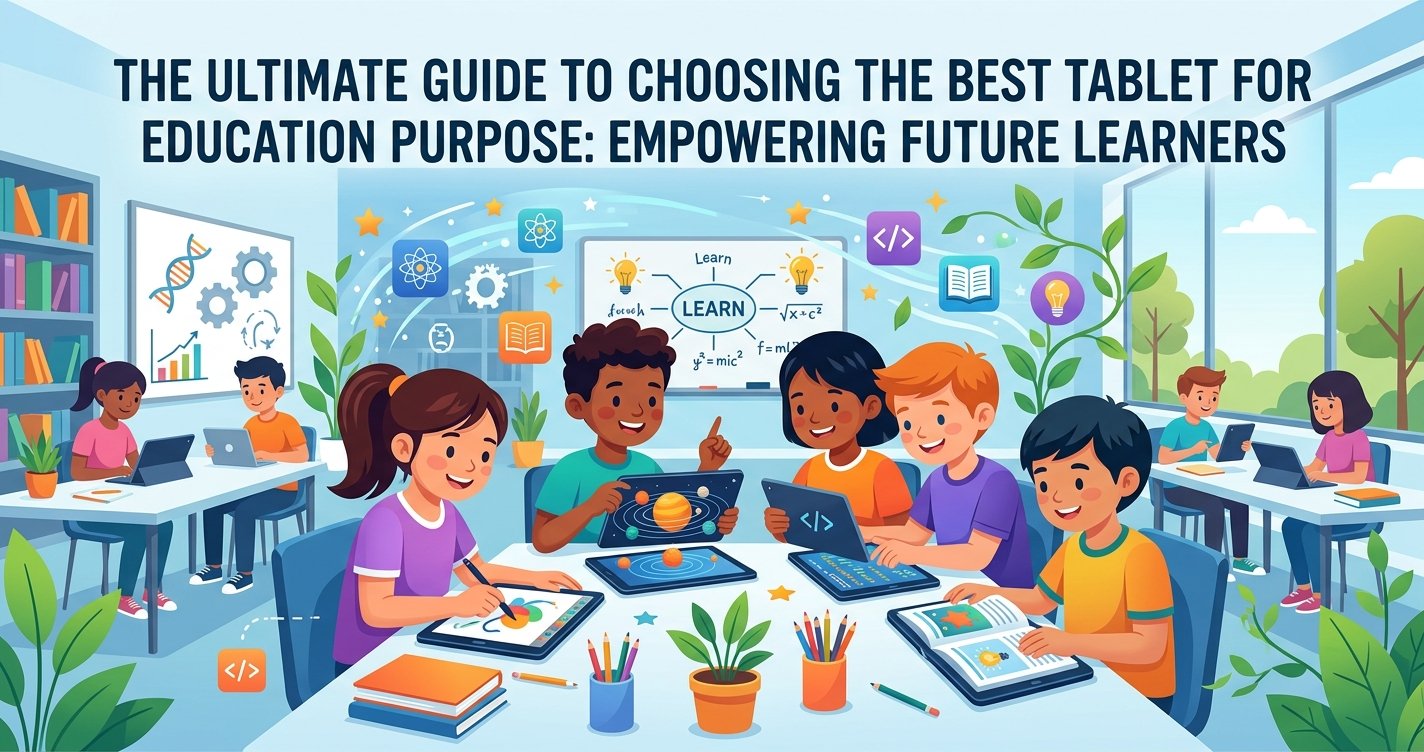
The digital age has irrevocably transformed the landscape of learning, moving beyond traditional textbooks and blackboards into a dynamic, interactive realm. At the heart of this transformation lies the tablet – a versatile device that has rapidly become an indispensable tool in modern education. For parents, educators, and students alike, understanding how to harness the power of a 'tablet for education purpose' is no longer a luxury but a necessity. As ToyVista, a leading expert in educational toys and learning solutions, we recognize the profound impact technology has on shaping young minds. This comprehensive guide will delve deep into why tablets are revolutionizing learning, what features truly matter, and how to select the perfect device to unlock a world of educational possibilities. From fostering creativity to simplifying complex subjects, the right educational tablet can be a game-changer, preparing students for a future driven by innovation and digital literacy.
The Evolving Landscape of Education: Why Tablets Are Essential
The shift towards digital learning environments has accelerated, particularly in recent years. Tablets offer a unique blend of portability, power, and interactivity that makes them ideal companions for learners of all ages. They are not just consumption devices; they are powerful creation tools that can transform passive learning into an engaging, hands-on experience.
Bridging the Digital Divide
In an increasingly connected world, access to digital tools is paramount. Tablets can help bridge the digital divide, providing equitable access to educational resources for students regardless of their socioeconomic background. They offer a gateway to online libraries, virtual classrooms, and global learning communities, ensuring that every student has the opportunity to thrive in the digital age. A well-chosen 'tablet for education purpose' can be a lifeline for students in remote areas or those with limited access to traditional learning infrastructure, bringing quality education directly to their fingertips.
Personalized Learning Paths
One of the most significant advantages of tablets in education is their capacity for personalized learning. Adaptive learning apps can tailor content to a student's individual pace and style, identifying strengths and weaknesses and providing targeted exercises. This level of customization is difficult to achieve in a traditional classroom setting, allowing students to master concepts before moving on, or accelerate through material they already understand. This personalized approach fosters a deeper understanding and greater confidence in learners.
Fostering Creativity and Engagement
Beyond core subjects, tablets excel at fostering creativity. With a plethora of apps for drawing, music composition, video editing, and coding, students can explore their artistic and innovative sides. The interactive nature of educational games and simulations keeps students engaged, turning potentially dry subjects into exciting adventures. This hands-on engagement is crucial for developing critical thinking, problem-solving skills, and a lifelong love for learning. The tactile interface of a tablet makes complex concepts more approachable and encourages experimentation.
Key Features to Look for in a Tablet for Education Purpose
Choosing the right tablet isn't just about brand or price; it's about matching features to educational needs. When considering a 'tablet for education purpose', several specifications stand out as critical for a seamless and effective learning experience.
Performance and Processing Power
A sluggish tablet can quickly become a source of frustration. For educational purposes, look for a device with a decent processor (e.g., a modern quad-core or octa-core chip) and sufficient RAM (at least 3GB, preferably 4GB or more). This ensures smooth multitasking, quick app loading, and the ability to run demanding educational applications, including augmented reality (AR) experiences that are becoming increasingly common in learning. A responsive device keeps students focused and productive.
Screen Quality and Durability
Students will spend hours looking at the screen, so a high-resolution display (e.g., Full HD or higher) is essential for readability and reducing eye strain. IPS panels offer wide viewing angles, which is beneficial for collaborative learning. Durability is also key, especially for younger users. Consider tablets with robust build quality or invest in a sturdy protective case to withstand the inevitable drops and spills that come with active student life.
Battery Life: Powering Through the Day
A tablet that dies in the middle of a lesson is counterproductive. Aim for a device with at least 8-10 hours of battery life on a single charge to ensure it can last through a full school day, including homework sessions. This minimizes interruptions and the need to constantly search for charging points, making the tablet a reliable learning companion whether at home, in school, or on the go.
Storage Capacity: For Apps, Books, and Projects
Educational apps, digital textbooks, notes, and creative projects can quickly consume storage space. A minimum of 32GB of internal storage is recommended, but 64GB or 128GB offers more future-proofing. Look for tablets that offer expandable storage via a microSD card slot, providing a cost-effective way to add more space as needed. This flexibility ensures students won't have to delete important files to make room for new learning materials.
Parental Controls and Educational Ecosystems
For younger students, robust parental controls are non-negotiable. Features like screen time limits, content filtering, and app whitelisting provide peace of mind. Some tablets, particularly those designed specifically for children, come with dedicated 'kids modes' or educational ecosystems that offer curated content and a safer browsing environment. These features help parents guide their children's digital journey responsibly.
Connectivity Options
Wi-Fi connectivity is standard, but consider tablets with support for the latest Wi-Fi standards (e.g., Wi-Fi 6) for faster and more reliable internet access. If the tablet will be used frequently outside of Wi-Fi zones, a model with cellular (LTE or 5G) connectivity might be beneficial, though this typically comes at a higher cost. Bluetooth is also important for connecting peripherals like headphones, keyboards, and mice.
Accessories for Enhanced Learning (Stylus, Keyboard)
Many educational tasks are enhanced by specific accessories. A stylus can be invaluable for note-taking, drawing, and precise interactions, especially in subjects like math or art. A detachable keyboard can transform a tablet into a highly portable laptop, perfect for writing essays, coding, or engaging in extensive research. When selecting a 'tablet for education purpose', consider the availability and cost of these essential add-ons.
Top Educational Applications and Resources for Tablets
The hardware is just one part of the equation; the software brings the learning to life. The app ecosystem is vast, offering tools for every subject and learning style.
Interactive Textbooks and E-Readers
Gone are the days of heavy backpacks filled with textbooks. Tablets provide access to a universe of interactive digital textbooks and e-books, often featuring embedded videos, quizzes, and 3D models. E-reader apps allow students to highlight text, make annotations, and instantly look up definitions, making reading a more dynamic and personalized experience.
STEM-Focused Apps
Science, Technology, Engineering, and Mathematics (STEM) subjects greatly benefit from the interactive capabilities of tablets. Apps can simulate complex experiments, teach coding through gamified challenges, or allow students to design virtual structures. For hands-on learning that bridges the digital and physical worlds, pairing a tablet with innovative educational kits is incredibly effective. For instance, exploring the principles of robotics and engineering becomes incredibly engaging with resources like this top-rated robotic building kit, which can be controlled or programmed via a tablet, bringing abstract concepts to tangible reality. ToyVista believes in fostering a love for STEM from an early age, and tablets are perfect conduits for such exploration.
Language Learning Tools
Learning a new language is made easier and more fun with tablet apps. From interactive flashcards and pronunciation guides to conversational AI and virtual immersion experiences, these tools offer constant practice and immediate feedback. Many apps use gamification to keep learners motivated and track progress effectively.
Creative Arts and Design Apps
Tablets are powerful canvases for artistic expression. Students can draw, paint, compose music, edit photos and videos, and even create 3D models using a wide array of specialized apps. These tools not only develop artistic skills but also enhance critical thinking, problem-solving, and digital literacy in a creative context.
Productivity and Organization Tools
Beyond direct learning, tablets help students develop essential organizational and productivity skills. Note-taking apps, calendar planners, task managers, and cloud storage solutions enable students to manage their assignments, track deadlines, collaborate on projects, and keep all their educational materials neatly organized and accessible from anywhere.
Age-Appropriate Tablet Choices: From Preschool to High School
The ideal 'tablet for education purpose' varies significantly depending on the age and developmental stage of the student. What works for a kindergartner will not suffice for a high schooler.
Early Learners (Preschool - Grade 2)
For the youngest students, durability, ease of use, and strong parental controls are paramount. Tablets designed specifically for kids often come with rugged cases, simplified interfaces, and pre-loaded educational content. Focus on devices with vibrant, child-friendly apps that promote foundational skills like letter recognition, counting, and problem-solving through play. Screen time management is particularly crucial at this age.
Elementary School (Grade 3 - Grade 5)
As children grow, their educational needs become more diverse. Tablets for elementary students should balance entertainment with more structured learning. Look for devices with access to a broader range of educational apps, including those for reading comprehension, basic coding, and science exploration. Good battery life and a decent screen are important as they start using the tablet for longer periods.
Middle School (Grade 6 - Grade 8)
Middle schoolers begin to engage with more complex subjects and may start using their tablets for research and project work. A tablet for this age group should have better processing power, more storage, and potentially support for a stylus or external keyboard. Access to productivity suites (like Google Docs or Microsoft Office) becomes important. Durability remains a concern, but the focus shifts towards versatility and performance.
High School and Beyond
For high school and college students, a tablet needs to be a powerful and versatile productivity tool, often replacing or complementing a laptop. High-performance processors, ample RAM and storage, excellent screen quality, and robust accessory support (keyboard, stylus) are essential. These students will use their tablets for extensive research, essay writing, complex simulations, and potentially even coding or graphic design. Integration with cloud services and collaborative tools is also key.
Maximizing the Educational Potential of Your Tablet
Simply owning a tablet isn't enough; actively integrating it into a holistic learning strategy is crucial to unlock its full potential.
Setting Boundaries and Screen Time Management
While tablets offer immense educational value, responsible usage is key. Establish clear screen time limits and ensure a balance between digital learning and other activities like physical play, reading physical books, and social interaction. Utilize the parental control features to monitor usage and content. Teaching digital literacy and responsible online behavior from an early age is vital.
Curating Educational Content
The digital world is vast, and not all content is equally beneficial. Actively curate the apps and websites your child accesses. Look for apps that are not only engaging but also pedagogically sound and age-appropriate. Read reviews, consult educational experts, or refer to resources from trusted organizations like ToyVista, which specializes in quality educational tools.
Integrating with Traditional Learning Methods
Tablets should complement, not replace, traditional learning methods. Encourage students to use their tablets for research to enhance classroom lessons, or to practice skills learned from textbooks. The combination of digital and analog learning creates a richer, more comprehensive educational experience. For example, using a tablet to research historical events and then writing an essay by hand, or using a math app to practice concepts learned in class.
Staying Updated with Software and Security
Regularly update the tablet's operating system and apps. Software updates often include security patches, performance improvements, and new features that enhance the learning experience. Install reputable antivirus software and teach students about online safety, phishing, and protecting their personal information. A secure and up-to-date device ensures a safe and effective learning environment.
ToyVista's Commitment to Educational Innovation
At ToyVista, we believe in empowering every learner with the best tools for success. Our expertise lies in identifying and promoting educational products that spark curiosity, foster critical thinking, and build foundational skills. We understand that a 'tablet for education purpose' is more than just a gadget; it's a gateway to discovery. We meticulously research and recommend products that align with our philosophy of joyful, effective learning, ensuring that parents and educators have access to reliable information and top-tier solutions. Our commitment extends to helping you navigate the ever-evolving world of educational technology, making informed choices that truly benefit your child's development.
Conclusion
The journey of learning is continuous, and in today's digital era, a well-chosen 'tablet for education purpose' stands as a powerful ally. From personalizing educational paths to igniting creativity and fostering essential STEM skills, tablets have cemented their place as indispensable tools in modern pedagogy. By carefully considering features like performance, durability, battery life, and the wealth of available educational applications, you can select a device that not only meets but exceeds your child's learning needs. As experts at ToyVista, we are dedicated to helping you make these informed decisions, ensuring that your investment in educational technology truly empowers future generations. Embrace the future of learning – a future that is interactive, personalized, and brilliantly digital. Explore our resources and recommended products today to find the perfect educational companions for your child's academic journey.


