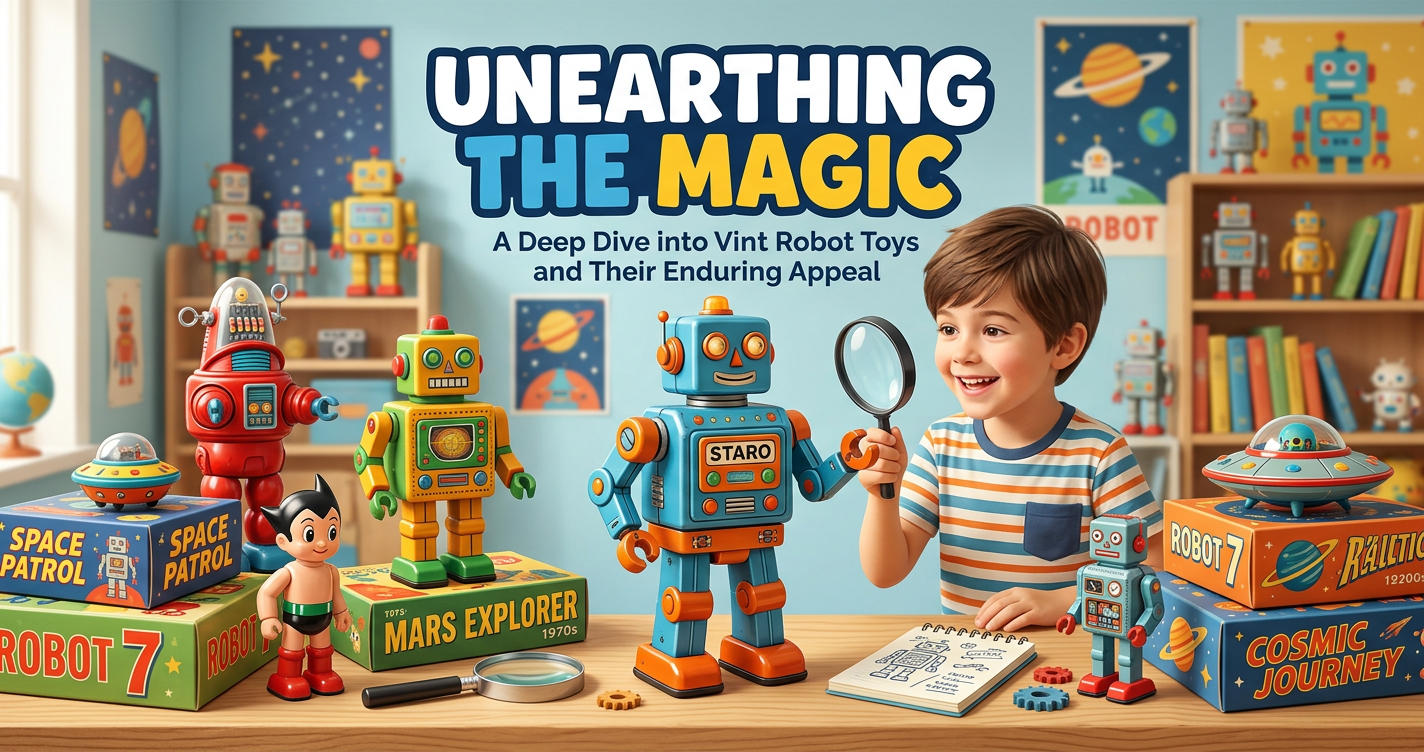
Unearthing the Magic: A Deep Dive into Vintage Robot Toys and Their Enduring Appeal
From the earliest sci-fi fantasies to the cutting-edge AI of today, robots have captivated the human imagination. They represent our hopes for the future, our anxieties about technology, and our endless quest for innovation. But long before sophisticated algorithms and advanced robotics became commonplace, a simpler, yet equally enchanting, breed of automaton captured the hearts of children and adults alike: vintage robot toys.
At ToyVista, where we champion the power of play to ignite curiosity and foster learning, we recognize that even these retro-futuristic relics hold immense educational and cultural value. More than just nostalgic playthings, vintage robot toys are tangible pieces of history, reflecting societal dreams, technological aspirations, and artistic trends of bygone eras. Join us as we journey into the fascinating world of these mechanical marvels, exploring their enduring charm, collectible appeal, and surprising educational insights.
The Enduring Charm of Vintage Robot Toys
What is it about a clunky tin robot with whirring gears and blinking lights that continues to enchant us in an age of sleek, app-controlled devices? The answer lies in a blend of nostalgia, ingenious design, and a tangible connection to a simpler, more imaginative past.
A Glimpse into Yesteryear's Imagination
Vintage robot toys are time capsules. They transport us back to an era when space travel was a daring new frontier and the concept of artificial intelligence was largely confined to science fiction novels and B-movies. These toys were often direct manifestations of those dreams, featuring bubble helmets, rocket packs, and intricate, albeit purely mechanical, internal workings. Their designs, ranging from the charmingly simple to the surprisingly complex, reflect the aesthetic sensibilities of their time – be it the streamlined Art Deco influences of the 1930s or the vibrant, atomic-age optimism of the 1950s and 60s.
Unlike many modern toys that aim for hyper-realism or digital interaction, vintage robots often embraced a more whimsical, stylized approach. Their imperfections, visible seams, and sometimes rudimentary movements are part of their charm, inviting us to fill in the gaps with our own imaginations, just as children did decades ago.
More Than Just Playthings: Collectibility and Cultural Impact
Beyond their play value, vintage robot toys have evolved into highly sought-after collector's items. Their scarcity, condition, and historical significance can drive their value into the thousands, even tens of thousands, of dollars for rare pieces. They represent not just toys, but cultural artifacts – reflections of technological hopes, fears, and design trends. Many iconic robots, like Robby the Robot from the film 'Forbidden Planet,' transcended their on-screen origins to become beloved toy iterations, influencing generations of designers and storytellers.
Collecting these mechanical wonders is a passion that blends historical appreciation with the thrill of the hunt. Each acquisition tells a story, not just of its own creation, but of the era it emerged from, making them fascinating conversation pieces and tangible links to our collective past.
A Collector's Guide: What to Look for in Vintage Robots
For those venturing into the world of vintage robot toy collecting, understanding the nuances of these fascinating objects is crucial. Here’s what to consider:
Key Eras and Manufacturers
- The Tin Toy Era (1930s-1950s): Characterized by sheet metal construction, often hand-painted or lithographed. Early examples like the 'Lilliput Robot' (often cited as the first commercial toy robot) are exceedingly rare. American brands like Marx and Japanese manufacturers like Masudaya and Nomura produced many iconic tin robots.
- The Golden Age of Japanese Robots (1960s-1980s): This period saw an explosion of innovative designs, often battery-operated with walking mechanisms, blinking lights, and sometimes even firing projectiles. Horikawa, Masudaya, Nomura, and Popy are legendary names from this era, known for their 'Gang of Five' robots and transforming figures like the Shogun Warriors.
- American & European Robots: While Japanese robots dominated, American companies like Ideal (with their Robbie the Robot) and European manufacturers also contributed to the robot toy landscape.
Condition and Rarity
As with any collectible, condition is paramount. A robot in its original, unopened packaging (Mint In Box - MIB) will command the highest prices. However, even loose robots in excellent working condition (Near Mint - NM) are highly valued. Look for:
- Original Box/Packaging: Adds significant value, especially if the box art is intact.
- Functionality: Does it still walk, light up, or perform its intended actions?
- Cosmetic Condition: Minimal paint chips, rust, dents, or missing parts.
- Rarity: Limited production runs, unique features, or cultural significance can make a robot exceedingly rare and valuable.
Authenticity Checks
The popularity of vintage robots has led to the production of reproductions. While some are clearly marked as such, others can be deceptive. Always research the specific model you're interested in. Look for manufacturer markings, specific materials (original tin vs. modern plastics), and compare details with authenticated examples. Consulting with experienced collectors or reputable dealers is always a wise step.
The Educational Value Hidden in Retro-Tech
At ToyVista, we believe that learning can be found in every corner of the toy world, and vintage robot toys are no exception. Far from being mere relics, they offer unique educational opportunities that bridge the past and the present.
Sparking Curiosity in STEM
Many vintage robots, especially the simpler wind-up or battery-operated ones, offer a clear window into basic mechanical and electrical engineering principles. How does a single spring make a robot walk? What simple circuit makes its eyes light up? Disassembling (or even just observing) these toys can spark a child's (or adult's!) curiosity about gears, levers, motors, and power sources. They provide a tangible, low-tech introduction to the foundational concepts that underpin modern robotics, encouraging questions and hands-on exploration.
Understanding Design Evolution
Comparing vintage robot designs with their modern counterparts offers a fascinating lesson in industrial design and technological evolution. Why did early robots look so clunky? How did the materials change over time? What cultural influences (like the Space Race or popular sci-fi movies) shaped their appearance and perceived capabilities? This comparison can lead to discussions about materials science, manufacturing processes, and the interplay between technology and societal imagination.
While vintage robots offer a historical perspective and a charming look at the origins of robotic dreams, the principles of robotics continue to evolve, inspiring new generations through hands-on learning. For those looking to dive into the exciting world of modern robotics and build their own intelligent machines, this top-rated robotic building kit offers an unparalleled educational experience, fostering creativity and problem-solving skills in a fun and engaging way, directly connecting the past's imagination to today's innovation.
Iconic Vintage Robot Toys You Should Know
To truly appreciate the breadth of vintage robot toys, it helps to know some of the standout examples that have left an indelible mark on history and collecting.
The Tin Toy Era Pioneers
- Lilliput Robot (1930s, Japan): Often credited as the first mass-produced toy robot, this small, simple tin figure set the stage for all that followed.
- R-35 Robot (1950s, Japan): A classic wind-up tin robot with a distinctive red and silver design, known for its walking action and spinning antennae.
- Robby the Robot (1950s, US/Japan): Inspired by the iconic character from 'Forbidden Planet,' numerous toy versions were produced, becoming highly collectible due to their direct link to sci-fi cinema history.
The Golden Age of Japanese Robots: Legends
- Horikawa Space Man Series (1960s-1970s, Japan): Horikawa produced a vast array of popular battery-operated robots, many featuring clear plastic chests revealing internal mechanisms, sparking wonder in countless children.
- Masudaya's "Gang of Five" (1950s-1960s, Japan): This series of large, sophisticated battery-operated robots – including Radicon, Target Robot, and Machine Man – are among the most coveted and valuable vintage robots.
- Tetsujin 28 (Gigantor) & Mazinger Z (1960s-1970s, Japan): While originating as manga and anime characters, their toy iterations, particularly the chunky die-cast figures from Popy, became immensely popular and defined a generation of 'super robot' toys.
American Favorites and Unique Contributions
- Marx Big Loo (1960s, US): A large, plastic robot with a multitude of features, including a rocket launcher, working claw, and even a built-in periscope, Big Loo was a standout American entry.
- Ideal's Robbie the Robot (1970s, US): A well-loved plastic robot that walked and talked, representing a more accessible and interactive toy for the era.
Preserving Your Robotic Treasures: Care and Display
Whether you're a seasoned collector or just starting, proper care is essential to maintain the condition and value of your vintage robot toys.
Cleaning and Maintenance
Dust is the enemy of any collectible. Use a soft brush or microfibre cloth for regular dusting. For deeper cleaning, especially on tin toys, use a very slightly damp cloth with mild soap, then immediately dry thoroughly to prevent rust. Avoid harsh chemicals or abrasive cleaners, which can damage paint or delicate mechanisms. For battery-operated toys, always remove batteries when not in use to prevent corrosion.
Optimal Storage and Display
To protect your robots from environmental damage:
- Avoid Direct Sunlight: UV rays can fade paint and plastics over time.
- Control Temperature and Humidity: Extreme fluctuations can cause materials to warp, crack, or rust. A stable, moderate environment is ideal.
- Display Cases: Acrylic display cases offer excellent protection from dust, curious hands, and some UV exposure, while allowing your robots to be admired.
- Safe Handling: Always handle vintage toys with care, particularly those with delicate parts or aging mechanisms.
Embracing the Legacy of Vintage Robot Toys
Vintage robot toys are more than just playthings; they are fascinating windows into our past, embodying the dreams, technological curiosities, and artistic expressions of previous generations. They offer a unique blend of nostalgia, collectible appeal, and surprisingly rich educational value, sparking interest in engineering, design, and history.
At ToyVista, we celebrate these mechanical marvels for their ability to inspire wonder and learning, proving that the magic of play transcends time and technological advancements. Whether you're a seasoned collector, a curious enthusiast, or simply someone who appreciates the charm of yesteryear, the world of vintage robot toys offers an enriching journey into the heart of human ingenuity and imagination. So go ahead, explore, collect, and let these delightful droids continue to inspire awe for generations to come!