
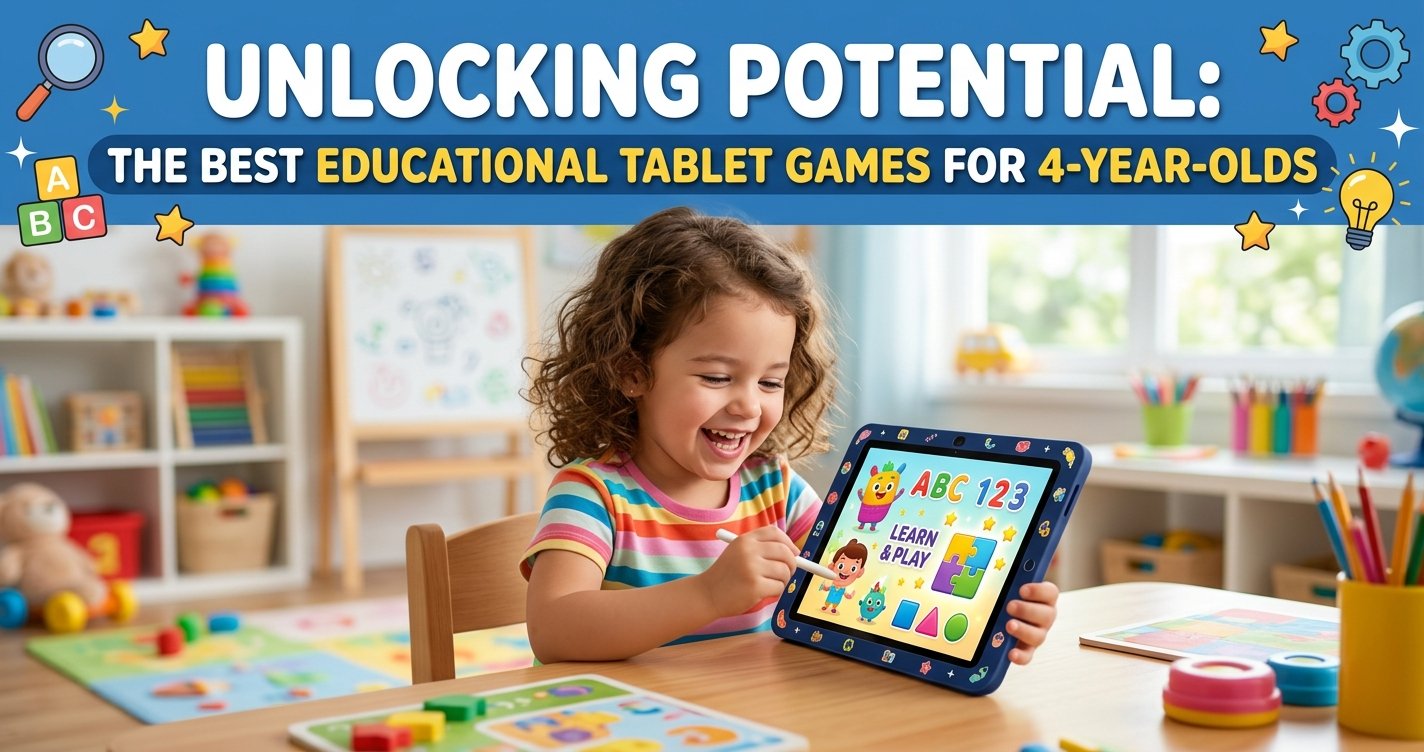
Unlocking Potential: The Best Educational Tablet Games for 4-Year-Olds
As parents, we constantly seek ways to enrich our children's early learning experiences. In an increasingly digital world, tablets have become ubiquitous, and with them, a new frontier for educational play has emerged. For the curious and rapidly developing mind of a 4-year-old, educational tablet games offer a unique blend of entertainment and learning. But how do you navigate the vast ocean of apps to find those that truly benefit your child? At ToyVista, a leading expert in educational toys, we understand this challenge and are here to guide you through the exciting world of digital learning for preschoolers.
Why Educational Tablet Games for 4-Year-Olds are a Game Changer
The idea of 'screen time' often comes with a degree of parental apprehension, and rightly so. However, when thoughtfully selected and moderated, educational tablet games can be incredibly powerful tools for development. For a 4-year-old, this isn't just about keeping them occupied; it's about providing an interactive platform that complements traditional learning methods, fostering critical skills that will serve them well into kindergarten and beyond.
Developing Early Literacy Skills
At four, children are sponges for language. Educational tablet games often introduce letters, phonics, sight words, and early reading concepts through engaging visuals and sounds. Interactive alphabet puzzles, letter tracing activities, and story-based games can make learning the ABCs a joyful adventure, laying a strong foundation for reading readiness without the pressure of formal lessons.
Nurturing Numeracy and Problem-Solving
Numbers can come alive on a tablet screen. Games designed for 4-year-olds teach counting, number recognition, simple addition and subtraction concepts, and even basic geometry through sorting shapes or completing patterns. These activities encourage logical thinking, problem-solving, and a positive attitude towards mathematics from an early age, often disguised within fun challenges and quests.
Boosting Creativity and Imagination
Beyond core academic skills, many educational apps are designed to spark creativity. Digital coloring books, virtual building blocks, musical instrument simulators, and open-ended drawing apps allow children to express themselves freely. These platforms provide an infinite canvas for imagination, enabling them to experiment with colors, shapes, and sounds without the mess, encouraging artistic exploration and innovative thinking.
Enhancing Fine Motor Skills and Hand-Eye Coordination
Interacting with a tablet – tapping, swiping, dragging, and pinching – requires precise fine motor control. These actions help strengthen the small muscles in a child's fingers and hands, which are crucial for tasks like holding a pencil, cutting with scissors, and tying shoelaces. Simultaneously, following on-screen actions and reacting quickly improves hand-eye coordination, a vital skill for both academic and physical development.
Fostering Digital Literacy in a Safe Environment
We live in a digital age, and understanding technology is becoming as fundamental as reading and writing. Introducing 4-year-olds to tablets through educational games, in a controlled and supervised manner, helps them build foundational digital literacy. They learn how to navigate interfaces, understand cause and effect within a digital space, and develop comfort with technology, all within a safe, age-appropriate ecosystem.
What to Look For in Educational Tablet Games for Your Preschooler
With countless apps available, discerning the truly beneficial from the merely distracting is key. ToyVista advocates for a thoughtful approach to app selection, prioritizing quality, safety, and genuine educational value. Here are the essential criteria to consider when choosing tablet games for your 4-year-old:
Age-Appropriate Content
Ensure the game is specifically designed for preschoolers. Content should be simple, intuitive, and free from complex concepts or themes that might be overwhelming. Look for apps that clearly state their target age range and align with the developmental milestones of a 4-year-old, offering challenges that are stimulating but not frustrating.
Engaging and Interactive Gameplay
The best educational games are those that don't feel like learning. They captivate children with vibrant graphics, appealing characters, and interactive elements that respond to their actions. Games that encourage active participation rather than passive viewing are far more effective in holding a child's attention and facilitating deeper learning.
Positive Reinforcement and Feedback
Children thrive on encouragement. Look for games that offer gentle, positive feedback for correct answers and efforts, rather than harsh penalties for mistakes. This fosters a growth mindset, encouraging perseverance and making the learning process enjoyable and rewarding, building confidence in their abilities.
No In-App Purchases or Ads
This is a crucial safety and quality indicator. In-app purchases can lead to accidental spending, and advertisements can expose children to inappropriate content or disrupt their learning flow. Opt for premium, one-time purchase apps or subscription services that guarantee an ad-free and distraction-free experience for your child.
Parental Controls and Progress Tracking
Responsible screen time includes robust parental oversight. Choose apps that offer strong parental controls, allowing you to manage play duration, access to certain features, and monitor your child's progress. Some apps even provide reports on the skills practiced and areas where your child might need more focus, turning screen time into a transparent learning journey.
Offline Play Options
Connectivity isn't always guaranteed, especially on long trips or in areas with patchy Wi-Fi. Many high-quality educational games offer offline play capabilities, allowing your child to continue their learning and fun wherever they are, without relying on an internet connection. This adds flexibility and ensures consistent access to valuable educational content.
Top Categories of Educational Games for 4-Year-Olds
To further streamline your search, let's explore some of the most beneficial categories of educational tablet games that cater specifically to the developmental needs and interests of 4-year-olds. These categories offer a rich tapestry of learning opportunities, ensuring a well-rounded digital play experience.
Alphabet and Phonics Games
From recognizing upper and lowercase letters to understanding letter sounds and blending them to form words, these games are fundamental for early literacy. Look for interactive letter tracing, matching letters to pictures, and simple word-building puzzles that make phonics fun and accessible for young learners.
Number and Counting Games
These apps introduce children to the world of mathematics. They often feature counting objects, number recognition, simple addition and subtraction through visual aids, and sequencing numbers. Games that incorporate playful characters and clear vocal instructions are especially effective for reinforcing early math concepts.
Shape and Pattern Recognition Games
Developing an understanding of shapes, colors, and patterns is crucial for cognitive development. Games in this category challenge children to identify, sort, and match shapes, complete visual patterns, and understand spatial relationships. These activities enhance visual discrimination and logical reasoning skills.
Memory and Matching Games
Memory games are excellent for boosting cognitive functions, including recall, concentration, and attention span. Tablet versions of classic matching games, where children flip cards to find pairs, or sequence memory challenges, provide engaging ways to sharpen these vital mental muscles.
Creative Arts and Drawing Apps
Unleash your child's inner artist with apps that allow them to draw, paint, and create digital masterpieces. These games often come with a wide array of tools, colors, and stamps, encouraging self-expression, fostering imagination, and developing an early appreciation for art and design.
Storytelling and Role-Playing Games
Apps that encourage storytelling or allow children to engage in imaginative role-playing scenarios are fantastic for language development and social-emotional skills. They can help children understand narratives, develop empathy, and practice problem-solving in a simulated environment, often featuring beloved characters or familiar settings.
The ToyVista Difference: Beyond the Screen
At ToyVista, we believe in a holistic approach to childhood development. While educational tablet games offer incredible benefits, we also understand the irreplaceable value of hands-on, tangible play. Our curated selection of educational toys is designed to complement digital learning, providing children with diverse avenues for exploration and growth. For instance, nurturing STEM skills through building and coding is just as vital as digital literacy. That's why we highly recommend supplementing screen time with engaging physical activities, like those offered by this top-rated robotic building kit, which encourages problem-solving, creativity, and fine motor skills in a completely different, yet equally enriching, way.
Integrating Screen Time Wisely: A Parent's Guide
Even the best educational games require thoughtful integration into a child's daily routine. The goal isn't to replace other forms of play but to enhance them. Responsible screen time is about balance, engagement, and intentionality, ensuring that digital learning remains a positive and productive experience.
Setting Time Limits
Pediatric guidelines often recommend limiting screen time for preschoolers. Establish clear, consistent time limits for tablet use, perhaps 15-30 minutes at a time, and stick to them. Use timers and visual cues to help your child understand when screen time begins and ends, fostering self-regulation.
Co-Playing and Engagement
Don't just hand over the tablet; sit down and play with your child! Engage with the game together, ask questions about what they're doing, and discuss the concepts they're learning. Co-playing transforms screen time from a solitary activity into a shared learning experience, deepening its impact and strengthening your bond.
Balancing with Other Activities
Ensure tablet time is balanced with plenty of other activities crucial for a 4-year-old's development: outdoor play, reading physical books, creative arts and crafts, imaginative play with toys, and social interaction with peers. A diverse range of experiences promotes holistic development.
Creating a Dedicated Learning Space
Designate a specific, comfortable, and well-lit area for tablet use. This helps children associate the tablet with a focused activity, much like a reading nook. Avoid using tablets in bedrooms, especially before bedtime, to prevent disruption to sleep patterns and to maintain clear boundaries for screen usage.
Conclusion: Empowering Your 4-Year-Old's Digital Journey
Educational tablet games, when chosen wisely and used responsibly, are powerful allies in nurturing the curious minds of 4-year-olds. They offer a dynamic, interactive, and fun way to build foundational skills in literacy, numeracy, creativity, and problem-solving, all while fostering essential digital literacy. At ToyVista, we are committed to helping you make informed decisions that enrich your child's learning journey, both on and off the screen. By selecting high-quality, age-appropriate apps and integrating them thoughtfully into a balanced play routine, you can unlock a world of potential for your preschooler, preparing them for a future where digital fluency is as important as traditional knowledge. Explore our resources and curated selections today to find the perfect blend of digital and physical educational tools for your child.


