
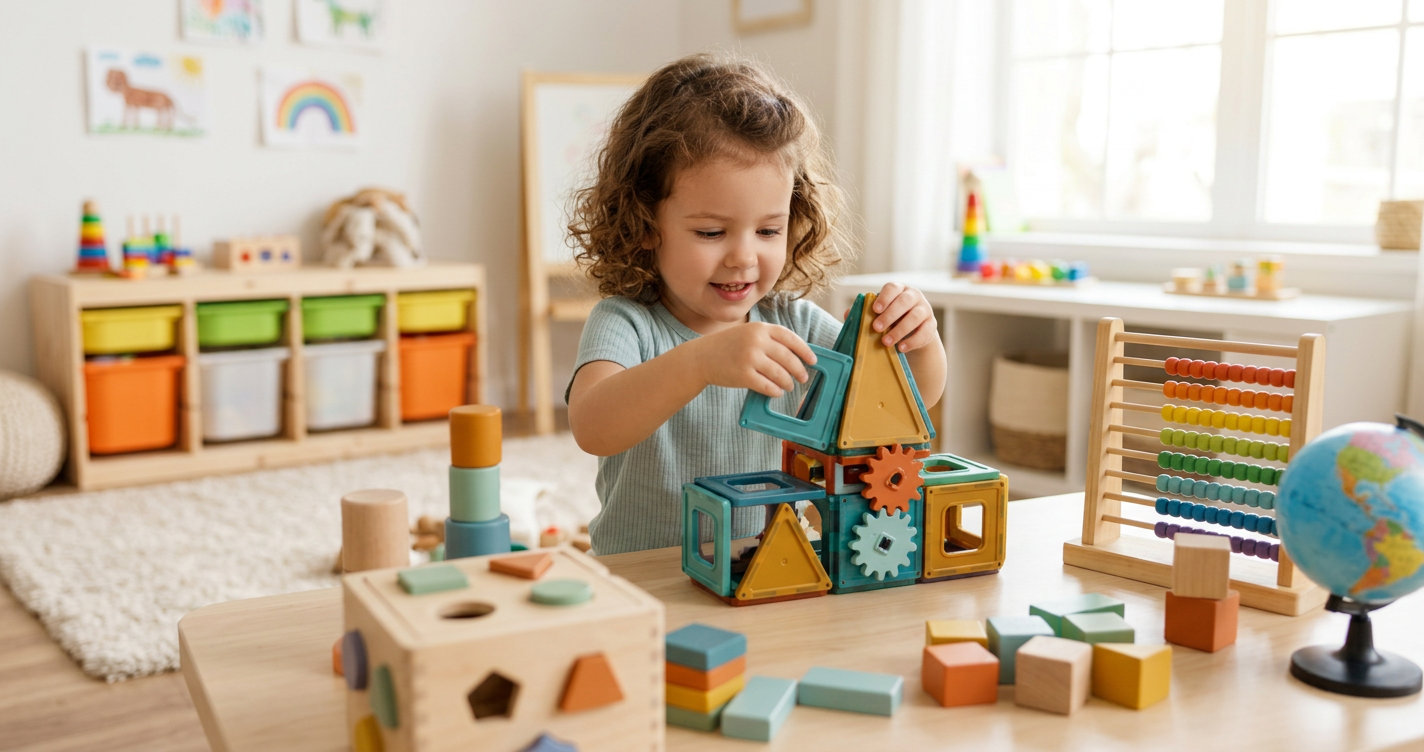
As parents, we all want the best for our children, especially when it comes to their development. We often think of learning as something that happens in a classroom, but for young children, the most profound learning happens through play. It’s in these moments of joyous exploration that tiny brains are building the foundational pathways for future success. This isn't just about fun; it's about crucial cognitive development.
Educational toys are far more than just playthings; they are powerful tools designed to stimulate specific skills, encourage curiosity, and foster a lifelong love of learning. In this post, we'll dive into the fascinating world of how these thoughtfully designed toys can significantly boost cognitive development in your little ones, backed by the science of early childhood. this excellent toy product
What Exactly Are Educational Toys? (And Why They Matter More Than You Think)
Before we explore the 'how,' let's clarify what we mean by 'educational toys.' These aren't just toys that light up or talk; they are tools that actively engage a child's mind, encouraging them to explore, experiment, and solve problems. Unlike passive entertainment, educational toys demand interaction, critical thinking, and creativity.
Think of a simple set of wooden blocks versus a video game. While both can be engaging, the blocks require the child to imagine, plan, build, and problem-solve, using their hands and minds. This active engagement is key to brain development. Educational toys help children understand cause and effect, develop fine motor skills, enhance spatial awareness, and even build their vocabulary through descriptive play.
The Science Behind the Smiles: How Play Sparks Cognitive Growth
The early years of a child's life are a period of rapid brain development, where billions of neural connections are forming. Play, especially with educational toys, acts as a catalyst for this process, stimulating various cognitive domains:
- Problem-Solving Skills: Puzzles, shape sorters, and building sets challenge children to think critically and find solutions. Whether it's figuring out how to fit a piece into a puzzle or how to make a tower stand tall, these activities build crucial problem-solving muscles.
- Critical Thinking & Logical Reasoning: Toys that involve sequences, patterns, or simple mechanics (like gears or levers) encourage children to observe, analyze, and predict outcomes. This lays the groundwork for logical thinking.
- Memory & Concentration: Matching games, memory cards, and storytelling puppets require children to remember details and maintain focus. These activities strengthen working memory and attention spans, vital for future academic success.
- Language & Communication: Pretend play sets, puppets, and interactive storybooks encourage children to express themselves, expand their vocabulary, and understand narrative structures. Role-playing helps them practice social scripts and develop empathy.
- Spatial Reasoning: Building blocks, construction toys, and 3D puzzles help children understand shapes, sizes, distances, and how objects fit together in space. This skill is fundamental for subjects like math and science.
- Creativity & Imagination: Open-ended toys like art supplies, loose parts, and simple dress-up clothes allow children to invent scenarios, express ideas, and explore their imagination without limits, fostering divergent thinking.
Each interaction with an educational toy is an opportunity for the brain to create and strengthen neural pathways, making connections that will serve them throughout their lives. This hands-on, multi-sensory engagement is far more effective than passive learning for young, developing minds.
Age-Appropriate Choices: Tailoring Toys for Maximum Impact
To maximize the benefits, it's essential to choose educational toys that are appropriate for your child's developmental stage. What excites a toddler might bore a preschooler, and vice-versa.
- Infants (0-12 months): Focus on sensory stimulation. Soft books with textures, rattles, unbreakable mirrors, activity gyms, and simple cause-and-effect toys (like a button that makes a sound) help develop senses and early motor skills.
- Toddlers (1-3 years): Introduce toys that encourage exploration and fine motor development. Stacking rings, shape sorters, large building blocks, musical instruments, and simple push/pull toys are excellent. They also love pretend play with toy animals or vehicles.
- Preschoolers (3-5 years): This is a prime time for imaginative and early STEM learning. Role-playing sets (kitchens, doctor kits), more complex puzzles, art supplies, early learning games (alphabet, numbers), and construction sets like LEGO Duplo or magnetic tiles are ideal.
Always prioritize safety and durability, ensuring toys are free from small parts for younger children and made from non-toxic materials.
Beyond Academics: Nurturing Essential Life Skills
The impact of educational toys extends beyond traditional academic skills. They are powerful catalysts for developing crucial social-emotional and practical life skills:
- Social-Emotional Development: Cooperative games and pretend play scenarios teach sharing, turn-taking, negotiation, and empathy. Children learn to understand different perspectives and manage their emotions in a playful setting.
- Persistence & Resilience: When a child encounters a challenge with a puzzle or a building task, they learn to keep trying, experiment with different approaches, and not give up. This builds resilience and a growth mindset.
- Fine and Gross Motor Skills: Manipulating small pieces, drawing, cutting, and building strengthen fine motor skills essential for writing and self-care. Larger toys like tricycles or push-walkers enhance gross motor skills and coordination.
By engaging with these toys, children aren't just learning facts; they are developing the character traits and practical abilities that will help them navigate the world successfully.
Tips for Parents: Maximizing the Learning Potential of Playtime
Bringing educational toys into your home is just the first step. Here’s how you can supercharge their learning potential:
- Be Present and Engage: Don't just hand over a toy; join in the play! Ask open-ended questions like, "What are you building there?" or "What do you think will happen if...?" Your interaction validates their play and models communication.
- Follow Their Lead: Let your child explore at their own pace and in their own way. Sometimes, playing 'incorrectly' with a toy can lead to new discoveries and creative solutions.
- Create a Rich Play Environment: Rotate toys to keep things fresh and interesting. Provide a mix of open-ended toys (like blocks, art supplies) and more structured ones (puzzles, board games).
- Balance Structured and Unstructured Play: While educational toys are great for guided learning, also allow plenty of time for free, imaginative play without specific goals. This fosters creativity and self-direction.
- Value the Process, Not Just the Product: Focus on the effort and joy your child experiences during play, rather than just the finished product. Celebrate their attempts and discoveries.
Debunking Myths: It's Not About Expensive or Complex Toys
One common misconception is that 'educational' means expensive or overly complex gadgets. This couldn't be further from the truth. Often, the simplest, most open-ended toys are the most beneficial because they put the child in the driver's seat of their own learning.
A set of basic wooden blocks, some art supplies, or even everyday household items like pots and pans can be incredibly educational when used imaginatively. It's not the price tag or the number of features that makes a toy educational; it's the potential it offers for a child to actively engage, experiment, and learn.
Furthermore, remember that screen-based 'educational' apps, while they have their place, are not a substitute for hands-on, physical play. The tactile experience of manipulating objects, the social interaction, and the physical movement involved in traditional play are irreplaceable for holistic development.
Embrace the Power of Play
Understanding how educational toys contribute to cognitive development empowers us as parents to make informed choices that truly benefit our children. By providing thoughtfully chosen toys and, more importantly, by actively engaging in their playtime, we're not just offering momentary entertainment; we're investing in their future.
So, let's celebrate the power of play, knowing that every block built, every puzzle solved, and every imaginative adventure taken is laying down the robust neurological groundwork for a bright, curious, and capable mind. Happy playing!


