
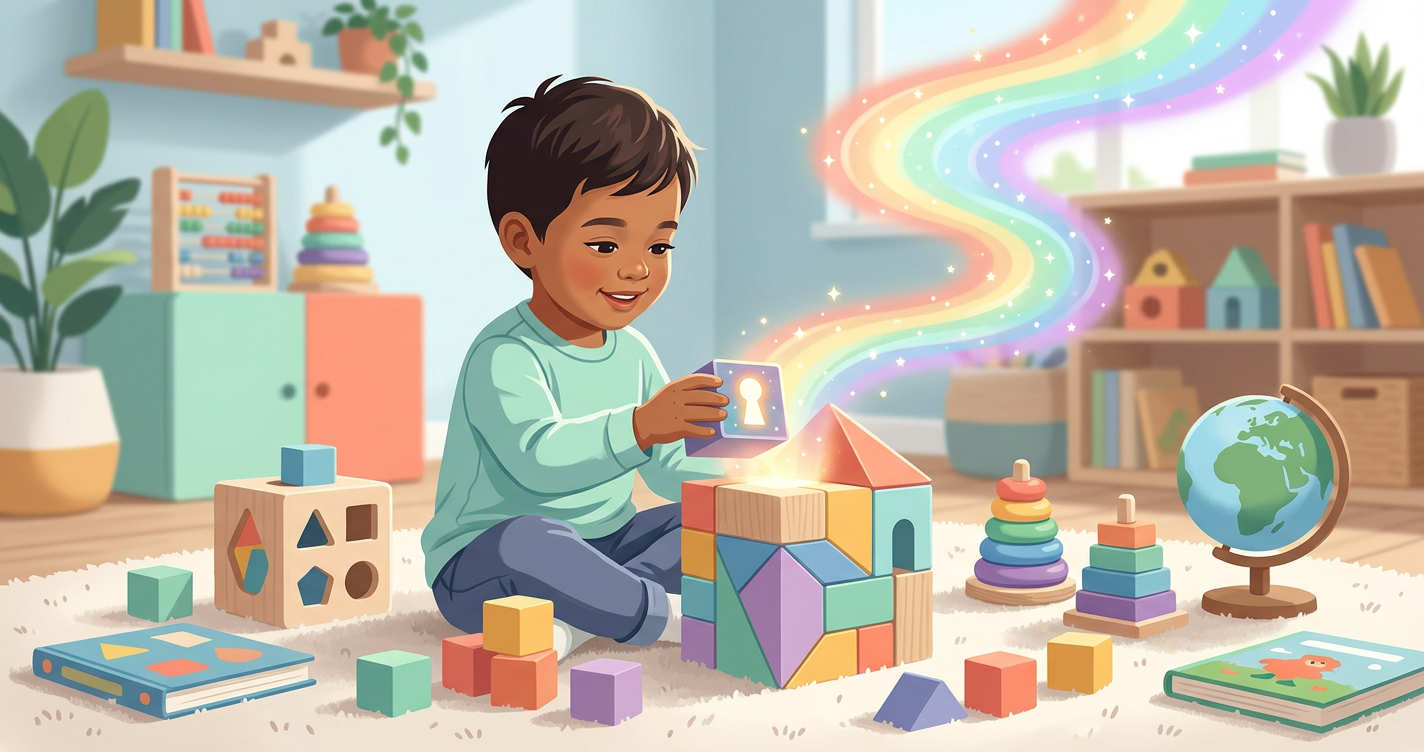
From the moment they open their eyes, children are natural learners, constantly observing, experimenting, and making sense of the world around them. Play isn't just a pastime; it's the primary vehicle for learning in early childhood. And within this vibrant world of play, educational toys stand out as powerful tools, carefully designed to stimulate young minds and foster crucial developmental milestones. But what exactly makes a toy 'educational,' and how do these seemingly simple objects contribute to a child's holistic growth? Let's dive deep into the fascinating science and profound benefits of integrating thoughtful educational toys into your child's early years.
What Exactly Are "Educational Toys"? Beyond the Buzzword
In a market saturated with products labeled 'educational,' it's easy to feel overwhelmed. True educational toys aren't just about teaching ABCs and 123s; they are about facilitating intrinsic curiosity, problem-solving, and skill development through engaging interaction. They aren't passive entertainment but rather active learning catalysts. this excellent toy product
Defining the Difference: Play vs. Pure Instruction
An educational toy empowers a child to explore, discover, and learn at their own pace. It's less about rote memorization and more about understanding concepts. Think building blocks that teach physics and balance, puzzles that hone spatial reasoning, or art supplies that ignite creativity. These toys often have an open-ended quality, meaning they can be used in multiple ways, evolving with your child's growing capabilities. Unlike purely instructional tools, educational toys make learning feel like an adventure, not a chore. The best ones are often simple, allowing the child's imagination to fill in the gaps.
The Brain Builders: How Educational Toys Fuel Cognitive Growth
The early years are a critical period for brain development. Educational toys are specifically designed to tap into this rapid growth, strengthening neural connections and laying robust foundations for future learning.
Problem-Solving & Critical Thinking
Whether it's figuring out how to fit puzzle pieces together, constructing a stable tower with blocks, or navigating a maze, educational toys constantly challenge children to think critically and solve problems. This process develops logical reasoning, sequential thinking, and the ability to strategize – skills that are invaluable in academics and life. Research consistently shows that engaging with such toys improves children's executive functions, including planning and working memory.
Language & Literacy Foundations
Toys like alphabet blocks, interactive storybooks, puppets, and even simple shape sorters contribute significantly to language development. They introduce new vocabulary, encourage storytelling, facilitate phonological awareness, and lay the groundwork for reading and writing. When children play with these items, they often narrate their actions, engage in conversations, and expand their descriptive language, boosting their communication skills.
Fine Motor Skills & Hand-Eye Coordination
From grasping chunky crayons to lacing beads, stacking rings, or manipulating small parts in a construction set, educational toys are exceptional for developing fine motor skills. These precise movements strengthen the small muscles in the hands and fingers, which are crucial for tasks like writing, drawing, self-feeding, and dressing. Simultaneously, activities requiring precise placement or manipulation enhance hand-eye coordination, improving a child's ability to integrate visual information with motor control.
Cultivating Character: Social-Emotional Skills & Creativity Through Play
Development isn't just about intellect; it's also profoundly about emotional intelligence, social interaction, and creative expression. Educational toys play a vital role in nurturing these equally important aspects of a child's personality.
Empathy & Social Interaction
Pretend play sets, dollhouses, action figures, and age-appropriate board games are fantastic for fostering social-emotional development. When children engage in role-playing, they step into different characters, learning to understand perspectives, express emotions safely, and practice negotiation and cooperation. These interactions teach valuable lessons in sharing, taking turns, empathy, and conflict resolution, which are cornerstones of healthy relationships.
Igniting Imagination & Creativity
Open-ended toys like building blocks, art supplies, dress-up clothes, or even a simple cardboard box transform into anything a child can imagine. This kind of play is a powerful incubator for creativity, allowing children to invent scenarios, build fantastical worlds, and express themselves without boundaries. Cultivating imagination during early childhood is linked to greater innovation, flexibility, and problem-solving abilities later in life.
Building Resilience & Confidence
The process of mastering an educational toy – successfully completing a puzzle, building a complex structure, or finally understanding a game's rules – instills a profound sense of accomplishment. Children learn persistence, how to cope with frustration, and the joy of overcoming challenges. Each successful interaction builds self-esteem and confidence, empowering them to tackle new obstacles with a positive attitude.
Choosing Wisely: Selecting the Right Educational Toys for Your Child
Given the vast array of options, how do parents make informed choices? It's about understanding your child's unique needs and developmental stage.
Age Appropriateness & Developmental Stages
While toy manufacturers provide age recommendations, these are often guidelines. The best educational toy is one that aligns with your child's current developmental stage, offering just enough challenge to keep them engaged without overwhelming them. Observe your child's interests and abilities, and choose toys that support their next steps in learning. Safety, of course, is paramount, so always check for small parts for younger children.
Prioritizing Open-Ended & Versatile Options
When in doubt, opt for toys that can be used in multiple ways. Simple blocks, art supplies, play dough, or a collection of natural items (like pinecones and smooth stones) offer endless possibilities for creative and imaginative play. These toys grow with your child, adapting to their evolving skills and interests, providing long-term value and sustained engagement.
Quality Over Quantity
A few well-chosen, high-quality educational toys are far more beneficial than a room full of flashy, single-purpose items. Durable toys can withstand years of enthusiastic play, and often, their simplicity encourages more imaginative engagement. Consider materials, craftsmanship, and the potential for a toy to last through multiple children or even generations.
Beyond the Toy: Maximizing the Impact of Playtime
An educational toy, however well-designed, is only one piece of the puzzle. The true magic happens when parents and caregivers actively participate in and facilitate the play experience.
The Power of Presence: Engaging with Your Child
Playing alongside your child, asking open-ended questions like, "What are you building there?" or "Tell me about your story," greatly amplifies the learning. Your presence validates their efforts, encourages communication, models problem-solving, and strengthens your bond. You become a guide, helping them connect ideas and deepen their understanding, rather than just an observer.
Creating a Stimulating Environment
A well-organized, accessible play space encourages independence and exploration. Consider rotating toys to keep them fresh and interesting. A designated spot for creative play or building helps children focus and signals that this is a place for discovery. Minimizing distractions, such as excessive screen time, can also help children immerse themselves more fully in their play.
Balancing Structured & Unstructured Play
While some educational toys lend themselves to structured activities (like following instructions for a science kit), it's equally crucial to allow for ample unstructured, child-led play. This freedom allows children to direct their own learning, follow their instincts, and develop self-regulation. The combination of both types of play fosters a well-rounded approach to learning and exploration.
Conclusion: Investing in Play, Investing in Their Future
Educational toys are far more than just playthings; they are investments in your child's future. They are the silent teachers, the creativity catalysts, and the confidence builders that shape young minds during their most formative years. By thoughtfully selecting these tools and actively engaging in the play process, we empower children to develop critical cognitive, social-emotional, and physical skills. So, embrace the power of play, choose wisely, and watch as your child unlocks their incredible potential, one joyful discovery at a time. The lessons learned through play are the ones that truly last a lifetime.


