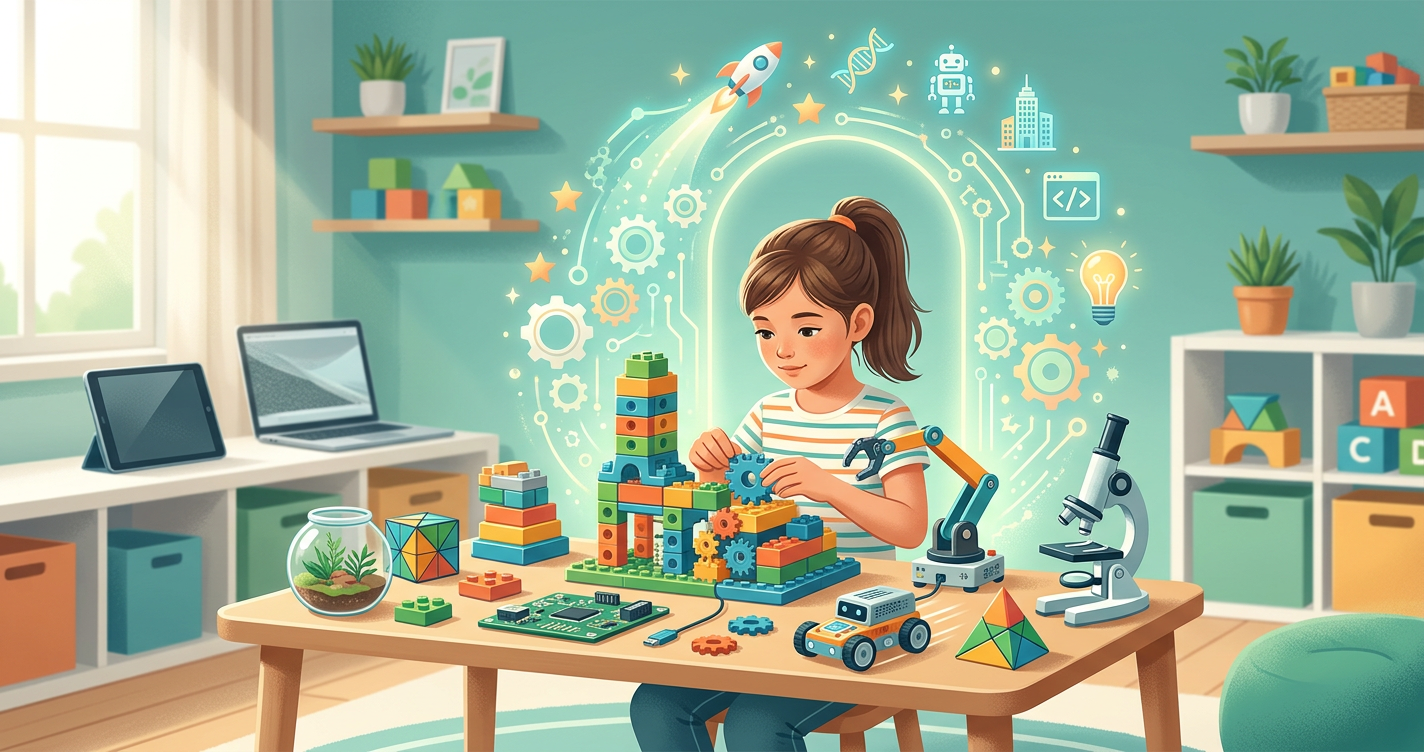
In an increasingly digital world, where screens often dominate children's attention, many parents seek meaningful ways to engage their elementary-aged kids. While technology certainly has its place, the craving for hands-on, minds-on learning experiences is stronger than ever. This is where STEM toys come into play – not just as fun distractions, but as powerful tools for shaping the innovators, problem-solvers, and critical thinkers of tomorrow. For elementary children, these educational toys are more than just playthings; they are gateways to understanding the world, developing crucial skills, and igniting a lifelong passion for discovery.
But what exactly makes a toy "STEM"? And how do these seemingly simple play items contribute to such profound development? Join us as we explore the incredible benefits of integrating STEM toys into your elementary child's world, uncover what to look for when choosing them, and provide practical tips to maximize their learning potential. Prepare to go beyond the screen and unlock your child's innate curiosity and future potential. this excellent toy product
What Exactly Are STEM Toys, Anyway?
STEM stands for Science, Technology, Engineering, and Mathematics. So, a STEM toy is essentially any plaything designed to introduce children to these four interconnected disciplines in an engaging, hands-on manner. Unlike traditional toys that might focus solely on imaginative play or motor skills, STEM toys specifically aim to foster skills directly related to scientific inquiry, technological understanding, engineering principles, and mathematical reasoning.
Think beyond just a microscope or a calculator. While those are certainly STEM tools, modern STEM toys are often much more integrated and interactive. They might involve:
- Building structures that demonstrate physics principles.
- Coding a simple robot to navigate a maze.
- Conducting experiments that reveal chemical reactions.
- Solving logic puzzles that strengthen mathematical thinking.
The key isn't just learning facts, but rather developing a "STEM mindset" – encouraging curiosity, experimentation, critical thinking, and problem-solving. These toys transform abstract concepts into tangible, exciting experiences, making learning fun and accessible for elementary kids.
The Undeniable Benefits: Why STEM Toys Matter for Elementary Kids
The impact of STEM toys on elementary children extends far beyond academic improvement. They are foundational for developing a robust set of life skills that are invaluable in school, future careers, and everyday challenges. Here’s why investing in these educational toys is one of the smartest decisions you can make for your child:
Fostering Critical Thinking & Problem-Solving
At the heart of STEM education is the ability to think critically and solve problems. When a child builds a circuit that doesn't light up, or a tower that keeps toppling, they are immediately faced with a challenge. They learn to analyze the situation, hypothesize what went wrong, test different solutions, and iterate until they succeed. This iterative process, often called "design thinking," is a cornerstone of innovation. Research consistently shows that hands-on, exploratory learning, as provided by STEM toys, significantly enhances children's ability to think logically and systematically, preparing them for complex challenges later in life.
Cultivating Creativity & Innovation
While STEM might sound rigidly logical, it is profoundly creative. Many STEM toys are open-ended, meaning there isn't just one "right" way to play. Building blocks, engineering kits, and even science experiments often encourage children to design their own solutions, invent new contraptions, and explore various possibilities. This freedom to experiment without fear of failure cultivates a strong sense of creativity and innovation, allowing children to think outside the box and imagine new solutions to existing problems.
Building Resilience & Patience
Learning new concepts and mastering complex tasks can be frustrating. STEM toys often require persistence, trial, and error. A child might spend hours trying to get their robot to perform a specific sequence or to construct a stable bridge. Through these experiences, they learn the invaluable lessons of patience, perseverance, and resilience. They understand that failure isn't the end, but rather a stepping stone to success – a crucial mindset for navigating life's inevitable setbacks.
Sparking a Lifelong Love for Learning
When learning is disguised as play, it becomes intrinsically motivating. STEM toys make science, technology, engineering, and math exciting and relevant. Instead of memorizing formulas, children are actively discovering principles. This hands-on engagement transforms abstract concepts into tangible realities, sparking genuine curiosity and a desire to learn more. This early exposure, framed positively, can ignite a lifelong passion for these subjects and potentially guide future academic and career choices.
Developing Essential 21st-Century Skills
Beyond individual skills, many STEM toys encourage collaboration and communication. When children work together on a building project or a science experiment, they learn to share ideas, delegate tasks, and communicate effectively to achieve a common goal. These collaborative skills, alongside digital literacy, adaptability, and complex problem-solving, are considered essential for success in the rapidly evolving 21st-century workforce.
Navigating the World of STEM Toys: What to Look For
With an explosion of educational toys on the market, choosing the right STEM toy for your elementary child can feel overwhelming. Here are key factors to consider to ensure you're making a valuable investment:
- Age Appropriateness: Always check the recommended age range. A toy too simple might bore them, while one too complex could lead to frustration. Look for toys that offer different levels of challenge to grow with your child.
- Open-Ended Play: Prioritize toys that allow for multiple uses and encourage imaginative play rather than a single, prescribed outcome. Toys like advanced building sets, magnetic tiles, or basic circuit kits often fall into this category, fostering ongoing creativity.
- Durability and Safety: Ensure the toy is made from high-quality, non-toxic materials and can withstand enthusiastic play. Safety certifications are a good indicator.
- Engagement Factor: Does the toy genuinely capture your child's interest? Consider their existing hobbies and curiosities. If they love space, a rocket-building kit might be perfect. If they enjoy puzzles, a logic game could be ideal.
- Variety of STEM Disciplines: Try to offer a balance across Science, Technology, Engineering, and Math. A diverse collection exposes them to different types of thinking and problem-solving.
Top Picks: STEM Toy Ideas for Every Elementary Explorer
To help you get started, here are some popular and highly effective types of STEM toys that cater to different interests and learning styles within the elementary age group:
- Science Experiment Kits: From chemistry sets that create colorful reactions to crystal growing kits or human anatomy models, these provide hands-on exploration of scientific principles.
- Coding & Robotics Kits: Simple coding robots (like Bee-Bot or Code & Go Robot Mouse) introduce foundational programming concepts without screens. More advanced kits (e.g., LEGO Mindstorms, VEX IQ) allow kids to build and program their own robots.
- Engineering & Building Sets: LEGO Technic, K'nex, Magna-Tiles, Keva Planks, and even advanced Lincoln Logs encourage structural design, balance, and mechanical understanding.
- Circuit Kits: Snap Circuits are fantastic for learning about electricity and circuits in a safe, engaging way.
- Logic & Math Games: Board games that require strategic thinking, puzzle books, or digital learning systems like Osmo (which blends physical and digital play) can make math concepts fun and intuitive.
Remember, the best toy is one that your child will actually play with and enjoy!
Integrating STEM Toys into Daily Play: Tips for Parents
Having the right STEM toys is only half the battle. How you introduce and interact with them can significantly amplify their educational impact. Here are some friendly, encouraging tips for parents:
- Play Alongside Them: Don't just hand over a toy; sit down and explore it together. Your enthusiasm is contagious, and you can model problem-solving strategies.
- Encourage Exploration, Not Just "Right" Answers: Focus on the process, not just the outcome. Ask "What if...?" or "How could we try that differently?" instead of only praising a correct solution.
- Ask Open-Ended Questions: "What do you think will happen next?" "Why do you think it worked that way?" "What did you learn from this?" These questions prompt deeper thinking and reflection.
- Connect to Real-World Applications: Help them see how the principles they're learning apply to everyday life – the bridge they built is like the one you drive over, or the circuit they made is similar to how a flashlight works.
- Create a Dedicated STEM Play Space: Designate an area where they can leave projects out and return to them, fostering sustained engagement and complex builds.
- Embrace "Failure": Reframe mistakes as learning opportunities. Celebrate the effort and the lessons learned, not just the successes.
Unlock Their Potential: The Future is Built on Play
In a world that demands adaptability, critical thinking, and innovation, providing your elementary child with access to high-quality STEM toys is more than just a passing trend – it's an investment in their future. These educational tools do far more than entertain; they build foundational skills, foster a growth mindset, and spark a genuine love for learning that can last a lifetime.
By choosing age-appropriate, open-ended STEM toys and actively engaging with your child during play, you're not just buying a toy; you're opening doors to countless possibilities. So, step away from the screens, embrace the power of hands-on exploration, and watch your elementary child transform into a confident, curious, and capable innovator, ready to shape the world of tomorrow. The future is bright, and it starts with play.