
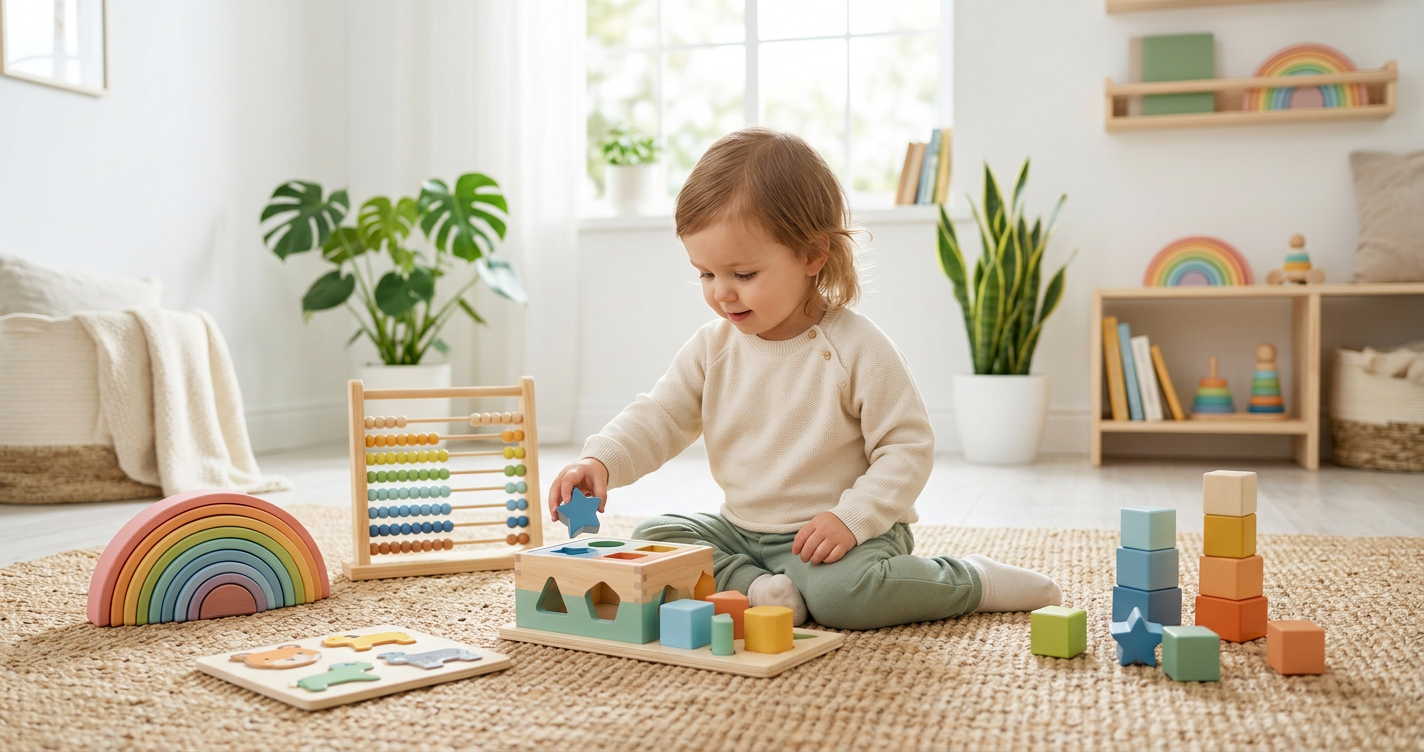
Watching a toddler explore the world is like witnessing pure magic. Every day brings new discoveries, new words, and new ways of understanding. During this incredible period, your child's brain is developing at an astonishing rate, laying the foundation for all future learning. As parents, we naturally want to provide the best environment for this growth, and that's where educational toys come into play. But what exactly makes a toy 'educational' for a toddler, and how do they truly contribute to their cognitive development?
Forget the flashy gadgets and complicated contraptions for a moment. True educational toys for toddlers are often simpler than you think, designed to engage their innate curiosity and encourage active participation. In this post, we'll dive deep into the fascinating world of toddler cognitive development and explore how thoughtfully chosen educational toys can become powerful tools in nurturing your little one's burgeoning brain. this excellent wellness product
The Toddler Brain: A Powerhouse of Potential
From their first birthday until around age three, toddlers experience an explosive period of brain growth. Synapses – the connections between brain cells – are forming at an incredible speed, shaping how they think, feel, and learn. This is a critical window for developing crucial cognitive skills, including:
- Problem-solving: Figuring out how things work.
- Memory: Remembering where they put their favorite toy.
- Language: Expanding their vocabulary and understanding.
- Attention: Focusing on a task, even for short periods.
- Abstract thinking: Beginning to understand concepts like cause and effect.
Every interaction, every new experience, and every moment of play contributes to this intricate brain architecture. Educational toys are specifically designed to stimulate these areas, providing structured yet playful opportunities for learning and exploration.
What Exactly Are "Educational Toys" for Toddlers?
Before we explore the benefits, let's clarify what we mean by 'educational toys' for toddlers. These aren't just toys that claim to teach letters or numbers (though some do!). For this age group, truly educational toys are those that:
- Encourage open-ended play: Toys that can be used in multiple ways, fostering creativity rather than dictating a single outcome.
- Promote active engagement: Toys that require toddlers to manipulate, explore, and interact physically and mentally.
- Are age-appropriate: Challenging enough to be engaging but not so complex that they lead to frustration.
- Stimulate multiple senses: Engaging touch, sight, and sometimes sound.
- Foster skill development: Targeting specific cognitive, motor, or social-emotional milestones.
Think beyond screens and complex electronics. Often, the simplest toys offer the richest learning experiences.
Boosting Problem-Solving Skills and Critical Thinking
One of the most significant cognitive benefits of educational toys is their ability to cultivate problem-solving skills. When a toddler encounters a shape sorter, they're not just playing; they're engaging in a miniature scientific experiment. They hypothesize which shape fits where, test their theories, and learn from their mistakes. This trial-and-error process is fundamental to developing critical thinking.
Examples of toys that excel here:
- Shape sorters: Teach shape recognition, spatial reasoning, and matching.
- Stacking rings/cups: Introduce concepts of size, order, and balance.
- Simple puzzles (2-4 pieces): Develop spatial awareness, hand-eye coordination, and logical deduction.
- Nesting dolls or blocks: Help understand concepts of 'inside' and 'outside,' and size relationships.
According to developmental psychologists like Jean Piaget, children learn best by actively manipulating their environment. These toys provide the perfect medium for this 'active learning,' allowing toddlers to construct their understanding of the world through direct experience.
Nurturing Language and Communication Development
Toddlers are language sponges, soaking up every word they hear. Educational toys can be fantastic catalysts for expanding vocabulary and improving communication skills, especially when parents engage alongside them. When you describe what your child is doing, or ask questions about their play, you're building crucial neural pathways for language.
How toys help:
- Picture books: Introduce new words, concepts, and storytelling. Even before they can speak, toddlers absorb information from listening and looking.
- Dolls and puppets: Encourage imaginative play, which often involves dialogue and role-playing, boosting expressive language.
- Interactive animal sounds or musical toys: While not overly stimulating, simple sound toys can help associate sounds with objects and encourage vocal imitation.
- Building blocks (with descriptive play): As you build a 'tall tower' or a 'red house,' you're naturally introducing adjectives and nouns.
Research consistently shows that a rich language environment during the toddler years correlates with stronger literacy skills later in life. Educational toys, when paired with parental interaction, create such an environment.
Enhancing Fine Motor Skills and Hand-Eye Coordination
Cognitive development isn't just about abstract thought; it's deeply intertwined with physical development. Fine motor skills – the coordination of small muscles, especially in the hands and fingers – are vital for tasks like writing, drawing, and self-feeding. Educational toys provide ample opportunities to hone these crucial skills.
Toys that help build dexterity:
- Building blocks (various sizes): Grasping, stacking, and fitting blocks together refines pincer grasp and overall hand strength.
- Lacing beads or stringing toys: Excellent for developing hand-eye coordination and fine motor control.
- Playdough and modeling clay: Squeezing, rolling, and shaping strengthens hand muscles and encourages creativity.
- Pegboards: Placing pegs into holes is a fantastic exercise for precision and focus.
As toddlers master these physical manipulations, their brain is simultaneously working to plan movements, perceive spatial relationships, and coordinate sensory input, all of which are key cognitive functions.
Sparking Creativity and Imagination
Perhaps one of the most delightful aspects of toddler play is the explosion of imagination. Cognitive flexibility, the ability to think outside the box and adapt to new situations, is a cornerstone of intelligence. Open-ended educational toys are champions in fostering this.
Toys for imaginative play:
- Dollhouses and play kitchens: Encourage role-playing, storytelling, and understanding social dynamics.
- Dress-up clothes: Allow toddlers to explore different roles and identities, enhancing empathy and self-expression.
- Art supplies (crayons, chunky paint, large paper): Provide a canvas for self-expression and abstract thinking without right or wrong answers.
- Vehicle sets (cars, trains): Encourage narrative play and understanding of movement and cause-and-effect.
When a toddler pretends a block is a phone or a blanket is a superhero cape, they are engaging in symbolic thought, a sophisticated cognitive skill that is foundational for abstract reasoning and problem-solving later in life.
Choosing the Right Educational Toys: A Practical Guide
With so many options, selecting the 'best' educational toys can feel overwhelming. Here are some friendly, evidence-based tips to guide your choices:
- Prioritize Safety: Always check for age recommendations, non-toxic materials, and absence of small parts that could be choking hazards.
- Opt for Open-Ended: Toys that can be used in multiple ways will grow with your child and offer more sustained engagement.
- Consider Durability: Toddlers are tough on toys! Choose items that can withstand enthusiastic play.
- Follow Your Child's Interests: If they love animals, find animal-themed puzzles or building sets. Engagement is key to learning.
- Balance Variety: A mix of toys that encourage physical activity, fine motor skills, language, and imaginative play is ideal.
- Less is Often More: A few high-quality, engaging toys are far more beneficial than a room full of overwhelming options. Rotate toys to keep things fresh.
Beyond the Toy: The Power of Playful Interaction
It's crucial to remember that educational toys are tools, not babysitters. The most profound cognitive development happens when a loving adult engages with the child during play. Your presence, your words, your questions, and your shared joy amplify the learning experience exponentially.
- Talk about what they're doing: "You're stacking the red block on top of the blue one!"
- Ask open-ended questions: "What do you think will happen if we push this?" or "Where should the teddy bear go next?"
- Follow their lead: Let your child direct the play sometimes. This empowers them and boosts their confidence.
- Observe: Pay attention to what engages them, what challenges them, and what brings them joy.
Conclusion
Educational toys are truly invaluable allies in nurturing your toddler's cognitive development. By providing opportunities for problem-solving, language acquisition, fine motor skill refinement, and imaginative play, these toys empower tiny minds to explore, understand, and grow. As you embark on this exciting journey with your little one, remember that thoughtful selection and, most importantly, joyful interaction are the keys to unlocking their incredible potential. Embrace the mess, cherish the giggles, and marvel at the amazing cognitive leaps your toddler makes every single day!


